
Chef Lupita
Aceite de Chiltepin Bajacaliforniano
Baja California's wild chiltepin steeped in olive oil with garlic, orejon, and lime peel, until the oil turns ruby-amber and carries the slow, sneaky burn of the desert coast.
A cooking platform built around craft, culture, and the stories behind what we eat.
Created by
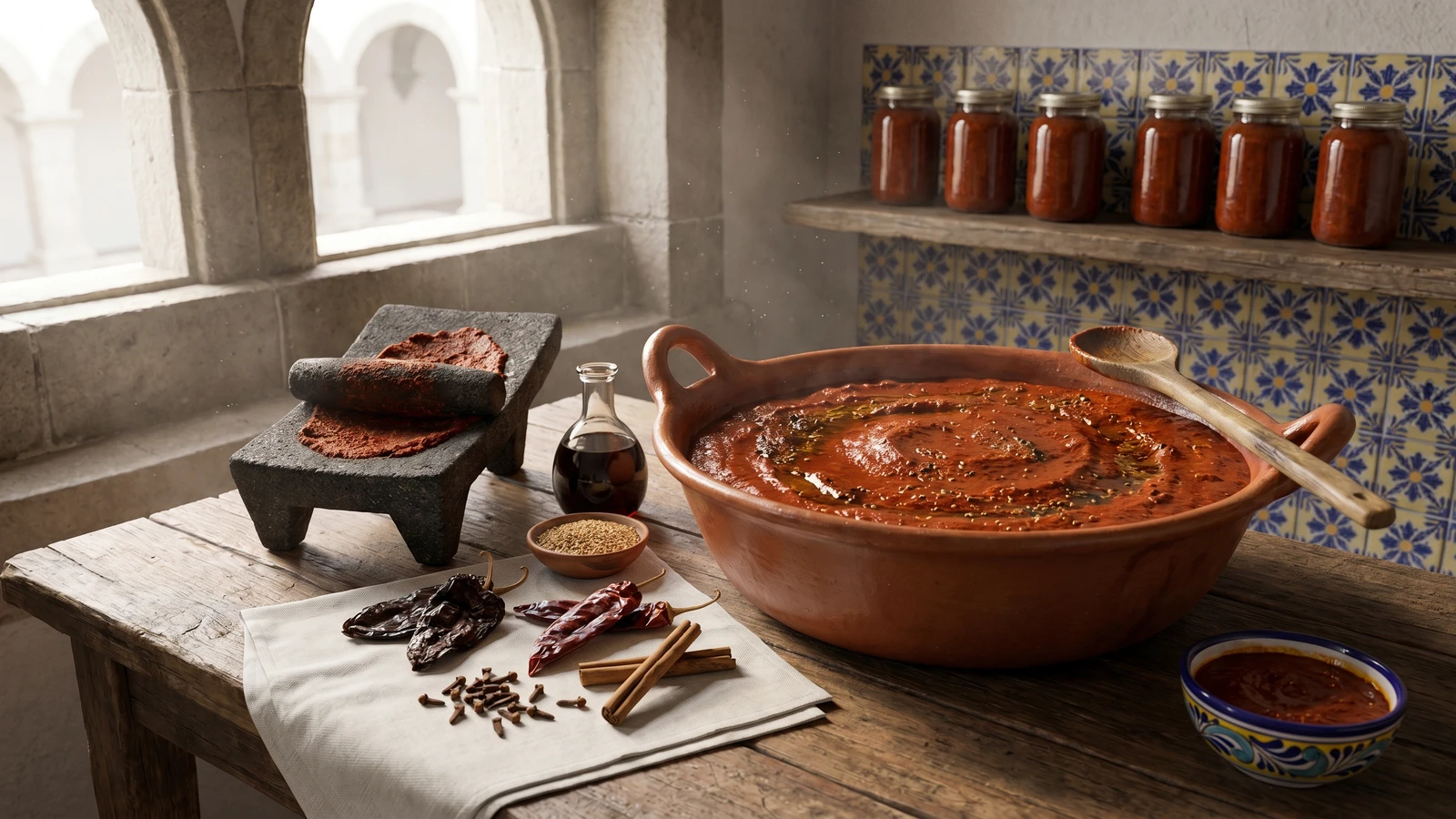
Puebla's Lenten convent adobo, a brick-red vinegar chile paste of ancho, guajillo, garlic, oregano, and comino made to dress fish for the meatless calendar.
Puebla de los Ángeles, the convent city, is where this adobo belongs. Not as a plate, as a sauce. In the old kitchens around Santa Rosa, Santa Clara, Santa Catalina, and Santa Mónica, the nuns built sauces for the calendar: rich moles for feast days, lean adobos for vigilia, when meat and lard left the table and the discipline of the sauce had to carry the meal.
The chiles here are ancho and guajillo. Ancho gives dark fruit and body. Guajillo gives clean red color and a sharper edge. The acid is vinegar, not tomato. The perfume comes from garlic, Mexican oregano, comino, clavo, pimienta, canela, and a little ajonjolí, that Old World register the convent kitchens absorbed and made Mexican. No lard here. This is vigilia. The fat belongs to other days.
El metate es la regla. A blender will make a useful paste, and I won't pretend every home cook owns a volcanic stone metate, but understand what the metate does: it crushes the chile skins, garlic, spices, and sesame into one architecture. A quick blend gives you liquid. A proper grind gives you adobo. No me vengas con atajos. Toast, soak, grind, simmer, rest. Así se hace y punto.
Puebla's convent kitchens, especially Santa Rosa de Lima, Santa Clara, Santa Catalina de Siena, and Santa Mónica, helped define the baroque criollo cooking of New Spain from the 17th through 19th centuries by joining native chile and corn techniques with Spanish vinegar, almonds, sesame, cinnamon, cloves, and other imported ingredients. Lenten recetarios used the word 'vigilia' for meatless preparations tied to the Catholic calendar, especially fish, legumes, eggs, and vegetable dishes dressed with serious sauces instead of animal fat. Santa Rosa's talavera-lined kitchen became the public symbol of this conventual tradition, but the practice belonged to many cloistered kitchens, not one legend.
Quantity
6
stemmed, seeded, and wiped clean
Quantity
8
stemmed, seeded, and wiped clean
Quantity
1/4 cup
Quantity
6
unpeeled
Quantity
1/2 small
thickly sliced
Quantity
1/2 teaspoon
Quantity
4
Quantity
6
Quantity
1 small piece, about 1 inch
Quantity
1 teaspoon
Quantity
1/2 teaspoon
Quantity
1
Quantity
3/4 cup
Quantity
1/2 cup, plus more as needed
Quantity
1 teaspoon, plus more to taste
Quantity
1 teaspoon
Quantity
1 tablespoon
| Ingredient | Quantity |
|---|---|
| dried chile anchostemmed, seeded, and wiped clean | 6 |
| dried chile guajillostemmed, seeded, and wiped clean | 8 |
| sesame seeds (ajonjoli) | 1/4 cup |
| garlic clovesunpeeled | 6 |
| white onionthickly sliced | 1/2 small |
| whole cumin seeds | 1/2 teaspoon |
| whole cloves | 4 |
| whole black peppercorns | 6 |
| Mexican canela | 1 small piece, about 1 inch |
| dried Mexican oregano | 1 teaspoon |
| dried thyme | 1/2 teaspoon |
| bay leaf | 1 |
| mild white vinegar or pineapple vinegar | 3/4 cup |
| chile soaking liquid | 1/2 cup, plus more as needed |
| kosher salt | 1 teaspoon, plus more to taste |
| piloncillo or dark brown sugar | 1 teaspoon |
| neutral oil, such as avocado or sunflower oil | 1 tablespoon |
Wipe the ancho and guajillo chiles with a dry cloth. Remove the stems, seeds, and loose veins. Do not rinse them. Water steals the first fragrance from the chile before the comal has done its work.
Heat a dry comal over medium. Toast the ancho chiles one at a time, about 20 to 30 seconds per side, until they soften, darken slightly, and smell like raisins and warm tobacco. Toast the guajillos faster, 10 to 15 seconds per side, because their skin is thinner. They should puff in spots, not blacken.
Place the toasted chiles in a bowl. Cover with hot water, not boiling, and let them soften for 20 minutes. Drain, reserving 1 cup of the soaking liquid. Return the chiles to the bowl and pour the vinegar over them for 10 more minutes. This is vigilia adobo. The vinegar gives preservation, brightness, and the old cloister taste.
On the same comal, toast the sesame seeds until golden and fragrant, shaking constantly. Remove them before they brown too far. Toast the unpeeled garlic and onion slices until the garlic skins blister and the onion edges char in places. Peel the garlic. Toast the cumin, cloves, peppercorns, and canela for a few seconds only, just until their smell rises.
On a metate, grind the toasted spices first with the oregano, thyme, bay leaf, salt, and piloncillo. Add the sesame, garlic, and onion, working them into a thick paste. Add the soaked chiles a few pieces at a time, moistening with small spoonfuls of vinegar and soaking liquid as needed. If using a blender, blend in batches until completely smooth, then pass through a fine-mesh strainer. El metate es la regla, but a strained blender paste is honest work when the grind is careful.
Heat the neutral oil in a barro rojo cazuela or heavy saucepan over medium-low. Add the chile paste carefully. It will sputter. Stir with a wooden spoon for 8 to 10 minutes, until the paste darkens from brick red to deep garnet and begins to cling to the spoon. No lard. This is the Lenten rule. La manteca es el sabor, yes, but discipline is also a flavor.
Stir in enough reserved soaking liquid to make a thick, brushable sauce. Simmer gently for 20 minutes, stirring often so the sesame does not catch on the bottom. Taste for salt and vinegar. The adobo should be tangy, earthy, and slightly sweet at the back, with the ancho giving body and the guajillo keeping the color clean.
Transfer the adobo to a glass jar and let it cool. Refrigerate at least overnight before using. The chiles, vinegar, garlic, and spices need time to settle into one voice. Brush it over firm white fish, salted cod after soaking, shrimp, or vegetables before roasting or stewing. This recipe is the sauce. The plate it dresses belongs elsewhere.
1 serving (about 60g)
Culinary guides, cultural storytelling, and the editorial depth that makes cooking meaningful.
Discover Culinary ExplorerChef Lupita
Baja California's wild chiltepin steeped in olive oil with garlic, orejon, and lime peel, until the oil turns ruby-amber and carries the slow, sneaky burn of the desert coast.
Chef Lupita
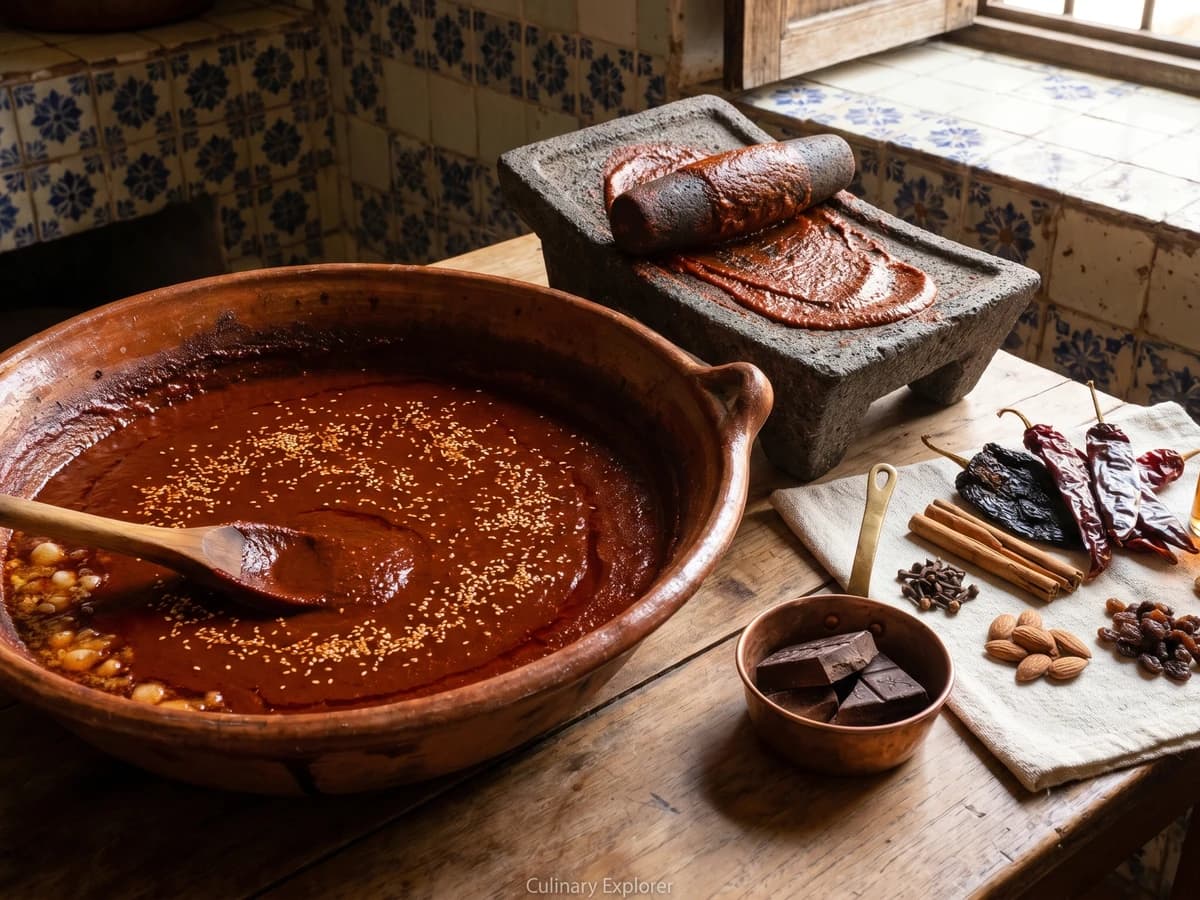
Zacatecas' wedding-table adobo, built from toasted guajillo and ancho, piloncillo, sour orange, chocolate, canela, clavo, almonds, sesame, and lard.

Chef Lupita
Puebla's convent kitchens built this adobo with ancho, guajillo, jerez, almonds, raisins, clove, and lard, a baroque marinade that stains pork loin and finishes as the sauce.

Chef Lupita
Guerrero's coast gives this adobo its authority: guajillo, pasilla mexicano, morita, chile costeño, garlic, vinegar, and fire, ground into the paste that belongs on butterflied fish.