
Chef Lupita
Adobo Conventual de Vigilia
Puebla's Lenten convent adobo, a brick-red vinegar chile paste of ancho, guajillo, garlic, oregano, and comino made to dress fish for the meatless calendar.
A cooking platform built around craft, culture, and the stories behind what we eat.
Created by
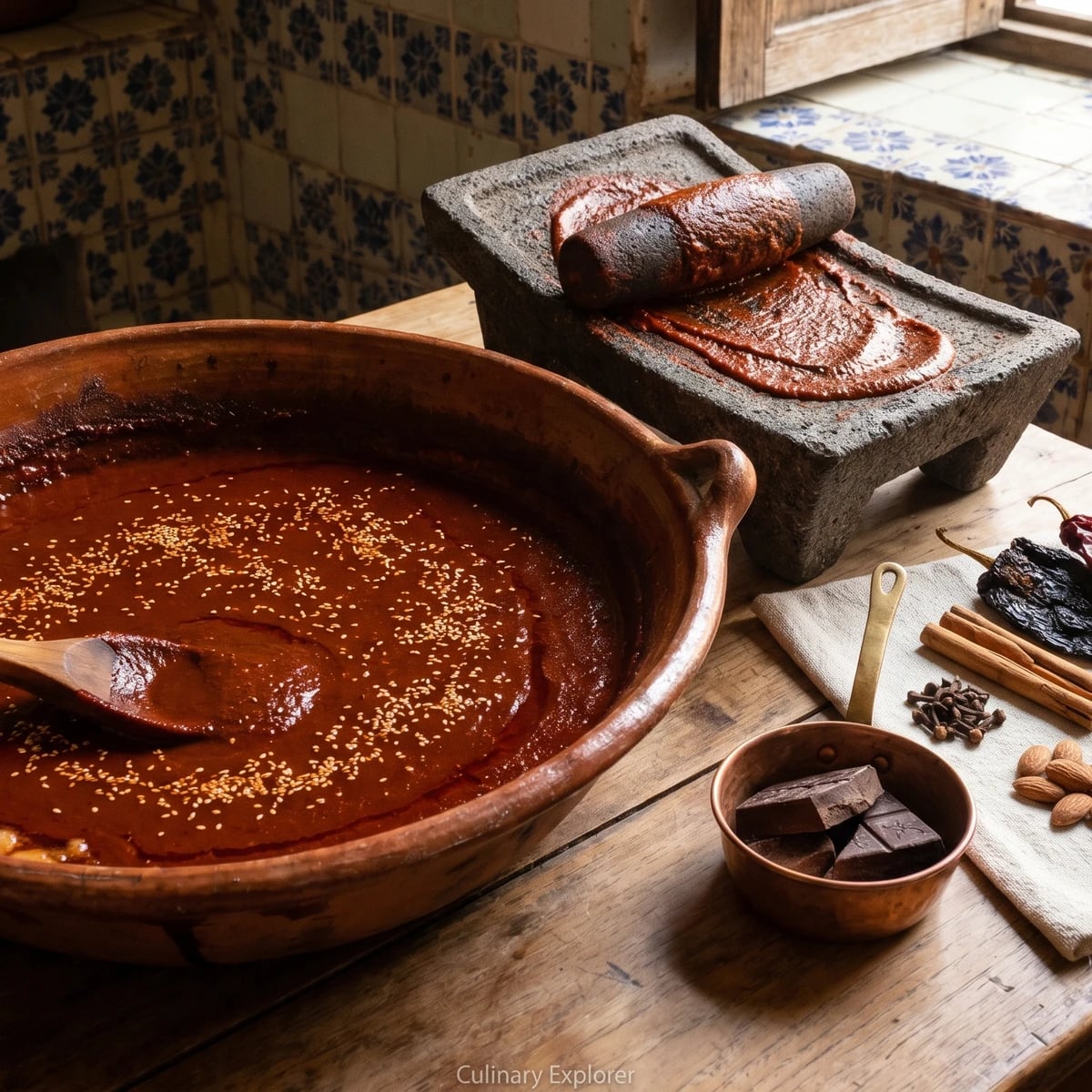
Zacatecas' wedding-table adobo, built from toasted guajillo and ancho, piloncillo, sour orange, chocolate, canela, clavo, almonds, sesame, and lard.
Zacatecas, especially the mining towns and old hacienda kitchens between Fresnillo, Jerez, and the capital, is where asado de boda announces a celebration before anyone sits down. This adobo is the sauce, not the plate. The pork it dresses belongs in another recipe. Here we are building the dark, sweet, chile-red architecture that makes a wedding table smell like Zacatecas.
The base is chile guajillo for color and clean fruit, chile ancho for body and sweetness, and a small mulato if you want the conventual shadow that old kitchens understood very well. The register comes from Old World ingredients carried into Mexican convent and criollo kitchens: almendra, ajonjoli, canela, clavo, pasas, jerez, piloncillo, and chocolate. That doesn't make it European. The chiles decide the sauce. Cada estado, su propia cocina.
I learned versions of this adobo from women who kept the paste in clay jars before a wedding, letting the vinegar, sour orange, and spices settle into each other overnight. My mother's notebook had one line in the margin: 'freir la pasta en manteca hasta que brille.' Fry the paste in lard until it shines. She was right. La manteca es el sabor, and el metate es la regla. Use a blender if your wrists are modern, but understand what the metate does: it makes a paste, not a thin red drink.
No me vengas con atajos. A baroque adobo is not a quick weeknight project. Toast, soak, grind, fry, simmer, rest. That is how the sauce learns itself. Saber cocinar es saber vivir.
Asado de boda is most strongly identified with Zacatecas, where it became a wedding dish in mining and hacienda communities during the colonial and postcolonial periods, when a slaughtered pig could feed a large celebration. Unlike mole poblano, which is tied in popular memory to Puebla's Convento de Santa Rosa and the Dominican convent kitchens of Santa Rosa and Santa Catalina, Zacatecas' asado de boda has no single documented convent of invention; it belongs to the broader criollo-conventual cooking shaped by Franciscan and Augustinian presence in the north-central mining corridor. Its use of chocolate, canela, clavo, almonds, raisins, sesame, and jerez marks the same conventual pantry that shaped Puebla and Oaxaca's moles, but the guajillo-ancho base keeps the sauce recognizably zacatecano.
Quantity
12
wiped clean, stemmed and seeded
Quantity
5
wiped clean, stemmed and seeded
Quantity
1
wiped clean, stemmed and seeded
Quantity
2 cups, plus more as needed
for soaking chiles
Quantity
1/2 cup
Quantity
1/4 cup
Quantity
3 tablespoons
Quantity
1/2 cup
Quantity
1/4 cup, plus 1 tablespoon
divided
Quantity
1/4 cup
Quantity
1
thickly sliced
Quantity
5
unpeeled
Quantity
1
toasted until deeply browned in spots
Quantity
2 ounces
chopped
Quantity
1 1/2 ounces
grated or chopped
Quantity
1 stick, about 3 inches
Quantity
4
Quantity
4
Quantity
2
Quantity
1/2 teaspoon
Quantity
1/2 teaspoon
Quantity
2
Quantity
1 teaspoon, plus more to taste
Quantity
4 tablespoons
Quantity
1 to 2 cups
as needed for blending and simmering
| Ingredient | Quantity |
|---|---|
| dried chile guajillowiped clean, stemmed and seeded | 12 |
| dried chile anchowiped clean, stemmed and seeded | 5 |
| dried chile mulatowiped clean, stemmed and seeded | 1 |
| hot waterfor soaking chiles | 2 cups, plus more as needed |
| fresh naranja agria juice | 1/2 cup |
| jerez seco or dry sherry | 1/4 cup |
| apple cider vinegar | 3 tablespoons |
| blanched almonds | 1/2 cup |
| sesame seedsdivided | 1/4 cup, plus 1 tablespoon |
| raisins | 1/4 cup |
| small white onionthickly sliced | 1 |
| garlic clovesunpeeled | 5 |
| corn tortillatoasted until deeply browned in spots | 1 |
| Mexican table chocolatechopped | 2 ounces |
| piloncillograted or chopped | 1 1/2 ounces |
| Mexican canela stick | 1 stick, about 3 inches |
| whole cloves | 4 |
| black peppercorns | 4 |
| allspice berries | 2 |
| cumin seeds | 1/2 teaspoon |
| dried Mexican oregano | 1/2 teaspoon |
| bay leaves | 2 |
| kosher salt | 1 teaspoon, plus more to taste |
| pork lard | 4 tablespoons |
| rich pork brothas needed for blending and simmering | 1 to 2 cups |
Wipe the guajillo, ancho, and mulato chiles with a dry cloth. Remove the stems, seeds, and most of the veins. Keep the chiles separate by type. They do not toast at the same speed, and a burned chile will punish the whole adobo.
Heat a dry comal over medium. Toast the guajillos first, about 15 to 20 seconds per side, just until the skins turn glossy and flexible. Toast the anchos about 25 seconds per side. Toast the mulato last and watch it closely because its sugar burns fast. The kitchen should smell deep and fruity, not scorched.
Put the toasted chiles in a bowl and cover with hot water. Hot, not boiling. Let them soften for 25 minutes, turning once. Boiling water toughens the skins and can pull bitterness into the sauce. Drain, reserving 1 cup of the soaking liquid only if it tastes clean. If it tastes bitter, use pork broth instead.
On the same comal, toast the almonds until golden in patches, then the sesame until it smells nutty, then the canela, cloves, peppercorns, allspice, and cumin just until fragrant. Keep each ingredient moving. This is the conventual register: nuts, seeds, warm spices, and patience. Do not walk away.
Place the onion slices and unpeeled garlic on the comal. Cook until the onion has browned edges and the garlic skins are spotted and soft inside. Peel the garlic. Toast the tortilla until it is deeply browned in spots, almost bitter but not burned. The tortilla gives body, the kind a thin blender sauce never has by accident.
On a metate, grind the toasted spices with the salt first, then the almonds, sesame, raisins, tortilla, garlic, onion, and softened chiles. Work until you have a thick, brick-red paste. If using a blender, add the sour orange juice, jerez, vinegar, and just enough pork broth to move the blades. Blend longer than you think. You want smooth paste, not speckled salsa.
Pass the chile paste through a medium-fine sieve into a bowl, pressing hard with a wooden spoon. Scrape the underside of the sieve. This removes tough skins and gives the adobo its polished body. If the paste refuses to pass, loosen it with a few tablespoons of pork broth. Do not flood it.
Melt the lard in a heavy cazuela over medium heat. Add the strained paste carefully. It will sputter. Stir with a wooden spoon for 12 to 15 minutes, until the paste darkens, thickens, and the fat begins to shine at the edges. My mother's note was right: fry it until it shines. La manteca es el sabor.
Add the chocolate, piloncillo, bay leaves, and 1 cup pork broth. Lower the heat and simmer gently for 35 to 45 minutes, stirring often so the bottom does not catch. The sauce should turn glossy, mahogany-red, and thick enough to coat the back of a spoon. Taste for salt and acidity. It should be sweet, sour, bitter, and chile-deep in balance, not sugary.
Remove the bay leaves. Let the adobo cool, then refrigerate it at least overnight and up to three days. The wedding cooks know this. The sauce needs time for the sour orange, jerez, chocolate, and chiles to stop shouting separately. Use it to marinate and finish pork for asado de boda, thinning with pork broth as needed. Recetas probadas y garantizadas.
1 serving (about 125g)
Culinary guides, cultural storytelling, and the editorial depth that makes cooking meaningful.
Discover Culinary Explorer
Chef Lupita
Puebla's Lenten convent adobo, a brick-red vinegar chile paste of ancho, guajillo, garlic, oregano, and comino made to dress fish for the meatless calendar.

Chef Lupita
Puebla's convent kitchens built this adobo with ancho, guajillo, jerez, almonds, raisins, clove, and lard, a baroque marinade that stains pork loin and finishes as the sauce.

Chef Lupita
Puebla's Santa Clara almendrado is a conventual almond sauce built on ancho chile, toasted nuts, milk, spices, lard, and metate work.

Chef Lupita
Puebla's convent escabeche of whole chiles, sealed in glass jars with vinegar, olive oil, garlic, laurel, comino, and the patience of women who preserved food before refrigeration.