
Chef Lupita
Adobo Conventual Poblano para Lomo Mechado
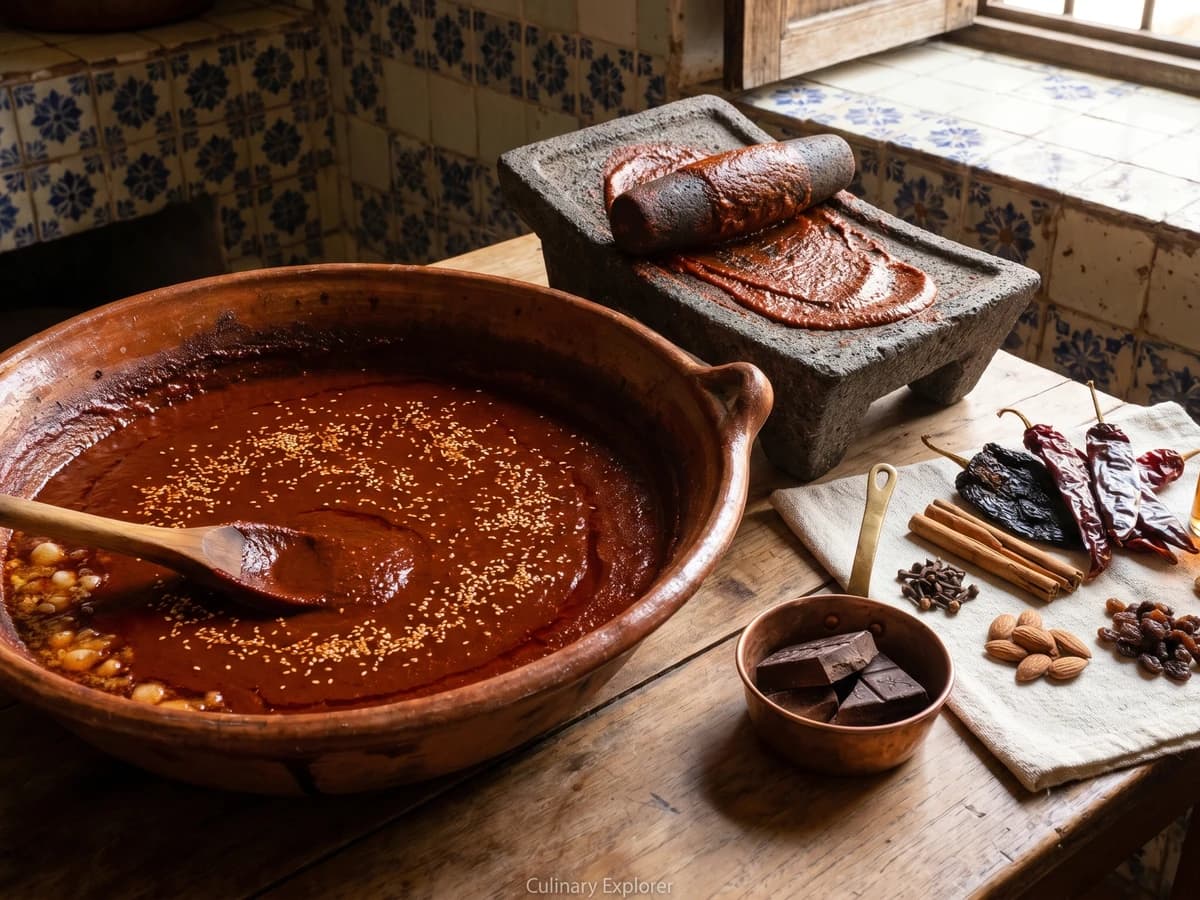
Puebla's convent kitchens built this adobo with ancho, guajillo, jerez, almonds, raisins, clove, and lard, a baroque marinade that stains pork loin and finishes as the sauce.

Updated May 31, 2026
The mole architecture as sauce, separated from the plate it dresses. Convent-register moles, pipianes, almendrado, nogada, conventual adobos and recados, escabeche poblano and verduras en escabeche. Each preparation carries the institutional provenance of a colonial-era convent or order: Santa Rosa, Santa Catalina, Santa Mónica, Santa Clara, the Augustinian, Dominican, Carmelite, and Conceptionist nuns who built this repertoire.
A cooking platform built around craft, culture, and the stories behind what we eat.
Chef Lupita
Puebla's convent kitchens built this adobo with ancho, guajillo, jerez, almonds, raisins, clove, and lard, a baroque marinade that stains pork loin and finishes as the sauce.

Chef Lupita
Puebla's Santa Clara almendrado is a conventual almond sauce built on ancho chile, toasted nuts, milk, spices, lard, and metate work.

Chef Lupita
Puebla's convent pantry escabeche, carrots, cauliflower, ejotes, onion, and chiles güeros held in olive oil, jerez vinegar, canela, clavo, and herbs until the jar tastes like Lent and feast day together.

Chef Lupita
Puebla's convent walnut sauce, pale and rich from fresh nuez de Castilla, goat cheese, milk, sherry, and canela, made in August when the walnuts still peel clean.

Chef Lupita
Puebla's convent recado for holiday stuffed turkey, ground from toasted ancho, almonds, raisins, canela, clavo, pimienta gorda, ajonjoli, manteca, and jerez into a baroque paste.

Chef Lupita
Puebla's convent pipián rojo, built from ancho, guajillo, pepita roja, almond, sesame, canela, and jerez, a mother sauce from the tiled kitchens where nuns made architecture in clay cazuelas.

Chef Lupita
Puebla's convent green pipián, a toasted pepita sauce from the talavera kitchens, sharpened with tomatillo and jalapeño, perfumed with hoja santa, and finished in lard and jerez.

Chef Lupita
Puebla's convent fruit mole, carried into Oaxaca's seven-mole language, stains the tablecloth with ancho, plantain, pineapple, apple, almonds, sherry, and chile-dark lard.
Chef Lupita
Zacatecas' wedding-table adobo, built from toasted guajillo and ancho, piloncillo, sour orange, chocolate, canela, clavo, almonds, sesame, and lard.

Chef Lupita
Puebla's convent escabeche of whole chiles, sealed in glass jars with vinegar, olive oil, garlic, laurel, comino, and the patience of women who preserved food before refrigeration.

Chef Lupita
Puebla's convent mole from Santa Rosa, built with ancho, mulato, pasilla, chocolate, almonds, raisins, sesame, canela, clavo, jerez, lard, and hours of patient grinding.

Chef Lupita
Oaxaca's conventual yellow mole is built from chilhuacle amarillo, hoja santa, masa, almonds, sesame, and jerez, a refectory sauce ground on the metate and simmered until it shines.

Chef Lupita
Oaxaca's darkest conventual mole, built from chilhuacle negro, toasted seeds, almonds, chocolate, jerez, and lard, then simmered until the sauce turns black, glossy, and serious.

Chef Lupita
Puebla's convent escabeche for roasted chiles poblanos, built with olive oil, vinegar, white onion, garlic, bay, thyme, marjoram, and peppercorns for the holiday table.

Chef Lupita
Oaxaca's Valles Centrales coloradito from the Santa Catalina convent register, a brick-red mole of chilhuacle rojo, ancho, almonds, sesame, canela, clove, raisins, jerez, and lard.

Chef Lupita
Puebla's Lenten convent adobo, a brick-red vinegar chile paste of ancho, guajillo, garlic, oregano, and comino made to dress fish for the meatless calendar.

Chef Lupita
Puebla's conventual recado for celebration stews, a metate-ground paste of ancho chile, almonds, sesame, saffron, clove, cinnamon, peppercorn, and jerez that needs two days to settle.
Culinary guides, cultural storytelling, and the editorial depth that makes cooking meaningful.
Discover Culinary ExplorerChef Lupita is a fictional culinary guide to Regional Mexican Cuisine, written with the assistance of AI.