
Chef Lupita
Aceite de Chiltepin Bajacaliforniano
Baja California's wild chiltepin steeped in olive oil with garlic, orejon, and lime peel, until the oil turns ruby-amber and carries the slow, sneaky burn of the desert coast.
A cooking platform built around craft, culture, and the stories behind what we eat.
Created by
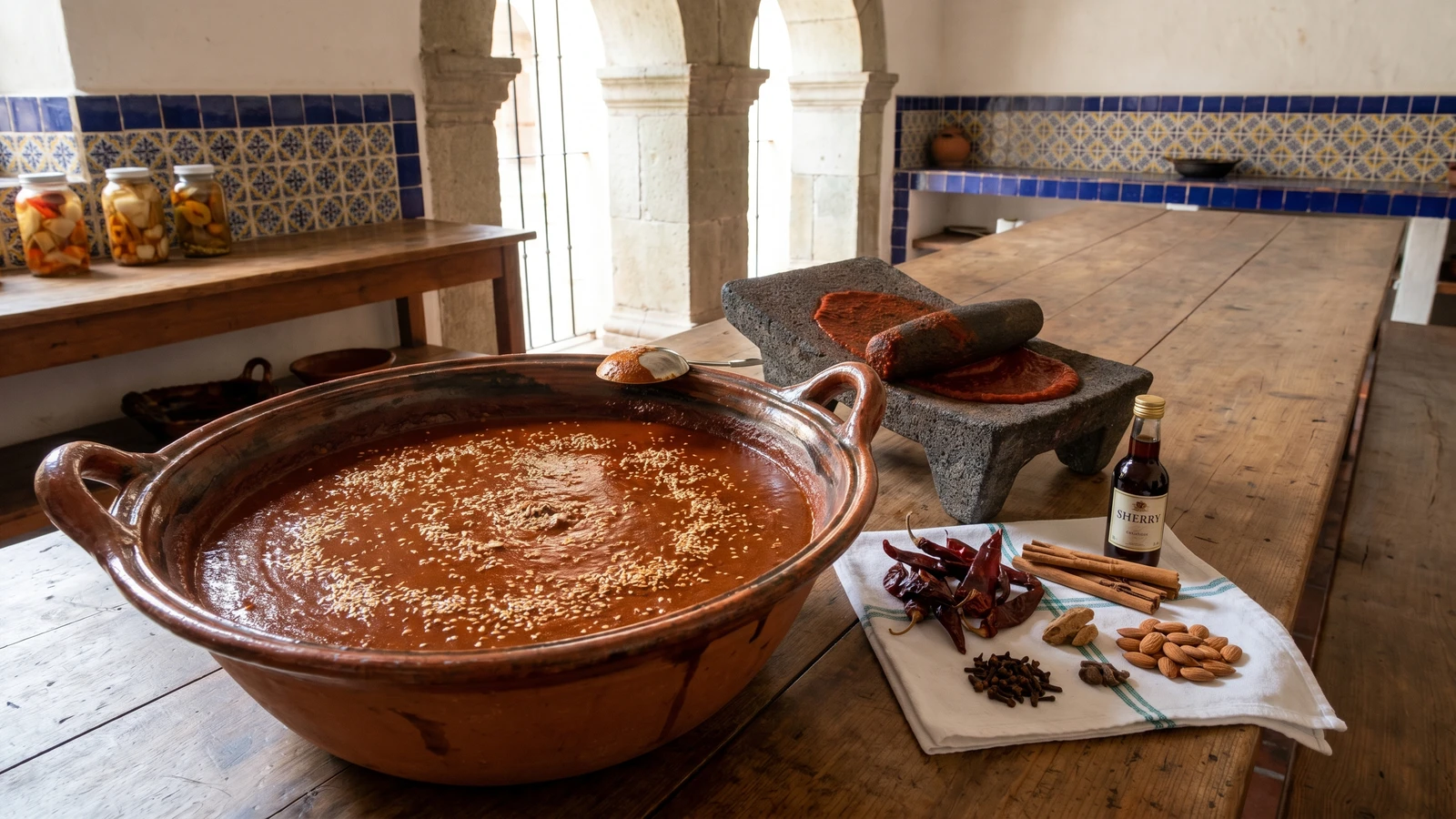
Oaxaca's Valles Centrales coloradito from the Santa Catalina convent register, a brick-red mole of chilhuacle rojo, ancho, almonds, sesame, canela, clove, raisins, jerez, and lard.
Oaxaca, Valles Centrales, is where this coloradito lives, with its convent voice tied to the Dominican kitchen of Santa Catalina de Siena. This is a sauce, not a plate. The turkey, chicken, pork, tamal, or vegetable it dresses belongs to another recipe. Here we are building the architecture.
The chile that gives this version its authority is chilhuacle rojo from the Oaxacan Canada trade routes, backed by ancho for sweetness, guajillo for brightness, and a little pasilla for depth. The convent register speaks through the Old World ingredients: almendra, ajonjoli, canela, clavo, pasas, bread, and jerez. Lighter than mole negro, deeper than a plain rojo. Baroque, yes, but not decorative. La cocina no es decoracion, es trabajo.
At the Central de Abastos in Oaxaca, the women selling chiles will tell you the truth faster than any cookbook. If the chilhuacle rojo is brittle and dusty, walk away. If it bends a little and smells like dried fruit, earth, and tobacco, buy it. My mother was from Jalisco, so she did not pretend this was hers. In her notebook she wrote only one line beside a Oaxacan mole recipe: ask the women who grind. She was right.
This takes two days because the paste needs to rest and the sauce needs a long simmer. El metate es la regla. A blender can help if your kitchen demands it, but do not confuse speed with the same result. Toast on the comal, grind patiently, fry in manteca until the fat rises. No me vengas con atajos. Asi se hace y punto.
The Convento de Santa Catalina de Siena in Oaxaca, founded for Dominican nuns in 1576, belongs to the colonial convent network that joined New World chiles and cacao with Old World almonds, bread, cinnamon, cloves, raisins, sesame, and fortified wine. Coloradito later became one of Oaxaca's seven named moles in the 20th-century regional shorthand, but the older conventual method is clear: toast on the comal, grind on the metate, fry the paste in lard, and simmer until the fat rises. Chilhuacle rojo, an heirloom chile associated with the Canada region around Cuicatlan, gives this preparation a brick-red depth that a guajillo-only sauce cannot imitate.
Quantity
6
wiped clean, stemmed, and seeded
Quantity
4
wiped clean, stemmed, and seeded
Quantity
2
wiped clean, stemmed, and seeded
Quantity
1
wiped clean, stemmed, and seeded
Quantity
1 teaspoon
toasted lightly
Quantity
as needed
for soaking the chiles
Quantity
8
Quantity
4
husked and rinsed
Quantity
1 medium
quartered
Quantity
8
unpeeled
Quantity
1 cup
divided
Quantity
1/2 cup
Quantity
1/3 cup, plus 2 tablespoons
extra reserved for finishing
Quantity
1/3 cup
Quantity
1
peeled and sliced
Quantity
1 small bolillo or 2 slices
torn
Quantity
2
torn
Quantity
1 stick, about 3 inches
Quantity
4
Quantity
6
Quantity
8
Quantity
1/2 teaspoon
Quantity
1 teaspoon
Quantity
1/2 teaspoon
Quantity
1/2 teaspoon
Quantity
2 ounces
chopped
Quantity
2 tablespoons
Quantity
2 tablespoons
Quantity
6 to 7 cups
hot
Quantity
2 teaspoons, plus more to taste
| Ingredient | Quantity |
|---|---|
| dried chile chilhuacle rojowiped clean, stemmed, and seeded | 6 |
| dried chile anchowiped clean, stemmed, and seeded | 4 |
| dried chile guajillowiped clean, stemmed, and seeded | 2 |
| dried chile pasilla mexicanowiped clean, stemmed, and seeded | 1 |
| reserved chile seeds (optional)toasted lightly | 1 teaspoon |
| warm waterfor soaking the chiles | as needed |
| plum tomatoes | 8 |
| medium tomatilloshusked and rinsed | 4 |
| white onionquartered | 1 medium |
| garlic clovesunpeeled | 8 |
| pork lard (manteca de cerdo)divided | 1 cup |
| blanched almonds | 1/2 cup |
| sesame seedsextra reserved for finishing | 1/3 cup, plus 2 tablespoons |
| raisins | 1/3 cup |
| small ripe plantainpeeled and sliced | 1 |
| day-old bolillo or pan de yematorn | 1 small bolillo or 2 slices |
| stale corn tortillastorn | 2 |
| Mexican canela | 1 stick, about 3 inches |
| whole cloves | 4 |
| whole allspice berries | 6 |
| black peppercorns | 8 |
| cumin seeds | 1/2 teaspoon |
| dried Mexican oregano | 1 teaspoon |
| dried thyme | 1/2 teaspoon |
| dried marjoram | 1/2 teaspoon |
| Oaxacan chocolate de metatechopped | 2 ounces |
| grated piloncillo | 2 tablespoons |
| dry sherry (jerez seco) | 2 tablespoons |
| light unsalted chicken or turkey stockhot | 6 to 7 cups |
| fine sea salt | 2 teaspoons, plus more to taste |
Wipe the chilhuacle rojo, ancho, guajillo, and pasilla with a barely damp cloth. Pull off the stems and shake out the seeds. Save one teaspoon of seeds if you want the older convent bitterness, but do not use more. Coloradito is not mole negro. Its depth should be brick-red and rounded, not black and severe.
Heat a dry comal over medium-low. Toast each chile separately, pressing it flat for a few seconds per side with a spatula. The chilhuacle rojo takes about 20 seconds per side, the ancho a little less, the guajillo faster, and the pasilla fastest of all. They should puff, shine, and smell like dried fruit and warm tobacco. If a chile blackens, throw it away. Burned chile makes bitter mole and there is no fixing it later.
Put the toasted chiles in a bowl and cover with hot water, not boiling water. Weight them with a small plate and let them soften for 25 minutes. Drain them and taste a spoonful of the soaking liquid. If it tastes bitter, discard it. If it tastes clean and fruity, save 1/2 cup for grinding. The chile flesh should be soft enough to smear between your fingers.
On the same comal, roast the tomatoes, tomatillos, onion, and unpeeled garlic. Turn them as they blister. The tomatoes should collapse at the edges, the tomatillos should turn olive with black freckles, the onion should char at the corners, and the garlic should soften inside its skin. Peel the garlic once it is cool enough to handle.
Melt 1/4 cup of the lard in a small cazo or heavy skillet over medium. Fry the almonds until pale gold, then lift them out. Fry the raisins just until they swell. Fry the plantain slices until amber at the edges. Fry the torn bolillo and tortillas until firm and golden. Add the sesame seeds last and stir for 30 to 45 seconds, just until nutty. Keep each ingredient separate as it comes out. The convent cooks understood order. You should too.
Wipe out the skillet. Toast the canela, cloves, allspice, peppercorns, cumin, oregano, thyme, and marjoram over low heat until fragrant, about 45 seconds. If you kept chile seeds, toast them now only until amber, never black. Spices are small and arrogant. Look away and they punish the whole cazuela.
Work on the metate in stages. Grind the spices first with the sesame and almonds until fine. Add the soaked chiles and work them into a thick red paste. Add the roasted tomatoes, tomatillos, onion, garlic, raisins, plantain, bread, and tortillas, grinding until the paste is heavy, smooth, and brick-colored. If you must use a blender, blend in small batches with just enough hot stock or saved soaking liquid to move the blades, then pass the mixture through a medium sieve. That is the compromise. El metate es la regla.
Scrape the mole paste into a nonreactive bowl, press a piece of parchment or plastic directly on the surface, and refrigerate overnight. This is not dead time. The chiles, nuts, fruit, bread, and spices settle into each other. Convent cooking was planned cooking. A baroque sauce is not a quick project.
The next day, heat the remaining 3/4 cup lard in a wide barro rojo cazuela or heavy Dutch oven over medium. Add the mole paste carefully. It will sputter, so use a long wooden spoon and stand back from the first jump. Fry 25 to 35 minutes, stirring constantly across the bottom, until the paste darkens, smells toasted rather than raw, and the lard begins to separate at the edges. La manteca es el sabor.
Add 6 cups hot stock slowly, one ladle at a time, stirring until each addition is absorbed before adding the next. Once the sauce loosens, reduce the heat to low and simmer uncovered for 2 1/2 to 3 hours, stirring every few minutes so the bottom does not catch. Add more stock as needed. The sauce should move like heavy cream and coat the spoon in a red-brown layer.
Stir in the chopped Oaxacan chocolate, piloncillo, jerez, and salt. Simmer 20 minutes more. Taste with a warm tortilla, not with a metal spoon. You should taste chile first, then almond and sesame, then the warmth of canela and clove, with the jerez sitting quietly in the back. If it tastes sweet before it tastes like chile, you used too much sugar. Correct with salt and a longer simmer.
Keep the mole warm in the cazuela and finish with the reserved toasted sesame seeds only when the sauce goes to the table. This sauce dresses poached turkey, chicken, pork, vegetables, tamales, or enchiladas, but those dishes live elsewhere. Do not bury the coloradito under garnishes. Let the sauce speak. Recetas probadas y garantizadas.
1 serving (about 225g)
Culinary guides, cultural storytelling, and the editorial depth that makes cooking meaningful.
Discover Culinary ExplorerChef Lupita
Baja California's wild chiltepin steeped in olive oil with garlic, orejon, and lime peel, until the oil turns ruby-amber and carries the slow, sneaky burn of the desert coast.

Chef Lupita
Puebla's Lenten convent adobo, a brick-red vinegar chile paste of ancho, guajillo, garlic, oregano, and comino made to dress fish for the meatless calendar.
Chef Lupita
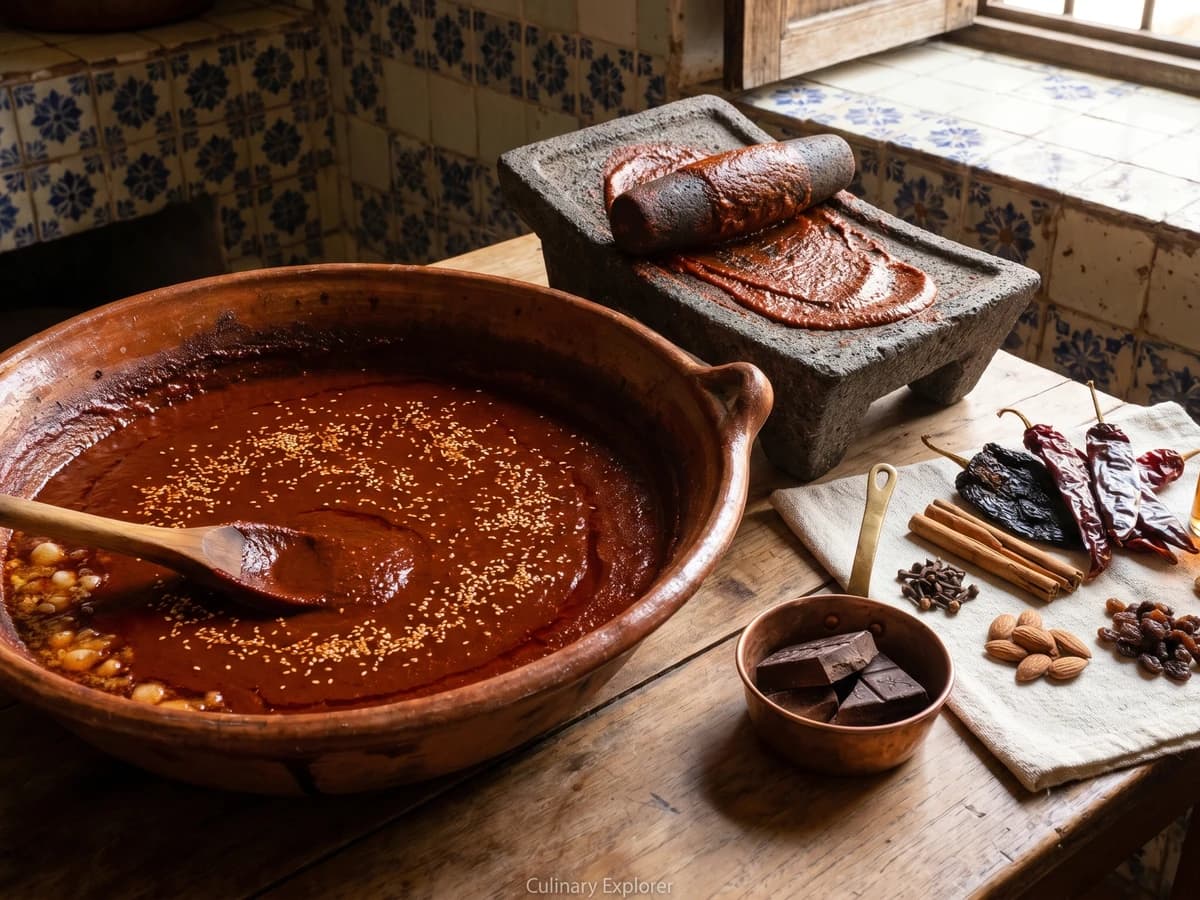
Zacatecas' wedding-table adobo, built from toasted guajillo and ancho, piloncillo, sour orange, chocolate, canela, clavo, almonds, sesame, and lard.

Chef Lupita
Puebla's convent kitchens built this adobo with ancho, guajillo, jerez, almonds, raisins, clove, and lard, a baroque marinade that stains pork loin and finishes as the sauce.