
Chef Lupita
Aceite de Chiltepin Bajacaliforniano
Baja California's wild chiltepin steeped in olive oil with garlic, orejon, and lime peel, until the oil turns ruby-amber and carries the slow, sneaky burn of the desert coast.
A cooking platform built around craft, culture, and the stories behind what we eat.

Created by
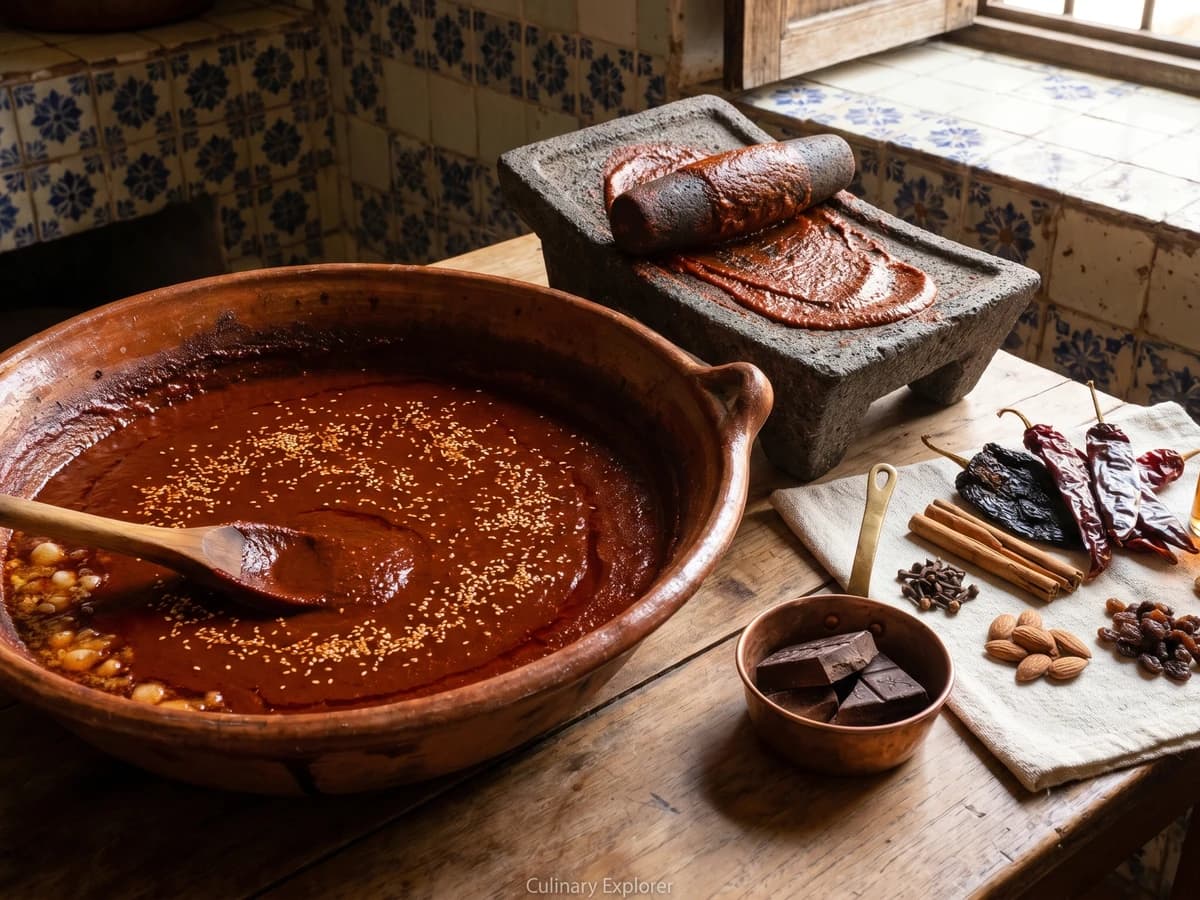
Puebla's convent kitchens built this adobo with ancho, guajillo, jerez, almonds, raisins, clove, and lard, a baroque marinade that stains pork loin and finishes as the sauce.
Puebla, the Angelopolis and its convent belt, owns this adobo. It belongs to the criollo-conventual kitchen around Santa Rosa, Santa Clara, Santa Monica, and Santa Catalina, where nuns worked with New Spain's two pantries at once: chile from here, jerez and spices from there. This is not a table salsa. This is the sauce that prepares the lomo mechado before that meat goes to its own recipe.
The chiles are ancho and guajillo. Ancho gives raisin-dark sweetness. Guajillo gives red color and a clean edge. The conventual register comes from almendra, pasas, canela, clavo, ajonjoli, and jerez. You toast on the comal, you soak without boiling, you grind until smooth. El metate es la regla. A blender can help you, but it cannot excuse laziness.
I saw a version like this in a Puebla family notebook copied from a convent recipe collection, with one line in the margin: 'freir bien en manteca antes de untar.' Fry it well in lard before spreading. My mother would have nodded. La manteca es el sabor. If you put raw chile paste on pork and call it adobo, no me vengas con atajos. This sauce needs one day to season and one more to do its work.
Puebla's convent kitchens, especially the Dominican convent of Santa Rosa and the Clarissan convent of Santa Clara, shaped the baroque sweet-spiced sauces of New Spain from the 17th century forward. Adobos for stuffed pork loin belong to the same criollo register as mole poblano: native dried chiles ground with Old World almonds, cinnamon, cloves, raisins, sesame, vinegar, and fortified wine. The exact lomo mechado formulas were often preserved in convent manuscript books and later family notebooks, so the historical record points to Puebla's convent system more than to one single named nun.
Quantity
6
stemmed, seeded, and wiped clean
Quantity
8
stemmed, seeded, and wiped clean
Quantity
2
stemmed, seeded, and wiped clean
Quantity
1/2 cup
Quantity
1/4 cup, plus 1 tablespoon
extra tablespoon for finishing if served separately
Quantity
1/3 cup
Quantity
4
unpeeled
Quantity
1/2 medium
cut into thick slices
Quantity
1 small
torn into pieces
Quantity
1 slice
torn into pieces
Quantity
1 inch
Quantity
4
Quantity
4
Quantity
1/2 teaspoon
Quantity
1/4 teaspoon
Quantity
1/2 cup
Quantity
1/4 cup
Quantity
1 1/2 cups, plus more as needed
Quantity
3 tablespoons
Quantity
1 1/2 teaspoons, plus more to taste
Quantity
1 teaspoon
grated, only if the chiles taste harsh
| Ingredient | Quantity |
|---|---|
| dried chile anchostemmed, seeded, and wiped clean | 6 |
| dried chile guajillostemmed, seeded, and wiped clean | 8 |
| dried chile mulatostemmed, seeded, and wiped clean | 2 |
| blanched almonds | 1/2 cup |
| sesame seedsextra tablespoon for finishing if served separately | 1/4 cup, plus 1 tablespoon |
| raisins | 1/3 cup |
| garlic clovesunpeeled | 4 |
| white onioncut into thick slices | 1/2 medium |
| corn tortillatorn into pieces | 1 small |
| bolillo or white breadtorn into pieces | 1 slice |
| Mexican cinnamon stick | 1 inch |
| whole cloves | 4 |
| black peppercorns | 4 |
| dried Mexican oregano | 1/2 teaspoon |
| dried thyme | 1/4 teaspoon |
| dry jerez or Mexican sherry-style wine | 1/2 cup |
| apple cider vinegar | 1/4 cup |
| hot chicken or pork broth | 1 1/2 cups, plus more as needed |
| pork lard | 3 tablespoons |
| kosher salt | 1 1/2 teaspoons, plus more to taste |
| piloncillo (optional)grated, only if the chiles taste harsh | 1 teaspoon |
Open the ancho, guajillo, and mulato chiles with kitchen scissors. Remove stems, seeds, and thick veins. Wipe the skins with a damp cloth. Do not rinse them under water. You are removing dust, not washing away the oils that give the adobo its body.
Heat a dry comal over medium. Toast the chiles one or two at a time, pressing them flat for a few seconds per side until the skin darkens slightly and smells deep, sweet, and smoky. The guajillo burns first, so watch it. If a chile turns black, throw it away. Burned chile makes bitter sauce and there is no fixing it later.
Put the toasted chiles in a bowl and cover with hot broth. Hot, not boiling. Let them soften for 25 minutes, turning once so every piece hydrates. Boiling water toughens the skins and pulls bitterness forward. The chile flesh should bend easily between your fingers.
On the same comal, toast the almonds until golden in spots, then the sesame seeds until they smell nutty. Toast the cinnamon, cloves, and peppercorns for 20 to 30 seconds, just until fragrant. Toast the tortilla and bread until dry and spotted brown. Roast the garlic in its skin and the onion slices until softened and charred at the edges. This is Puebla's convent pantry waking up.
Put the raisins in a small bowl with the jerez and vinegar. Let them sit 15 minutes while the chiles finish soaking. The raisins swell and the wine takes their sweetness. That sweet-acid balance is what makes this adobo fit pork loin instead of fighting it.
Peel the roasted garlic. Grind the spices first on the metate or in a spice grinder, then work in the almonds, sesame, tortilla, bread, raisins with their soaking liquid, onion, garlic, oregano, thyme, soaked chiles, and enough chile soaking broth to move the paste. If using a blender, blend in batches until completely smooth. Not almost smooth. Smooth. A conventual adobo should coat the back of a spoon like velvet.
Pass the paste through a fine-mesh strainer into a bowl, pressing hard with a spoon. Scrape the underside of the strainer. The skins stay behind. This step is tedious. Good. La cocina no es decoración, es trabajo.
Heat the lard in a barro rojo cazuela or heavy pot over medium. Add the strained adobo carefully. It will sputter. Stir with a wooden spoon for 12 to 15 minutes, until the color deepens to brick red and the fat begins to shine at the edges. La manteca es el sabor. Raw adobo tastes like separate ingredients. Fried adobo becomes one sauce.
Add enough broth to make a thick marinade, usually 1/2 to 1 cup more. Stir in the salt and simmer gently for 30 to 40 minutes, scraping the bottom often. Taste. If the chiles are harsh, add the grated piloncillo. Do not make it sweet. You are rounding the bitterness, not making candy.
Cool the adobo completely. Cover and refrigerate overnight. The next day, use it to coat and marinate a mechado pork loin, or thin it with broth and finish it as the sauce after the meat braises. The marinade becomes the sauce on the plate. That is the point. Recetas probadas y garantizadas.
1 serving (about 120g)
Culinary guides, cultural storytelling, and the editorial depth that makes cooking meaningful.
Discover Culinary ExplorerChef Lupita
Baja California's wild chiltepin steeped in olive oil with garlic, orejon, and lime peel, until the oil turns ruby-amber and carries the slow, sneaky burn of the desert coast.

Chef Lupita
Puebla's Lenten convent adobo, a brick-red vinegar chile paste of ancho, guajillo, garlic, oregano, and comino made to dress fish for the meatless calendar.
Chef Lupita
Zacatecas' wedding-table adobo, built from toasted guajillo and ancho, piloncillo, sour orange, chocolate, canela, clavo, almonds, sesame, and lard.

Chef Lupita
Guerrero's coast gives this adobo its authority: guajillo, pasilla mexicano, morita, chile costeño, garlic, vinegar, and fire, ground into the paste that belongs on butterflied fish.