
Chef Lupita
Aceite de Chiltepin Bajacaliforniano
Baja California's wild chiltepin steeped in olive oil with garlic, orejon, and lime peel, until the oil turns ruby-amber and carries the slow, sneaky burn of the desert coast.
A cooking platform built around craft, culture, and the stories behind what we eat.

Created by
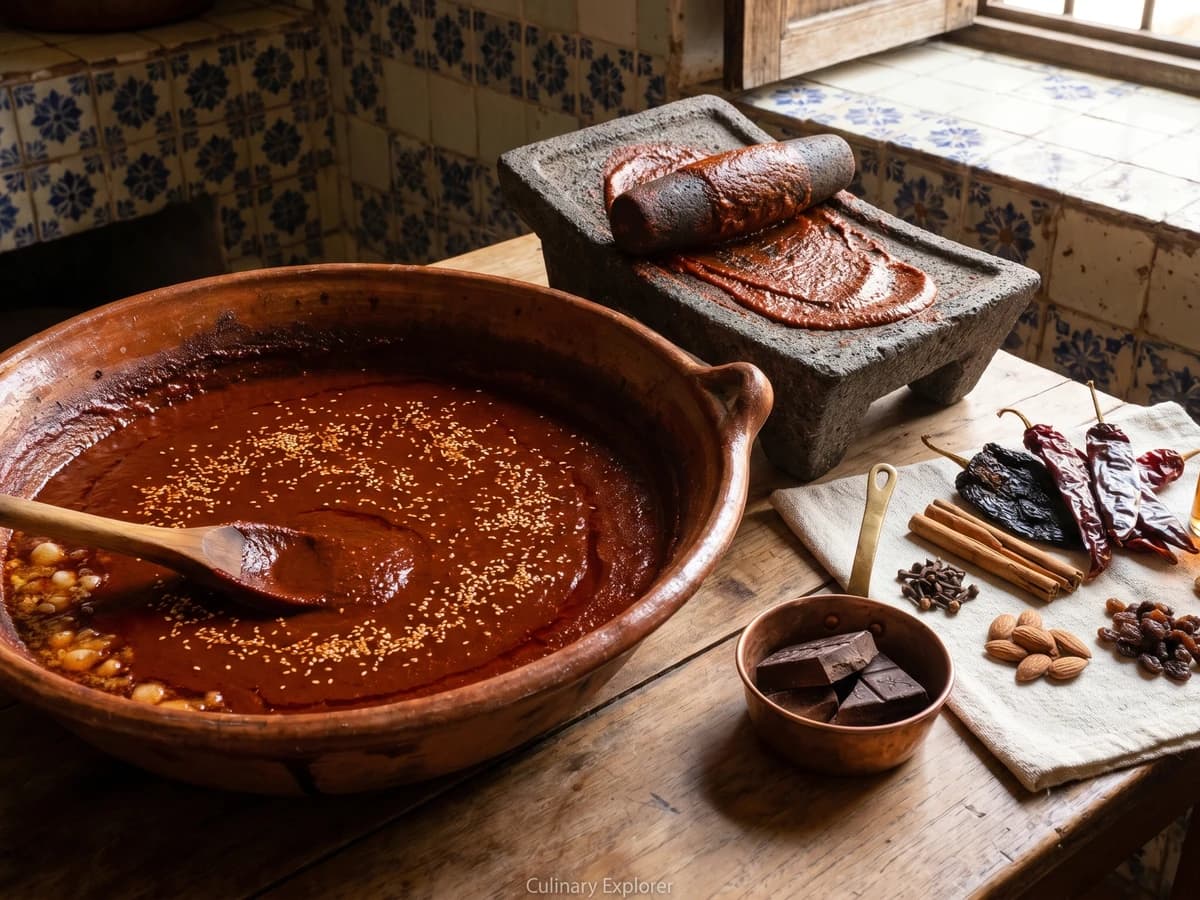
Puebla's Santa Clara almendrado is a conventual almond sauce built on ancho chile, toasted nuts, milk, spices, lard, and metate work.
Puebla, in the convent kitchens of the historic center, is where this almendrado belongs. Santa Clara means the Clarisas, women who cooked behind walls but shaped the public taste of the city: almonds from the Iberian pantry, chile ancho from Mexican soil, canela, clavo, pasas, ajonjoli, milk, and jerez brought into one disciplined sauce.
This is a sauce, not the whole plate. It dresses poultry, pork, or festive guajolote elsewhere in the meal, but here we respect the architecture itself. The chile ancho gives color and body, not brute heat. The almonds give the sauce its pale gold weight. The milk softens the edges. The lard carries everything. La manteca es el sabor, and in Puebla's conventual kitchen that was understood without speeches.
El metate es la regla. A blender can help you in a modern kitchen, but the standard is still the volcanic stone paste: smooth, heavy, patient. Toast each ingredient separately on the comal. Grind without laziness. Fry the paste until the fat separates and then let it simmer until it moves like satin from a wooden spoon. No me vengas con atajos. A baroque sauce is work, and that work is the point.
When I teach this at Cocina del Pueblo, I tell students to look at the sauce before tasting it. If it is thin, you rushed. If it tastes raw, you didn't fry the paste. If it tastes dusty, your almonds were old. Preguntale a las senoras del mercado. They know which almond is alive and which one has been sleeping in a sack too long. Saber cocinar es saber vivir.
The Convento de Santa Clara in Puebla belonged to the Poor Clare nuns, the Clarisas, whose enclosed kitchens helped define Puebla's conventual cooking from the colonial period onward. Almond-based sauces came from Iberian and Arab-Andalusian culinary inheritance, then changed in New Spain through chile ancho, sesame, lard, and metate grinding. Puebla's better-known Santa Rosa kitchen made mole poblano famous, but Santa Clara's record belongs to the same conventual register: sweet-savory sauces, careful spice work, and Old World ingredients translated through Mexican technique.
Quantity
4
stemmed and seeded
Quantity
1 cup
Quantity
2 tablespoons, plus 1 teaspoon
for grinding and finishing
Quantity
1/4 cup
Quantity
1
sliced
Quantity
3
peeled
Quantity
1 bolillo or 2 slices
torn into pieces
Quantity
1
torn into pieces
Quantity
3 tablespoons
divided
Quantity
2 cups
warmed
Quantity
2 cups
warmed
Quantity
1/4 cup
Quantity
1 small stick, about 3 inches
Quantity
3
Quantity
6
Quantity
1/4 teaspoon
Quantity
1/8 teaspoon
Quantity
1 teaspoon, plus more to taste
Quantity
1 teaspoon
only if the chiles taste harsh
| Ingredient | Quantity |
|---|---|
| dried chile anchostemmed and seeded | 4 |
| blanched almonds | 1 cup |
| white sesame seeds (ajonjoli)for grinding and finishing | 2 tablespoons, plus 1 teaspoon |
| raisins | 1/4 cup |
| small white onionsliced | 1 |
| garlic clovespeeled | 3 |
| small bolillo or stale white breadtorn into pieces | 1 bolillo or 2 slices |
| corn tortillatorn into pieces | 1 |
| pork lard (manteca de cerdo)divided | 3 tablespoons |
| whole milkwarmed | 2 cups |
| light chicken stock or turkey stockwarmed | 2 cups |
| dry jerez | 1/4 cup |
| Mexican canela stick | 1 small stick, about 3 inches |
| whole cloves | 3 |
| black peppercorns | 6 |
| anise seed | 1/4 teaspoon |
| freshly grated nutmeg | 1/8 teaspoon |
| kosher salt | 1 teaspoon, plus more to taste |
| piloncillo or dark brown sugar (optional)only if the chiles taste harsh | 1 teaspoon |
Heat a dry comal over medium. Toast the ancho chiles one at a time, about 20 to 30 seconds per side, pressing them flat with a spatula until the skin softens, darkens slightly, and smells like dried fruit and tobacco. Do not blacken them. Burned ancho turns bitter and will bully the almonds.
Put the toasted chiles in a bowl and cover with hot water, not boiling water. Let them soften for 20 minutes. Drain them and discard the soaking water if it tastes bitter. If it tastes clean and fruity, save 1/4 cup in case the paste needs help moving on the metate or in the blender.
On the same comal, toast the almonds until they take on pale gold spots and smell sweet, 4 to 6 minutes. Move them constantly. Toast the sesame seeds separately until golden, about 1 minute. Toast the canela, cloves, peppercorns, and anise for 30 seconds, just until fragrant. Each ingredient has its own time. Treat them all the same and you will burn something.
Melt 1 tablespoon of lard in a cazuela or heavy skillet over medium heat. Fry the torn bolillo and tortilla until golden and crisp at the edges. Remove them to a plate. In the same fat, cook the onion and garlic until the onion softens and takes a little color. This gives body to the sauce and keeps the paste from tasting raw.
Add the raisins to the warm skillet for 30 to 45 seconds, only until they swell and shine. Do not scorch them. Raisins in Puebla's conventual sauces are not candy. They are a quiet sweetness that rounds the chile and almond.
Grind the almonds, sesame, spices, fried bread, tortilla, onion, garlic, raisins, soaked ancho chiles, salt, and nutmeg on a metate until you have a thick, smooth paste. Work in small amounts and scrape often. If using a blender, add just enough warm milk and stock to move the blades, then blend longer than you think you need. Grainy almendrado is unfinished work.
Melt the remaining 2 tablespoons lard in a wide clay cazuela over medium-low heat. Add the almond-chile paste carefully. It will sputter because the paste is thick. Stir with a wooden spoon for 12 to 15 minutes, until the color deepens from pale brick to warm ocher and the fat begins to glisten at the edges. This frying is where the sauce becomes serious.
Whisk in the warm milk little by little, then the warm stock. Add the jerez. Lower the heat and simmer gently for 45 to 60 minutes, stirring often so the almond does not catch on the bottom. The sauce should thicken enough to coat the spoon and fall back into the cazuela in a slow ribbon. If it tightens too much, loosen with warm stock, not cold water.
Taste for salt. If the ancho tastes harsh instead of fruity, add the teaspoon of piloncillo and simmer 5 minutes more. Strain only if you failed to grind it smooth. A proper almendrado should have body, not grit. Rest the sauce 30 minutes before serving so the almond, chile, milk, and spices settle into one flavor.
Spoon the sauce into a warm Puebla talavera serving bowl or keep it in the clay cazuela. Scatter the reserved toasted sesame seeds over the surface. Serve as a sauce for the appropriate festive main dish, not as a soup, not as a dip, and not as decoration. Asi se hace y punto.
1 serving (about 120g)
Culinary guides, cultural storytelling, and the editorial depth that makes cooking meaningful.
Discover Culinary ExplorerChef Lupita
Baja California's wild chiltepin steeped in olive oil with garlic, orejon, and lime peel, until the oil turns ruby-amber and carries the slow, sneaky burn of the desert coast.

Chef Lupita
Puebla's Lenten convent adobo, a brick-red vinegar chile paste of ancho, guajillo, garlic, oregano, and comino made to dress fish for the meatless calendar.
Chef Lupita
Zacatecas' wedding-table adobo, built from toasted guajillo and ancho, piloncillo, sour orange, chocolate, canela, clavo, almonds, sesame, and lard.

Chef Lupita
Puebla's convent kitchens built this adobo with ancho, guajillo, jerez, almonds, raisins, clove, and lard, a baroque marinade that stains pork loin and finishes as the sauce.