
Chef Lupita
Aceite de Chiltepin Bajacaliforniano
Baja California's wild chiltepin steeped in olive oil with garlic, orejon, and lime peel, until the oil turns ruby-amber and carries the slow, sneaky burn of the desert coast.
A cooking platform built around craft, culture, and the stories behind what we eat.
Created by
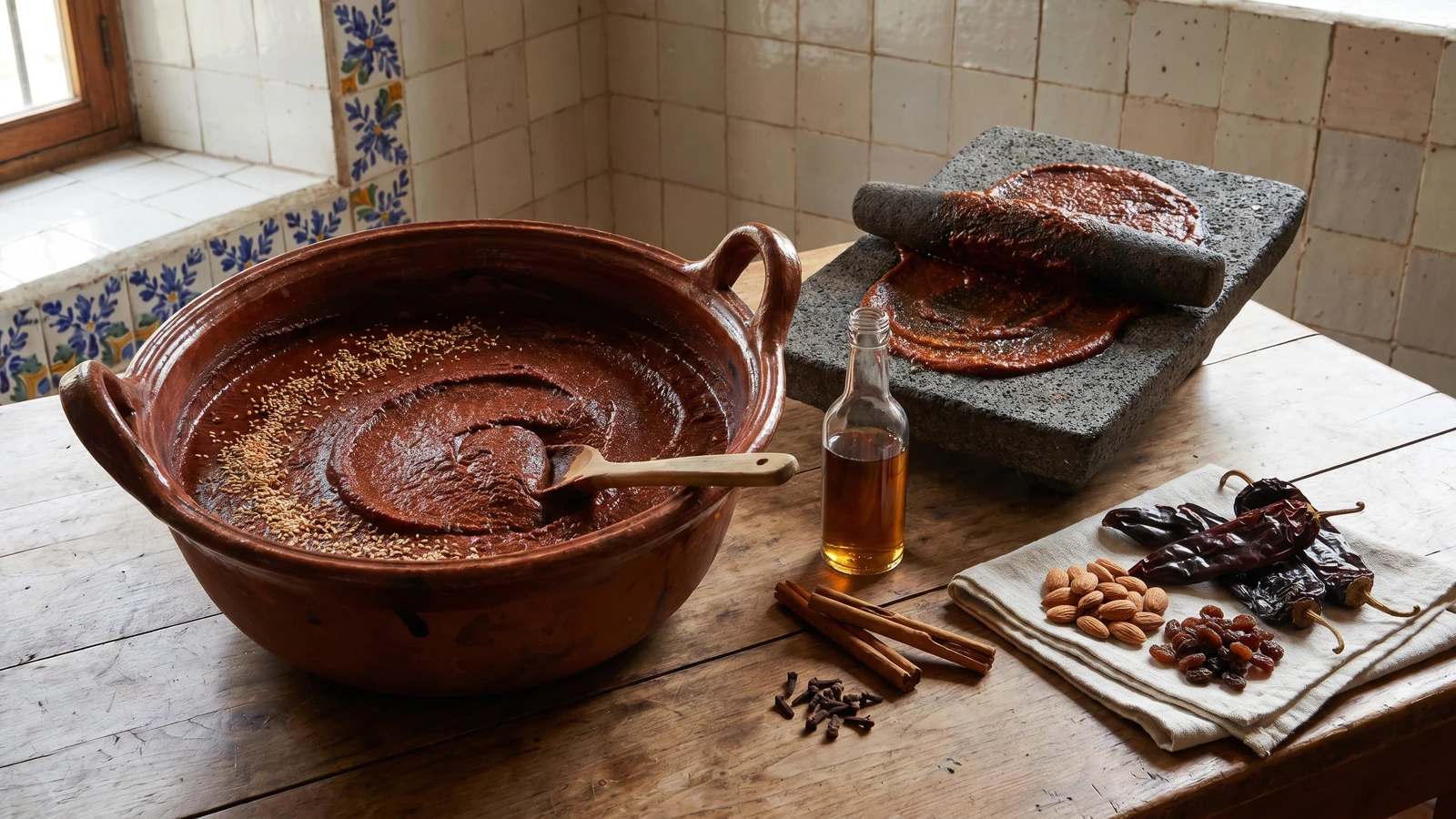
Puebla's convent recado for holiday stuffed turkey, ground from toasted ancho, almonds, raisins, canela, clavo, pimienta gorda, ajonjoli, manteca, and jerez into a baroque paste.
Puebla, the Angelopolis, is where this recado belongs: the convent kitchens behind talavera walls, the barro cazuelas blackened at the base, the metate waiting on the table like a tool and a warning. This is not the turkey itself. This is the paste that dresses it, stains it, perfumes the stuffing, and tells you the dish comes from the criollo-conventual table of central Mexico.
The chile here is ancho, dark, sweet, and raisiny, with a little mulato for depth if your chile vendor has good ones. The Old World speaks through almendra, canela, clavo, pasas, ajonjoli, pimienta gorda, and jerez. The American table answers with turkey, chile, tomato, and the metate. That is the architecture. Not decoration. Work.
I learned this register in Puebla by asking the women who still cook from copied convent notebooks, not from restaurant menus. They will tell you what the nuns already knew: toast every ingredient separately, grind patiently, fry the paste in lard until the fat rises, then let it rest overnight. La manteca es el sabor. El metate es la regla. A blender can help if your hands are tired, but the paste still has to become paste, not sauce. No me vengas con atajos.
Use this recado to marinate and baste a stuffed turkey for Christmas or a patron saint feast. It should taste sweet, dark, spiced, and serious, not hot. Puebla's convent cooking was baroque because it understood balance, abundance, and discipline. Cada estado, su propia cocina.
Puebla's convent kitchens, especially Santa Rosa de Lima, Santa Monica, Santa Clara, and Santa Catalina de Siena, helped codify the baroque criollo style between the 17th and 18th centuries, blending native chiles and turkey with Spanish almonds, raisins, cinnamon, cloves, sesame, and fortified wines. The famous mole poblano legend tied to Santa Rosa is debated, but the documented convent register of Puebla clearly favored complex ground sauces for turkey, capon, and festive meats. Recados like this one belong to that same historical system: a seasoning architecture made on the metate before it ever touched the bird.
Quantity
8
stemmed, seeded, and wiped clean
Quantity
2
stemmed, seeded, and wiped clean
Quantity
3 medium
Quantity
1 small
quartered
Quantity
6
unpeeled
Quantity
1/2 cup
Quantity
1/3 cup
Quantity
1/4 cup, plus 1 tablespoon for finishing if using as a table sauce
Quantity
2
torn into pieces and dried overnight
Quantity
1
sliced and dried overnight
Quantity
1 small
peeled and sliced
Quantity
1 inch
Quantity
4
Quantity
6
Quantity
8
Quantity
1/2 teaspoon
Quantity
1/4 teaspoon
Quantity
1/8 teaspoon
Quantity
1/3 cup
Quantity
1/2 cup
Quantity
2 cups
warm
Quantity
1 tablespoon
grated
Quantity
1 1/2 teaspoons, plus more to taste
Quantity
2 tablespoons
| Ingredient | Quantity |
|---|---|
| dried chile anchostemmed, seeded, and wiped clean | 8 |
| dried chile mulatostemmed, seeded, and wiped clean | 2 |
| Roma tomatoes | 3 medium |
| white onionquartered | 1 small |
| garlic clovesunpeeled | 6 |
| blanched almonds | 1/2 cup |
| raisins | 1/3 cup |
| sesame seeds | 1/4 cup, plus 1 tablespoon for finishing if using as a table sauce |
| corn tortillastorn into pieces and dried overnight | 2 |
| bolillo or small white rollsliced and dried overnight | 1 |
| ripe plantainpeeled and sliced | 1 small |
| Mexican canela stick | 1 inch |
| whole cloves | 4 |
| whole allspice berries | 6 |
| black peppercorns | 8 |
| dried Mexican oregano | 1/2 teaspoon |
| dried thyme | 1/4 teaspoon |
| anise seed | 1/8 teaspoon |
| pork lard | 1/3 cup |
| dry jerez | 1/2 cup |
| turkey stock or chicken stockwarm | 2 cups |
| piloncillograted | 1 tablespoon |
| kosher salt | 1 1/2 teaspoons, plus more to taste |
| apple cider vinegar | 2 tablespoons |
The night before, tear the tortillas and slice the bolillo. Leave them uncovered on a tray so they dry. This matters. Fresh bread drinks fat and turns heavy. Dry bread toasts cleanly and gives the recado body without making it pasty in the wrong way.
Heat a dry comal over medium. Toast the ancho chiles one at a time, about 20 to 30 seconds per side, just until the skin puffs and smells sweet. Toast the mulatos even more carefully because they burn faster. If a chile blackens, throw it out. Burned chile will make the whole recado bitter and no amount of jerez will save it.
Put the toasted chiles in a bowl and cover them with hot water, not boiling water. Let them soften for 25 minutes, then drain. Taste a spoonful of the soaking water. If it is bitter, discard it. If it tastes clean and fruity, save half a cup in case the paste needs help moving on the metate or in the blender.
On the same comal, roast the tomatoes, onion, and unpeeled garlic until the tomato skins blister, the onion edges char, and the garlic softens in its skin. Peel the garlic. This is where the recado begins to taste cooked before it reaches the cazuela.
Lower the heat slightly. Toast the almonds until golden in spots, then remove them. Toast the sesame seeds until they turn pale gold and smell nutty. Toast the raisins only until they puff. Do each one separately. The nuns did not put everything on the comal at once and hope for the best. They knew better.
Melt 2 tablespoons of the lard in a small skillet. Fry the dried tortilla pieces, bolillo slices, and plantain slices in batches until golden. Drain them on brown paper or a rack. The bread and tortilla thicken the paste. The plantain rounds the chile and spice without making the recado taste like dessert.
Return the dry comal to low heat. Toast the canela, cloves, allspice, peppercorns, oregano, thyme, and anise seed for 30 to 45 seconds, moving them constantly. Stop when the spices smell alive. Grind them first in a spice mill or on the metate until fine. Whole clove hiding in a recado is bad work.
On a metate, grind the chiles with the tomatoes, onion, garlic, almonds, sesame, raisins, fried bread, tortilla, plantain, and ground spices. Work in small additions and scrape often. You want a thick, smooth paste that holds its shape on a spoon. If using a blender, blend in batches with just enough warm stock to move the blades. Do not drown it. This is a recado, not a soup.
Heat the remaining lard in a wide barro rojo cazuela or heavy Dutch oven over medium. Add the ground paste carefully. It will sputter. Stir with a wooden spoon for 20 to 25 minutes, scraping the bottom, until the paste darkens, thickens, and the fat begins to show at the edges. La manteca es el sabor. This frying step locks the chile, nuts, bread, and spices into one flavor.
Add the jerez and stir until its sharp alcohol smell softens. Add 1 1/2 cups warm stock, the piloncillo, salt, and vinegar. Simmer gently for 30 to 40 minutes, stirring often, until the recado is glossy, thick, and spreadable. It should coat the spoon heavily. Taste for salt. The flavor should be sweet-spiced, dark with chile, and balanced by vinegar, not sugary.
Scrape the recado into a glass or glazed clay container. Press parchment directly against the surface and refrigerate overnight. The chile, jerez, canela, clove, and almonds need time to settle into each other. Use it the next day to rub under and over the skin of a stuffed turkey, loosened with a little stock for basting as the bird roasts. Recetas probadas y garantizadas.
1 serving (about 105g)
Culinary guides, cultural storytelling, and the editorial depth that makes cooking meaningful.
Discover Culinary ExplorerChef Lupita
Baja California's wild chiltepin steeped in olive oil with garlic, orejon, and lime peel, until the oil turns ruby-amber and carries the slow, sneaky burn of the desert coast.

Chef Lupita
Puebla's Lenten convent adobo, a brick-red vinegar chile paste of ancho, guajillo, garlic, oregano, and comino made to dress fish for the meatless calendar.
Chef Lupita
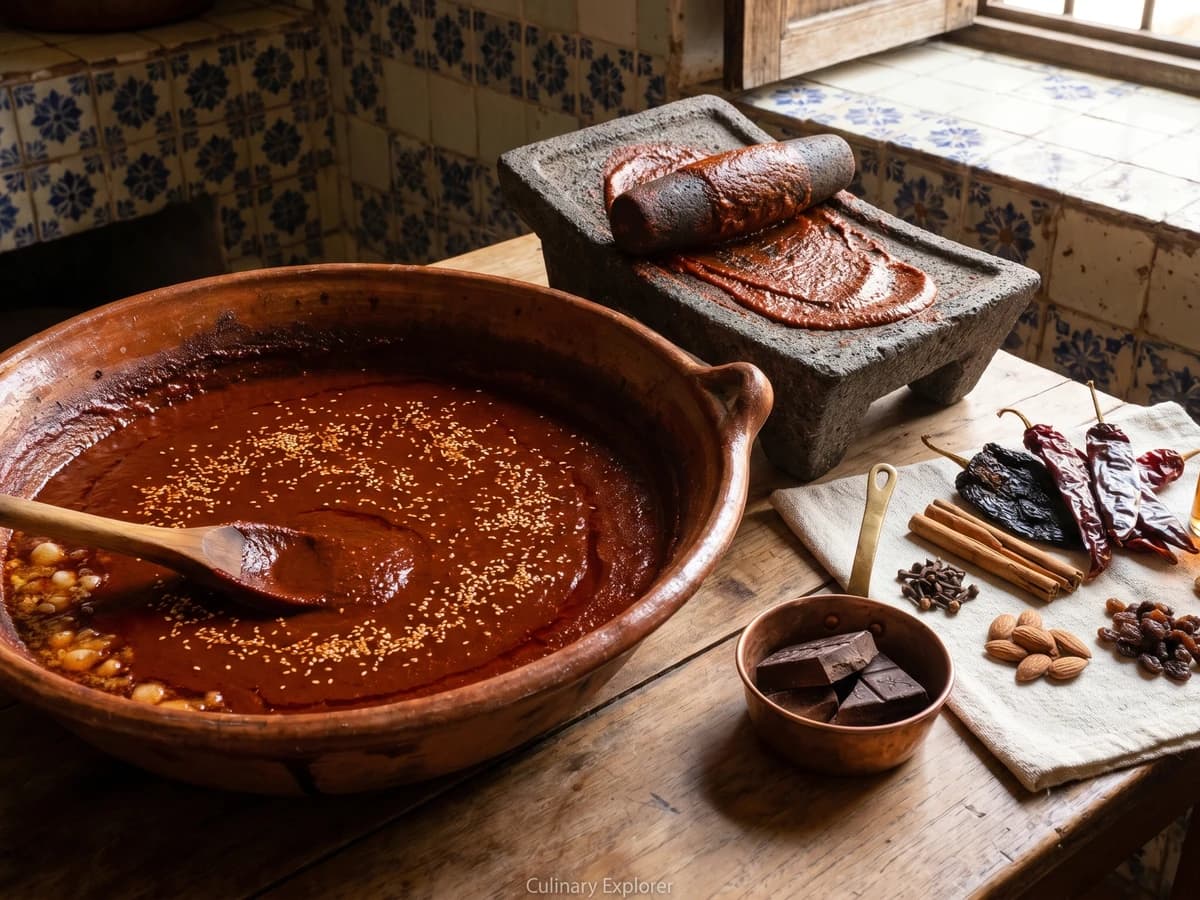
Zacatecas' wedding-table adobo, built from toasted guajillo and ancho, piloncillo, sour orange, chocolate, canela, clavo, almonds, sesame, and lard.

Chef Lupita
Puebla's convent kitchens built this adobo with ancho, guajillo, jerez, almonds, raisins, clove, and lard, a baroque marinade that stains pork loin and finishes as the sauce.