
Chef Lupita
Aceite de Chiltepin Bajacaliforniano
Baja California's wild chiltepin steeped in olive oil with garlic, orejon, and lime peel, until the oil turns ruby-amber and carries the slow, sneaky burn of the desert coast.
A cooking platform built around craft, culture, and the stories behind what we eat.

Created by
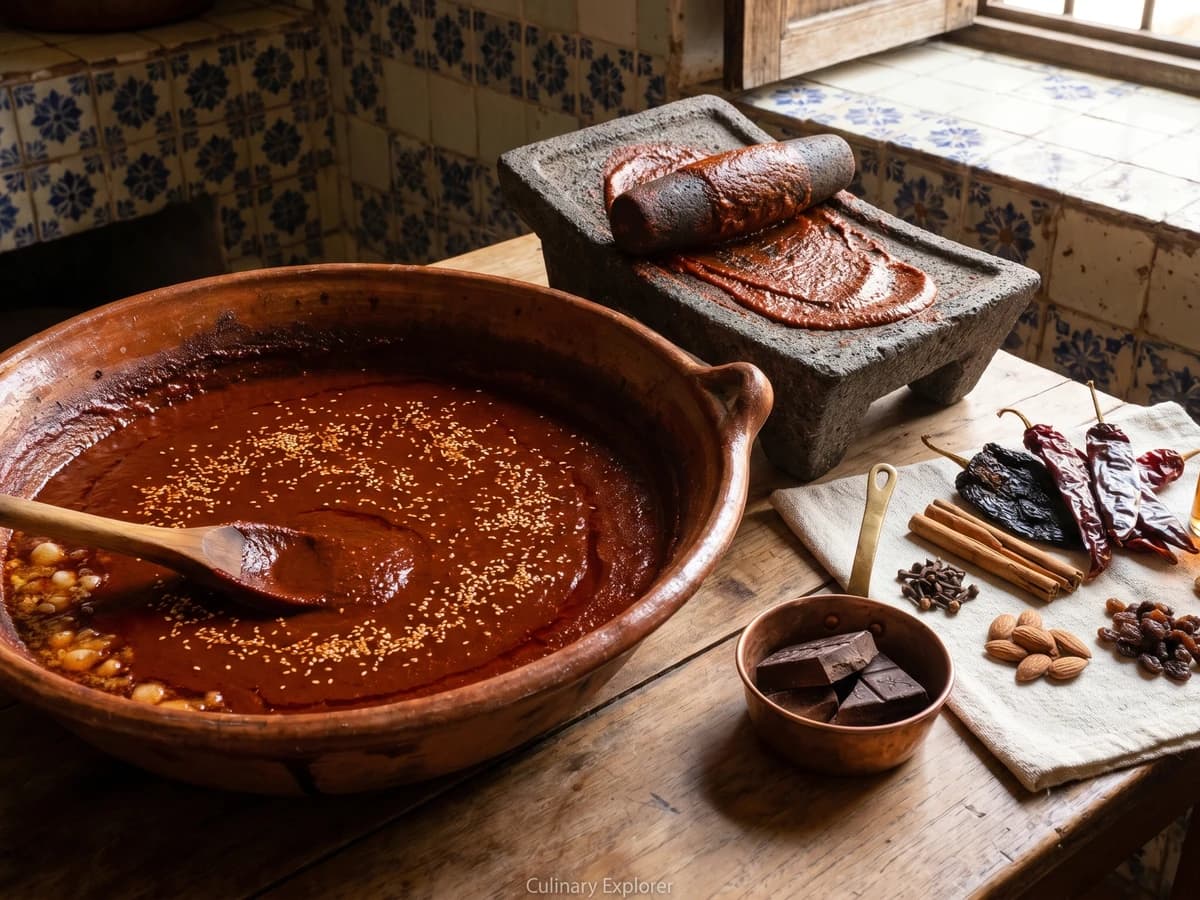
Oaxaca's conventual yellow mole is built from chilhuacle amarillo, hoja santa, masa, almonds, sesame, and jerez, a refectory sauce ground on the metate and simmered until it shines.
Oaxaca, Valles Centrales, is where this sauce lives. Mole amarillo belongs to the Oaxacan table before it belongs to any book, but this conventual version carries the hand of the Dominican kitchen at Santa Catalina de Siena: indigenous chile, maize, and hoja santa disciplined by almonds, sesame, canela, clavo, raisins, and a little jerez. Esto no es comida de un solo México. This is Oaxaca speaking in yellow.
The chile is chilhuacle amarillo, grown with the stubbornness of Oaxacan seed traditions. Guajillo can support the color, but it does not replace the chilhuacle's dry fruit and thin, almost tobacco edge. The sauce is thickened with masa, not flour, not cream. Hoja santa goes in near the end so it perfumes the mole instead of turning medicinal. La manteca es el sabor, even in a sauce that looks clean and bright.
I learned this kind of sauce by watching women who understood scale: not one plate, a cazuela for the refectory, a sauce that could dress chicken, turkey, pork, squash, or chochoyotes later. The dish each sauce dresses lives elsewhere. Here you are building the mother sauce. Toast on the comal, grind on the metate, fry the paste in lard, simmer until the fat glints at the edge. No me vengas con atajos.
My mother did not cook this in Colonia Roma; she was jalisciense. But in her notebook she had one line copied from an Oaxacan convent recetario she found in a used-book stall: 'amarillo claro, no espeso como barro.' Clear yellow, not thick as mud. She was right to keep that line. Saber cocinar es saber vivir.
The Dominican Convent of Santa Catalina de Siena in Oaxaca City was founded in 1576, and it is the house most often named when Oaxaca's colonial convent cooking is discussed; Puebla's Santa Rosa, Santa Mónica, and Santa Clara preserve the better-known Talavera-tiled convent kitchen record, but Oaxaca's Dominican kitchens had their own recetario discipline. Mole amarillo grew from Indigenous Oaxacan chile-and-maize sauces, the word mole coming from Nahuatl molli, and later absorbed Spanish-introduced almonds, sesame, canela, clavo, raisins, and jerez in the conventual register. No serious document names a single nun as inventor of mole amarillo; the record points to shared technique across Dominican kitchens, mercado cooks, and family notebooks in the Valles Centrales.
Quantity
8
wiped clean, stemmed and seeded
Quantity
4
wiped clean, stemmed and seeded
Quantity
as needed
for soaking the chiles
Quantity
1 large
quartered
Quantity
8
unpeeled
Quantity
1 pound
husked and rinsed
Quantity
2 medium
ripe
Quantity
1/2 cup
Quantity
1/2 cup
Quantity
3 tablespoons
divided
Quantity
1/4 cup
Quantity
1/3 cup
divided
Quantity
1 2-inch stick
Quantity
3
Quantity
6
Quantity
2
Quantity
1/2 teaspoon
Quantity
1 teaspoon
Quantity
1/2 teaspoon
Quantity
4
ribs removed, 2 torn and 2 reserved
Quantity
3/4 cup
crumbled
Quantity
6 cups
divided
Quantity
1 teaspoon
Quantity
2 teaspoons, plus more to taste
| Ingredient | Quantity |
|---|---|
| dried chile chilhuacle amarillowiped clean, stemmed and seeded | 8 |
| dried chile guajillowiped clean, stemmed and seeded | 4 |
| hot waterfor soaking the chiles | as needed |
| white onionquartered | 1 large |
| garlic clovesunpeeled | 8 |
| miltomate or tomatillohusked and rinsed | 1 pound |
| jitomates guaje or Roma tomatoesripe | 2 medium |
| pork lard (manteca de cerdo) | 1/2 cup |
| blanched almonds | 1/2 cup |
| sesame seedsdivided | 3 tablespoons |
| raisins | 1/4 cup |
| dry jerez (dry sherry)divided | 1/3 cup |
| Mexican canela | 1 2-inch stick |
| whole cloves | 3 |
| black peppercorns | 6 |
| allspice berries | 2 |
| cumin seeds | 1/2 teaspoon |
| dried Mexican oregano | 1 teaspoon |
| dried thyme | 1/2 teaspoon |
| fresh hoja santa leavesribs removed, 2 torn and 2 reserved | 4 |
| fresh nixtamalized corn masacrumbled | 3/4 cup |
| light unsalted chicken or turkey brothdivided | 6 cups |
| grated piloncillo | 1 teaspoon |
| sea salt | 2 teaspoons, plus more to taste |
Wipe the chilhuacle amarillo and guajillo with a dry cloth. Open them with kitchen scissors, remove the stems, seeds, and large veins. Do not rinse dried chiles under water. You wash away the dust, yes, but you also wash away the surface oils that give the mole its first aroma.
Heat a dry comal over medium. Toast the chilhuacle amarillo first, about 20 to 30 seconds per side, pressing gently with tongs until the skin softens and darkens one shade. Toast the guajillo separately, closer to 10 to 15 seconds per side. The guajillo is thinner and burns faster. Burned chile turns bitter, and bitterness has a long memory.
Put the toasted chiles in a bowl and cover with hot water, not boiling water. Let them soften for 25 minutes. Boiling water tightens the skins and pulls bitterness. Hot water softens the flesh cleanly. Drain the chiles and taste a spoonful of the soaking liquid. If it tastes sweet and earthy, save 1/2 cup. If it tastes bitter, discard it. The chile decides.
On the same comal, roast the onion, unpeeled garlic, miltomates, and jitomates. Turn them as they blister. The garlic should soften inside its skin, the onion should char at the edges, and the miltomates should slump without collapsing into water. Peel the garlic once it is cool enough to handle.
Toast the almonds on the comal until they smell sweet and take on pale gold spots. Toast 2 tablespoons of the sesame seeds until they turn golden, reserving the remaining tablespoon for finishing. Toast the canela, cloves, peppercorns, allspice, and cumin for 15 to 20 seconds, just until fragrant. Put the raisins in a small bowl with 2 tablespoons of the jerez so they plump while you grind. This is the conventual register: almendra, ajonjolí, pasas, canela, clavo, jerez. Use them with discipline.
Grind the soaked chiles on the metate first, working them into a smooth red-gold paste. Add the roasted garlic, onion, miltomates, and jitomates in small amounts, grinding until the paste holds together. Grind in the almonds, toasted sesame, spices, oregano, thyme, plumped raisins, and the 2 torn hoja santa leaves. Use a little broth or saved chile soaking liquid only when the paste refuses to move. El metate es la regla. The stone bruises the chile and nuts in a way a blade does not.
Scrape the paste into a glass or clay bowl. Cover and refrigerate overnight. This is why the recipe takes two days. The ground chiles, nuts, masa aromas, and spices need time to settle into one sauce instead of tasting like separate ingredients fighting in the cazuela.
The next day, heat the lard in a wide barro rojo cazuela or heavy Dutch oven over medium. Add the paste carefully. It will sputter. Stir with a wooden spoon for 20 to 25 minutes, scraping the bottom so it does not catch. The paste will darken from yellow-gold to deep ochre, and little beads of fat will appear at the edge. La manteca es el sabor. This frying is where the mole becomes serious.
Add 4 cups of the broth slowly, one cup at a time, stirring each addition smooth before adding the next. Lower the heat and simmer uncovered for 1 hour and 30 minutes, stirring often. The sauce should move like heavy cream, not clay. If it thickens too much before the flavors round out, add more broth. A baroque sauce is not a quick weeknight project. Así se hace y punto.
Whisk the fresh masa with 1 cup of broth until smooth, then strain it through a fine-mesh sieve into the mole. Stir constantly for the first 5 minutes so the masa does not clump. Simmer 35 to 45 minutes more, until the raw corn smell disappears and the sauce coats the back of a spoon in a clean layer. Masa is not just thickener here. It is the memory of corn holding the sauce together.
Add the 2 reserved hoja santa leaves, the piloncillo, sea salt, and the remaining jerez. Simmer gently for 10 minutes, then remove the whole leaves. Taste for salt. The finished mole should be clear yellow-ochre, glossy at the edges, and pourable enough to dress another dish without burying it. Do not ladle it over chicken here. This is the sauce. The plate lives somewhere else.
Let the mole cool until it is no longer hot to the touch, then transfer it to clean glass jars or a covered clay vessel and refrigerate. Scatter the reserved toasted sesame over the surface only when serving the sauce in a cazuela. Recetas probadas y garantizadas, but only if you respect the order of the work.
1 serving (about 175g)
Culinary guides, cultural storytelling, and the editorial depth that makes cooking meaningful.
Discover Culinary ExplorerChef Lupita
Baja California's wild chiltepin steeped in olive oil with garlic, orejon, and lime peel, until the oil turns ruby-amber and carries the slow, sneaky burn of the desert coast.

Chef Lupita
Puebla's Lenten convent adobo, a brick-red vinegar chile paste of ancho, guajillo, garlic, oregano, and comino made to dress fish for the meatless calendar.
Chef Lupita
Zacatecas' wedding-table adobo, built from toasted guajillo and ancho, piloncillo, sour orange, chocolate, canela, clavo, almonds, sesame, and lard.

Chef Lupita
Puebla's convent kitchens built this adobo with ancho, guajillo, jerez, almonds, raisins, clove, and lard, a baroque marinade that stains pork loin and finishes as the sauce.