
Chef Lupita
Aceite de Chiltepin Bajacaliforniano
Baja California's wild chiltepin steeped in olive oil with garlic, orejon, and lime peel, until the oil turns ruby-amber and carries the slow, sneaky burn of the desert coast.
A cooking platform built around craft, culture, and the stories behind what we eat.

Created by
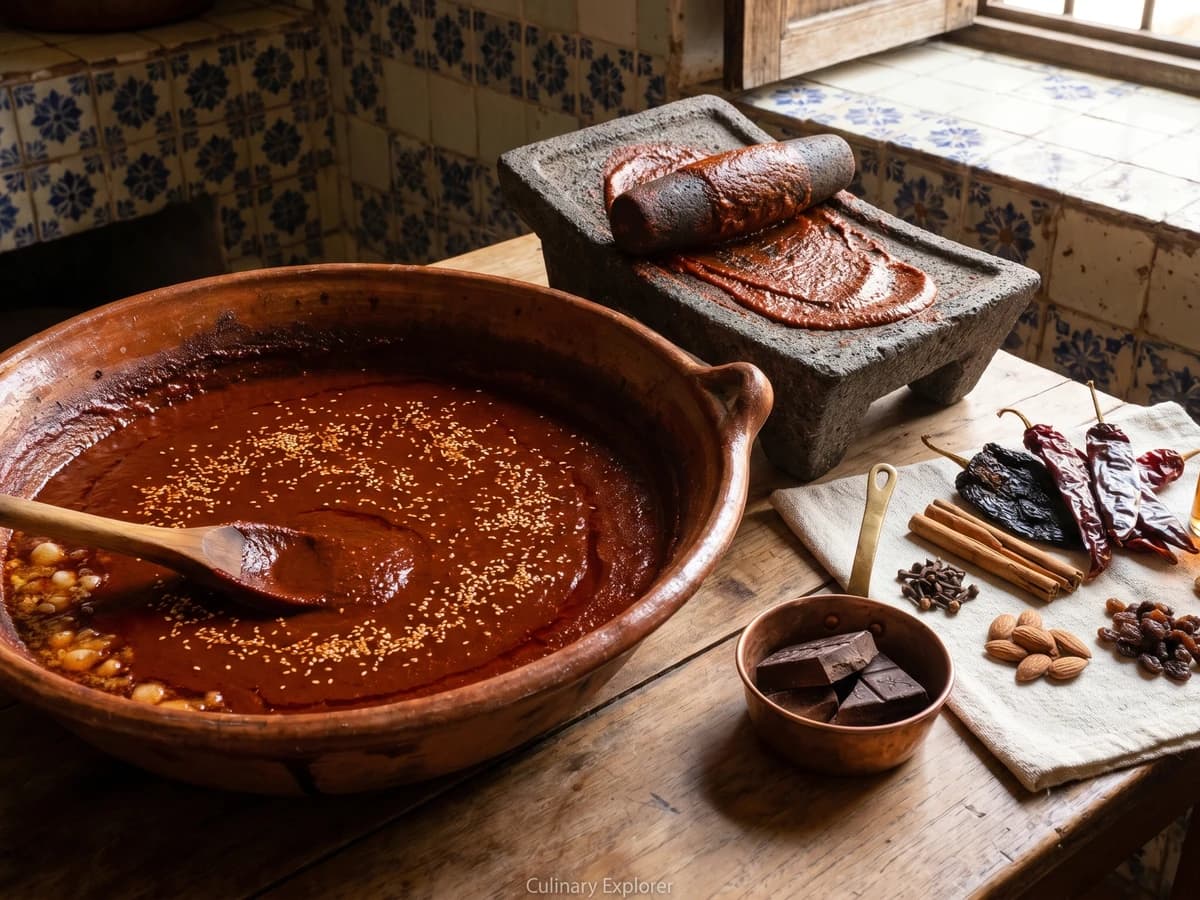
Puebla's convent fruit mole, carried into Oaxaca's seven-mole language, stains the tablecloth with ancho, plantain, pineapple, apple, almonds, sherry, and chile-dark lard.
Puebla, from the convent kitchens of the Centro Historico, is where this manchamanteles speaks first. Oaxaca answers with its own version in the Valles Centrales, because this is a 32-state cuisine and no state asks permission to adapt a mole. The sauce belongs to the criollo-conventual table: chile ancho for red depth, fruit for sweetness, almonds and sesame for body, canela and clavo for the Old World hand in the pot.
Manchamanteles means tablecloth stainer. Good. A mole that polite is not worth making. The color comes from toasted ancho and a little guajillo, fried in manteca until the paste darkens and the fat separates. The fruit is not garnish. Pineapple, plantain, apple, and pear cook into the sauce until the chile and fruit stop arguing and start speaking together. La fruta y el chile hablan juntos.
I learned one Puebla version from a woman near the Mercado de Sabores who served it only for feast days, never on a normal Tuesday. She used a metate for the chile paste and a barro rojo cazuela wide enough to feed a parish committee. A blender will work if you are honest about what you are doing, but el metate es la regla. No me vengas con atajos. A baroque sauce is architecture, not a quick weeknight project.
Manchamanteles appears in 19th-century Mexican cookbooks as part of the Puebla and Oaxaca mole repertory, with the name referring to the red chile sauce that stained linen tablecloths during formal meals. Unlike mole poblano's popular legend at the Convento de Santa Rosa in Puebla, manchamanteles is not securely tied to one named nun, but it belongs to the same conventual cooking world shaped by Dominican, Augustinian, and Clarissan houses, including Santa Rosa, Santa Monica, and Santa Clara. Its fruit, almonds, sesame, canela, clavo, raisins, and jerez mark the colonial pantry working with Indigenous chile grinding and lard-fried sauce technique.
Quantity
10
stemmed, seeded, and wiped clean
Quantity
3
stemmed, seeded, and wiped clean
Quantity
1
stemmed and seeded
Quantity
1/2 cup
divided
Quantity
1 large
peeled and sliced into thick coins
Quantity
1 cup
cut into 1-inch pieces
Quantity
1 large
peeled, cored, and chopped
Quantity
1
peeled, cored, and chopped
Quantity
1 medium
chopped
Quantity
5
peeled
Quantity
1/2 cup
Quantity
1/4 cup, plus 2 tablespoons
divided
Quantity
1/4 cup
Quantity
1
torn into pieces
Quantity
1 bolillo or 2 slices
torn into pieces
Quantity
1 stick, about 3 inches
Quantity
4
Quantity
4
Quantity
1/4 teaspoon
Quantity
1/4 teaspoon
Quantity
1/4 teaspoon
Quantity
3 cups, plus more as needed
warm
Quantity
1/4 cup
Quantity
1 tablespoon, plus more to taste
grated
Quantity
1 tablespoon
Quantity
1 1/2 teaspoons, plus more to taste
| Ingredient | Quantity |
|---|---|
| dried chile anchostemmed, seeded, and wiped clean | 10 |
| dried chile guajillostemmed, seeded, and wiped clean | 3 |
| dried chile pasilla mexicanostemmed and seeded | 1 |
| pork lard (manteca de cerdo)divided | 1/2 cup |
| ripe plantainpeeled and sliced into thick coins | 1 large |
| fresh pineapplecut into 1-inch pieces | 1 cup |
| tart applepeeled, cored, and chopped | 1 large |
| ripe pearpeeled, cored, and chopped | 1 |
| white onionchopped | 1 medium |
| garlic clovespeeled | 5 |
| blanched almonds | 1/2 cup |
| sesame seedsdivided | 1/4 cup, plus 2 tablespoons |
| raisins | 1/4 cup |
| corn tortillatorn into pieces | 1 |
| bolillo or white breadtorn into pieces | 1 bolillo or 2 slices |
| Mexican canela stick | 1 stick, about 3 inches |
| whole cloves | 4 |
| whole black peppercorns | 4 |
| anise seed | 1/4 teaspoon |
| dried thyme | 1/4 teaspoon |
| dried Mexican oregano | 1/4 teaspoon |
| rich chicken or turkey brothwarm | 3 cups, plus more as needed |
| dry jerez or Mexican sherry | 1/4 cup |
| piloncillograted | 1 tablespoon, plus more to taste |
| apple cider vinegar | 1 tablespoon |
| kosher salt | 1 1/2 teaspoons, plus more to taste |
Open the ancho, guajillo, and pasilla chiles with kitchen scissors. Remove stems, seeds, and veins, then wipe the skins with a barely damp cloth. Do not rinse them under running water. You are cleaning dust, not washing laundry.
Heat a dry comal over medium. Toast the chiles one at a time, about 20 to 30 seconds per side for ancho and guajillo, less for pasilla. The skins should puff and smell deep, red, and sweet. They should not blacken. Burned chile gives bitterness, and bitterness will follow you through the whole cazuela.
Place the toasted chiles in a bowl and cover with hot water. Hot, not boiling. Let them soften for 25 minutes, then drain. Taste a spoonful of the soaking water. If it tastes bitter, throw it away. If it tastes clean and chile-sweet, save a little for adjusting the paste.
Melt 3 tablespoons of the lard in a wide barro rojo cazuela or heavy pot over medium heat. Fry the plantain coins until browned on both sides, then remove them to a bowl. Fry the pineapple, apple, and pear in the same fat until their edges take color and the fruit smells concentrated, about 8 minutes. Remove them with the plantain. This browning matters. Raw fruit makes a thin, childish sauce.
Add the almonds to the cazuela and fry until pale gold. Add the 1/4 cup sesame seeds and stir until they turn golden and smell nutty. Add the raisins for the last minute so they puff but do not burn. Remove everything to the bowl with the fruit.
Add another tablespoon of lard if the cazuela looks dry. Fry the tortilla pieces and bolillo until browned and crisp at the edges. They will thicken the mole and give it the conventual body that clings to a spoon. Remove them to the same bowl.
Add the onion and garlic to the cazuela. Cook until the onion softens and the garlic spots brown, about 6 minutes. Add the canela, cloves, peppercorns, anise seed, thyme, and Mexican oregano for the last 30 seconds. The spices should wake up in the fat. If they scorch, start them again. No spice should bully this mole.
Work the soaked chiles, fried fruit, nuts, seeds, raisins, bread, aromatics, spices, and 1 cup warm broth into a smooth paste on a metate. If you are using a blender, blend in batches and let each batch run longer than you think. You want a paste, not a chunky sauce. Strain through a medium-mesh sieve, pressing hard on the solids. El metate es la regla, but a disciplined blender can serve the household.
Melt the remaining lard in the cleaned cazuela over medium heat. Add the strained paste carefully. It will sputter, so use a long spoon and stand like someone who has cooked before. Fry for 15 to 20 minutes, stirring constantly, until the paste darkens to brick red and the lard begins to separate at the edges. La manteca es el sabor. This is where the mole becomes serious.
Add the remaining warm broth a little at a time, stirring until the sauce loosens into a thick, glossy mole. Add the jerez, piloncillo, vinegar, and salt. Lower the heat and simmer uncovered for 1 1/2 to 2 hours, stirring often so the fruit sugars do not catch on the bottom. The finished mole should coat the back of a spoon and fall in a slow ribbon.
Taste for salt, sweetness, and acid. The chile should lead, the fruit should round it, and the jerez should sit quietly in the back. Toast the remaining 2 tablespoons sesame seeds until golden. Serve the mole as a sauce in a deep talavera or barro cazuela, with sesame scattered over the surface. The chicken, turkey, or pork it dresses belongs to another recipe. This is the mother sauce. Así se hace y punto.
1 serving (about 225g)
Culinary guides, cultural storytelling, and the editorial depth that makes cooking meaningful.
Discover Culinary ExplorerChef Lupita
Baja California's wild chiltepin steeped in olive oil with garlic, orejon, and lime peel, until the oil turns ruby-amber and carries the slow, sneaky burn of the desert coast.

Chef Lupita
Puebla's Lenten convent adobo, a brick-red vinegar chile paste of ancho, guajillo, garlic, oregano, and comino made to dress fish for the meatless calendar.
Chef Lupita
Zacatecas' wedding-table adobo, built from toasted guajillo and ancho, piloncillo, sour orange, chocolate, canela, clavo, almonds, sesame, and lard.

Chef Lupita
Puebla's convent kitchens built this adobo with ancho, guajillo, jerez, almonds, raisins, clove, and lard, a baroque marinade that stains pork loin and finishes as the sauce.