
Chef Lupita
Aceite de Chiltepin Bajacaliforniano
Baja California's wild chiltepin steeped in olive oil with garlic, orejon, and lime peel, until the oil turns ruby-amber and carries the slow, sneaky burn of the desert coast.
A cooking platform built around craft, culture, and the stories behind what we eat.

Created by
Oaxaca's red recado, built on toasted guajillo, ancho, and costeño rojo with metate-ground spices and pineapple vinegar. The base paste for mole rojo, enchiladas, and meat that the cooks of the Valles Centrales reach for first.
This is Oaxaca's recado rojo. Not Yucatán's. The two share a name and almost nothing else. Yucatán's recado rojo is built on achiote and sour orange, brick-red and earthy, made for cochinita pibil and the Mayan kitchen. Oaxaca's is built on chile guajillo, ancho, and costeño rojo with toasted spices and vinegar, and it has nothing to do with achiote. Confusing the two is the kind of mistake that tells a cook in Oaxaca you have not done your homework.
The chile costeño rojo is what makes it Oaxacan. It comes from the coast, around Pinotepa Nacional, and it brings a sharp, almost fruity heat that the guajillo and ancho cannot give you on their own. If your chile vendor at La Merced or the Mercado de Abastos does not stock costeño, ask them where to find it. Do not skip it and add more guajillo. That is a different paste from a different state.
The vinegar is the second tell. Oaxaca uses vinagre de piña casero, a homemade pineapple vinegar fermented from the rinds, and it gives the recado a soft acidity that distilled white vinegar cannot replicate. If you cannot ferment your own, apple cider vinegar is the closest compromise. White vinegar will make the paste taste industrial.
My mother's notebook had a page on recados, with a line in the margin that said: 'el recado rojo es la base, no el destino.' The red recado is the base, not the destination. You build with it. Mole rojo, enchiladas oaxaqueñas, marinated pork for the asador, chicken for the cazuela. One jar in the refrigerator and you have the foundation for half a week of cooking. Saber cocinar es saber vivir. Cada estado, su propia cocina, and this paste belongs to Oaxaca.
The word 'recado' comes from the Spanish for 'errand' or 'message' and entered Mexican kitchens through the colonial spice trade, originally describing pre-mixed seasoning pastes that a cook could send a child to fetch from the market. Oaxaca's recado tradition draws on the pre-Columbian Zapotec practice of grinding chiles and aromatics on the metate into storable pastes, a technique that predated the conquest by centuries; the Spanish contribution was the imported spices, cinnamon, cloves, peppercorns, and the vinegar that gave the paste its keeping power. The conflation of Oaxacan and Yucatecan recado rojo in 20th-century Mexican cookbooks, particularly those written for foreign audiences, erased the distinct regional logics behind each: Yucatán's achiote-based paste reflects the peninsular Mayan kitchen and its Caribbean connections, while Oaxaca's chile-and-spice version belongs to the highland mole tradition of the Valles Centrales.
Quantity
10
stemmed and seeded
Quantity
6
stemmed and seeded
Quantity
2
stemmed and seeded
Quantity
1
unpeeled, separated into cloves
Quantity
1 tablespoon
Quantity
1 tablespoon
Quantity
1 tablespoon
Quantity
6
Quantity
1 stick (3-inch)
Quantity
4
Quantity
3
Quantity
1 tablespoon
Quantity
1/3 cup
Quantity
2 tablespoons
melted
Quantity
1/2 cup, plus more as needed
| Ingredient | Quantity |
|---|---|
| dried chile guajillostemmed and seeded | 10 |
| dried chile anchostemmed and seeded | 6 |
| dried chile costeño rojostemmed and seeded | 2 |
| head of garlicunpeeled, separated into cloves | 1 |
| whole black peppercorns | 1 tablespoon |
| whole cumin seed | 1 tablespoon |
| dried Mexican oregano (oregano oaxaqueño preferred) | 1 tablespoon |
| whole cloves | 6 |
| Mexican cinnamon (canela) | 1 stick (3-inch) |
| whole allspice berries (pimienta gorda) | 4 |
| bay leaves | 3 |
| kosher salt | 1 tablespoon |
| vinagre de piña casero or apple cider vinegar | 1/3 cup |
| manteca de cerdo (pork lard)melted | 2 tablespoons |
| warm chile-soaking water | 1/2 cup, plus more as needed |
Heat a dry comal or heavy cast iron skillet over medium. Open each chile flat against the surface with a spatula and toast for about 20 to 30 seconds per side. The skin should puff and change from dark crimson to a lighter, oil-shined red. The kitchen will smell like the chile aisle at the Mercado de Abastos in Oaxaca. That smell is the oils releasing. If a chile blackens, throw it out and toast another. Burned chile turns the recado bitter and there is no fixing it later.
Transfer the toasted chiles to a heatproof bowl and cover with hot tap water. Hot, not boiling. Boiling water cooks the skin and makes the paste bitter. Weight them down with a small plate so they stay submerged. Let them soften for 20 to 25 minutes, until the flesh gives easily under your fingernail. Reserve the soaking water. You will need it for the blender.
While the chiles soak, return the comal to medium-low heat. Place the unpeeled garlic cloves on the dry surface and roast them, turning every couple of minutes, for about 10 minutes, until the skins are charred in spots and the cloves feel soft when pressed. Pull them off and let them cool. In the same comal, toast the peppercorns, cumin, cloves, allspice, cinnamon stick, and bay leaves together for about a minute, swirling the pan, until the spices release their oils and you can smell the cumin from across the kitchen. Pull them off the heat the moment they smell awake. Burned spices are worse than no spices.
If you have a metate, this is where it earns its place. If not, a spice grinder or mortar will do the work. Grind the toasted peppercorns, cumin, cloves, allspice, cinnamon stick, bay leaves, and oregano into a fine powder. Stop and scrape down the sides as you go. The powder should be uniform and deeply fragrant. Asi se hace y punto.
Drain the chiles and transfer them to a blender. Peel the roasted garlic and add it. Add the ground spices, the salt, the vinegar, and the melted lard. Pour in 1/2 cup of the warm chile-soaking water to start. Blend on high for two to three minutes, stopping to scrape down the sides, until the paste is completely smooth. Add a tablespoon more of the soaking water at a time only if the blender struggles. You want a thick, glossy paste, the consistency of soft peanut butter. Too thin and it will not cling to meat.
Pass the paste through a fine-mesh strainer set over a bowl, pressing down hard with the back of a wooden spoon. Discard the chile skins and seeds left behind. This step is non-negotiable. The recado should be silky enough to spread on meat with the back of a knife, not gritty. A senora at the Mercado 20 de Noviembre would send it back to the blender if it were not.
Scrape the strained paste into a clean glass jar. Press a piece of plastic wrap directly onto the surface to keep the air off, then seal the jar. Refrigerate for at least 24 hours before using. The flavors need time to settle into each other. The chile, the spice, the vinegar, the lard, they have to negotiate. After a day, the paste tastes like one thing instead of seven. Recetas probadas y garantizadas.
1 serving (about 15g)
Culinary guides, cultural storytelling, and the editorial depth that makes cooking meaningful.
Discover Culinary ExplorerChef Lupita
Baja California's wild chiltepin steeped in olive oil with garlic, orejon, and lime peel, until the oil turns ruby-amber and carries the slow, sneaky burn of the desert coast.

Chef Lupita
Puebla's Lenten convent adobo, a brick-red vinegar chile paste of ancho, guajillo, garlic, oregano, and comino made to dress fish for the meatless calendar.
Chef Lupita
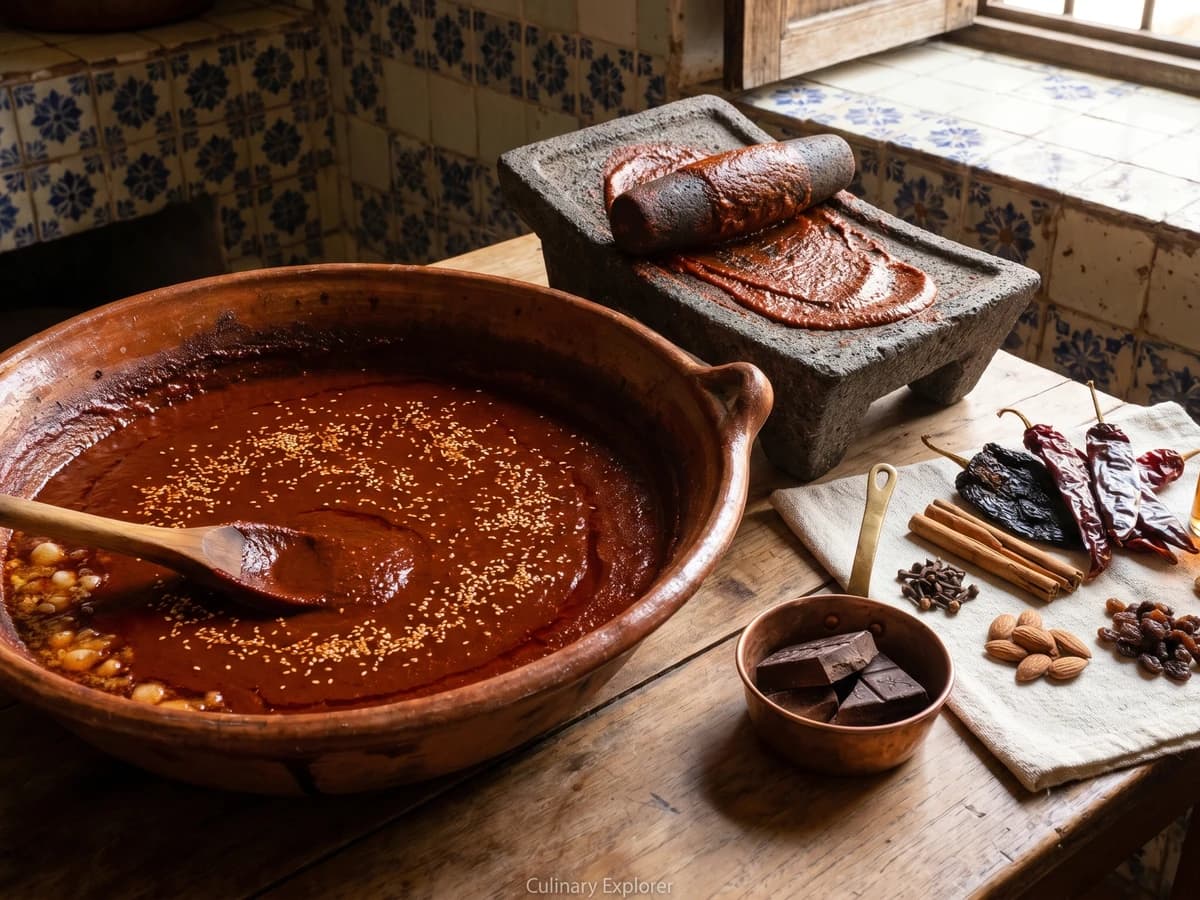
Zacatecas' wedding-table adobo, built from toasted guajillo and ancho, piloncillo, sour orange, chocolate, canela, clavo, almonds, sesame, and lard.

Chef Lupita
Puebla's convent kitchens built this adobo with ancho, guajillo, jerez, almonds, raisins, clove, and lard, a baroque marinade that stains pork loin and finishes as the sauce.