
Chef Takumi
Nagoya Uirō (名古屋ういろう, steamed rice-flour confection)
Nagoya uirō asks for rice flour, sugar, water, and patience. Steam it fully, cool it completely, then slice the quiet, chewy log thin enough that its restraint makes sense.

Recipe Archive
Desserts bring structure to sweetness, from cakes and custards to frozen treats and fruit-driven finishes that close the meal with intention.
1329 recipes
A cooking platform built around craft, culture, and the stories behind what we eat.
Chef Takumi
Nagoya uirō asks for rice flour, sugar, water, and patience. Steam it fully, cool it completely, then slice the quiet, chewy log thin enough that its restraint makes sense.
Chef Takumi
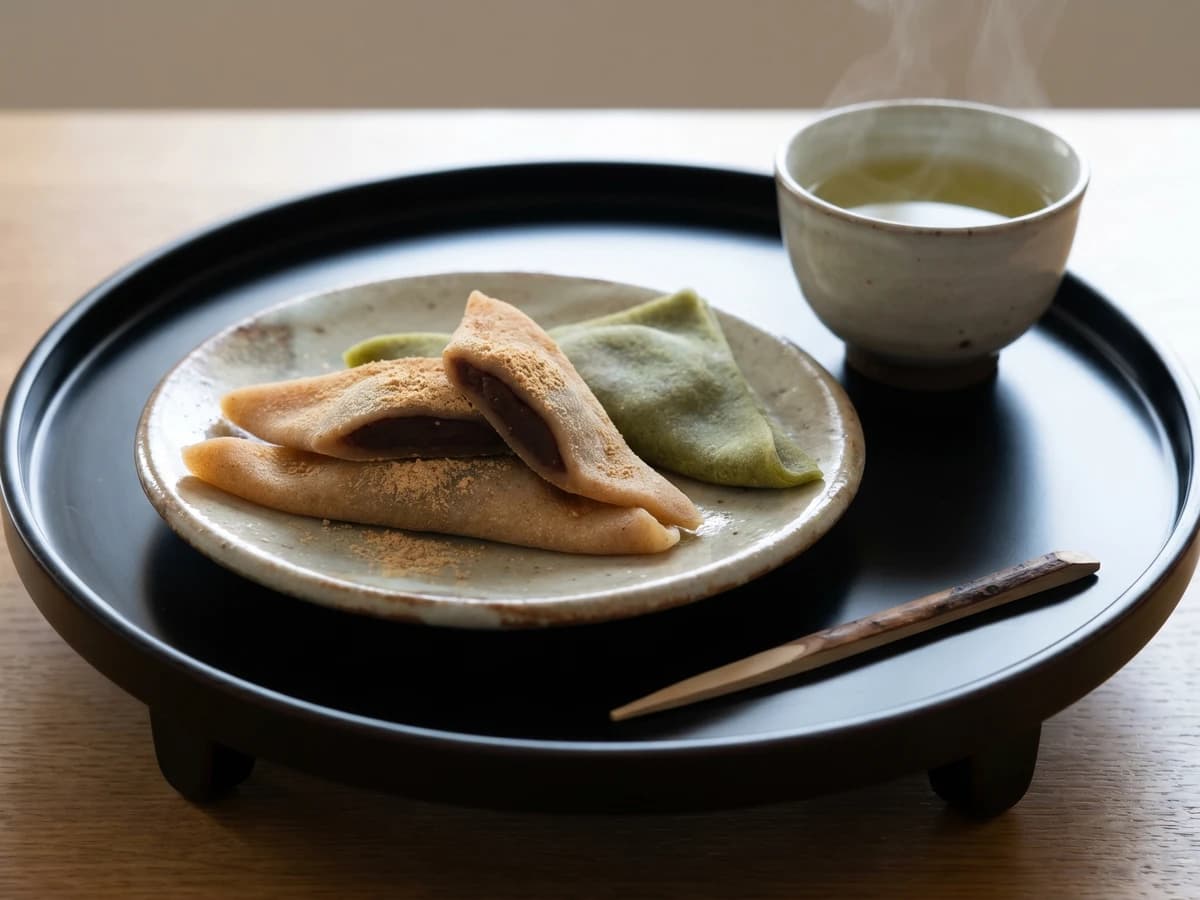
Soft, cinnamon-scented yatsuhashi asks for evenly steamed rice dough and a modest spoon of anko. Fold it while warm, leave it room, and Kyoto's souvenir sweet becomes kitchen work.

Chef Lupita
Veracruz's Totonacapan custard slow-cooks whole milk with split Papantla vanilla pods, piloncillo claro, and egg yolks until it sets into a spoon-coating natilla, not flan.

Chef Lupita
Querétaro's market custard of whole cow's milk, egg yolks, Mexican canela, and orange peel, stirred low until it turns glossy enough to serve warm or cold in clay tazones.

Chef Juliana
You don't need candy machinery. You need ripe bananas, sugar, lemon, and patience at the stove until the spoon shows the bottom of the pan.

Chef Lupita
Yucatán's dark coconut rombos, bound in caramelo quemado de piloncillo and shaped by hand, with the bittersweet edge that gives them their name and their color.
Chef Lupita
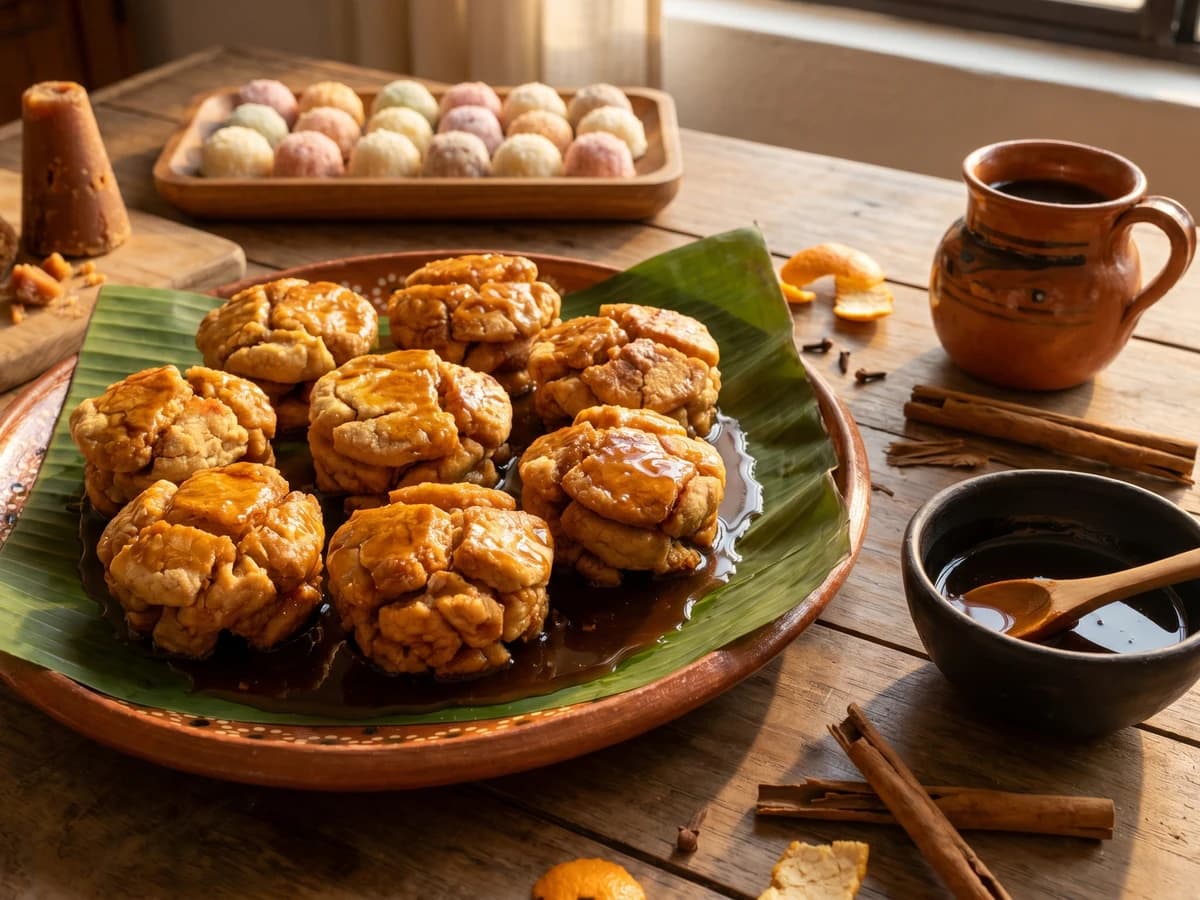
Oaxaca's after-mass sweet from the Valles Centrales: small fried wheat biscuits pressed into clusters and lacquered in a dark, spiced piloncillo syrup, sold from baskets outside the churches of the Centro Historico.

Chef Takumi
Nerikiri looks like confectionery for people with secret hands. It isn't. Smooth white-bean paste, a little gyūhi for suppleness, and one clear seasonal idea are the whole matter.

Chef Remy
Day-old French bread transformed into a golden, custardy masterpiece, soaked through with vanilla and cinnamon, then crowned with a warm bourbon sauce so good you'll want to drink it straight from the pan.

Chef Remy
Creamy pecan candies born in the French Quarter, where brown sugar and butter come together in a confection so rich and tender it dissolves on your tongue, leaving nothing but sweetness and the memory of toasted pecans.
Chef Remy
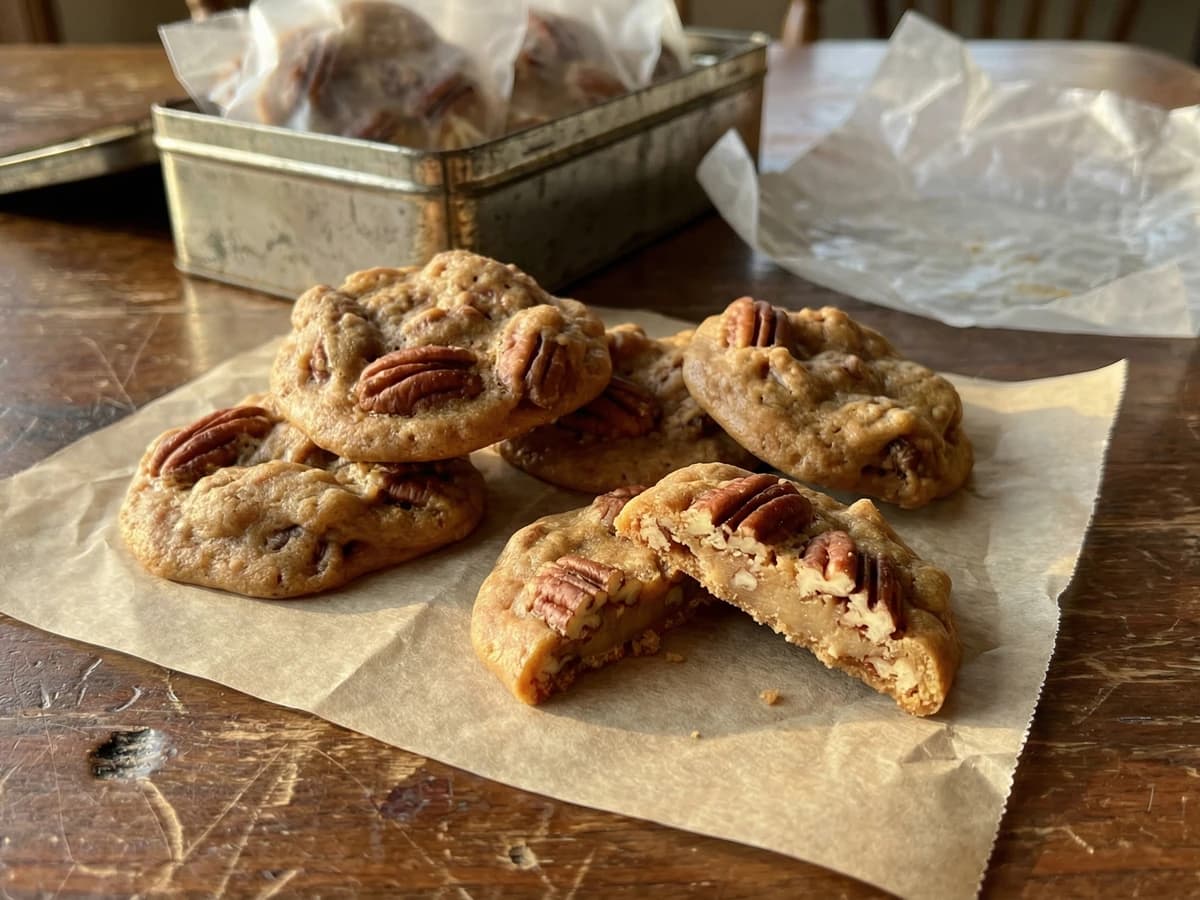
Rich, creamy brown sugar candy loaded with toasted Louisiana pecans, the kind that dissolves on your tongue and leaves you reaching for just one more, the way pralines have been made in New Orleans for over two hundred years.

Chef Remy
A towering wedge of silky cheesecake on a pecan-studded crust, draped in buttery praline sauce and crowned with candied pecans, the kind of dessert that makes everyone at the table go quiet for a moment.

Chef Dean
The towering, velvet-textured cheesecake that made New York delis famous—four pounds of pure cream cheese indulgence on a buttery graham cracker base, baked low and slow until impossibly smooth.
Chef Lupita
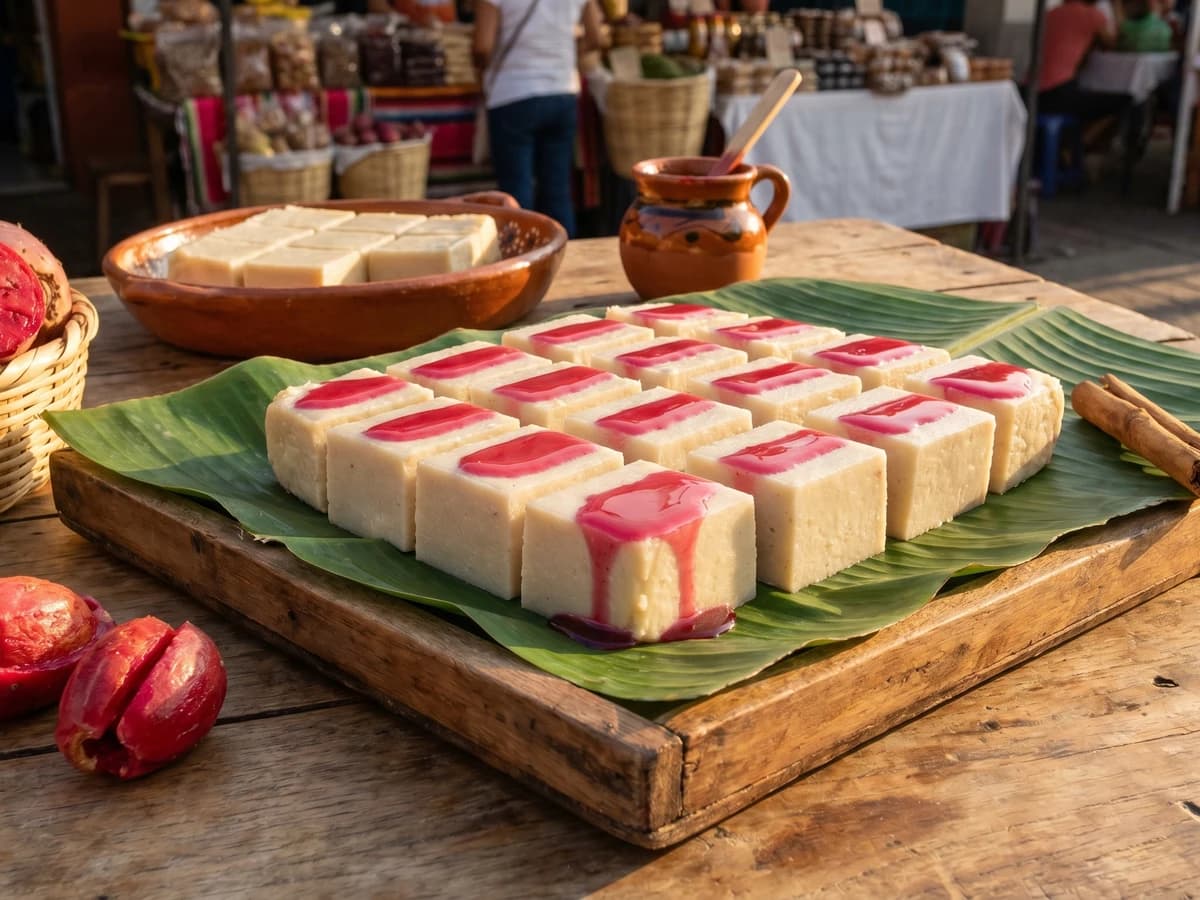
Oaxaca's pre-Columbian corn pudding, set from maíz criollo simmered with milk, canela, and piloncillo, then crowned with a cochineal-pink syrup of fresh tunas rojas.

Chef Lupita
Baja California's desert sorbet, the deep-purple garambullo cactus berry hand-churned in a wooden garrafa with cane sugar, lime, and a pinch of salt from the Guerrero Negro flats.
Chef Lupita
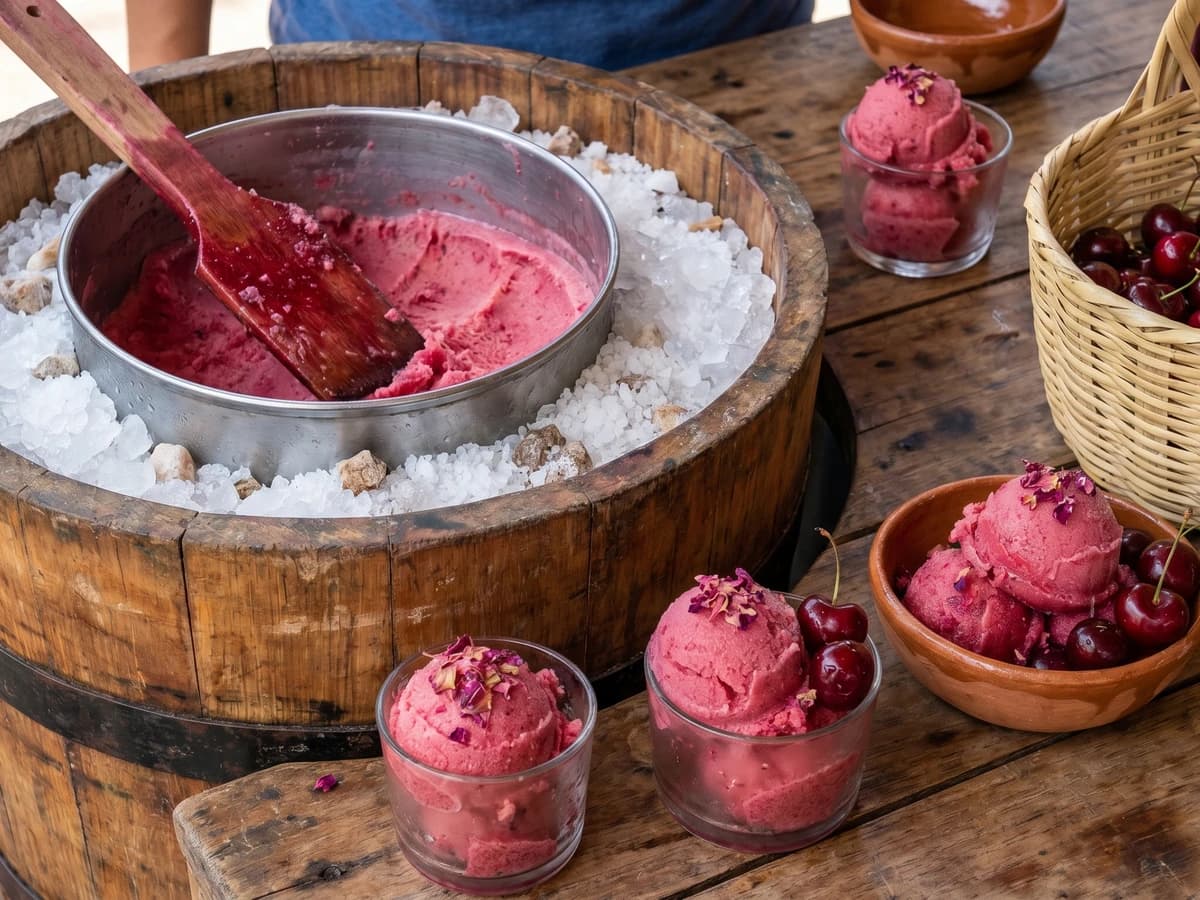
Tepoztlan's wooden-garrafa nieve, hand-churned over ice and salt until cherry and rose turn into a cold, floral scoop that belongs to the mercado, not a factory.

Chef Lupita
Oaxaca's iconic nieve pairing, burnt-milk sorbet hand-churned in a salt-and-ice garrafa, served beside magenta prickly pear at the Jardín Sócrates stalls in the Centro Histórico.
Chef Lupita
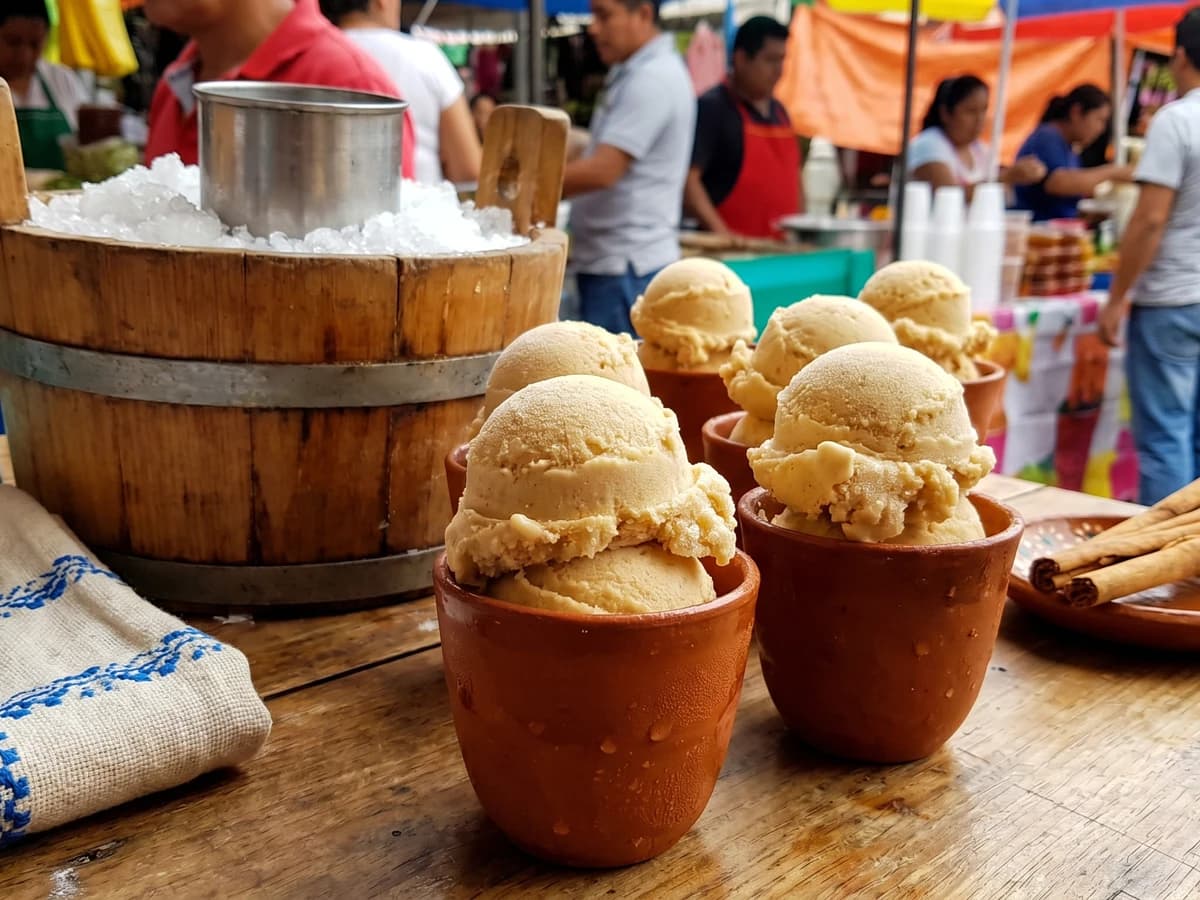
Ciudad de México's Xochimilco sweet, from Santiago Tulyehualco's garrafa tradition: milk cooked until toasted gold with canela, then hand-churned over ice and salt until scoopable but still light.
Chef Lupita
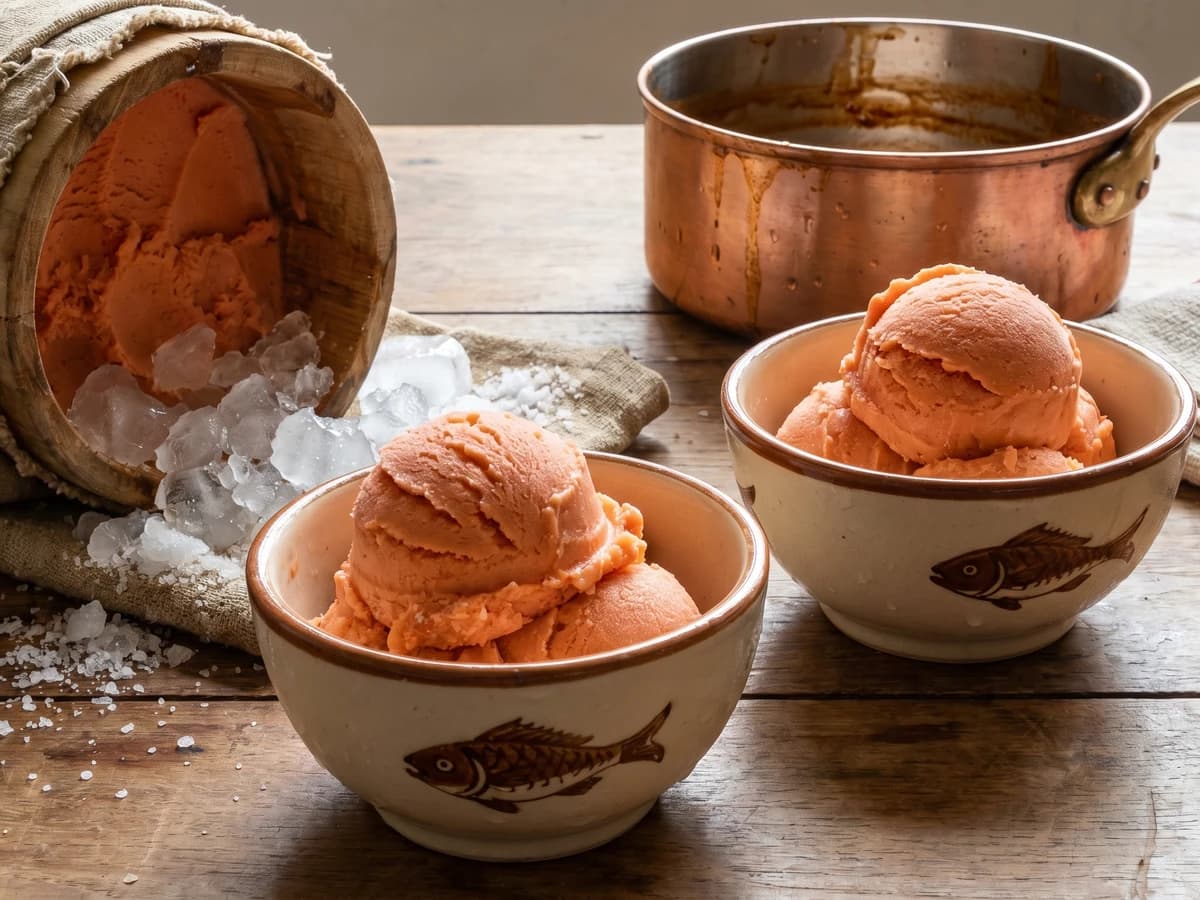
Michoacán's plaza nieve, ripe mamey folded into a copper-cooked jamoncillo de leche base, then turned by hand in a garrafa packed with ice and sal de grano.
Chef Lupita
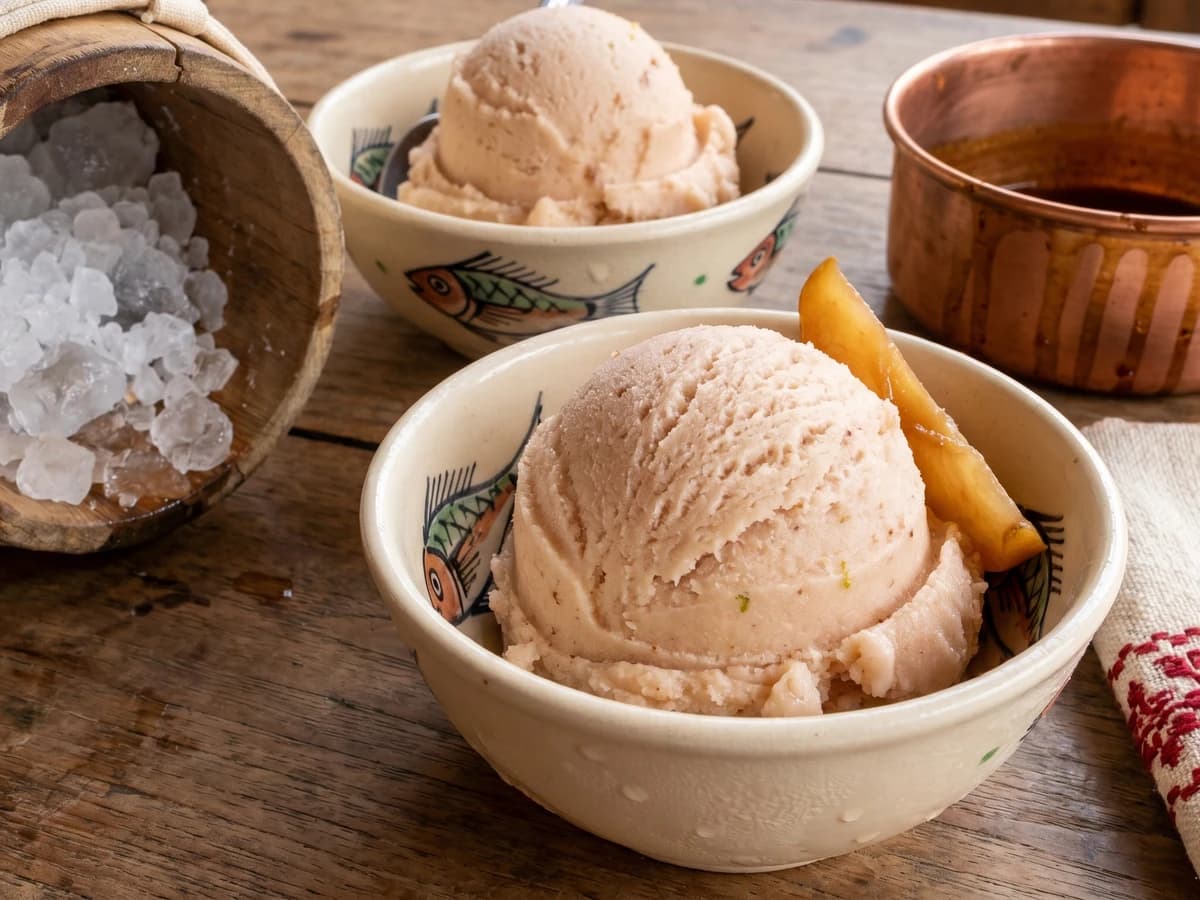
Michoacán's Lago de Pátzcuaro winter fruit, cooked in a copper cazo with piloncillo and churned by hand in a garrafa packed with rock salt and ice.

Chef Lupita
Oaxaca's smoky agave nieve, hand-churned in a wooden garrafa packed with salt and ice. Mezcal espadín folded into a slow-cooked cream base, soft enough to scoop, sharp enough to know what you are eating.
Chef Lupita
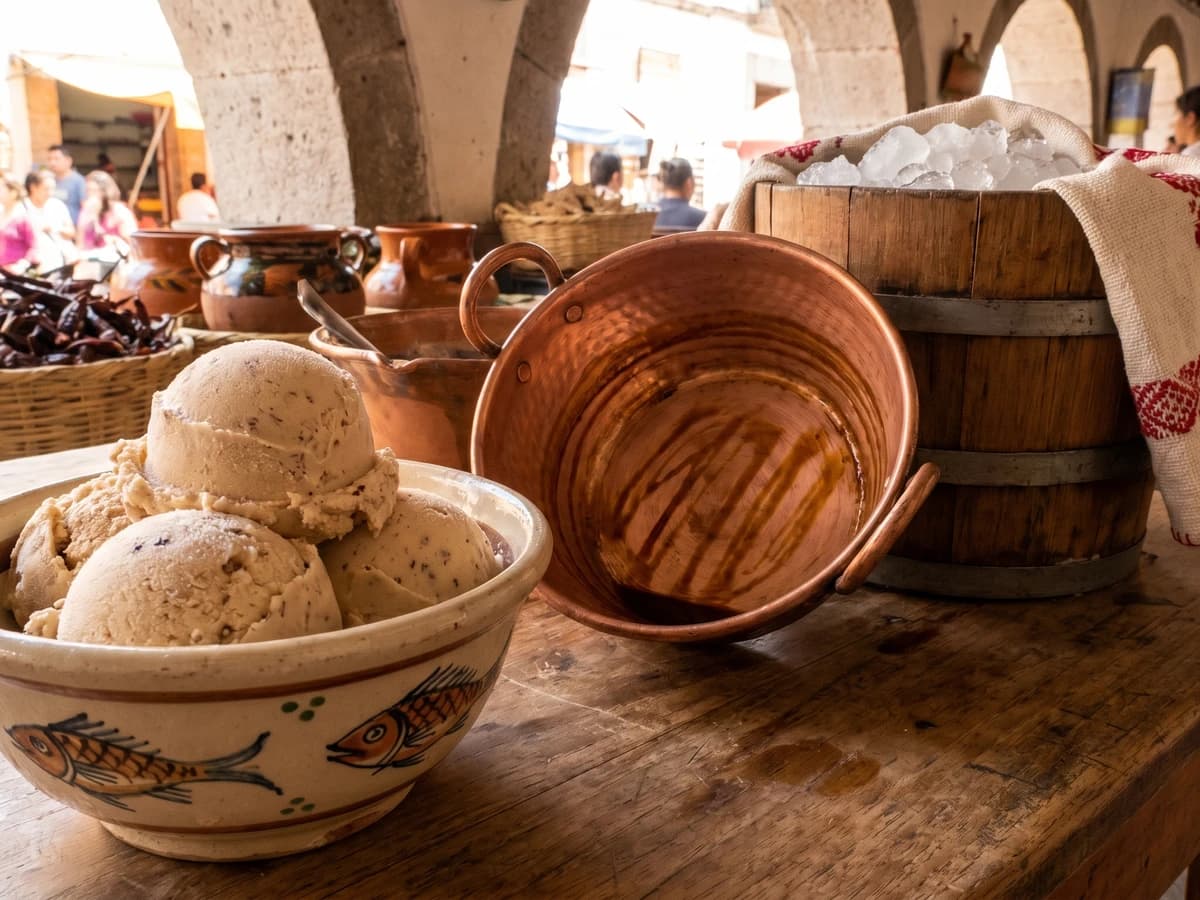
Michoacán's Pátzcuaro nieve de pasta is milk cooked down in copper with piloncillo and canela, then frozen by hand in a garrafa packed with ice and grain salt.

Chef Lupita
Michoacán's Pátzcuaro nieve de pasta, reduced in cazo de cobre until the milk tastes like jamoncillo, then hand-churned in a garrafa with nurite from the Meseta Purépecha.
Chef Lupita
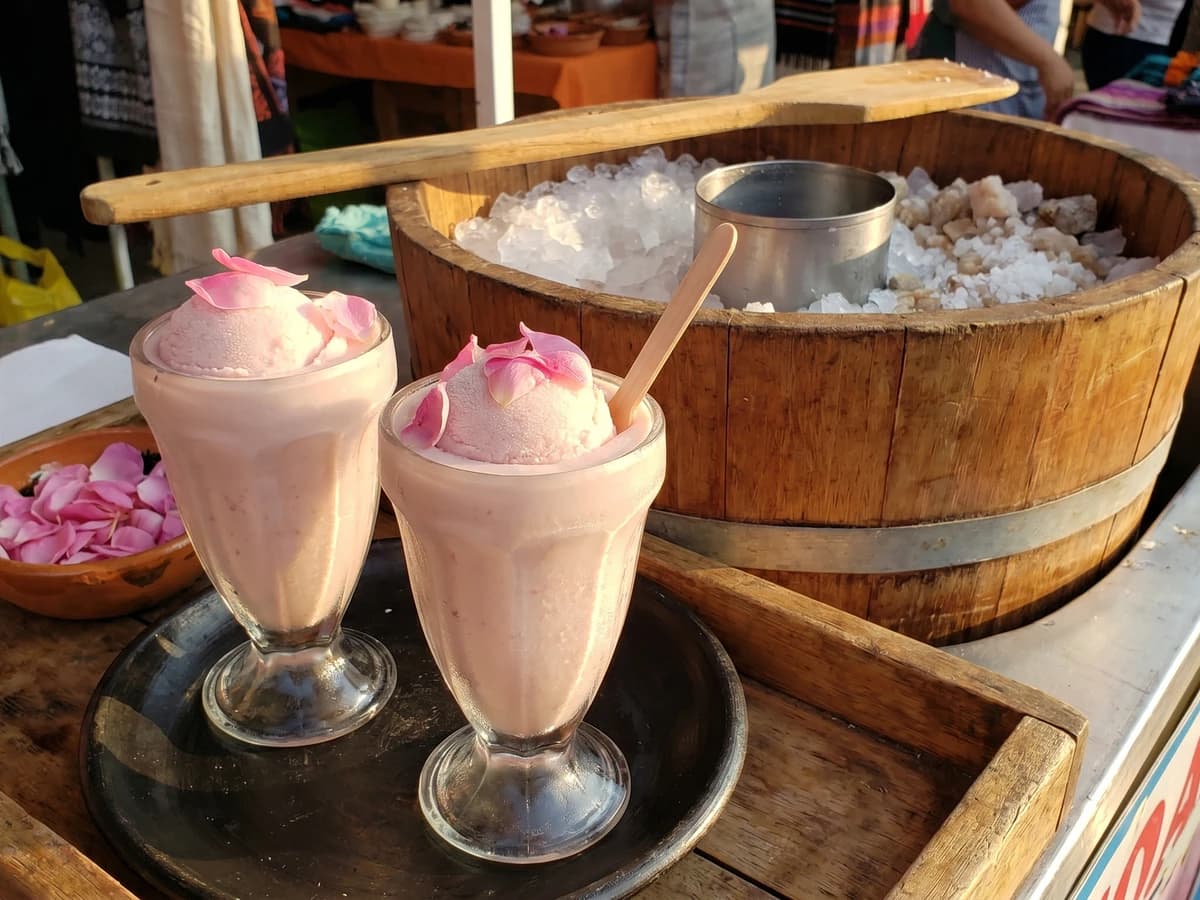
Oaxaca's rose petal nieve, the kind they hand-churn in wooden garrafas under the laurel trees of Jardín Sócrates. Castilian rose petals steeped in milk, almond as a whisper, churned by hand until the texture turns soft and floral.
Culinary guides, cultural storytelling, and the editorial depth that makes cooking meaningful.
Discover Culinary Explorer