
Chef Lupita
Acitrón de Cidra Conventual
Puebla's convent-style acitrón, made from cidra peel instead of endangered biznaga, built through repeated syrup soakings until the cubes turn firm, translucent, and ready for rosca or chiles en nogada.
A cooking platform built around craft, culture, and the stories behind what we eat.
Created by
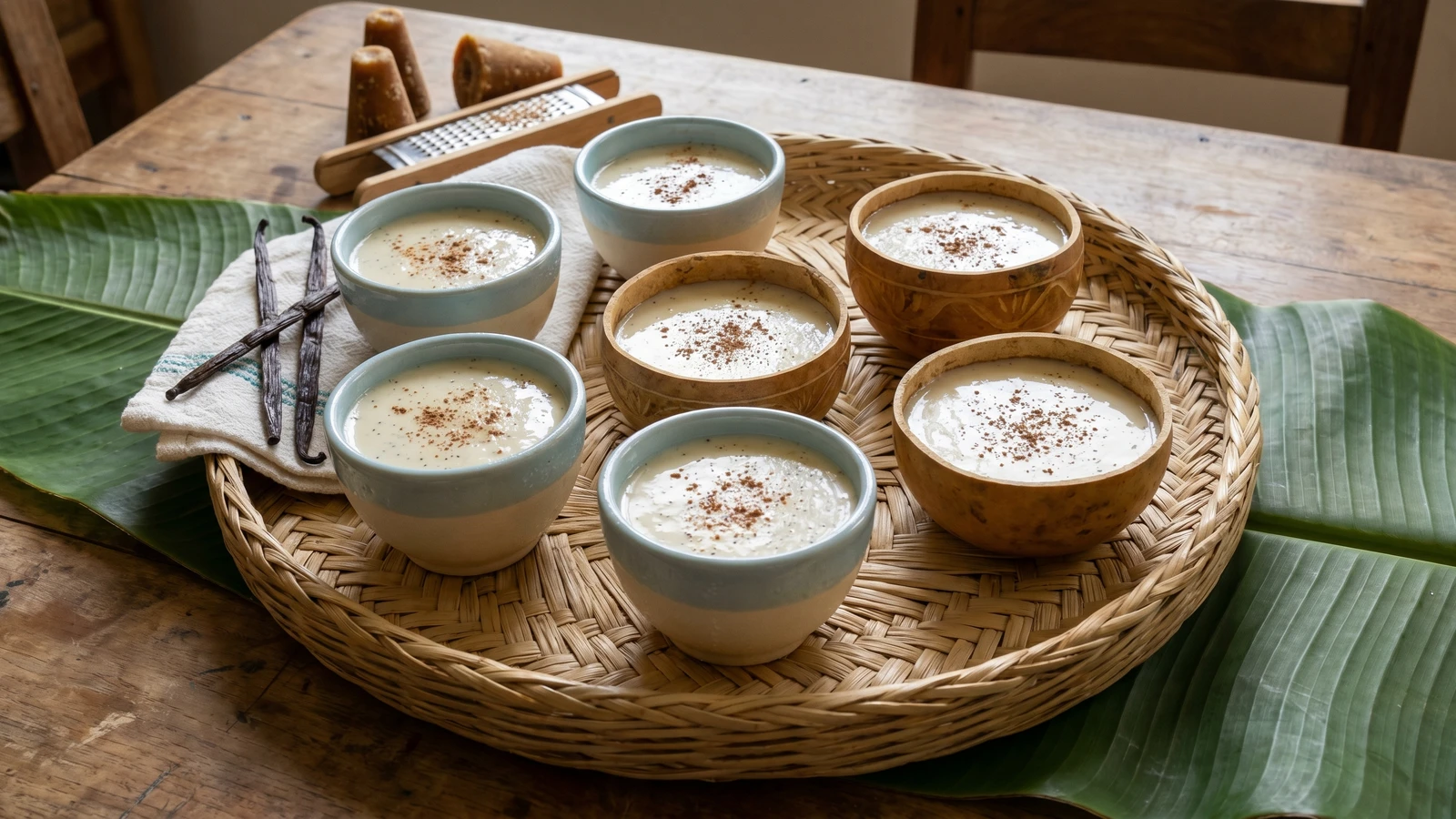
Veracruz's Totonacapan custard slow-cooks whole milk with split Papantla vanilla pods, piloncillo claro, and egg yolks until it sets into a spoon-coating natilla, not flan.
Veracruz, in the Totonacapan around Papantla, is where this custard lives. Not in a pastry case, not under a burnt caramel cap. In small copitas, in jícaras, in cream and pale blue glazed earthenware from Tlacotalpan, carried to the table after the milk has been watched properly. Cada estado, su propia cocina.
There is no chile here, and there should not be. The defining ingredient is vainilla de Papantla, the long dark pod cured until it smells of flowers, dried fruit, and the humid hills above the Gulf. Use the whole pod. Split it, scrape it, simmer the seeds and the husk in the milk. Extract is not the same thing. No me vengas con atajos.
I learned this kind of natilla from women who knew how milk behaves before they ever owned a thermometer. They stirred with a wooden spoon, watched the bubbles at the edge of the pot, and stopped when the custard coated the spoon cleanly. That is the lesson: patience, low heat, and good vanilla. Saber cocinar es saber vivir.
Vanilla planifolia is native to the humid Totonacapan of northern Veracruz, where Totonac growers cured the pods long before Europeans learned the word; Nahuatl speakers called it tlilxochitl, black flower. Natilla itself is a colonial milk-and-egg custard, made possible after cattle, chicken eggs, and sugarcane entered New Spain in the 16th century. Papantla kept its authority in vanilla until 1841, when Edmond Albius's hand-pollination method on Reunion allowed commercial vanilla to spread beyond Mexico.
Quantity
4 1/2 cups
divided
Quantity
2
split lengthwise and scraped
Quantity
1 small cone, about 4 ounces
finely grated
Quantity
1 small piece, about 2 inches
Quantity
1/4 teaspoon
Quantity
6
Quantity
3 tablespoons
Quantity
for serving
| Ingredient | Quantity |
|---|---|
| whole milkdivided | 4 1/2 cups |
| whole vainilla de Papantla podssplit lengthwise and scraped | 2 |
| piloncillo clarofinely grated | 1 small cone, about 4 ounces |
| Mexican canela | 1 small piece, about 2 inches |
| fine sea salt | 1/4 teaspoon |
| large egg yolks | 6 |
| cornstarch (maicena) | 3 tablespoons |
| ground Mexican canela (optional) | for serving |
Set aside 1/2 cup of the milk and keep it cold. Split the vainilla de Papantla pods lengthwise with a small knife. Scrape the seeds with the back of the blade. Put the seeds and the empty pods into a heavy saucepan with the remaining 4 cups milk, the grated piloncillo claro, the canela, and the salt. The pod goes in too. That husk still has flavor.
Set the pan over medium-low heat and stir until the piloncillo dissolves. Lower the heat and cook gently for 25 to 30 minutes, stirring often with a wooden spoon and scraping the bottom. You want small bubbles around the edge, not a boil. The milk should darken slightly to ivory, smell clearly of vanilla, and reduce by about one fifth. Scorched milk tastes scorched forever.
In a medium bowl, whisk the egg yolks with the cornstarch until smooth. Add the reserved 1/2 cup cold milk and whisk again until there are no lumps. This cold milk protects the yolks and loosens the maicena before it meets heat.
Remove the canela and vanilla pods from the hot milk. Ladle about 1 cup of the hot milk into the yolk mixture in a slow stream, whisking constantly. Do not dump it in all at once unless you want sweet scrambled eggs. Pour the warmed yolk mixture back into the pot through a fine-mesh strainer.
Return the pot to low heat. Stir constantly for 8 to 12 minutes, reaching into the corners of the pan each time. The natilla is ready when it coats the back of the spoon and a line drawn through it with your finger stays clean. It should fall slowly from the spoon, not run like milk and not stand like pudding from a packet.
Take the pot off the heat and stir for one more minute so the bottom does not keep cooking. Pour the natilla into small copitas, jícaras, or shallow glazed clay cups. If your family likes the thin skin on top, leave them uncovered for 10 minutes before chilling. If not, press parchment directly on the surface.
Refrigerate for at least 3 hours, or overnight. Serve cold with a light dusting of ground Mexican canela if you want it. Do not bury this custard under berries, whipped cream, or caramel. The vanilla is the point. Así se hace y punto.
1 serving (about 205g)
Culinary guides, cultural storytelling, and the editorial depth that makes cooking meaningful.
Discover Culinary ExplorerChef Lupita
Puebla's convent-style acitrón, made from cidra peel instead of endangered biznaga, built through repeated syrup soakings until the cubes turn firm, translucent, and ready for rosca or chiles en nogada.

Chef Lupita
Ciudad de México's Tulyehualco alegría is popped huautli folded into piloncillo honey, pressed with peanuts, pepitas, and raisins, then cut into the rectangular bars that built a pueblo's identity.

Chef Lupita
Oaxaca's pre-Columbian amaranth bar, popped on a hot comal and bound with piloncillo, honey, and the sacred Zapotec grain that the Spanish tried, and failed, to outlaw.

Chef Lupita
Querétaro's mercado candy of popped amaranto pressed with dark piloncillo syrup, pepitas, pecans, and cacahuate, a Bajío sweet that respects the seed before it decorates the table.