
Chef Lupita
Alegrías de Amaranto
Oaxaca's pre-Columbian amaranth bar, popped on a hot comal and bound with piloncillo, honey, and the sacred Zapotec grain that the Spanish tried, and failed, to outlaw.
A cooking platform built around craft, culture, and the stories behind what we eat.
Created by
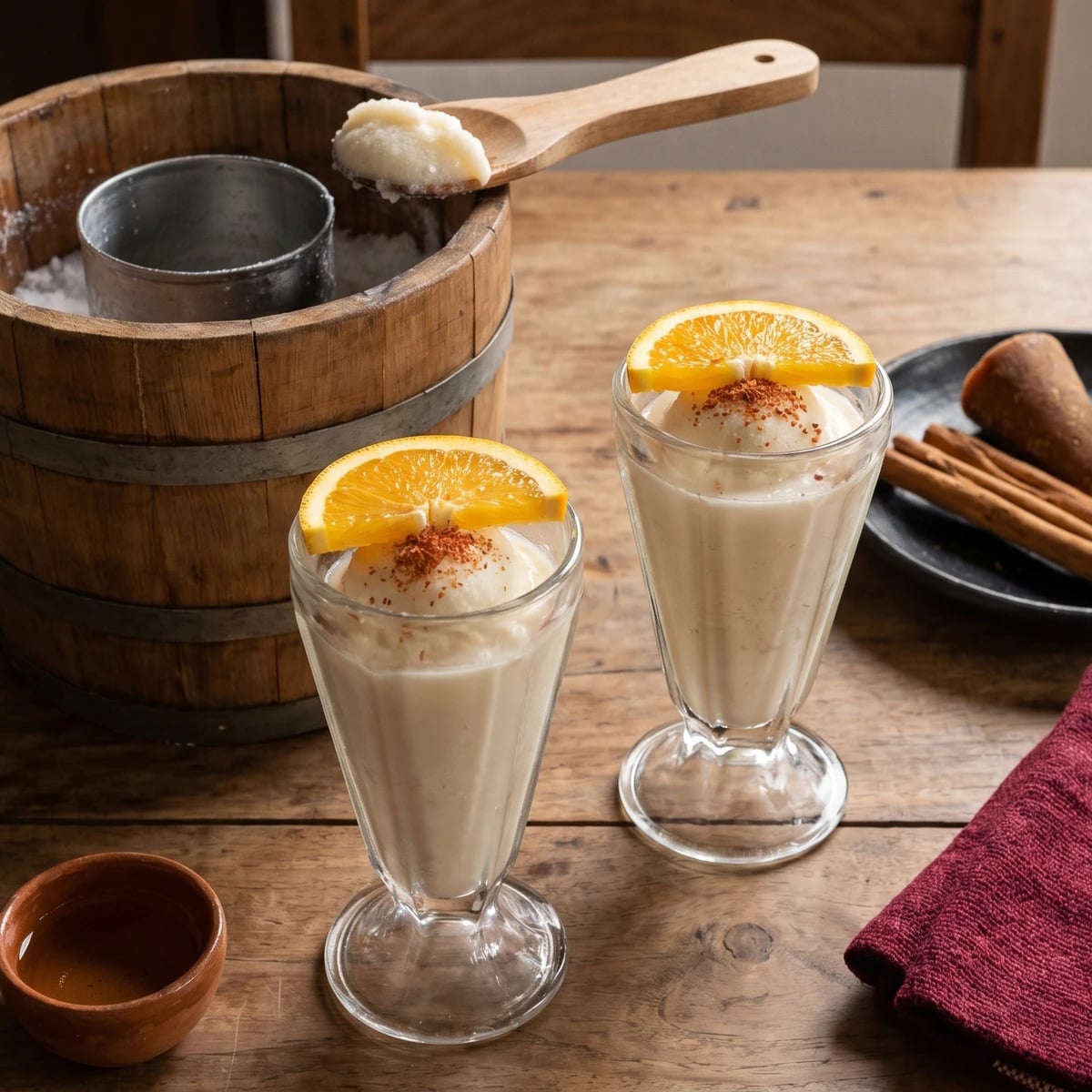
Oaxaca's smoky agave nieve, hand-churned in a wooden garrafa packed with salt and ice. Mezcal espadín folded into a slow-cooked cream base, soft enough to scoop, sharp enough to know what you are eating.
This is a Oaxacan nieve. Not an ice cream. Not a sorbet. Not a paleta. A nieve, made in a wooden barrel called a garrafa, churned by hand against a wall of crushed ice and rock salt, the way the senoras at Jardín Sócrates in Oaxaca de Juárez have been making them for over a century. If you have walked through the zócalo on a hot afternoon, you have seen the wooden garrafas lined up under the laurel trees, the women working the cylinders by hand, the small glass cups stacked beside them. That is where this dish lives.
The mezcal is the point. Espadín, joven, from a small palenque in the Valles Centrales, the kind of mezcal that still tastes like the earth pit it was roasted in. You fold it into a cream base built on whole milk, heavy cream, piloncillo, Mexican canela, and a strip of naranja agria peel if you can find one. The piloncillo matters. It carries the molasses note that holds up against the smoke of the agave. White sugar alone tastes thin next to mezcal. Cada estado, su propia cocina, and Oaxaca's nieves are not Mexico City's helados.
A word about the alcohol. You cannot pour in a whole bottle and expect it to freeze. Mezcal lowers the freezing point of the base. Half a cup is the line between a nieve that scoops and a nieve that stays slushy in the cylinder. I learned that the first time I tried to make this for my own students at Cocina del Pueblo and watched the garrafa refuse to set for ninety minutes. My mother's notebook had a margin note from a recipe she copied off a friend in Tlacolula: 'el alcohol no se apura' (alcohol takes its time). She was right. The mezcal goes in cold, just before churning, and never a drop more than the base can carry.
This is an adults-only nieve. It is served in small cups with a wooden pala, sometimes with a pinch of sal de gusano on top and a thin slice of orange. Saber cocinar es saber vivir, and saber servir mezcal en una nieve, that is something Oaxaca has known longer than most countries have been countries.
The nieve de garrafa tradition arrived in Oaxaca through colonial trade routes that brought ice down from the high sierras of Ixtlán and the Mixteca, where mountain cooks had cured snow for the courts of New Spain since the 17th century. By the late 19th century, the families of Tlacolula and Oaxaca de Juárez had codified the wooden-barrel-and-rock-salt method, and Jardín Sócrates emerged as the city's central nevería corridor, with families like the Garcías and the Méndez clan passing down garrafas across four and five generations. Mezcal nieve specifically is a more recent variation, developed in the 1990s and 2000s as Oaxacan mezcal moved from rural sustenance product to internationally recognized denomination of origin, and it now sits alongside the older flavors, leche quemada, tuna, beso oaxaqueño, rose petal, as a permanent fixture of the city's nevería tradition.
Quantity
2 cups
Quantity
1 1/2 cups
Quantity
3/4 cup
Quantity
1/4 cup
finely grated
Quantity
1 strip
no white pith, from a Oaxacan naranja agria if you can find one
Quantity
1 small stick
Quantity
1 pinch
Quantity
5
Quantity
1/2 cup
from a small Oaxacan palenque
Quantity
1 teaspoon
Quantity
for the garrafa
Quantity
for the garrafa
Quantity
for serving
Quantity
for serving
| Ingredient | Quantity |
|---|---|
| whole milk | 2 cups |
| heavy cream | 1 1/2 cups |
| granulated sugar | 3/4 cup |
| piloncillofinely grated | 1/4 cup |
| orange peelno white pith, from a Oaxacan naranja agria if you can find one | 1 strip |
| Mexican canela (Ceylon cinnamon) | 1 small stick |
| fine sea salt | 1 pinch |
| large egg yolks | 5 |
| mezcal espadín, jovenfrom a small Oaxacan palenque | 1/2 cup |
| Mexican vanilla extract | 1 teaspoon |
| coarse rock salt | for the garrafa |
| crushed ice | for the garrafa |
| toasted sal de gusano (optional) | for serving |
| thin orange slices (optional) | for serving |
In a heavy saucepan, combine the milk, cream, granulated sugar, grated piloncillo, orange peel, canela stick, and the pinch of salt. Warm over medium-low heat, stirring slowly, until the sugars dissolve and the surface trembles but does not boil. Pull the pan off the heat. Cover. Let it steep for 20 minutes. The piloncillo gives the base a darker, more honest sweetness than refined sugar alone, and the canela infuses without ever taking over.
Whisk the egg yolks in a heatproof bowl until they loosen and lighten. Ladle in about a cup of the warm cream base, slowly, whisking the whole time. Pour the tempered yolks back into the saucepan. Return to medium-low heat. Stir constantly with a wooden spoon, scraping the bottom and the corners, until the custard coats the back of the spoon and a finger drawn across leaves a clean trail. About six to eight minutes. Do not let it boil. Boiled custard is scrambled custard.
Strain the custard through a fine-mesh sieve into a clean bowl. Discard the orange peel and canela. Set the bowl over a larger bowl of ice water and stir until the custard cools to room temperature. Cover and refrigerate for at least three hours, or overnight. The base must be cold before it ever sees the garrafa. Warm base will not freeze cleanly and the texture will be grainy.
Stir the mezcal and vanilla into the cold custard right before churning. Not earlier. Alcohol evaporates over time and the smoke softens if it sits in a warm bowl. Half a cup is the right amount, enough that you taste the mezcal in every spoonful, not so much that the nieve refuses to freeze. Mezcal espadín from a small palenque in Santiago Matatlán or San Dionisio Ocotepec is what you want. The kind with the smoke still on it. Industrial mezcal is a compromise.
If you have a wooden garrafa with a metal cylinder, this is its moment. Pour the cold base into the metal cylinder and seat it inside the wooden barrel. Pack crushed ice around the cylinder, layering it with handfuls of coarse rock salt, about one cup of salt for every four cups of ice. The salt drops the ice below freezing. That is the trick. Without the salt, the ice melts and nothing freezes. The senoras at Jardín Sócrates have been doing this for generations and they will tell you it is the salt that makes the nieve, not the cold.
Spin the metal cylinder steadily by its handle, scraping the inside walls every few minutes with a long wooden pala. The base will start to cling to the walls within ten minutes. Scrape it down. Keep spinning. After 30 to 45 minutes, you will have a dense, smooth nieve with the consistency of soft-serve. The mezcal will keep it just soft enough to scoop. This is hand work. Your arm will know it tomorrow. La cocina no es decoracion, es trabajo.
Scoop the nieve into stout glass tulip cups with a wooden pala. At Jardín Sócrates the senoras serve it the moment it is ready, never from a freezer. If you must hold it, transfer to a chilled container and freeze for no more than two hours. Past that, the mezcal nieve hardens and loses the soft, pulled-cream texture that defines a true nieve de garrafa. Dust each cup with a pinch of sal de gusano and lay a thin slice of orange across the rim. The smoke, the salt, the cream, the cold. That is the dish.
1 serving (about 155g)
Culinary guides, cultural storytelling, and the editorial depth that makes cooking meaningful.
Discover Culinary Explorer
Chef Lupita
Oaxaca's pre-Columbian amaranth bar, popped on a hot comal and bound with piloncillo, honey, and the sacred Zapotec grain that the Spanish tried, and failed, to outlaw.

Chef Lupita
Oaxaca's Day of the Dead sugar figures, Spanish-Moorish sugar paste molded into lambs, calaveras, and miniature fruits to dress the ofrenda. Edible ancestors, named in royal icing, set out for the souls who come home in November.

Chef Lupita
Oaxaca's hometown nieve, hand-churned in the wooden garrafa with pineapple, shredded carrot, toasted coconut, and chopped pecans. The proud invention of the dulceras under the laurel trees of the Zocalo.

Chef Lupita
Oaxaca's drunken jellied confections, small pastel cubes spiked with mezcal espadin and dusted in powdered sugar. The dulceria tradition of the Centro Histórico in one bite.