
Chef Lupita
Acitrón de Cidra Conventual
Puebla's convent-style acitrón, made from cidra peel instead of endangered biznaga, built through repeated syrup soakings until the cubes turn firm, translucent, and ready for rosca or chiles en nogada.
A cooking platform built around craft, culture, and the stories behind what we eat.
Created by
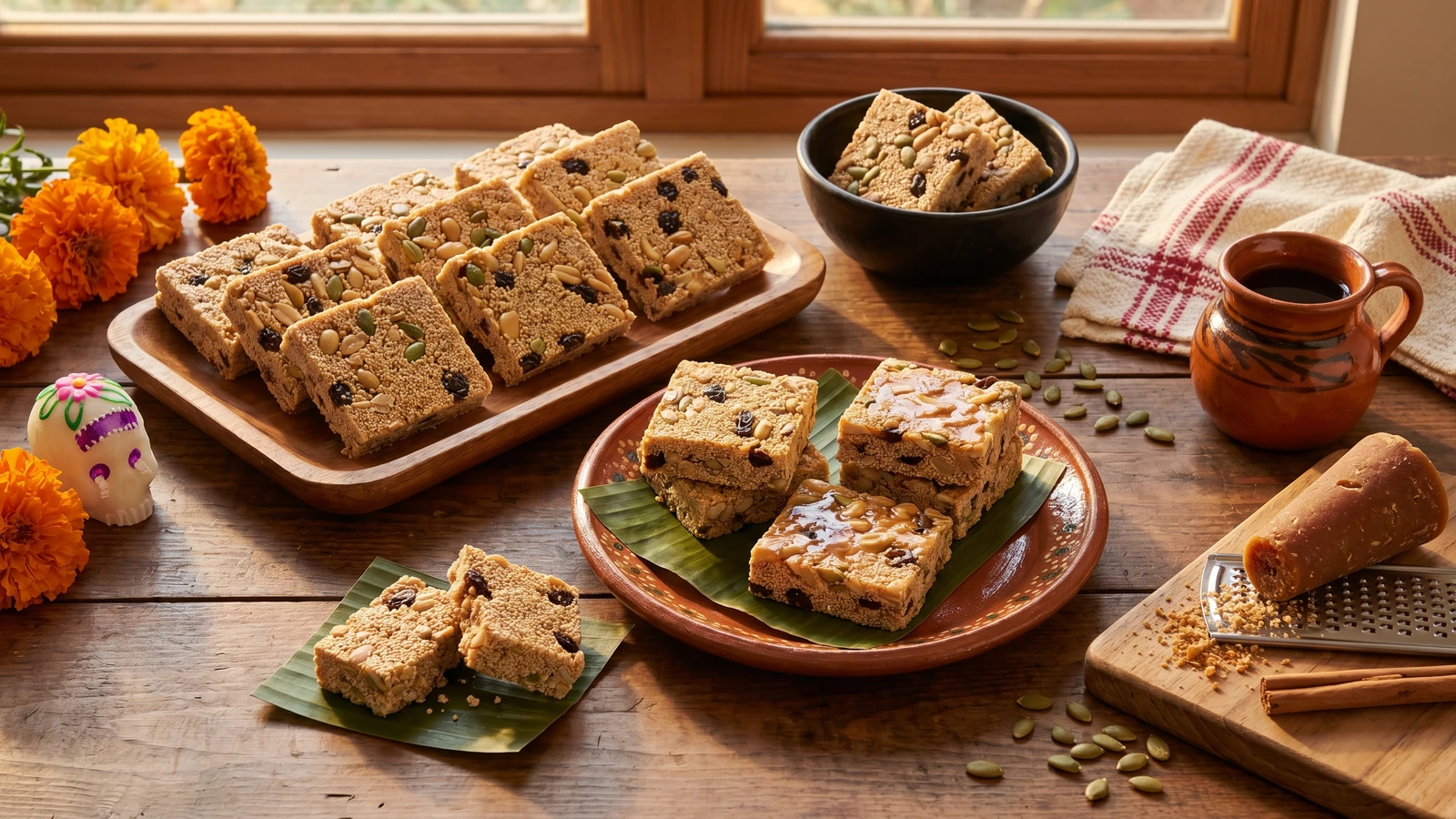
Oaxaca's pre-Columbian amaranth bar, popped on a hot comal and bound with piloncillo, honey, and the sacred Zapotec grain that the Spanish tried, and failed, to outlaw.
This is a Oaxacan dulce. The version sold by women in front of the Templo de Santo Domingo and at the entrance of the Mercado Benito Juarez, wrapped in cellophane twisted at the ends, eaten standing up while the city moves around you. Alegrias travel across central Mexico, Tulyehualco in the Xochimilco area is famous for them, but the grain itself, amaranto, has its deepest roots in Oaxaca's pre-Columbian kitchen and the surrounding Mesoamerican highlands.
Amaranto is the sacred grain. The Mexica and the Zapotec used it in religious offerings centuries before the Spanish arrived, mixed with honey and sometimes with blood, pressed into figures of their gods. The conquistadores understood exactly what they were looking at and tried to ban the crop. They almost succeeded. Amaranto survived because rural cooks kept growing it in small plots and kept making the sweet. What you are making today is a 500-year act of cultural stubbornness pressed into a square.
The technique is simple and unforgiving. You pop the amaranto on a dry comal in tiny batches. Too much in the pan and it burns. You cook the piloncillo to soft ball stage. One degree too hot and the alegria is a brick. You press the warm mixture into a pan with the heel of your greased palm, hard, the way the senora at the Jardin Socrates pressed hers when she taught me, and you wait. No me vengas con atajos. There is nothing to shortcut here. The whole recipe is five ingredients and three decisions, and each decision is the recipe.
My mother had alegrias in her notebook with a single line beneath the recipe: 'la abuela las hacia para los Dias de Muertos.' Grandmother made them for the Days of the Dead. That is where they belong, on the ofrenda next to the pan de muerto and the calaveras de azucar, but they belong on a Tuesday afternoon too, with a glass of cold milk or a cup of cafe de olla. Saber cocinar es saber vivir.
Amaranto (Amaranthus hypochondriacus and A. cruentus) was one of the four staple crops of pre-Columbian Mesoamerica alongside maiz, beans, and squash, and its ritual use was so central to Mexica religious practice, particularly in offerings to Huitzilopochtli where popped amaranto was bound with maguey syrup or human blood into edible god-figures called tzoalli, that the Spanish colonial authorities prohibited its cultivation in the early 16th century. The crop nearly disappeared from Mexican agriculture for four centuries before being revived in the 20th century, with the town of Santiago Tulyehualco in the Xochimilco borough of Mexico City emerging as the modern center of alegria production after a 1970s government initiative reintroduced amaranto farming. The name 'alegria,' meaning joy or happiness, is itself a colonial-era rebranding: friars who could not stamp out the sweet renamed it to strip the religious meaning, but the recipe, popped grain bound in syrup, is essentially unchanged from the tzoalli of the Templo Mayor.
Quantity
2 cups
Quantity
1 cup (about 7 ounces)
chopped or grated
Quantity
1/3 cup
Quantity
1/4 cup
Quantity
1 tablespoon
Quantity
1/2 teaspoon
ground
Quantity
pinch
Quantity
1/3 cup
Quantity
1/3 cup
skinned
Quantity
1/4 cup
Quantity
for greasing the pan and your hands
| Ingredient | Quantity |
|---|---|
| raw amaranto seeds (semillas de amaranto) | 2 cups |
| piloncillochopped or grated | 1 cup (about 7 ounces) |
| wildflower honey or honey from Oaxaca | 1/3 cup |
| water | 1/4 cup |
| fresh lime juice | 1 tablespoon |
| Mexican cinnamon (canela)ground | 1/2 teaspoon |
| sea salt | pinch |
| raw pepitas (hulled pumpkin seeds) | 1/3 cup |
| raw peanutsskinned | 1/3 cup |
| raisins | 1/4 cup |
| manteca de cerdo or unflavored oil | for greasing the pan and your hands |
Heat a heavy comal or cast iron skillet over medium-high until it is hot enough that a single drop of water dances and disappears in two seconds. Working in small batches, no more than two tablespoons of seeds at a time, scatter the amaranto across the dry surface. Stir constantly with a small whisk or wooden spoon. The seeds will pop within five to ten seconds, swelling into tiny pale puffs. Tip them immediately into a wide bowl. Asi se hace y punto. Repeat until all the seeds are popped. The kitchen should smell faintly nutty, like toasted corn. If it smells burnt, your comal is too hot and the next batch will be bitter.
On the same comal, lower the heat to medium. Toast the pepitas, stirring constantly, until they puff and turn pale gold, about two minutes. Tip them in with the popped amaranto. Toast the peanuts the same way until the skins darken and the nuts smell sweet, three to four minutes. Add them to the bowl with the raisins. La cocina no es decoracion, es trabajo. Each step is a layer of flavor. Skip the toasting and the alegria tastes flat.
Combine the piloncillo, honey, water, lime juice, canela, and salt in a heavy small saucepan. Set over medium heat and stir until the piloncillo dissolves completely. Bring to a low boil and cook without stirring, swirling the pan occasionally, until the syrup reaches the soft-ball stage, 235 to 240 degrees on a candy thermometer. This takes eight to ten minutes. Test it like the senoras at Jardin Sócrates do: drop a small spoonful into a cup of cold water. If it forms a soft, pliable ball you can pinch between your fingers, it is ready. If it disperses, keep cooking. If it cracks like glass, you went too far and the alegria will be brittle.
Have an 8-inch square pan greased with manteca and lined with parchment ready before the syrup hits temperature. The moment the syrup is ready, pour it over the popped amaranto, pepitas, peanuts, and raisins. Work fast. Stir with a greased wooden spoon until every seed is coated and the mixture clumps together like wet sand. The piloncillo cools and seizes quickly. If you hesitate, you will be pressing dry rubble into the pan.
Scrape the mixture into the prepared pan. Grease your palms with a little more manteca. Press down hard, very hard, working from the center out to the corners, until the surface is even, dense, and tight. The pressure is what holds the alegria together once it cools. A loose press gives you a crumbly bar that falls apart in the hand. A firm press gives you a clean snap. Lay a sheet of parchment on top and press one more time with the bottom of a flat-bottomed glass.
Let the pan sit undisturbed at room temperature for one hour. Do not refrigerate. Cold sets the piloncillo too hard and the bars crack into shards instead of cutting clean. Once the slab is firm but still slightly warm in the center, lift it out by the parchment and cut into 16 squares with a heavy knife, pressing straight down. Cada estado, su propia cocina, and these are how they cut them in front of the Templo de Santo Domingo.
1 serving (about 59g)
Culinary guides, cultural storytelling, and the editorial depth that makes cooking meaningful.
Discover Culinary ExplorerChef Lupita
Puebla's convent-style acitrón, made from cidra peel instead of endangered biznaga, built through repeated syrup soakings until the cubes turn firm, translucent, and ready for rosca or chiles en nogada.

Chef Lupita
Ciudad de México's Tulyehualco alegría is popped huautli folded into piloncillo honey, pressed with peanuts, pepitas, and raisins, then cut into the rectangular bars that built a pueblo's identity.

Chef Lupita
Querétaro's mercado candy of popped amaranto pressed with dark piloncillo syrup, pepitas, pecans, and cacahuate, a Bajío sweet that respects the seed before it decorates the table.

Chef Lupita
Guanajuato's Day of the Dead alfeñiques are cane-sugar figures pressed in dry molds, finished with bright icing, and set on Talavera guanajuatense platones for the altar.