
Chef Takumi
Agar Jelly with Anko and Fruit (あんみつ, Anmitsu)
Anmitsu looks like a tray of small tasks, but the work is calm: dissolve the kanten fully, chill the pieces clean, then let fruit, anko, and kuromitsu do the speaking.
A cooking platform built around craft, culture, and the stories behind what we eat.

Created by
Nagoya uirō asks for rice flour, sugar, water, and patience. Steam it fully, cool it completely, then slice the quiet, chewy log thin enough that its restraint makes sense.
Uirō is the sweet that makes a doubtful cook tilt the plate and wonder where the rest of it has gone. No filling, no glaze, no little performance. Just rice flour, sugar, and water, steamed into a pale log and sliced thin. That restraint is not poverty. It is the point.
The texture decides everything. If the flour is lumpy or the center undercooked, uirō turns pasty and dull. If the batter is smooth and the heat steady, it cools into a clean chew, dense but not heavy. Resting the batter gives rice flour time to drink the water before heat fixes it in place. Straining it is mercy for your knife later.
Nagoya uirō belongs to the quiet side of wagashi, the tea sweet that doesn't compete with the bowl beside it. This is not a shun dish in the way bamboo shoots are; the season comes through the vessel, the tea, and the small amount you serve. We cut it thin, the way we cut yōkan, because a modest slice lets the grain and sweetness arrive slowly. Leave the plate room. Honmono often looks like very little until you taste what isn't being hidden.
Uirō predates Nagoya's boxed souvenirs; the name is usually traced to the Uirō family of Odawara, whose Muromachi-period medicine gave its name to a rice-flour sweet associated with the same household tradition. Nagoya made uirō a city specialty in the modern period, with Aoyagi Sōhonke founded in 1879 and twentieth-century railway-station sales helping turn the rectangular log into a familiar omiyage. Other regions, especially Odawara and Yamaguchi, keep their own styles, while Nagoya's version is known for plain rice-flour chew and restrained sweetness.
Quantity
150g
Quantity
95g
Quantity
1/8 teaspoon
Quantity
330ml
| Ingredient | Quantity |
|---|---|
| jōshinko (non-glutinous Japanese rice flour) | 150g |
| jōhakutō or fine granulated sugar | 95g |
| fine sea salt | 1/8 teaspoon |
| room-temperature water | 330ml |
Line a nagashikan, the rectangular mold used for Japanese sweets, with parchment. An 8 x 4-inch loaf pan works well if you keep the batter shallow, about 1 to 1 1/4 inches deep. Wrap the steamer lid in a clean cotton cloth so water drops don't fall onto the surface and mark it. Uirō is plain, so every mark shows.
Whisk the jōshinko, sugar, and salt in a bowl, breaking up any sugar lumps. Add about one-third of the water and stir it into a smooth paste, then add the rest of the water little by little. Making a paste first traps fewer dry pockets of rice flour, and those pockets would cook into chalky white specks.
Let the batter rest for 15 minutes, then stir it well and pass it through a fine-mesh sieve into a jug. Resting gives the rice flour time to drink the water before heat fixes the texture. Straining is not fuss. It is how you get the smooth, quiet cut face that makes uirō feel like honmono.
Pour the stirred batter into the lined mold. Tap the mold lightly on the counter to bring up large bubbles, then skim any foam from the surface with a spoon. Cover the mold loosely with its lid or a sheet of foil, tented so it doesn't touch the batter. This protects the top from drips without pressing a mark into it.
Set the mold in a steamer over steadily boiling water and steam for 45 to 55 minutes. Keep the lid closed for the first 35 minutes so the rice starch gels evenly. Check the center with a skewer: it should come out without milky batter clinging to it, and the surface should look satin-smooth and set, with the loaf moving as one piece when nudged.
Lift the mold from the steamer, uncover it, and let the uirō cool in the mold for at least 2 hours. Don't rush this. Hot rice starch hasn't finished setting, and it will smear under the knife. The texture becomes clean and gently elastic only after it cools.
Unmold the uirō and peel away the parchment. Dip a thin knife in water, wipe it clean, and cut the loaf into slices about 1/4 inch thick. Wet the blade again between cuts. Serve three or five slices at room temperature with sencha or usucha, leaving space on the plate. This sweet asks for quiet, not a crowd.
1 serving (about 48g)
Culinary guides, cultural storytelling, and the editorial depth that makes cooking meaningful.
Discover Culinary ExplorerChef Takumi
Anmitsu looks like a tray of small tasks, but the work is calm: dissolve the kanten fully, chill the pieces clean, then let fruit, anko, and kuromitsu do the speaking.

Chef Takumi
A cool square of almond-scented milk, set softly and served with mikan in thin syrup, is dinner-party food without theater. The only stern demand is restraint with the fragrance.

Chef Takumi
Azuki bar asks for patience twice: once while the beans soften, and once while the frozen bar yields. That hardness is not a flaw. It is the character of the thing.
Chef Takumi
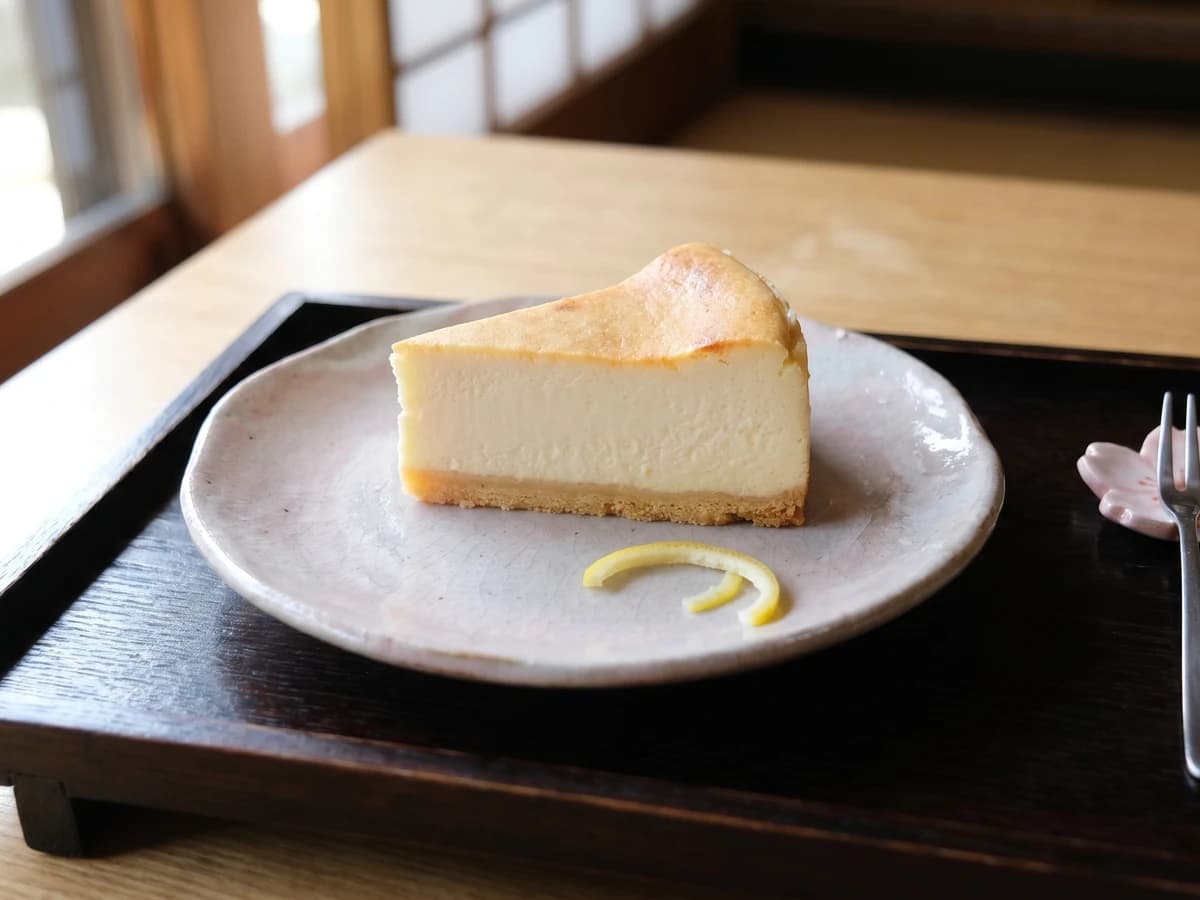
A Japanese baked cheesecake is not trying to float away. It is dense, smooth, and quietly tart, with a clean slice doing the work of decoration.