
Chef Takumi
Agar Jelly with Anko and Fruit (あんみつ, Anmitsu)
Anmitsu looks like a tray of small tasks, but the work is calm: dissolve the kanten fully, chill the pieces clean, then let fruit, anko, and kuromitsu do the speaking.
A cooking platform built around craft, culture, and the stories behind what we eat.

Created by
Autumn's grand yōkan is simpler than it looks: smooth anko, properly boiled kanten, and whole sweet chestnuts held in a firm jelly that slices cleanly.
Chestnuts tell you the season before the calendar bothers. Kuri yōkan belongs to autumn, when the nut is sweet, dense, and worth showing whole. This is not a confection to bury under decoration. The pleasure is in the slice: dark azuki jelly, pale chestnut opened by the knife, nothing hidden.
People see yōkan and imagine a difficult shop sweet. It isn't. The first secret is kanten, the seaweed gel that sets firm and clean. Boil it fully before the anko goes in, because half-dissolved kanten gives a weak set and a cloudy face. Once that is understood, the rest is stirring, pouring, and waiting.
Use good koshian, smooth sweet azuki bean paste, and whole kuri no kanroni, chestnuts simmered in syrup. Homemade is lovely, but a careful jar from Japan is a sensible stand-in, not a crime against the ancestors. The one detail that decides the dish is placement: anchor the chestnuts in a shallow first layer so they sit where the knife can find them.
Serve it in thick, modest slices with bitter green tea. Wagashi, Japanese sweets, are not meant to shout across the table. They answer the season quietly, and the cook's job is to leave them room.
Yōkan began in medieval Japan as a savory preparation connected to Zen temple cooking, then changed over time into a sweet made with azuki bean paste. The firm kanten-set style became widespread in the Edo period after kanten production developed in the seventeenth century, especially around Kyoto and later Shinshū. Kuri yōkan grew as an autumn variation, using preserved chestnuts to make the seasonal fruit visible in each slice.
Quantity
500g
Quantity
200g
drained, syrup reserved if using
Quantity
300ml
Quantity
4g
Quantity
80g
Quantity
1 tablespoon
Quantity
1 pinch
| Ingredient | Quantity |
|---|---|
| koshian (smooth sweet azuki bean paste) | 500g |
| kuri no kanroni (whole chestnuts in syrup)drained, syrup reserved if using | 200g |
| water | 300ml |
| kanten powder | 4g |
| granulated sugar | 80g |
| chestnut syrup (optional) | 1 tablespoon |
| fine sea salt | 1 pinch |
Line a small loaf pan, about 18 by 8 cm, with plastic wrap, or dampen a proper nagashikan mold if you have one. The damp surface helps the set yōkan release cleanly, and a clean release matters because the cut face is the dish's beauty.
Drain the kuri no kanroni and pat the chestnuts dry. Keep them whole. Whole chestnuts are the point here, because each slice should reveal the kuri laid open in cross-section, not little fragments wandering through the bean paste.
Put the water and kanten powder in a saucepan and whisk before heating. Bring it to a steady boil, then simmer for 2 minutes, stirring often. Kanten needs a full boil to dissolve properly. If you only warm it, the yōkan may set weakly or weep later, which is a sad thing after behaving so well up to now.
Add the sugar, chestnut syrup if using, and salt. Stir until the sugar is fully dissolved and the liquid looks clear again. Sugar tightens the texture and rounds the bean flavor, while the pinch of salt keeps the sweetness from turning flat.
Lower the heat and add the koshian in several spoonfuls, stirring until the mixture is smooth and glossy. Don't boil it hard now. You want the kanten evenly carried through the bean paste, not scorched anko on the bottom of the pan.
Cook over low heat for 5 to 7 minutes, stirring with a wooden spatula until the mixture thickens slightly and falls from the spatula in a heavy ribbon. This short cooking drives off enough water to give the yōkan its firm, sliceable body.
Pour a thin layer of the hot anko mixture into the mold and let it sit for 1 minute, just until it begins to dull at the edges. Lay the chestnuts in a single line or two staggered rows, then cover with the remaining mixture. That first layer anchors the chestnuts so they don't all sink or float.
Tap the mold lightly to settle the corners, then smooth the top. Let it cool at room temperature until firm, about 1 hour, then refrigerate for at least 3 hours. Kanten sets as it cools and becomes cleanly sliceable once chilled.
Unmold the yōkan and slice it with a warm, damp knife, wiping between cuts. The warm blade passes through the firm jelly without dragging the bean paste, and every slice should show a quiet brown face with pale chestnut moons inside.
1 serving (about 105g)
Culinary guides, cultural storytelling, and the editorial depth that makes cooking meaningful.
Discover Culinary ExplorerChef Takumi
Anmitsu looks like a tray of small tasks, but the work is calm: dissolve the kanten fully, chill the pieces clean, then let fruit, anko, and kuromitsu do the speaking.

Chef Takumi
A cool square of almond-scented milk, set softly and served with mikan in thin syrup, is dinner-party food without theater. The only stern demand is restraint with the fragrance.

Chef Takumi
Azuki bar asks for patience twice: once while the beans soften, and once while the frozen bar yields. That hardness is not a flaw. It is the character of the thing.
Chef Takumi
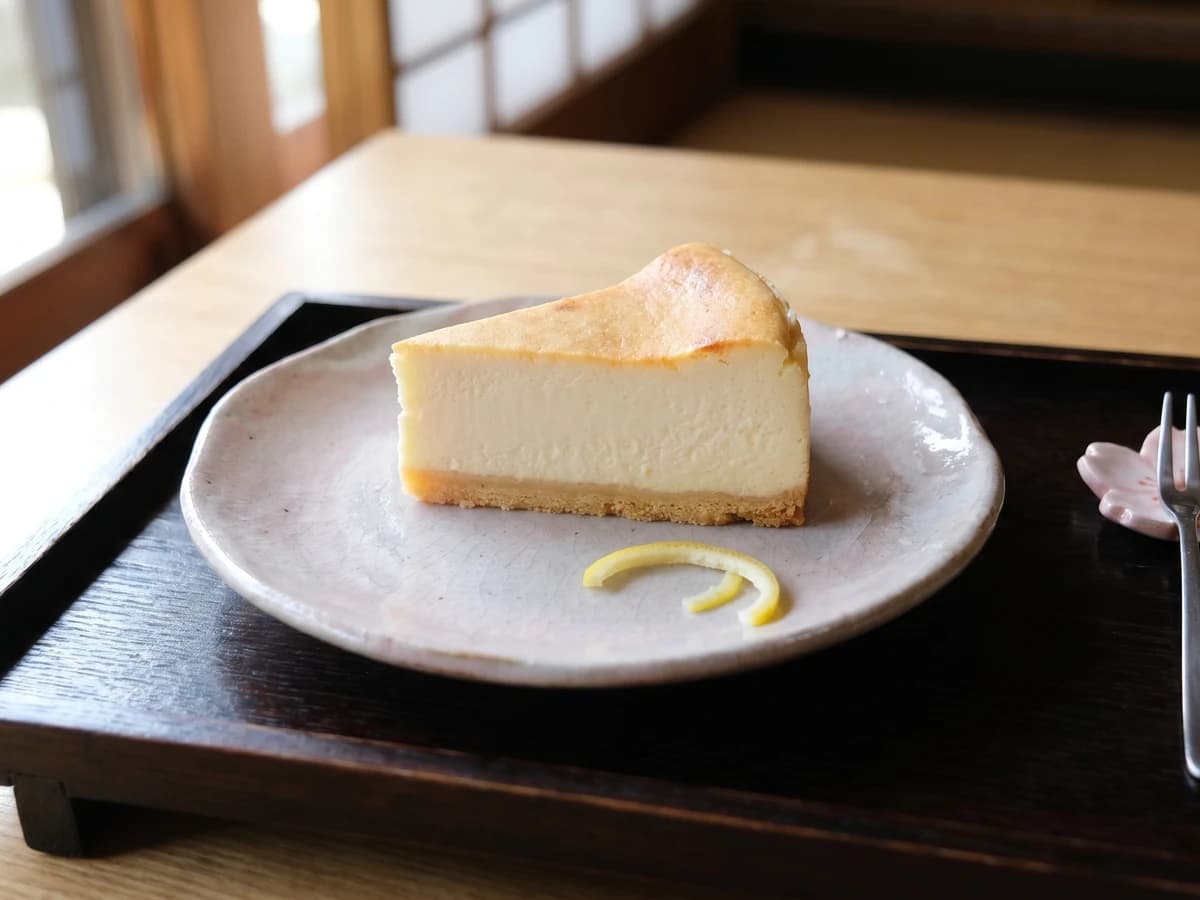
A Japanese baked cheesecake is not trying to float away. It is dense, smooth, and quietly tart, with a clean slice doing the work of decoration.