
Chef Takumi
Agar Jelly with Anko and Fruit (あんみつ, Anmitsu)
Anmitsu looks like a tray of small tasks, but the work is calm: dissolve the kanten fully, chill the pieces clean, then let fruit, anko, and kuromitsu do the speaking.
A cooking platform built around craft, culture, and the stories behind what we eat.
Created by
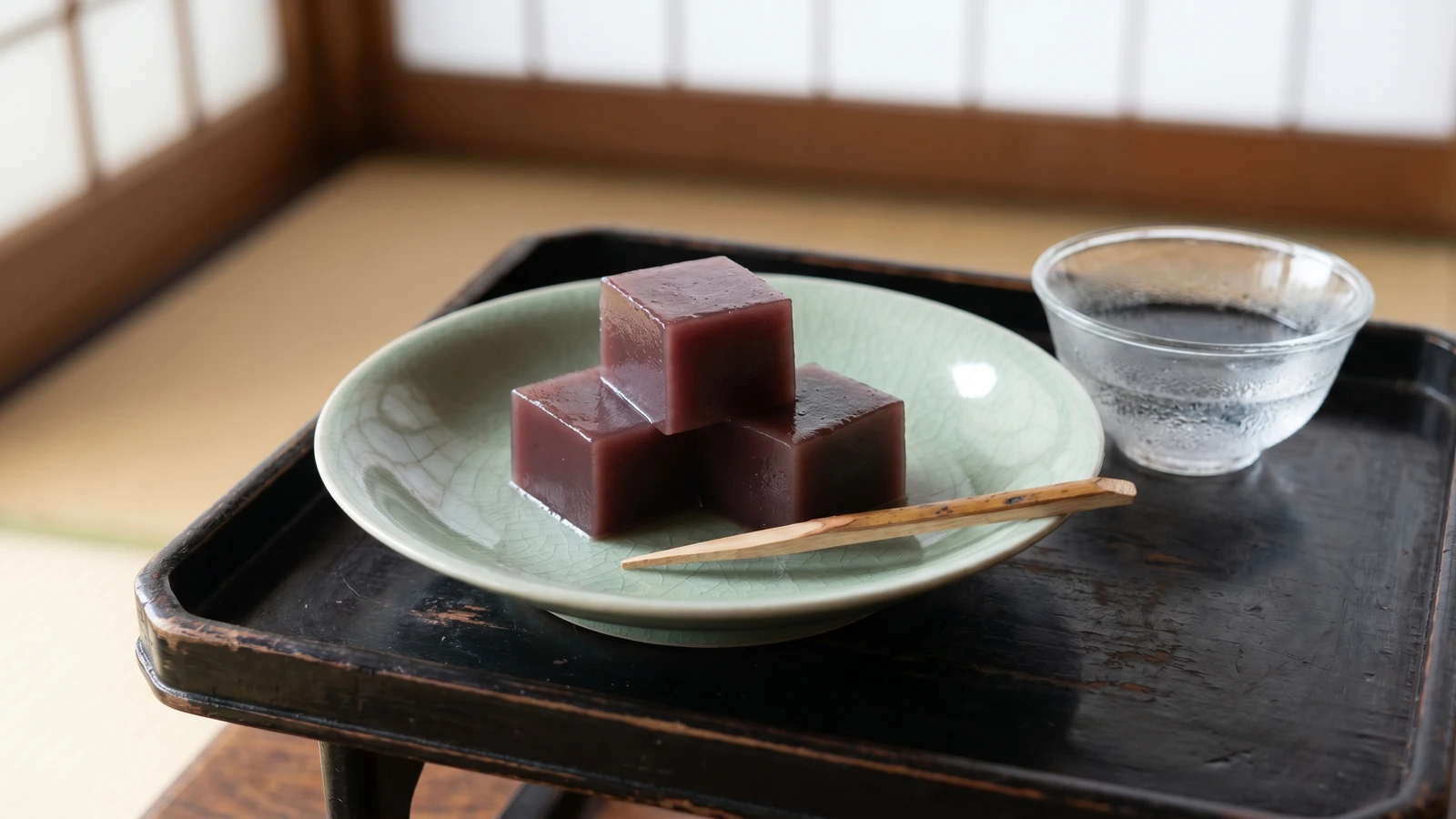
Mizu yōkan is summer yōkan: cool, smooth, and barely set. More water and less kanten make it tender enough to cut cleanly and eat chilled from a small dish.
Mizu yōkan belongs to the heavy air of June through August, when even sweetness should feel cool. It looks like a confectioner's work, all dark red gloss and clean edges, but don't let that frighten you. This is anko, water, kanten, sugar, and salt. The first secret is not force. It is proportion.
Kanten, the seaweed gel we use for setting sweets, is firm by nature. Use too much and you have a rubber block pretending to be refined. Use too little and the yōkan slumps when you cut it. Mizu yōkan asks for a softer hand than the dense neri yōkan served with tea: enough kanten to hold a clean slice, enough water to let the bean paste taste loose and cool on the tongue.
The detail that decides it is dissolving the kanten completely before the anko goes in. Kanten must boil to set properly, but anko doesn't want rough handling after that. Boil the kanten with water until it disappears, then stir in the bean paste gently and strain if you want the finest texture. Nothing hidden here. Good koshian, a pinch of salt, and a patient chill do nearly all the work.
Serve it small, from a glass dish or cool stoneware, with a wooden pick. Three cubes are plenty. Leave it room, because a summer sweet should cool the eye before it cools the mouth.
Yōkan takes its name from the Chinese characters for 'sheep soup,' a reminder that the word once referred to a gelatinous meat preparation before Buddhist vegetarian kitchens in Japan reshaped it around beans. The use of kanten, a dried agar made from seaweed, became established after its discovery in the seventeenth century near Kyoto, allowing yōkan to set cleanly without animal gelatin. Mizu yōkan is now widely treated as a summer sweet, though Fukui is famous for eating a related soft yōkan in winter.
Quantity
400g
Quantity
500ml
Quantity
4g
Quantity
50g
adjust depending on the sweetness of the anko
Quantity
1 small pinch
| Ingredient | Quantity |
|---|---|
| smooth sweet red bean paste (koshian) | 400g |
| water | 500ml |
| powdered kanten | 4g |
| granulated sugaradjust depending on the sweetness of the anko | 50g |
| sea salt | 1 small pinch |
Wet a nagashikan, the rectangular Japanese jelly mold, and shake out the excess water. A small loaf pan or shallow glass dish works too. The thin film of water helps the set yōkan release cleanly without oil, which would cloud the surface.
Put the water and powdered kanten in a saucepan and whisk while bringing it to a boil. Once it boils, lower the heat and simmer for two minutes, stirring steadily. Kanten needs a real boil to dissolve and set; if tiny grains remain, the texture will feel sandy instead of smooth.
Add the sugar and salt, stirring until they disappear. Taste carefully. It should taste a little sweeter than you want the finished yōkan, because cold dulls sweetness and the bean paste will soften it.
Lower the heat and add the koshian in several spoonfuls, stirring after each addition until the mixture is even and glossy. Keep it hot but don't boil it hard now. The kanten has done its work, and rough boiling only dulls the clean bean flavor.
Strain the mixture through a fine sieve into the prepared mold, pressing gently with a spatula only if needed. Straining removes any stubborn bits of bean skin or kanten and gives mizu yōkan its quiet, even face. Tap the mold once on the counter to settle the surface.
Let the mold cool at room temperature until it is no longer hot, then refrigerate for at least three hours. Chilling slowly gives the gel time to settle without separating. The finished yōkan should cut cleanly but tremble slightly when lifted.
Unmold the yōkan and cut it into small rectangles or cubes with a thin wet knife, wiping the blade between cuts. Serve chilled in restrained portions. A clean cut shows the texture you worked for, and a small piece keeps the sweetness calm.
1 serving (about 155g)
Culinary guides, cultural storytelling, and the editorial depth that makes cooking meaningful.
Discover Culinary ExplorerChef Takumi
Anmitsu looks like a tray of small tasks, but the work is calm: dissolve the kanten fully, chill the pieces clean, then let fruit, anko, and kuromitsu do the speaking.

Chef Takumi
A cool square of almond-scented milk, set softly and served with mikan in thin syrup, is dinner-party food without theater. The only stern demand is restraint with the fragrance.

Chef Takumi
Azuki bar asks for patience twice: once while the beans soften, and once while the frozen bar yields. That hardness is not a flaw. It is the character of the thing.
Chef Takumi
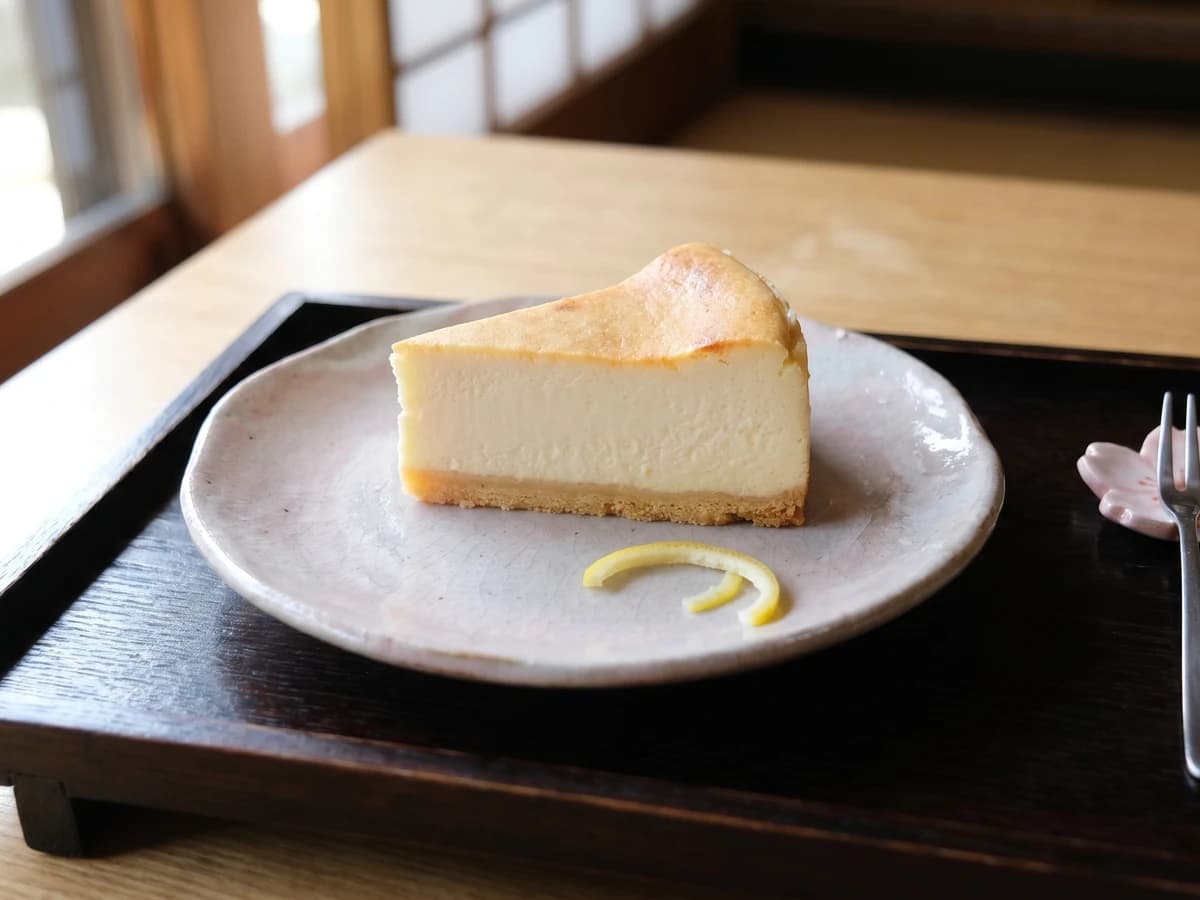
A Japanese baked cheesecake is not trying to float away. It is dense, smooth, and quietly tart, with a clean slice doing the work of decoration.