
Chef Takumi
Agar Jelly with Anko and Fruit (あんみつ, Anmitsu)
Anmitsu looks like a tray of small tasks, but the work is calm: dissolve the kanten fully, chill the pieces clean, then let fruit, anko, and kuromitsu do the speaking.
A cooking platform built around craft, culture, and the stories behind what we eat.
Created by
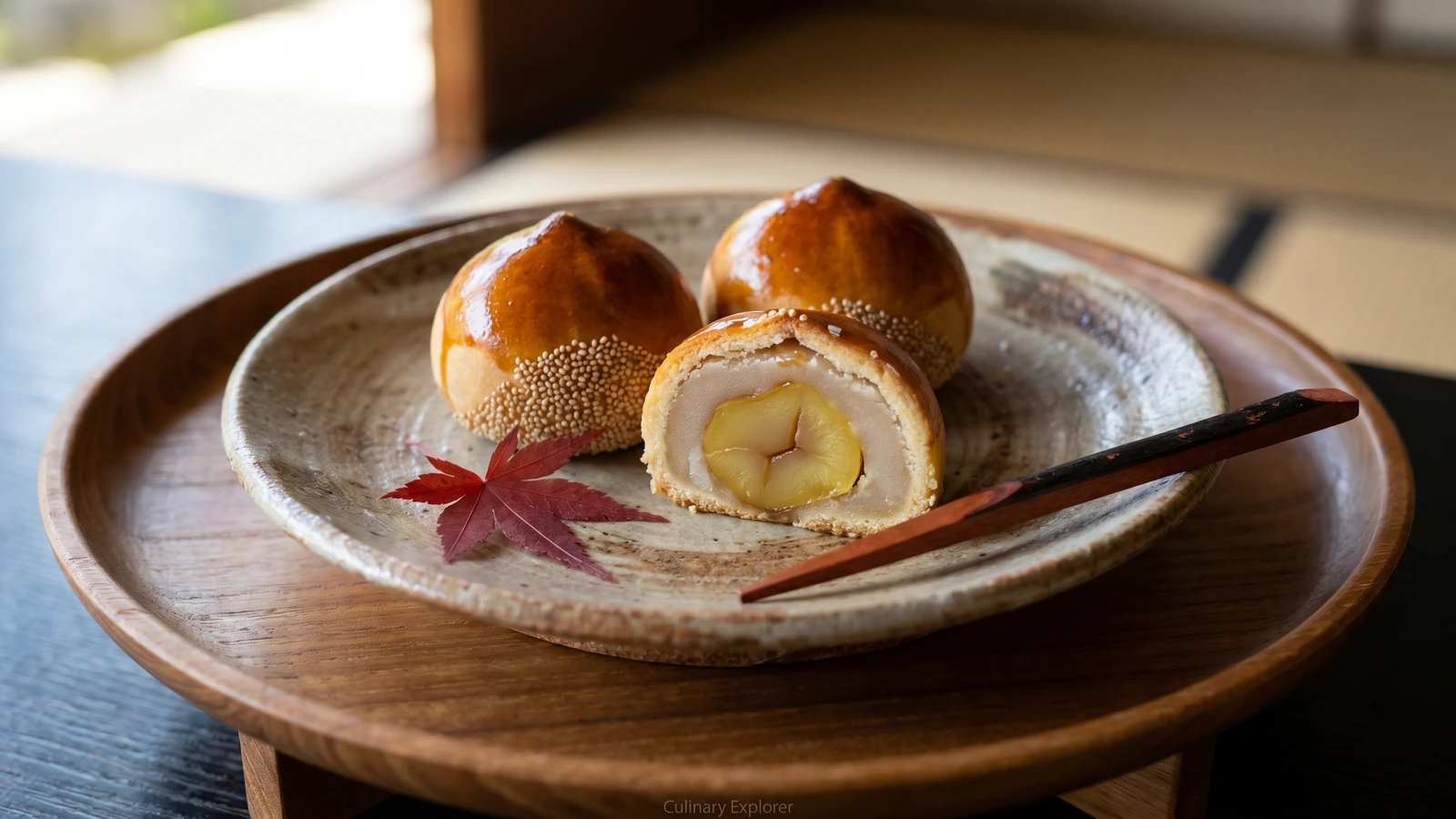
Autumn sits inside this manjū: a whole sweetened chestnut wrapped in pale bean paste, sealed in soft dough, and brushed until the top bakes glossy as lacquer.
Chestnut is not a loud ingredient. It doesn't shout sweetness; it sits there, pale gold and patient, asking you to notice autumn properly. Kuri manjū is the celebratory version of an everyday sweet: a soft baked shell, pale shiro-an, and one whole kuri kanroni hidden at the center so the cut face tells the truth.
People see the glossy dome and assume wagashi has gone into its formal clothes. Let it. The work is simple: wrap, seal, brush, bake. The one detail that decides it is moisture. The chestnut must be blotted dry, the white bean paste firm enough to hold its shape, and the dough rested until it stops fighting your fingers. Wet filling pushes through the seam; too much flour toughens the skin. Neither is a tragedy, but both are avoidable.
We make these when chestnuts are at their shun, or from good kuri kanroni when the season has been preserved in syrup. Use that jar without apology; here it is honmono, a preserved chestnut doing exactly what it was meant to do. The glaze is not decoration alone. A thin coat of yolk, mirin, and a breath of soy browns into that chestnut shine, and a second coat gives the lacquered top without weighing the bun down. Leave the tray uncrowded. A small sweet still needs room.
Manjū entered Japan in the fourteenth century through Zen Buddhist connections with China; the confectioner Rin Jōin, said to have arrived in Nara in 1341, is traditionally credited with adapting Chinese mantou into buns filled with sweet bean paste for Buddhist communities. Baked manjū developed later as ovens and egg-glazed yaki-gashi became part of confectionery shops, giving sweets like kuri manjū their glossy browned shell rather than a white steamed skin. The chestnut version belongs naturally to autumn, though kuri kanroni, chestnuts simmered in syrup, also carried the flavor into New Year sweets.
Quantity
10 whole
drained, syrup reserved
Quantity
300g
Quantity
150g
plus more for dusting
Quantity
1/2 teaspoon
Quantity
1
beaten
Quantity
55g
Quantity
20g
Quantity
25g
melted and cooled
Quantity
1
Quantity
1 teaspoon
Quantity
3 to 4 drops
Quantity
1 tablespoon
| Ingredient | Quantity |
|---|---|
| kuri kanroni (sweetened chestnuts in syrup)drained, syrup reserved | 10 whole |
| prepared shiro-an (white bean paste) | 300g |
| hakurikiko (Japanese low-protein flour) or cake flourplus more for dusting | 150g |
| baking powder | 1/2 teaspoon |
| large eggbeaten | 1 |
| sugar | 55g |
| mizuame (Japanese starch syrup) or mild honey | 20g |
| unsalted buttermelted and cooled | 25g |
| egg yolk | 1 |
| mirin | 1 teaspoon |
| soy sauce | 3 to 4 drops |
| white poppy seeds (keshi no mi) (optional) | 1 tablespoon |
Check the shiro-an before you begin. It should mound on a spoon and hold a thumbprint without shining wetly. If it feels loose, set it in a small pan over low heat and fold it for three to five minutes, just until a spatula leaves a clean path through it. Cool completely. Wet paste is the quiet troublemaker here: it pushes against the dough, opens seams, and makes the baked skin heavy.
Blot the kuri kanroni dry with a towel. Divide the shiro-an into 10 portions, about 30g each. Flatten one portion in your palm, set a chestnut in the center, and close the paste around it, keeping the chestnut whole. Shape each filled piece into a smooth oval and chill while you make the dough. Dry chestnut, firm paste, clean center. That's how the cut face later shows the kuri clearly, with nothing hidden.
Sift the flour and baking powder together. In another bowl, whisk the beaten egg, sugar, mizuame, and cooled melted butter until smooth. Fold in the flour mixture with a spatula until no dry patches remain. Stop there. Kneading develops gluten, and gluten gives a wagashi shell the wrong sort of chew. Cover and rest the dough for 30 minutes so the flour hydrates and the stickiness settles.
Dust your hands lightly with flour and divide the dough into 10 pieces. Flatten one piece into a thin round, thicker in the center and thinner at the edge. Set a chilled filling ball in the middle and draw the dough up around it, pinching the seam closed with no trapped air. Air pockets expand in the oven and crack the dome, which sounds more dramatic than it is, but we may as well not invite it.
Roll each manjū seam-side down into a smooth chestnut-like dome, slightly pointed at one end if you like. Press the lower end into the white poppy seeds, if using, and set the pieces on a parchment-lined baking sheet with space between them. Chill for 15 minutes while the oven heats to 180°C or 350°F. A short chill firms the surface so the glaze goes on thinly instead of dragging the dough.
Mix the egg yolk, mirin, and soy sauce. Brush a very thin coat over the domes, avoiding puddles near the base. Bake for 10 minutes, then brush on a second thin coat and bake 7 to 9 minutes more, until the tops are glossy chestnut brown and the bottoms are lightly set. The second coat gives depth of color; a thick first coat only streaks and tastes eggy.
Move the manjū to a rack and cool completely. They are good the day they are baked, but better after a night in an airtight container, when moisture from the filling softens the shell evenly. Cut one only after it is cool if you want the neat cross-section: pale shiro-an, whole golden kuri, glossy brown skin.
1 serving (about 70g)
Culinary guides, cultural storytelling, and the editorial depth that makes cooking meaningful.
Discover Culinary ExplorerChef Takumi
Anmitsu looks like a tray of small tasks, but the work is calm: dissolve the kanten fully, chill the pieces clean, then let fruit, anko, and kuromitsu do the speaking.

Chef Takumi
A cool square of almond-scented milk, set softly and served with mikan in thin syrup, is dinner-party food without theater. The only stern demand is restraint with the fragrance.

Chef Takumi
Azuki bar asks for patience twice: once while the beans soften, and once while the frozen bar yields. That hardness is not a flaw. It is the character of the thing.
Chef Takumi
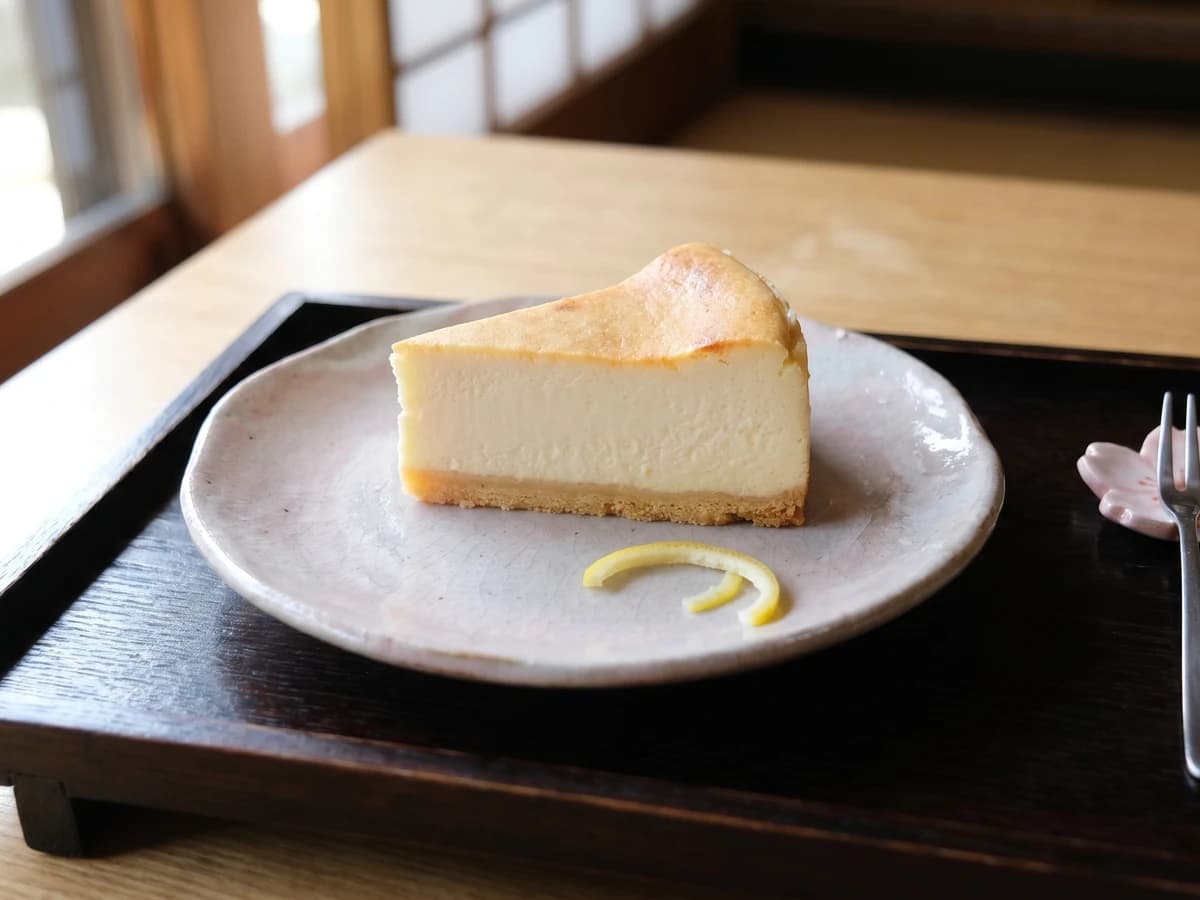
A Japanese baked cheesecake is not trying to float away. It is dense, smooth, and quietly tart, with a clean slice doing the work of decoration.