
Chef Lupita
Acitrón de Cidra Conventual
Puebla's convent-style acitrón, made from cidra peel instead of endangered biznaga, built through repeated syrup soakings until the cubes turn firm, translucent, and ready for rosca or chiles en nogada.
A cooking platform built around craft, culture, and the stories behind what we eat.
Created by
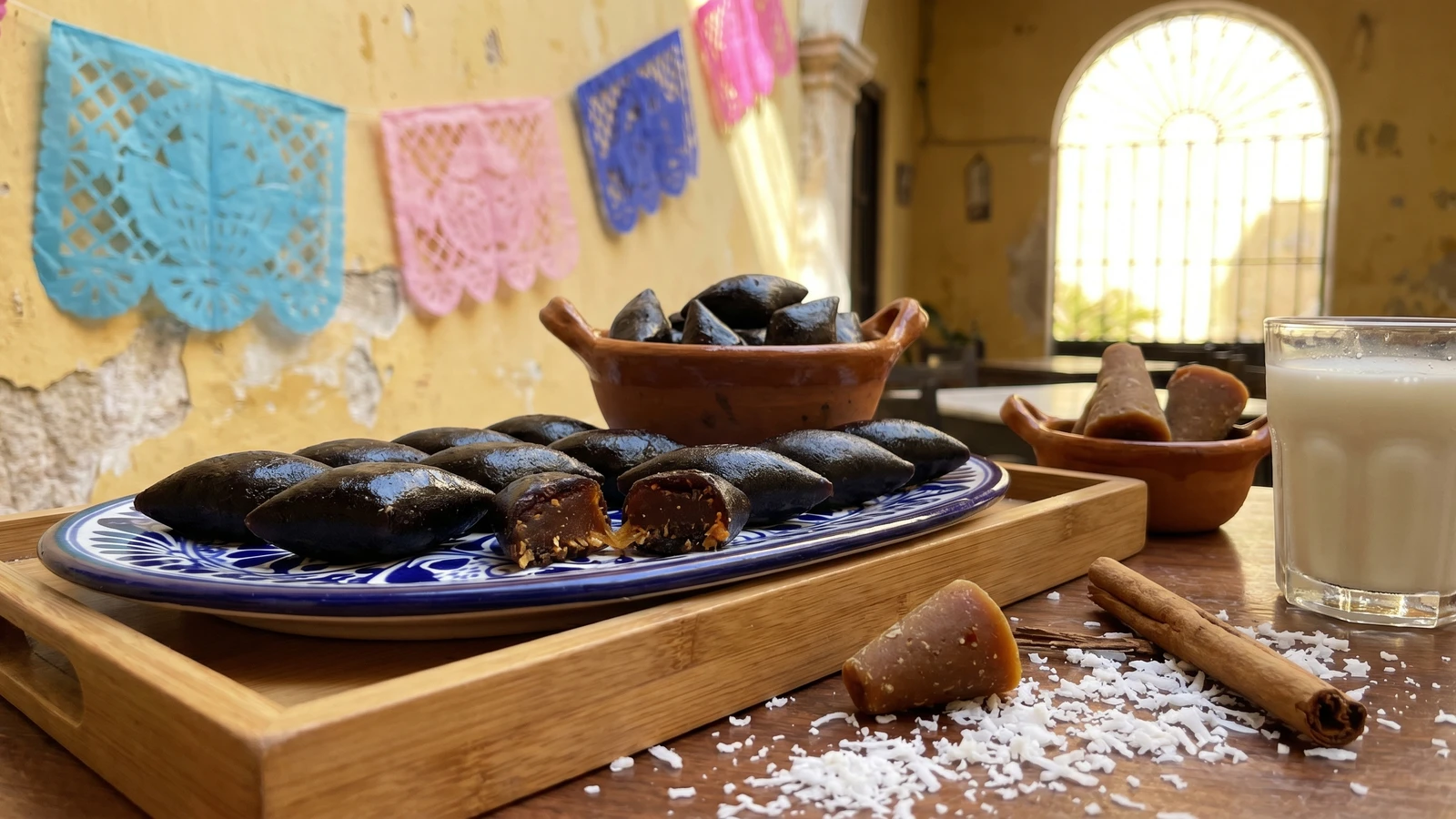
Yucatán's dark coconut rombos, bound in caramelo quemado de piloncillo and shaped by hand, with the bittersweet edge that gives them their name and their color.
Negritos are from Yucatán. From the dulcerías of Mérida, from the bandejas of the señoras at the Lucas de Gálvez market who sell them next to the mazapanes and the cocadas. The Yucatán peninsula grows coconut along its coast and has worked piloncillo and caramelo into a dulcería tradition that belongs to the southeast, not to the central plateau, not to the north. Cada estado, su propia cocina.
The name tells you the technique. Negritos. Little black ones. The color does not come from chocolate. There is no chocolate in this dulce. The color comes from caramelo quemado, sugar taken past amber, past mahogany, almost to the edge of bitter ruin. That dark, smoky sugar is what binds the coconut and what gives the candy its bittersweet edge. A pale negrito is a failure. If yours come out the color of a cocada, you stopped too soon at the cazo.
My mother did not make negritos. She was from Jalisco and her dulces were jamoncillo and ate de membrillo, not the dulces of the southeast. I learned these from a señora named Doña Carmita in a courtyard in Mérida in 2014, with the heat of the afternoon coming through the open door and her hands moving the rombos out of the hot mass before they could set. She told me: no me vengas con atajos. Burn the sugar properly. Use fresh coconut. Use piloncillo, not brown sugar. Shape them by hand, not in a mold. Así se hace y punto.
These are dulces de abuela, made for Hanal Pixán, for picnics on the beach, for the table that holds the leche and the cafe on a hot afternoon in Mérida. Saber cocinar es saber vivir.
Coconut arrived in the Yucatán peninsula through the Spanish colonial trade routes that connected the Pacific port of Acapulco with the Caribbean and ultimately with the Philippines via the Manila Galleon, beginning in the late 16th century. By the 18th century, coconut palms had naturalized along the Yucatecan coast and entered the dulcería tradition the convents of Mérida and Campeche had established, where Spanish caramelization techniques met indigenous and African approaches to sweetening with raw cane. The use of piloncillo, an unrefined cane sugar pressed into cones, distinguishes Yucatecan dulces from European-style confections and ties them to the broader Mesoamerican tradition of working with the dark, mineral-heavy sugar that was historically more accessible to home cooks than refined white sugar.
Quantity
1 (about 1 1/2 pounds)
grated fine, about 3 cups grated
Quantity
1 pound (about 2 cones)
chopped
Quantity
1/2 cup
Quantity
1 cup
Quantity
1 stick
Quantity
1 small piece
the colored layer only, no white pith
Quantity
1/4 teaspoon
Quantity
1 tablespoon
for greasing the work surface
| Ingredient | Quantity |
|---|---|
| fresh mature coconutgrated fine, about 3 cups grated | 1 (about 1 1/2 pounds) |
| piloncillochopped | 1 pound (about 2 cones) |
| granulated cane sugar | 1/2 cup |
| water | 1 cup |
| canela mexicana (Mexican cinnamon) | 1 stick |
| orange peelthe colored layer only, no white pith | 1 small piece |
| sea salt | 1/4 teaspoon |
| manteca de cerdo (pork lard)for greasing the work surface | 1 tablespoon |
Crack the coconut and reserve the water for drinking. Pry the white meat from the shell. Peel off the thin brown skin with a paring knife. Grate the meat on the fine side of a box grater, or pulse it in a food processor until it looks like wet snow. You want about three packed cups. Do not use the bagged dried coconut from the supermarket. That is sweetened, it is dehydrated, and it will not absorb the caramelo the way fresh coconut does. The whole dish lives or dies on this ingredient.
In a heavy-bottomed cazo or saucepan, melt the granulated cane sugar over medium heat. Do not stir. Let it melt, then turn amber, then deep mahogany, then dark, almost black, with thin wisps coming off the surface. This is caramelo quemado. It will smell sharp and a little bitter. That bitter edge is what gives negritos their name and their color. Pull the cazo off the heat the second the caramel goes near-black. Burned sugar is the recipe. Burned past that point is bitter ruin.
Stand back. Pour the water into the dark caramel slowly. It will hiss and seize into a hard rock. That is normal. Return the pan to medium heat, add the chopped piloncillo, the canela stick, the orange peel, and the salt. Stir gently as the seized caramel dissolves into the syrup. This takes about five minutes. You will have a deep brown, near-black almíbar that smells of cinnamon, citrus, and burnt sugar.
Add the grated coconut to the bubbling syrup. Stir with a wooden spoon. The mixture will look loose at first. Lower the heat to medium-low and cook, stirring almost constantly, for 25 to 35 minutes. The coconut drinks the syrup. The mixture thickens, darkens, and starts to pull away from the sides of the pan in a single mass. When you drag the spoon across the bottom and the pan stays clean for two seconds before the mixture closes back in, it is ready. Remove the canela stick and the orange peel.
Lightly grease a clean marble slab or a large platter with the manteca. Scrape the hot coconut mixture out in a single mass. Let it rest for 10 minutes, until cool enough to handle but still warm and pliable. Pinch off pieces the size of a walnut. Roll each one between greased palms into a small ball, then flatten gently between your hands into a rombo, a diamond shape with two pointed ends. Yucatecan dulceras shape them this way and that shape is the visual signature. A round one is something else.
Set the shaped negritos on a tray lined with parchment or a lightly greased bandeja. Let them cool completely at room temperature, at least two hours. The outside will set firm with a faint glossy crust while the inside stays moist and chewy. Stored in a covered tin or glass jar, with a sheet of parchment between layers, they keep for two weeks. They are eaten frío, with a glass of cold leche or cafe. Recetas probadas y garantizadas.
1 serving (about 33g)
Culinary guides, cultural storytelling, and the editorial depth that makes cooking meaningful.
Discover Culinary ExplorerChef Lupita
Puebla's convent-style acitrón, made from cidra peel instead of endangered biznaga, built through repeated syrup soakings until the cubes turn firm, translucent, and ready for rosca or chiles en nogada.

Chef Lupita
Ciudad de México's Tulyehualco alegría is popped huautli folded into piloncillo honey, pressed with peanuts, pepitas, and raisins, then cut into the rectangular bars that built a pueblo's identity.

Chef Lupita
Oaxaca's pre-Columbian amaranth bar, popped on a hot comal and bound with piloncillo, honey, and the sacred Zapotec grain that the Spanish tried, and failed, to outlaw.

Chef Lupita
Querétaro's mercado candy of popped amaranto pressed with dark piloncillo syrup, pepitas, pecans, and cacahuate, a Bajío sweet that respects the seed before it decorates the table.