
Chef Takumi
Agar Jelly with Anko and Fruit (あんみつ, Anmitsu)
Anmitsu looks like a tray of small tasks, but the work is calm: dissolve the kanten fully, chill the pieces clean, then let fruit, anko, and kuromitsu do the speaking.
A cooking platform built around craft, culture, and the stories behind what we eat.
Created by
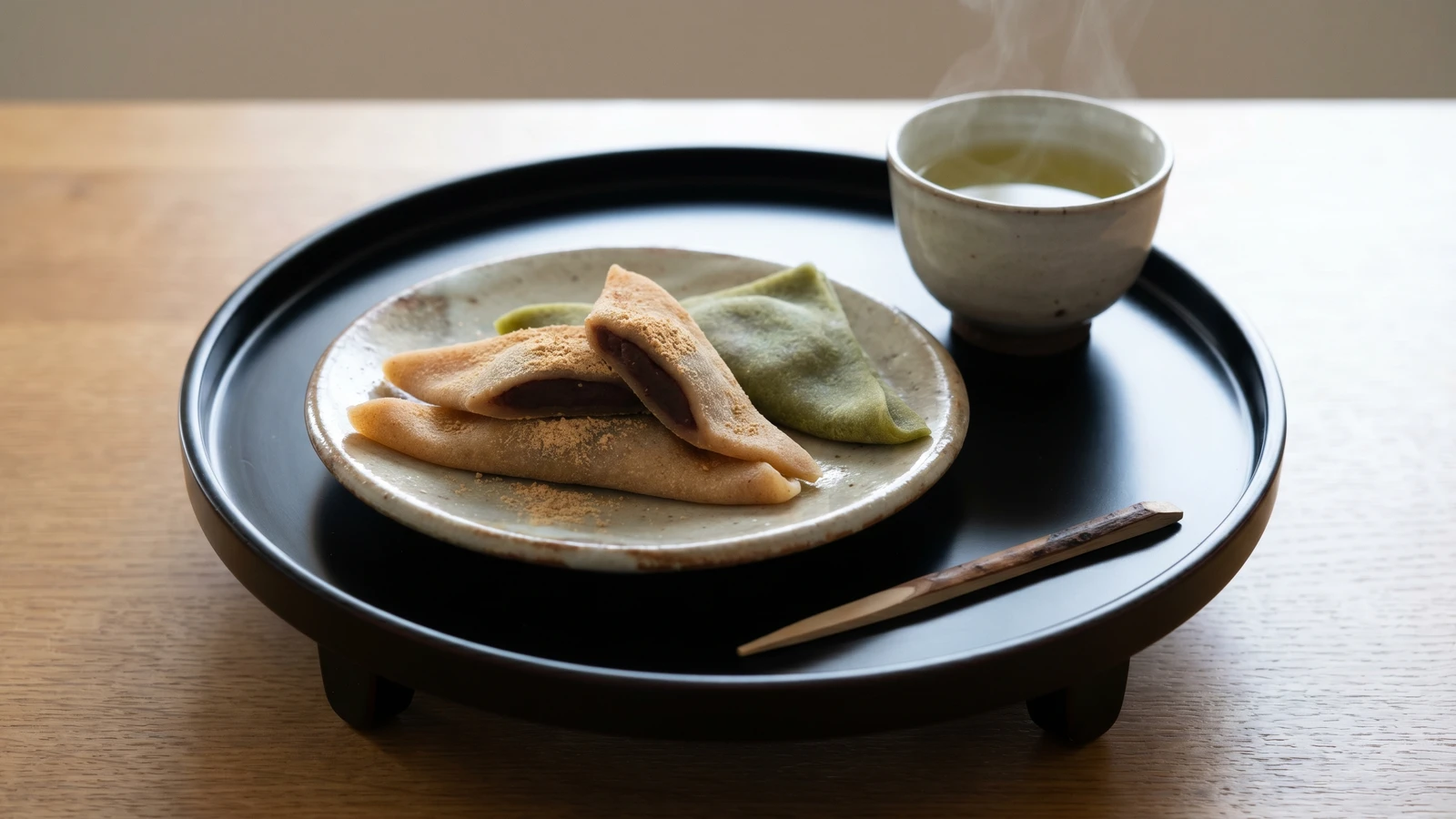
Soft, cinnamon-scented yatsuhashi asks for evenly steamed rice dough and a modest spoon of anko. Fold it while warm, leave it room, and Kyoto's souvenir sweet becomes kitchen work.
Wagashi has a reputation for tiny tools and solemn hands. Nama yatsuhashi doesn't ask for that. It is a soft square of rice dough, scented with nikki, folded into a triangle around anko. The shape looks clever, but the work is plain: make the dough supple, cut it cleanly, and fold before it cools.
The first secret is hydration. Shiratamako begins as coarse little grains, and if water doesn't reach them before the heat does, you get pale specks that chew like sand. Crush the grains, stir the batter smooth, then steam it until the rice starch turns translucent and stretchy. That change is not ceremony. It is the starch taking on water, which is what gives nama yatsuhashi its soft pull.
Kyoto shops now sell cinnamon, matcha, and seasonal fruit pieces by the box, the kind of sweet that rides home as omiyage after a temple visit. At the table, keep it small. Three pieces on a plate, a little tea, plenty of empty space. This is honmono because nothing is forced: good anko, a clean dusting of kinako and cinnamon, and a warm fold made before the dough has a chance to sulk.
Yatsuhashi is a Kyoto meibutsu, a local specialty, generally traced to the Edo period and often linked by name to Yatsuhashi Kengyō, the seventeenth-century blind koto master; the older baked pieces were shaped to suggest the curve of a koto. Nama yatsuhashi, the soft unbaked form, appeared in Kyoto in the 1960s, and folding it around anko made it better suited to quick sale as omiyage, the small travel gifts carried home from temples and stations. Today the soft version is the more familiar yatsuhashi to many visitors, though the baked form is the elder sweet.
Quantity
70g
Quantity
50g
Quantity
70g
Quantity
1 teaspoon
for the dough
Quantity
1 small pinch
Quantity
150ml
Quantity
2 tablespoons
Quantity
1 tablespoon
Quantity
1/2 teaspoon
for dusting
Quantity
180g
divided into 12 small mounds
Quantity
1 teaspoon
use instead of the dough cinnamon for matcha yatsuhashi
Quantity
6
hulled and patted dry for fruit-filled pieces
| Ingredient | Quantity |
|---|---|
| shiratamako (glutinous rice flour) | 70g |
| jōshinko (Japanese non-glutinous rice flour) | 50g |
| jōhakutō or granulated sugar | 70g |
| ground cinnamon or nikkifor the dough | 1 teaspoon |
| fine sea salt | 1 small pinch |
| water | 150ml |
| kinako (roasted soybean flour) | 2 tablespoons |
| katakuriko (potato starch) | 1 tablespoon |
| ground cinnamon or nikkifor dusting | 1/2 teaspoon |
| koshian or tsubuan (sweet red bean paste)divided into 12 small mounds | 180g |
| matcha (optional)use instead of the dough cinnamon for matcha yatsuhashi | 1 teaspoon |
| small strawberries (optional)hulled and patted dry for fruit-filled pieces | 6 |
Divide the anko into twelve 15g mounds and chill them on a tray. If making fruit-filled pieces, use about 8g anko with one small dry strawberry or half strawberry inside each piece. Chill the filling because warm rice dough is soft; a firm mound folds neatly and doesn't smear across the pale skin.
Stir the kinako, katakuriko, and 1/2 teaspoon cinnamon in a small bowl. Sift a light layer on the work surface and keep the rest nearby. The potato starch stops sticking, while kinako keeps the dusting from tasting flat and raw. Use it lightly; too much powder dries the edges and makes the fold look tired.
Put the shiratamako in a heatproof bowl and crush the coarse grains with your fingers or the back of a spoon. Whisk in the jōshinko, sugar, dough cinnamon, and salt. For matcha yatsuhashi, use matcha in place of the dough cinnamon. Add the water in three additions, rubbing out lumps until the batter is smooth and pourable, like heavy cream.
Set the bowl in a mushiki or steamer over a steady simmer, and wrap the lid in a clean kitchen towel so water does not drip onto the dough. Steam for 15 to 18 minutes, stirring and folding once after about 8 minutes with a wet spatula. The dough is ready when it is sticky, elastic, slightly translucent, and no longer smells of raw rice flour.
Turn the hot dough onto the dusted surface and dust the top lightly. Use a bench scraper or spatula to fold it for a minute, then knead briefly with dusted hands until smooth enough to roll. Work while it is warm. Cooled rice dough stiffens, and a cold fold cracks at the corners.
Divide the dough in half and keep one half covered. Roll each half into a rectangle about 16 by 24cm and 2 to 3mm thick, dusting underneath only as needed. Cut each sheet into six 8cm squares and trim ragged edges.
Brush excess dust from each square. Set one mound of anko in the center, fold one corner to the opposite corner, and press gently around the filling to make a triangle. Do not crimp hard. The warm sheet clings as it cools, and heavy pressure pushes the filling to the edge.
Rest the pieces under cover for 15 minutes at cool room temperature so the surface relaxes. Arrange three or five on a plate rather than piling them. Serve with sencha or usucha. Classic pieces keep airtight at cool room temperature for 24 hours; fruit-filled pieces should be refrigerated and eaten the same day, because wet fruit changes the dough.
1 serving (about 35g)
Culinary guides, cultural storytelling, and the editorial depth that makes cooking meaningful.
Discover Culinary ExplorerChef Takumi
Anmitsu looks like a tray of small tasks, but the work is calm: dissolve the kanten fully, chill the pieces clean, then let fruit, anko, and kuromitsu do the speaking.

Chef Takumi
A cool square of almond-scented milk, set softly and served with mikan in thin syrup, is dinner-party food without theater. The only stern demand is restraint with the fragrance.

Chef Takumi
Azuki bar asks for patience twice: once while the beans soften, and once while the frozen bar yields. That hardness is not a flaw. It is the character of the thing.
Chef Takumi
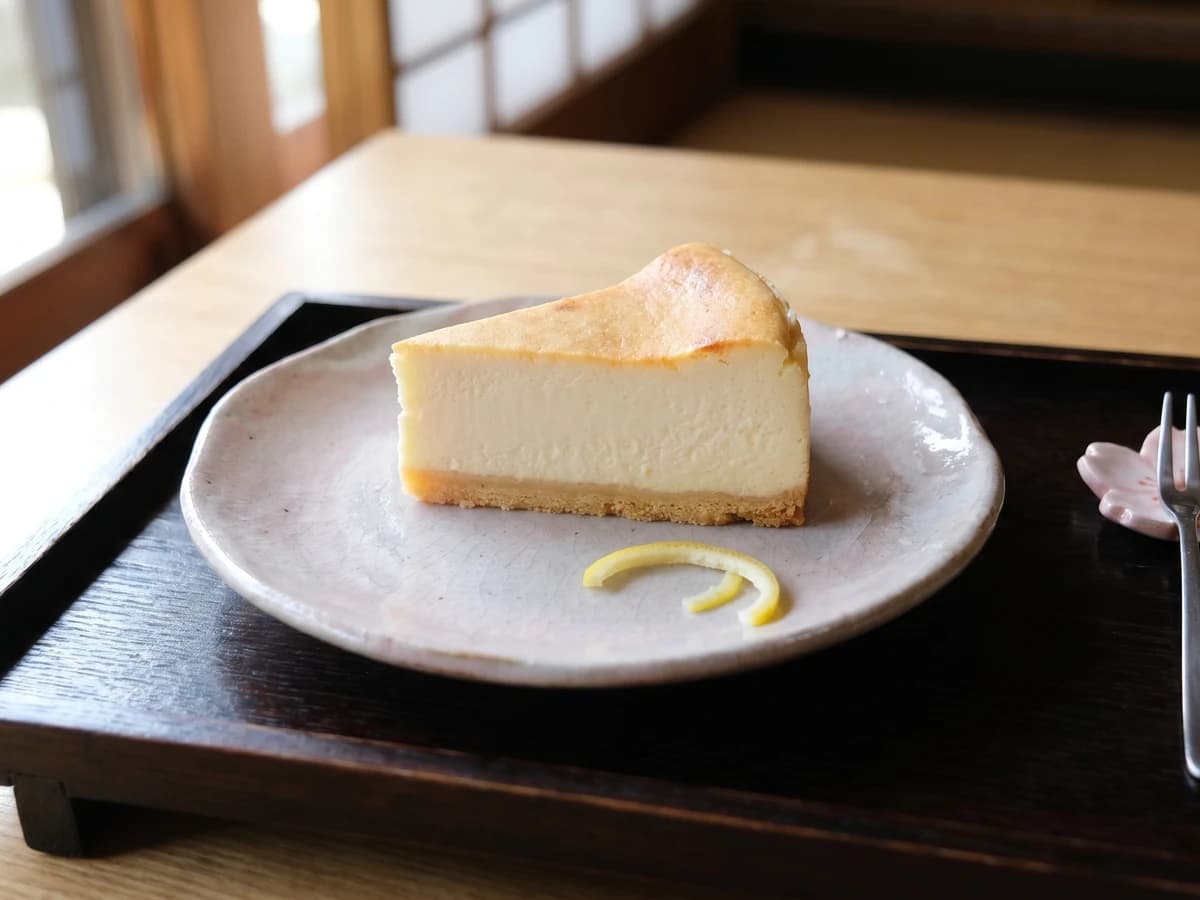
A Japanese baked cheesecake is not trying to float away. It is dense, smooth, and quietly tart, with a clean slice doing the work of decoration.