
Chef Lupita
Acitrón de Cidra Conventual
Puebla's convent-style acitrón, made from cidra peel instead of endangered biznaga, built through repeated syrup soakings until the cubes turn firm, translucent, and ready for rosca or chiles en nogada.
A cooking platform built around craft, culture, and the stories behind what we eat.
Created by
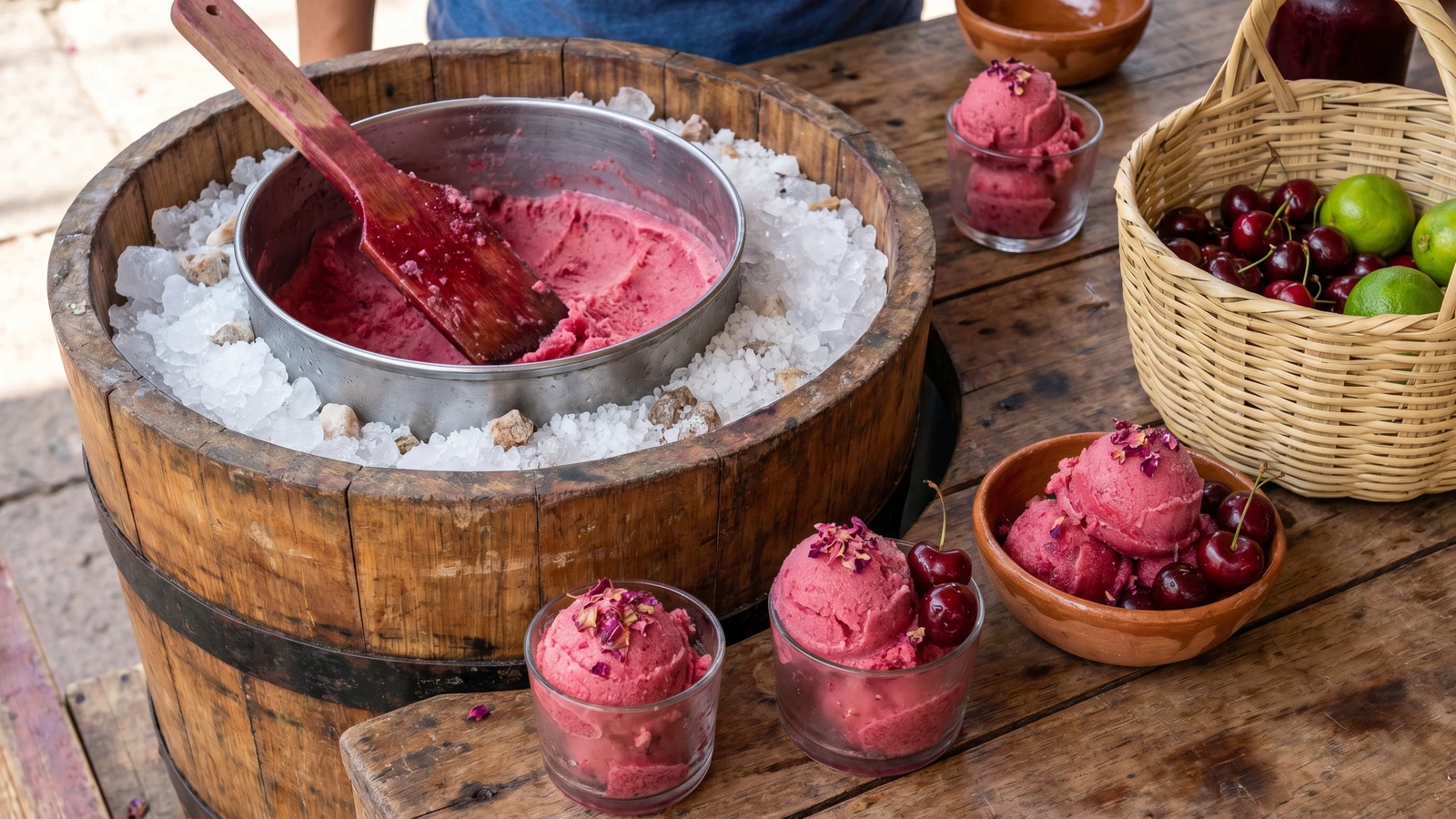
Tepoztlan's wooden-garrafa nieve, hand-churned over ice and salt until cherry and rose turn into a cold, floral scoop that belongs to the mercado, not a factory.
This is Morelos, the high, warm valley of Tepoztlan under the Tepozteco cliffs, where nieve de garrafa is eaten walking through the market after the climb, at a picnic table, or standing in the plaza because patience ran out. The town is famous for flavors that sound like gossip from a curandera's kitchen: rose, mamey, guanabana, zapote, tequila, and the cherry-and-rose combination people call Beso Tepozteco.
The technique is the dish. A metal canister sits inside a wooden garrafa packed with crushed ice and rock salt. You turn it by hand until the fruit syrup freezes against the walls, scrape it down, and keep turning. No me vengas con atajos. A freezer bowl can help a modern cook, but the texture of garrafa nieve comes from scraping and folding as it freezes, not from abandoning it in the freezer like a tray of ice cubes.
There is no chile here because not all Mexican food is chile. The flavor comes from ripe black cherries, a little lime to wake them up, and rose water used with discipline. Too much rose and your nieve tastes like soap. Enough rose and it smells like the flower stalls at dawn. Cada estado, su propia cocina, and this one belongs to Morelos.
Nieve de garrafa in central Mexico descends from colonial-era frozen desserts made possible by bringing mountain ice down from volcanoes such as Popocatepetl and Iztaccihuatl, then packing it with salt to lower the freezing point. By the 19th and early 20th centuries, wooden garrafas with metal inner canisters had become a street and market technology for making fruit-based nieves without electricity. Tepoztlan, Morelos became nationally associated with imaginative garrafa flavors in the late 20th century, especially through shops and market vendors who turned local tourism into a living catalog of regional fruit, flowers, and ceremonial names.
Quantity
1 pound
pitted
Quantity
3/4 cup
Quantity
1 1/2 cups
Quantity
1 tablespoon
Quantity
1/4 teaspoon
Quantity
1 1/2 teaspoons
preferably Mexican or Middle Eastern rose water, not perfume extract
Quantity
1 tablespoon
rinsed briefly
Quantity
8 cups
for packing the garrafa
Quantity
2 cups
for packing the garrafa
| Ingredient | Quantity |
|---|---|
| ripe black cherriespitted | 1 pound |
| granulated sugar | 3/4 cup |
| water | 1 1/2 cups |
| fresh lime juice | 1 tablespoon |
| fine sea salt | 1/4 teaspoon |
| rose waterpreferably Mexican or Middle Eastern rose water, not perfume extract | 1 1/2 teaspoons |
| dried edible rose petals (optional)rinsed briefly | 1 tablespoon |
| crushed icefor packing the garrafa | 8 cups |
| rock salt or coarse kosher saltfor packing the garrafa | 2 cups |
Put the pitted cherries, sugar, water, lime juice, and fine sea salt in a small saucepan. Bring to a gentle simmer over medium heat and cook for 8 to 10 minutes, until the cherries soften and stain the syrup deep ruby. Do not boil it hard. You want the fruit to give itself to the syrup, not turn jammy and heavy.
Let the cherry mixture cool for 10 minutes. Blend until smooth, then strain through a fine-mesh sieve, pressing with a spoon to get the body of the fruit through while leaving tough skins behind. Stir in the rose water and the dried rose petals if using. Taste it now. It should be slightly sweeter and more fragrant than you want the final nieve, because freezing dulls sweetness and aroma.
Pour the base into a covered container and refrigerate until very cold, at least 4 hours. Overnight is better. A cold base freezes faster and forms smaller crystals. Warm syrup makes coarse nieve. Preguntale a las senoras del mercado and they will tell you the same thing: cold base, cold canister, patient hands.
Set the metal canister inside the wooden garrafa or a deep bucket. Add a layer of crushed ice around the canister, then a generous layer of rock salt. Repeat until the ice comes nearly to the top of the canister. The salt is not seasoning the nieve. It makes the ice colder so the base freezes against the metal walls. This is old market engineering, and it works.
Pour the cold cherry-rose base into the metal canister and seal it. Turn the canister steadily for 15 to 20 minutes. Every few minutes, open it and scrape the frozen layer from the sides back into the center with a wooden paddle or sturdy spatula. Keep turning. The texture should move from liquid to slush to a soft, spoonable nieve with tiny crystals that melt clean on the tongue.
When the nieve is thick, pack more salted ice around the canister, cover the top with a folded kitchen towel, and let it sit for 20 to 30 minutes to firm. Do not freeze it solid. Nieve de garrafa should scoop softly, with a little resistance and a clean fruit finish.
Scoop into small glass cups or hand-thrown clay bowls. Add a few rose petals only if you used them in the base. Serve immediately, preferably with wooden spoons and no fuss. La cocina no es decoracion, es trabajo, and here the work is in the turning.
1 serving (about 115g)
Culinary guides, cultural storytelling, and the editorial depth that makes cooking meaningful.
Discover Culinary ExplorerChef Lupita
Puebla's convent-style acitrón, made from cidra peel instead of endangered biznaga, built through repeated syrup soakings until the cubes turn firm, translucent, and ready for rosca or chiles en nogada.

Chef Lupita
Ciudad de México's Tulyehualco alegría is popped huautli folded into piloncillo honey, pressed with peanuts, pepitas, and raisins, then cut into the rectangular bars that built a pueblo's identity.

Chef Lupita
Oaxaca's pre-Columbian amaranth bar, popped on a hot comal and bound with piloncillo, honey, and the sacred Zapotec grain that the Spanish tried, and failed, to outlaw.

Chef Lupita
Querétaro's mercado candy of popped amaranto pressed with dark piloncillo syrup, pepitas, pecans, and cacahuate, a Bajío sweet that respects the seed before it decorates the table.