
Chef Juliana
Ambrosia Baiana
You think curdled milk means you ruined dessert. Good. Tonight you'll do it on purpose, with lemon, yolks, cravo, and sugar, until the pot turns into golden gruminhos.
A cooking platform built around craft, culture, and the stories behind what we eat.
Created by
You don't need candy machinery. You need ripe bananas, sugar, lemon, and patience at the stove until the spoon shows the bottom of the pan.
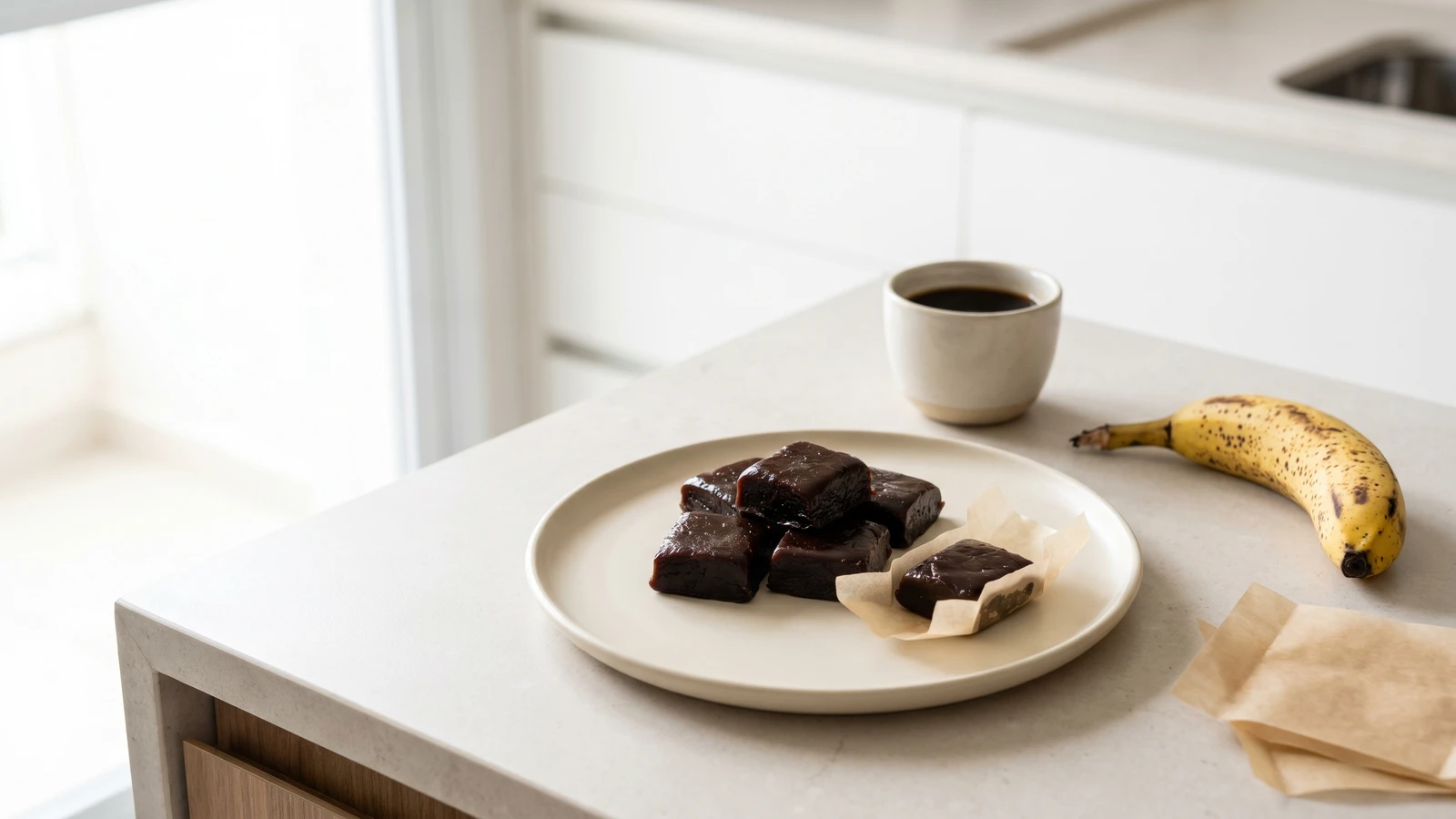
You look at a wrapped little square of dark banana candy and think, isso não é pra mim. Factory thing. Feira thing. Somebody's auntie thing. No. Anota aí: it's banana, sugar, lemon, heat, and attention. Cozinhar não é dom, é um aprendizado, even when the lesson is sticky.
This is comida de verdade in its sweet clothes. It won't resolver o jantar like rice and beans do, but it belongs to the same kitchen: the one that stretches what is cheap, ripe, and local into something worth keeping. The banana that is too soft for your lunch plate is exactly the banana that becomes candy. Waste less, cook more, eat better.
The method is not mysterious. You mash the bananas so they cook evenly. You add lemon so the sweetness has a clean edge and the candy doesn't taste flat. You cook slowly, stirring, until the mixture turns deep brown, glossy, and heavy enough to pull away from the pan. Stop too soon and it won't cut. Go too hard and you'll scorch it, and burnt sugar is a bossy taste.
This is the home version, taught with respect for the Pernambucano cooks who carry these sweets better than any outsider's speech ever could. A gente is just putting the steps in plain words, the way someone should have done for all of us.
Nego Bom is a traditional banana sweet associated with Pernambuco's interior, where ripe bananas and sugarcane turned into small wrapped candies sold in fairs, roadside shops, and neighborhood markets. Its dark color comes from long reduction and caramelization, not chocolate, and the chewy square format made it cheap, portable, and good beside strong coffee. Like many Northeastern sweets, it sits inside a practical home economy: preserve the fruit at its ripest, wrap it, and make it last.
Quantity
8 bananas, about 3 cups
peeled and mashed
Quantity
1 1/2 cups
Quantity
2 tablespoons
Quantity
1 tablespoon, plus more for greasing
Quantity
1/4 teaspoon
| Ingredient | Quantity |
|---|---|
| very ripe bananaspeeled and mashed | 8 bananas, about 3 cups |
| granulated sugar | 1 1/2 cups |
| fresh lime juice | 2 tablespoons |
| unsalted butter | 1 tablespoon, plus more for greasing |
| salt | 1/4 teaspoon |
Butter a small baking dish or tray, about 8 by 8 inches, and line it with parchment paper if you have it. Grease the paper too. Do this before the candy is ready, because once the banana reaches ponto, it thickens fast and won't politely wait while you hunt for a tray.
Peel the bananas and mash them well with a fork until you have a loose, pulpy paste with only small bits left. The smoother mash cooks evenly, which matters because big chunks stay soft while the sugar around them gets too dark. Use very ripe bananas, freckled and soft, because they bring flavor and sweetness without needing nonsense from a packet.
Put the mashed banana, sugar, lime juice, butter, and salt in a heavy saucepan. Set it over medium heat and stir until the sugar dissolves and the mixture loosens, about 3 minutes. The lime doesn't make it sour; it wakes up the banana and keeps the candy from tasting like plain sugar wearing a banana hat.
Lower the heat to medium-low and cook, stirring often with a sturdy spoon, until the mixture thickens, darkens from yellow-brown to deep chestnut, and starts to look glossy, about 30 to 40 minutes. Scrape the bottom and corners every time you stir. Sugar burns first where the spoon gets lazy, and then the whole pan tastes punished.
Keep cooking until the spoon dragged across the bottom opens a clean path that stays visible for 2 seconds before the candy slides back. Then lift a spoonful and let it fall: it should drop heavily, not run like jam. This is the difference between chewy candy and banana spread. Stop too early and it won't cut into squares.
Scrape the hot candy into the prepared dish and smooth the top with a buttered spatula or the back of a spoon. Press it into an even layer about 1/2 inch thick. Even thickness means even chew, and uneven candy gives you soft middles and hard edges, which is how a perfectly good afternoon gets rude.
Let the slab cool completely at room temperature, at least 2 hours, until firm and no longer tacky on top. Lift it out, cut into small squares with a lightly buttered knife, and wipe the blade between cuts if it drags. Wrap each square in parchment or cellophane. Wrapped, it becomes the kind of sweet that sits by the coffee and disappears one by one.
1 serving (about 20g)
Culinary guides, cultural storytelling, and the editorial depth that makes cooking meaningful.
Discover Culinary ExplorerChef Juliana
You think curdled milk means you ruined dessert. Good. Tonight you'll do it on purpose, with lemon, yolks, cravo, and sugar, until the pot turns into golden gruminhos.

Chef Juliana
You are not ruining the milk. You're curdling it on purpose, slowly, until sugar, eggs, cinnamon, and patience turn cheap ingredients into dessert.

Chef Juliana
You think curdled milk means failure. Not here. Milk, yolks, sugar, and lemon cook into golden curds in amber whey, a Minas sweet where the ponto teaches the whole recipe.

Chef Juliana
You already trust rice for dinner. Trust it for dessert: cook it gently with milk, coconut, and canela until each grain turns soft, creamy, and impossible to blame on lack of talent.