
Chef Lupita
White Atápakua with Cilantro (Atápakua Urápiti)
Michoacán's white P'urhépecha atápakua, thickened with maíz urápiti masa and greened with cilantro, is a quiet Meseta stew that proves Mexican food does not need red chile to speak clearly.
Updated June 1, 2026
The P'urhépecha one-pot architecture in full. Churipo de res, de cerdo, de venado y mixto; atápakua de hierbabuena con cerdo, de hongos, de quelites, blanca; sopa tarasca; caldo michi de Pátzcuaro (not de Chapala); caldo de pescado blanco; mole de olla michoacano. The stews the cocineras tradicionales ladle into clay bowls at the K'uínchekua and at every wedding in the Meseta.
A cooking platform built around craft, culture, and the stories behind what we eat.
Chef Lupita
Michoacán's white P'urhépecha atápakua, thickened with maíz urápiti masa and greened with cilantro, is a quiet Meseta stew that proves Mexican food does not need red chile to speak clearly.
Chef Lupita
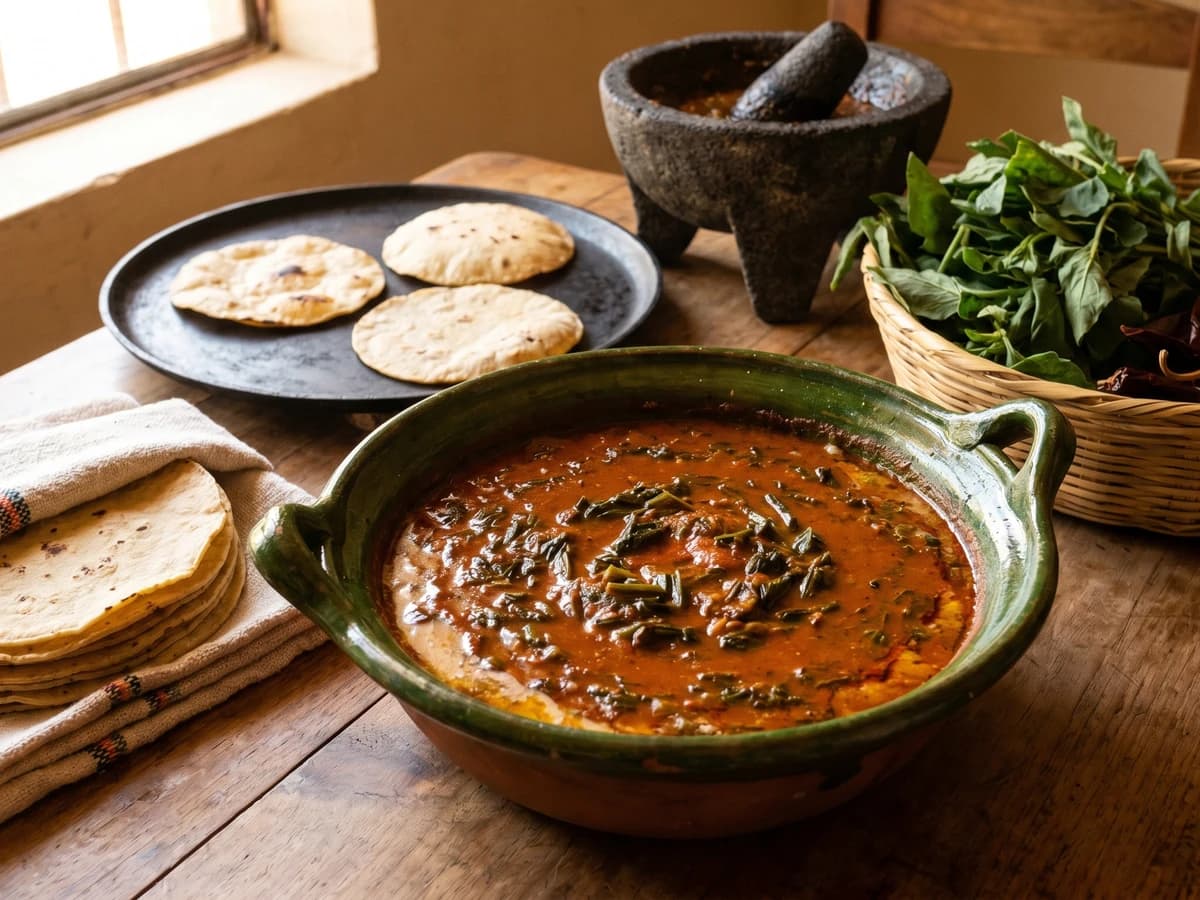
Michoacan's Meseta P'urhepecha atapakua, a masa-thickened stew of milpa quelites, toasted chile guajillo, and broth, carried by cocineras tradicionales who know that corn is structure, not decoration.

Chef Lupita
Michoacán's Lake Pátzcuaro fish broth, made with legal pescado blanco, chile perón, tomato, manteca, and nurite, is a clear fiesta caldo that proves quiet Mexican cooking can still command the table.

Chef Lupita
Michoacán's Pátzcuaro fish broth, built with pescado blanco or charal, jitomate, chile perón verde, cilantro, and nurite, a ribereño Cuaresma pot that belongs to the lake, not to Chapala.

Chef Lupita
Michoacán's Meseta P'urhépecha caldo, clean chicken broth scented with fresh nurite, seasonal vegetables, and chile perón, a midday pot taught by cocineras tradicionales, not restaurant chefs.
Chef Lupita
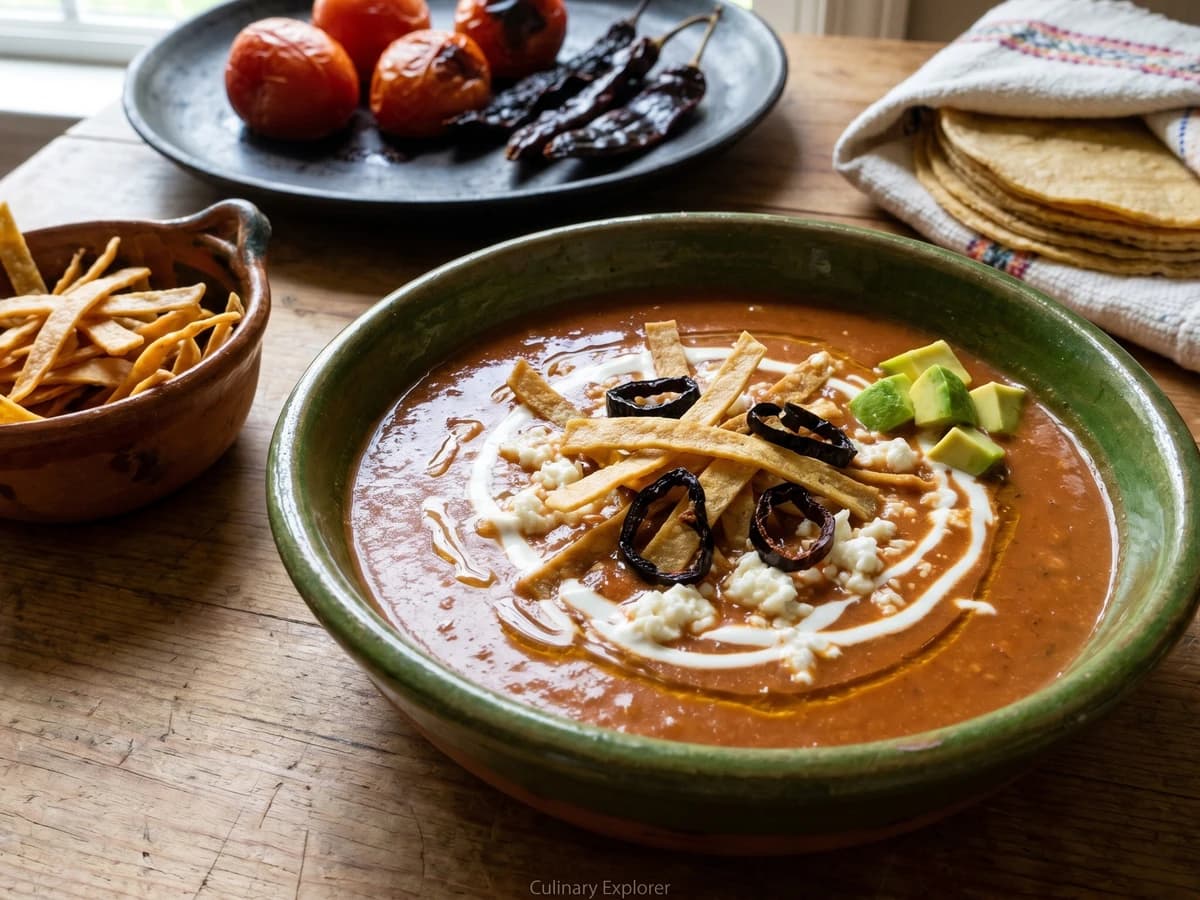
Michoacan's Lake Patzcuaro soup, built from frijol pinto, roasted jitomate, chile pasilla, and lard-fried tortilla strips, finished with crema and queso fresco in the clay bowls of the Meseta.
Chef Lupita
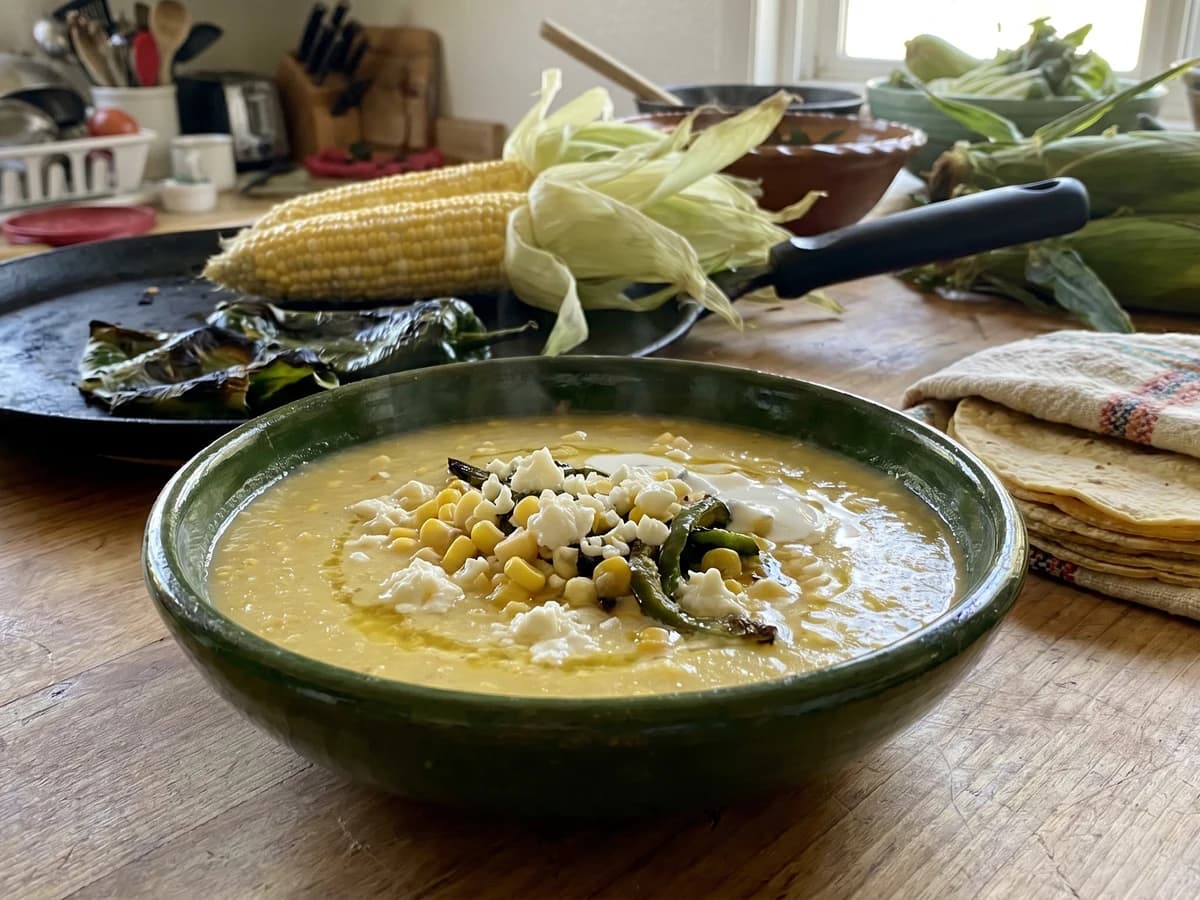
Michoacán's Meseta soup of fresh elote blended with milk and butter, finished with tatemado chile poblano rajas, epazote, and queso fresco, the quiet harvest pot a cocinera puts on the table.

Chef Lupita
Michoacán's Meseta P'urhépecha rainy-season caldo, built with foraged terekuas, chile perón verde, garlic, epazote, and a clean forest broth that tastes like the pine floor after the first storms.

Chef Lupita
Michoacán's P'urhépecha celebration caldo, res and pollo simmered in a guajillo-red broth with corn, chayote, cabbage, and calabacita, served the only proper way: with corundas beside the bowl.

Chef Lupita
Michoacán's Meseta P'urhépecha midday churipo, beef and garbanzo in a red guajillo broth with chayote, cabbage, carrot, and sour tuna, always served with corundas beside the bowl.
Chef Lupita
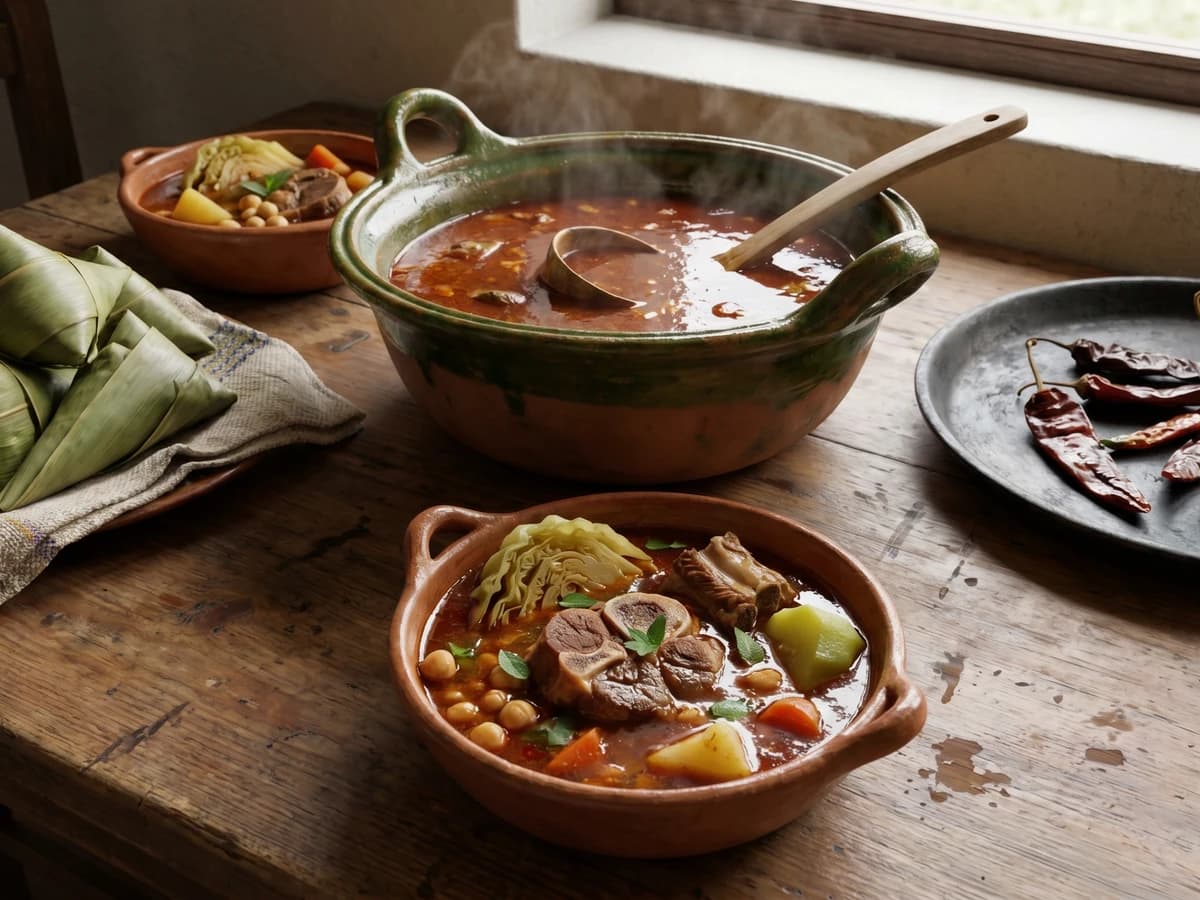
Michoacán's P'urhépecha ceremonial broth from the Meseta and Lake Pátzcuaro, beef shank simmered with guajillo, cabbage, chayote, garbanzo, and hierbabuena, served only with corundas beside the bowl.

Chef Lupita
Michoacán's Meseta P'urhépecha ceremonial caldo, venison simmered with guajillo and ancho, milpa vegetables, and nurite, served properly with corundas because churipo never arrives alone at fiestas.
Chef Lupita
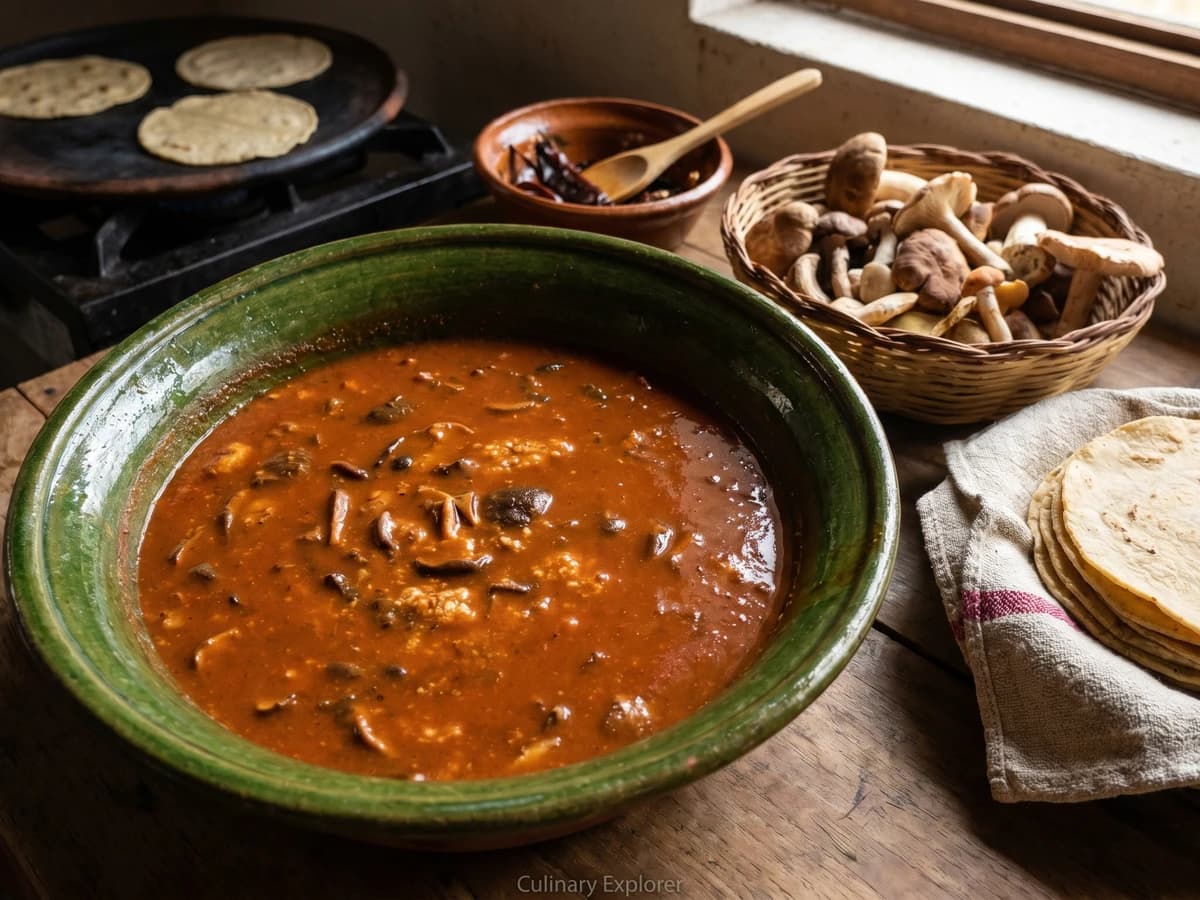
The Meseta P'urhépecha's Cuaresma atápakua, built from wild terekua mushrooms, chile guajillo, and masa de maíz until the sauce becomes a stew and the forest sits in the cazuela.
Chef Lupita
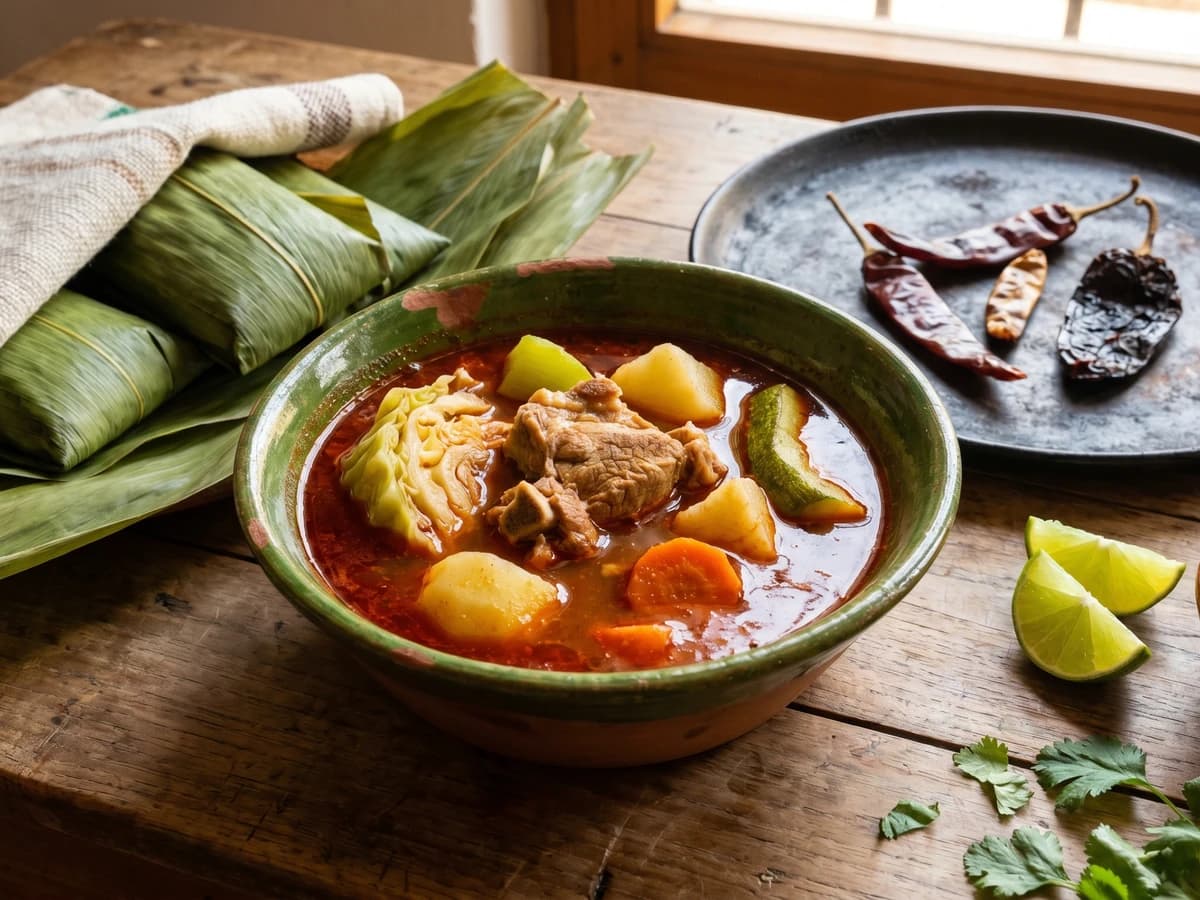
Michoacán's Meseta Purépecha gives this ceremonial pork broth its red guajillo color, its vegetable weight, and its rule: churipo is served with corundas, never alone.

Chef Lupita
Michoacán's P'urhépecha atápakua is a masa-thickened sauce and stew at once, built with pork, chile guajillo, and hierbabuena added only at the end.
Chef Lupita
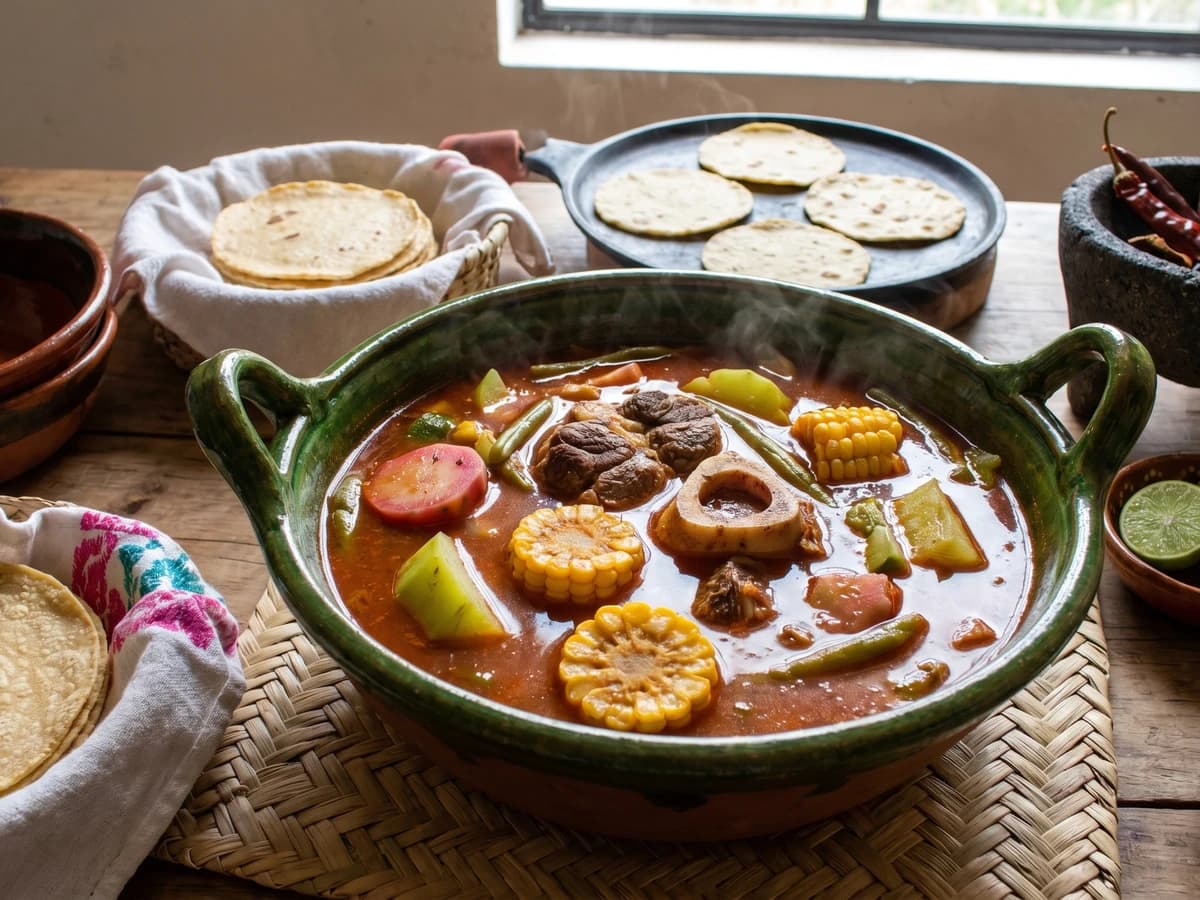
Michoacán's rainy-season mole de olla, built from res con hueso, chile guajillo, chile pasilla, xoconostle, elote, chayote, ejote, calabaza, and epazote, the milpa speaking through one pot.
Culinary guides, cultural storytelling, and the editorial depth that makes cooking meaningful.
Discover Culinary Explorer