
Chef Lupita
Aguascalientes Beef Tongue Pozole (Pozole de Lengua)
Aguascalientes' Bajio pozole de lengua, built with cacahuazintle hominy, tender beef tongue, chile ancho and guajillo, with xoconostle brightness and table garnishes.
A cooking platform built around craft, culture, and the stories behind what we eat.
Created by
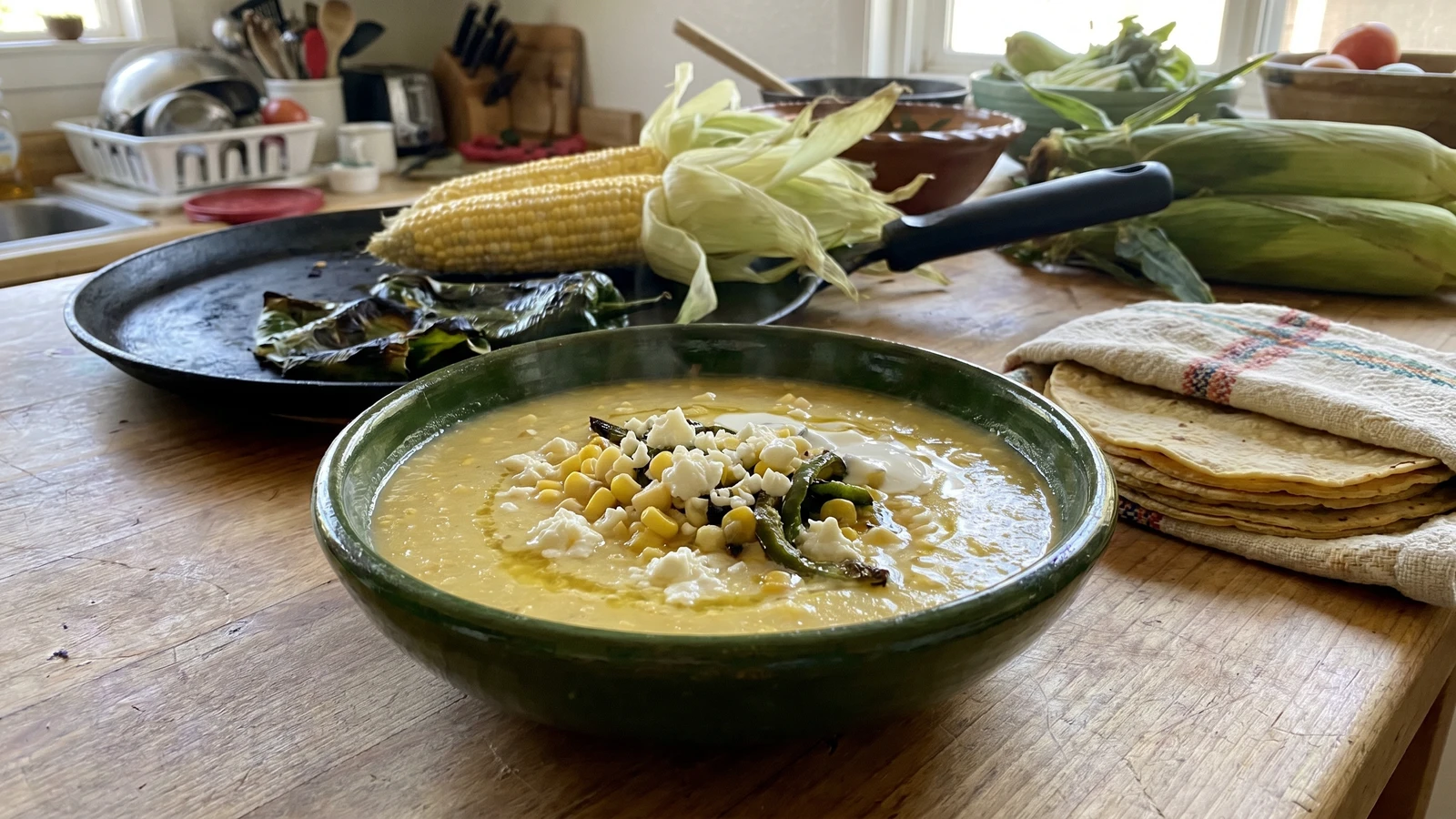
Michoacán's Meseta soup of fresh elote blended with milk and butter, finished with tatemado chile poblano rajas, epazote, and queso fresco, the quiet harvest pot a cocinera puts on the table.
Michoacán, from the Meseta P'urhépecha down toward the Lake Pátzcuaro basin, is where this sopa de elote belongs. The corn is the authority here: tender elote from the milpa, cut from the cob while it still smells green and sweet, then cooked with milk, mantequilla, and a little epazote. Serve it in barro from Capula or Tzintzuntzan and a Michoacán cook will know what you meant.
This is not a heavy restaurant cream soup. The body comes from the corn itself, not flour, not canned creamed corn, not a carton of something pretending to be food. The poblanos are tatemados on the comal until their skins blacken, then sliced into rajas so their green roasted flavor moves through the bowl. The chile gives perfume and depth. It does not turn the soup into a dare.
I have watched cocineras tradicionales in Michoacán make pots like this without measuring anything, because they know the corn by touch. Too young and it tastes grassy. Too old and the skins fight the blender. The lesson is plain: start at the market. If the elotes are good, the soup will be good. Si no conoces el mercado, no conoces la cocina. Saber cocinar es saber vivir.
Michoacán's corn cookery comes from Purépecha milpa traditions that predate the Spanish conquest, while cream soups using milk and butter reflect the arrival of cattle and dairy in the 16th century. The 2010 UNESCO inscription of Traditional Mexican Cuisine as Intangible Cultural Heritage used the Michoacán paradigm, especially the authority of cocineras tradicionales and their communal systems of maize, beans, squash, chiles, and market knowledge. Sopa de elote sits in that daily lineage: not ceremonial like churipo with corundas, but still a dish built from the same agricultural intelligence.
Quantity
6 ears
shucked, kernels cut from cobs, cobs reserved
Quantity
4 cups
for corn cob broth
Quantity
2
tatemado, peeled, seeded, and cut into rajas
Quantity
3 tablespoons
Quantity
1/2 medium
finely chopped
Quantity
2
finely chopped
Quantity
1 teaspoon, plus more to taste
Quantity
2 cups
Quantity
1 sprig
Quantity
1/2 cup
Quantity
3/4 cup
crumbled
Quantity
for serving
warmed
| Ingredient | Quantity |
|---|---|
| tender fresh elote or fresh sweet cornshucked, kernels cut from cobs, cobs reserved | 6 ears |
| waterfor corn cob broth | 4 cups |
| fresh chile poblanotatemado, peeled, seeded, and cut into rajas | 2 |
| unsalted butter (mantequilla) | 3 tablespoons |
| white onionfinely chopped | 1/2 medium |
| garlic clovesfinely chopped | 2 |
| kosher salt | 1 teaspoon, plus more to taste |
| whole milk | 2 cups |
| fresh epazote | 1 sprig |
| Mexican crema | 1/2 cup |
| queso frescocrumbled | 3/4 cup |
| hand-pressed corn tortillas (optional)warmed | for serving |
Set the chile poblanos directly over a gas flame or on a hot dry comal. Turn them until the skins are blackened all over and the flesh has softened, 6 to 8 minutes. Put them in a covered bowl for 10 minutes, then rub off the skins, remove stems and seeds, and slice the flesh into thin rajas. Poblano gives this soup its green, roasted perfume. It is not here to punish anybody with heat. Not all Mexican food is hot, and anyone who tells you that has not paid attention.
Cut the kernels from the cobs into a wide bowl. Scrape each cob with the back of the knife so the milky corn pulp falls into the bowl with the kernels. That little milk is flavor. Set aside 1 cup of whole kernels for the final texture. Keep the cobs. A cook who throws away the cobs before making broth is leaving half the field in the trash.
Place the scraped cobs in a pot with 4 cups water and 1/2 teaspoon salt. Bring to a simmer and cook 20 minutes, pressing the cobs down now and then so they give up their sweetness. Strain and keep 2 1/2 cups of the broth. This is better than boxed broth because it tastes like corn, not like someone else's chicken.
Melt the butter in a heavy 4-quart cazuela or Dutch oven over medium-low heat. Add the onion and cook until translucent, 4 to 5 minutes. Add the garlic and cook 30 seconds more. Do not brown them. This is a pale corn soup, not a roasted onion soup. The fat here is mantequilla, not lard, because the milk and elote are carrying the pot.
Add the corn kernels, except the reserved cup, and the remaining 1/2 teaspoon salt. Cook 5 minutes, stirring, until the corn turns glossy and smells sweet. Add 2 cups of the corn cob broth and the epazote sprig. Simmer gently for 10 minutes. Epazote belongs with corn because it cuts the sweetness and gives the soup that market herb bite. Remove and discard the epazote before blending.
Let the corn mixture cool for 5 minutes, then blend it in batches with the whole milk until very smooth. Vent the blender lid and hold it down with a folded towel. Hot liquid expands. No me vengas con atajos that end with soup on the ceiling. Strain through a medium-mesh sieve back into the pot, pressing with a spoon. You want creaminess without tough corn skins.
Set the pot over low heat. Stir in the reserved corn kernels and most of the poblano rajas, saving a few for the top. Simmer 5 minutes, just until the kernels are tender but still have a little bite. Stir in the Mexican crema off the heat. Taste for salt. If the soup is too thick, loosen it with a little more corn cob broth. Do not boil it after the crema goes in.
Ladle the soup into warm green-glazed Michoacán barro bowls. Finish with queso fresco, the saved poblano rajas, and a few spoonfuls of the whole corn kernels showing at the surface. Serve with warm hand-pressed corn tortillas. This is a quiet pot, but it knows where it comes from. Cada estado, su propia cocina.
1 serving (about 380g)
Culinary guides, cultural storytelling, and the editorial depth that makes cooking meaningful.
Discover Culinary ExplorerChef Lupita
Aguascalientes' Bajio pozole de lengua, built with cacahuazintle hominy, tender beef tongue, chile ancho and guajillo, with xoconostle brightness and table garnishes.

Chef Lupita
Veracruz's Gulf coast rice from Alvarado, built with seafood stock, tomato, chile chipotle, epazote, shrimp, fish, jaiba, and pulpo, served loose and brothy in a clay cazuela.

Chef Lupita
Costa Chica's wet salt-beef stew, built from chile costeño, guajillo, tomato, manteca, yuca, plantain, and masa dumplings, the ranching pot of Cuajinicuilapa and Pinotepa.

Chef Lupita
Michoacán's P'urhépecha atápakua is a masa-thickened sauce and stew at once, built with pork, chile guajillo, and hierbabuena added only at the end.