
Chef Lupita
Aguascalientes Beef Tongue Pozole (Pozole de Lengua)
Aguascalientes' Bajio pozole de lengua, built with cacahuazintle hominy, tender beef tongue, chile ancho and guajillo, with xoconostle brightness and table garnishes.
A cooking platform built around craft, culture, and the stories behind what we eat.
Created by
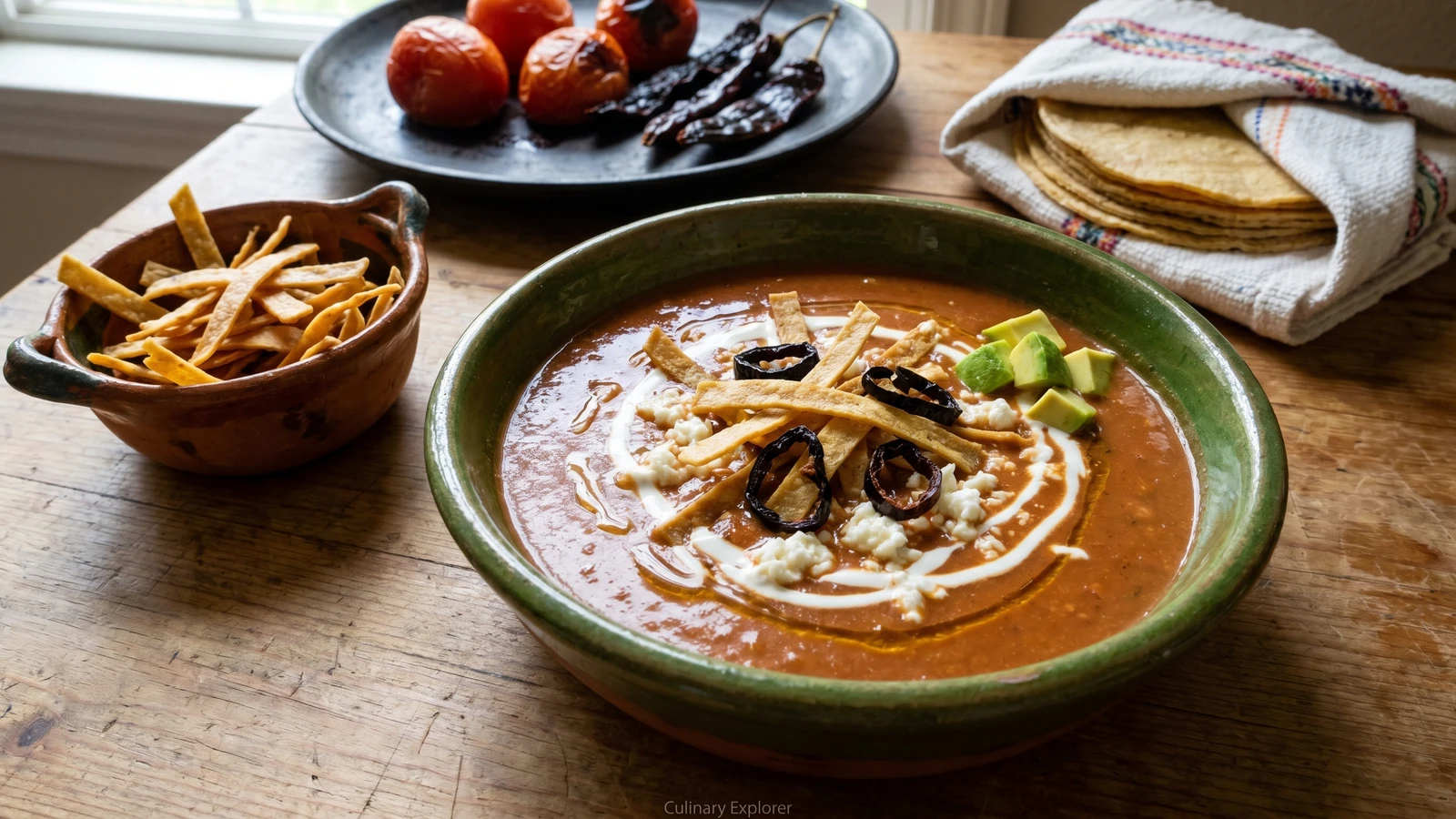
Michoacan's Lake Patzcuaro soup, built from frijol pinto, roasted jitomate, chile pasilla, and lard-fried tortilla strips, finished with crema and queso fresco in the clay bowls of the Meseta.
Michoacan, the Lake Patzcuaro region, owns this bowl. Sopa tarasca lives between the lake towns and the Meseta Purepecha, where beans, corn, chile, clay, and wood fire have been doing their work long before anyone tried to make Mexican food look fashionable.
The base is frijol pinto, jitomate roasted on the comal, and chile pasilla. Not chile powder. Not canned tomato soup with beans hiding inside. Pasilla gives the broth its dark raisin color and its quiet bitterness. The cream softens the edge, the fried tortilla gives the crunch, and the queso fresco brings the salt and milk of the region back to the bowl.
I learned one version in Patzcuaro from a woman who served it in green-glazed clay with the tortilla strips kept separate until the last second. She told me the soup fails in two places: bad beans and raw chile. She was right. You cook the beans until the broth has flavor, toast the chile carefully, fry the puree in manteca, and then you have something a Michoacan cook recognizes.
This is not a soup pretending to be delicate. It is supper. It is make-ahead food. It is the kind of bowl that lets a family eat well without expensive meat. Saber cocinar es saber vivir.
Sopa tarasca is strongly associated with Patzcuaro and Morelia in Michoacan, and many accounts trace the restaurant version to the mid-20th century, when Felipe Oseguera Iturbide served it at Hosteria San Felipe and named it for the Tarascan, now more properly Purepecha, people. The dish reflects a regional synthesis: Indigenous beans, corn tortillas, and chile pasilla meeting convent and hotel-kitchen habits of crema and cheese. Michoacan's cocineras tradicionales became central public guardians of this food knowledge, and their organized work helped frame the Michoacan paradigm cited in Mexico's 2010 UNESCO inscription for Traditional Mexican Cuisine.
Quantity
1 pound
picked over and rinsed
Quantity
10 cups, plus more as needed
Quantity
1/2 medium
for cooking the beans
Quantity
3
for cooking the beans
Quantity
1 sprig
Quantity
2 teaspoons, plus more to taste
Quantity
1 1/2 pounds
ripe
Quantity
3
stemmed and seeded
Quantity
2
stemmed, seeded, and cut into thin rings
Quantity
2 tablespoons
Quantity
1/2 medium
chopped
Quantity
2
chopped
Quantity
4 cups
Quantity
1/2 teaspoon
Quantity
6
preferably day-old, cut into thin strips
Quantity
1 cup
for frying
Quantity
3/4 cup, plus more for serving
Quantity
1 cup
crumbled
Quantity
1
diced
| Ingredient | Quantity |
|---|---|
| dried frijol pintopicked over and rinsed | 1 pound |
| water | 10 cups, plus more as needed |
| white onionfor cooking the beans | 1/2 medium |
| garlic clovesfor cooking the beans | 3 |
| epazote | 1 sprig |
| kosher salt | 2 teaspoons, plus more to taste |
| jitomate guaje or Roma tomatoesripe | 1 1/2 pounds |
| dried chile pasillastemmed and seeded | 3 |
| dried chile pasilla for garnishstemmed, seeded, and cut into thin rings | 2 |
| manteca de cerdo | 2 tablespoons |
| white onionchopped | 1/2 medium |
| garlic cloveschopped | 2 |
| chicken broth or bean cooking liquid | 4 cups |
| dried Mexican oregano | 1/2 teaspoon |
| corn tortillaspreferably day-old, cut into thin strips | 6 |
| pork lard or neutral oilfor frying | 1 cup |
| crema Mexicana | 3/4 cup, plus more for serving |
| queso frescocrumbled | 1 cup |
| ripe avocado (optional)diced | 1 |
Put the frijol pinto in a heavy pot with the water, half onion, garlic, and epazote. Bring to a simmer, then cook gently until the beans are fully tender, about 1 hour 45 minutes to 2 hours depending on the age of the beans. Salt them only after they soften. The bean broth should taste full, not watery. This broth is part of the soup, so do not throw it away.
Heat a dry comal over medium. Toast the 3 chile pasilla for the soup for 10 to 15 seconds per side, just until fragrant and flexible. Pasilla is thin and bitter when burned. Do not walk away. Cover the toasted chiles with hot water and let them soften for 15 minutes.
On the same comal, roast the jitomates until the skins blister and blacken in spots, turning them so the flesh softens evenly. This gives the soup its roasted body. Raw tomato makes a nervous soup. Roasted tomato settles down and tastes like Patzcuaro.
Drain the soaked chiles. Blend them with the roasted jitomates, chopped onion, chopped garlic, and 2 cups of cooked beans with some of their broth. Blend until completely smooth. If your blender struggles, add a little more bean broth. You want a pourable puree, not a paste.
Melt the 2 tablespoons manteca de cerdo in a clay cazuela or heavy pot over medium heat. Pour in the blended bean and chile base. It will sputter. Cook for 8 to 10 minutes, stirring often, until it darkens slightly and the fat begins to shine at the edges. La manteca es el sabor. This frying step gives the soup depth. Skip it and the beans taste flat.
Add the remaining cooked beans, the chicken broth or bean cooking liquid, and the dried Mexican oregano. Simmer gently for 20 minutes, stirring from the bottom so the bean puree does not catch. Taste for salt. The texture should be creamy and spoon-coating, thinner than refried beans and thicker than caldo.
Heat the lard or oil in a small skillet. Fry the tortilla strips until crisp and golden, then drain on paper towels. Fry the chile pasilla rings for only a few seconds, just until they darken and smell toasted. Pull them out quickly. Burned pasilla ruins the bowl, and I will not argue with anyone about that.
Lower the heat. Stir 3/4 cup crema Mexicana into the soup until it turns smooth and brick-red, with the chile and bean color still visible. Do not boil hard after adding crema or it can split. This is a cream caldo, not a pot of dairy hiding the beans.
Ladle the sopa tarasca into warm clay bowls. Top each bowl with fried tortilla strips, fried chile pasilla, crumbled queso fresco, a small ribbon of crema, and diced avocado if using. Serve immediately, with more tortilla strips at the table. Cada estado, su propia cocina.
1 serving (about 445g)
Culinary guides, cultural storytelling, and the editorial depth that makes cooking meaningful.
Discover Culinary ExplorerChef Lupita
Aguascalientes' Bajio pozole de lengua, built with cacahuazintle hominy, tender beef tongue, chile ancho and guajillo, with xoconostle brightness and table garnishes.

Chef Lupita
Veracruz's Gulf coast rice from Alvarado, built with seafood stock, tomato, chile chipotle, epazote, shrimp, fish, jaiba, and pulpo, served loose and brothy in a clay cazuela.

Chef Lupita
Costa Chica's wet salt-beef stew, built from chile costeño, guajillo, tomato, manteca, yuca, plantain, and masa dumplings, the ranching pot of Cuajinicuilapa and Pinotepa.

Chef Lupita
Michoacán's P'urhépecha atápakua is a masa-thickened sauce and stew at once, built with pork, chile guajillo, and hierbabuena added only at the end.