
Chef Lupita
Aguascalientes Beef Tongue Pozole (Pozole de Lengua)
Aguascalientes' Bajio pozole de lengua, built with cacahuazintle hominy, tender beef tongue, chile ancho and guajillo, with xoconostle brightness and table garnishes.
A cooking platform built around craft, culture, and the stories behind what we eat.
Created by
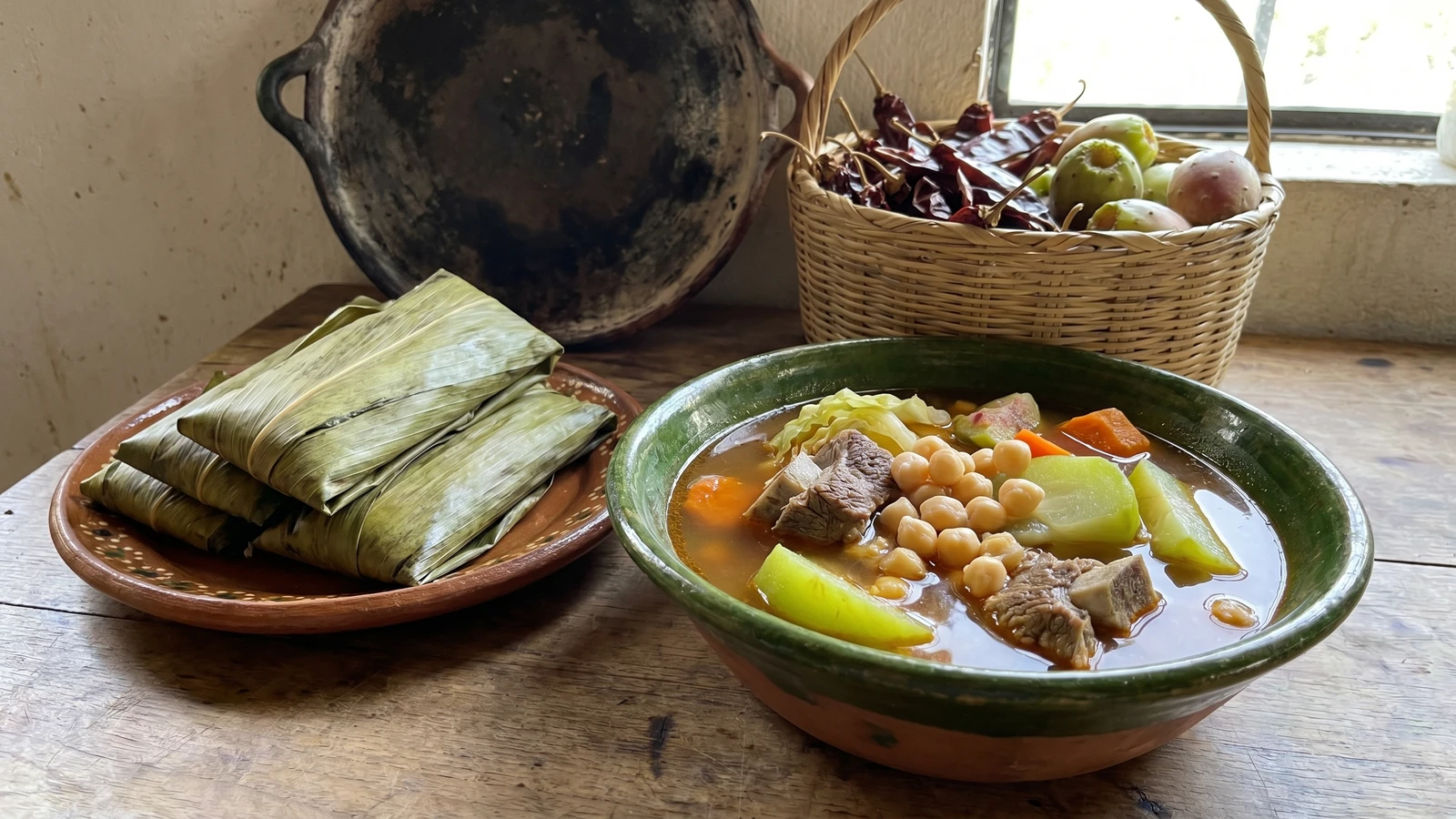
Michoacán's Meseta P'urhépecha midday churipo, beef and garbanzo in a red guajillo broth with chayote, cabbage, carrot, and sour tuna, always served with corundas beside the bowl.
Michoacán, Meseta P'urhépecha, is where this churipo lives: Cherán, Paracho, Nahuatzen, the pine towns where a midday caldo has to feed working people without making a ceremony of itself. This is the everyday version preserved in CID-INALI records: res, garbanzo, chayote, col, tuna agria, zanahoria, red from chile guajillo, served with corundas because churipo without corundas is unfinished.
The sourness comes from tuna agria, xoconostle, not lime squeezed at the end. The body comes from bone-in beef and garbanzo cooked until the broth has weight. The color comes from guajillo toasted on a comal, softened, blended, strained, then simmered in the pot until the raw edge is gone. No tomato. No cumin. No bouillon cube acting like a cook.
My mother was from Jalisco, so this was not her pot. I learned churipo from cocineras tradicionales in the Meseta, women who do not separate technique from responsibility. They know which chayote is young enough, when the cabbage should go in, and when a corunda is ready to be broken into the caldo. Those women carried the Michoacán paradigm to UNESCO in 2010, not a restaurant brigade. Cada estado, su propia cocina.
Churipo is a P'urhépecha beef caldo from Michoacán's Meseta and lake communities, and its present form is post-conquest because cattle arrived with the Spanish in the 16th century. CID-INALI documentation records everyday Meseta preparations with beef, garbanzo, chayote, cabbage, sour tuna, and carrot, while feast versions can be larger and more ceremonial but still meet the table with corundas. The 2010 UNESCO inscription of Traditional Mexican Cuisine, the Michoacán paradigm, named community cooks and the milpa-based system as living cultural bearers, which is why the authority here belongs to the cocineras tradicionales.
Quantity
1 cup
soaked overnight and drained
Quantity
2 pounds
cut into 2-inch pieces
Quantity
1 pound
Quantity
12 cups
Quantity
1/2 medium
Quantity
4
peeled
Quantity
2 teaspoons, plus more to taste
Quantity
8
wiped clean, stemmed and seeded
Quantity
2 medium
peeled, seeded, and cut into wedges
Quantity
2 medium
cut into thick half-moons
Quantity
2 medium
cut into wedges
Quantity
1/2 small head
cut into thick wedges
Quantity
12
warmed for serving
| Ingredient | Quantity |
|---|---|
| dried garbanzosoaked overnight and drained | 1 cup |
| bone-in beef shank (chambarete de res)cut into 2-inch pieces | 2 pounds |
| beef ribs or beef neck bones | 1 pound |
| cold water | 12 cups |
| white onion | 1/2 medium |
| garlic clovespeeled | 4 |
| kosher salt | 2 teaspoons, plus more to taste |
| dried chile guajillowiped clean, stemmed and seeded | 8 |
| tuna agria (xoconostle)peeled, seeded, and cut into wedges | 2 medium |
| carrotscut into thick half-moons | 2 medium |
| chayotescut into wedges | 2 medium |
| green cabbagecut into thick wedges | 1/2 small head |
| corundas de maízwarmed for serving | 12 |
Put the soaked garbanzo, beef shank, beef ribs or neck bones, cold water, onion, garlic, and salt in a heavy pot. Bring it slowly to a simmer over medium heat. Skim the gray foam during the first 20 minutes. A clear broth starts here. Boil it hard and you get cloudy caldo with tough meat.
Lower the heat so the pot barely moves. Cover partly and simmer for 1 hour and 30 minutes, until the garbanzo has started to soften and the beef is beginning to pull away from the bone. The broth should taste like beef, not like salt water. Adjust only a little now because the chile base is still coming.
Heat a dry comal over medium. Toast the chile guajillo pieces a few at a time, about 15 to 20 seconds per side, pressing them flat with tongs. They should darken slightly and smell fruity, never black. Burned guajillo makes bitter churipo. Throw out any chile that scorches. No me vengas con atajos.
Cover the toasted guajillos with hot water and let them soften for 15 minutes. Drain them. Transfer the chiles to a blender with the cooked onion, garlic, and 1 cup of broth from the pot. Blend until completely smooth, then strain through a fine-mesh sieve. The skins stay in the strainer. The red base goes into the pot.
Stir the strained guajillo puree into the beef broth. Simmer uncovered for 20 minutes so the raw chile edge disappears and the broth turns a clear brick red. This is not tomato soup and it is not chile paste dumped into water. The chile has to cook into the beef.
Add the tuna agria, carrots, and chayotes. Simmer for 20 to 25 minutes, until the carrots are tender at the center and the chayote still holds its shape. The tuna agria gives the broth its sour line. Do not replace it with lime at the end. That is a different decision and a weaker one.
Add the cabbage wedges and simmer 10 to 12 minutes more. Keep the wedges intact if you can. The cabbage should soften but not collapse into the broth. Taste for salt now. The garbanzo, chayote, and cabbage absorb seasoning, so the final broth must be direct.
Ladle beef, garbanzo, vegetables, and red broth into deep clay bowls. Set warm corundas beside every bowl, still wrapped if possible. Churipo is served with corundas, never alone. Break the corunda into the broth as you eat. Así se hace y punto.
1 serving (about 800g)
Culinary guides, cultural storytelling, and the editorial depth that makes cooking meaningful.
Discover Culinary ExplorerChef Lupita
Aguascalientes' Bajio pozole de lengua, built with cacahuazintle hominy, tender beef tongue, chile ancho and guajillo, with xoconostle brightness and table garnishes.

Chef Lupita
Veracruz's Gulf coast rice from Alvarado, built with seafood stock, tomato, chile chipotle, epazote, shrimp, fish, jaiba, and pulpo, served loose and brothy in a clay cazuela.

Chef Lupita
Costa Chica's wet salt-beef stew, built from chile costeño, guajillo, tomato, manteca, yuca, plantain, and masa dumplings, the ranching pot of Cuajinicuilapa and Pinotepa.

Chef Lupita
Michoacán's P'urhépecha atápakua is a masa-thickened sauce and stew at once, built with pork, chile guajillo, and hierbabuena added only at the end.