Culinary Explorer

A cooking platform built around craft, culture, and the stories behind what we eat.
Discover Culinary Explorer
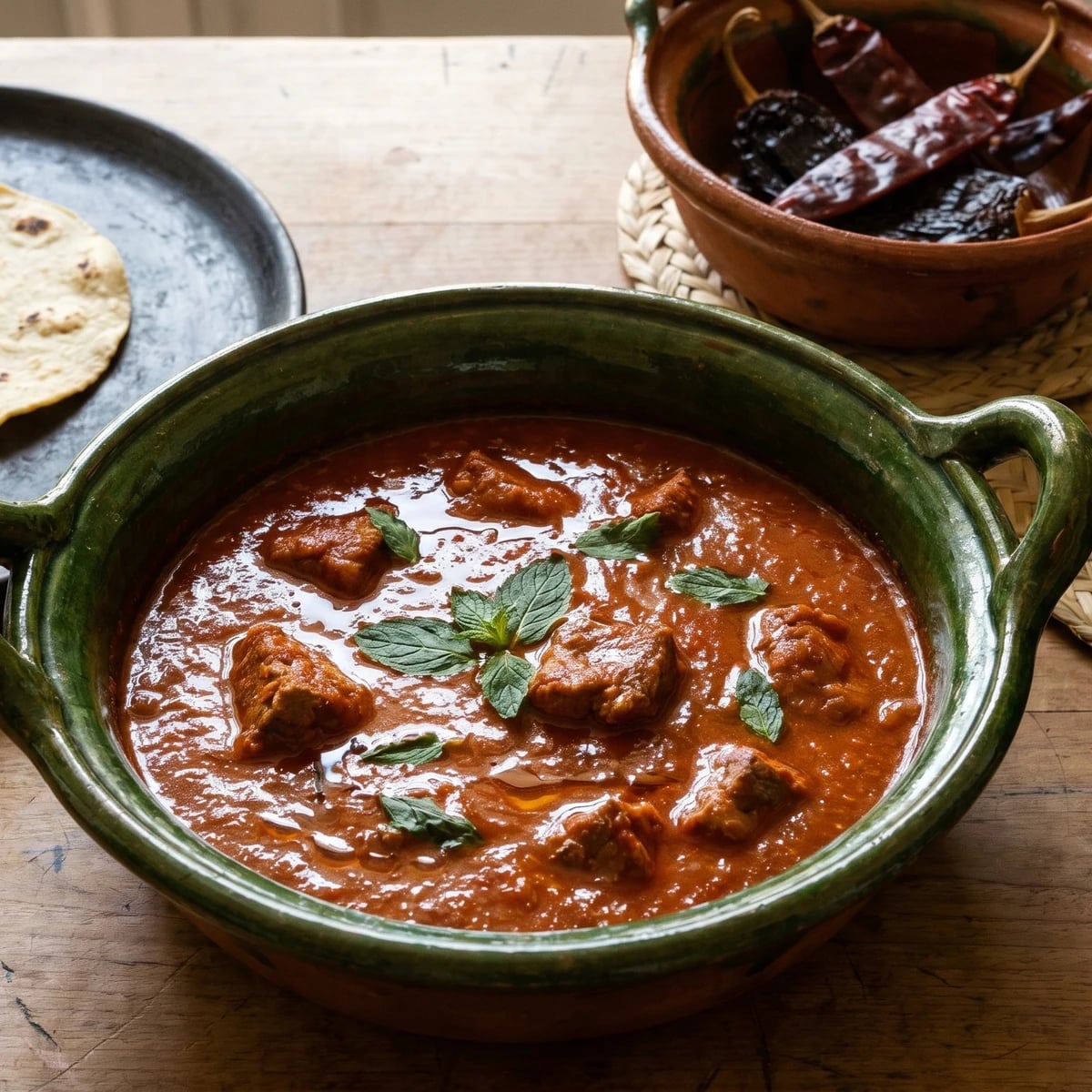
Atápakua de Cerdo y Hierbabuena (K'uiripita Puesïri)

Atápakua de Cerdo y Hierbabuena (K'uiripita Puesïri)

Created by

Michoacán's P'urhépecha atápakua is a masa-thickened sauce and stew at once, built with pork, chile guajillo, and hierbabuena added only at the end.

Soups & Stews
Mexican
Comfort Food
Special Occasion
Make Ahead
35 min
Active Time
1 hr 45 min cook2 hr 20 min total
Yield6 servings

Michoacán, in the Meseta P'urhépecha and the towns around Lake Pátzcuaro, is where atápakua lives. Not as a soup, not as a mole, not as a sauce you pour politely over something else. Atápakua is sauce and stew in the same cazuela, thickened with masa de maíz until it coats the spoon and holds the pork in place.

The chile here is guajillo, sometimes with a little ancho when the cook wants a deeper red. The thickener is fresh masa, not flour, not cornstarch, not a blender trick. The hierbabuena goes in at the end, because if you boil it until it turns tired and gray, you wasted the herb. No me vengas con atajos. The masa is the backbone of this dish.

I learned to respect atápakua from cocineras tradicionales in Michoacán, the women whose work carried the living evidence behind the UNESCO 2010 inscription of traditional Mexican cuisine. They do not cook from slogans. They cook from memory, from the milpa, from the cazuela, from the market, from what their mothers corrected in them. Cada estado, su propia cocina, and this one belongs to the P'urhépecha table.

Atápakua is a P'urhépecha masa-thickened preparation from Michoacán, documented in institutional recipe work including CID-INALI materials on atápakuas and sustained by cocineras tradicionales across the Meseta and lake regions. The technique reflects the older central Mexican use of nixtamalized corn masa as both staple and thickener, long before wheat flour or European roux entered Mexican kitchens. In 2010, UNESCO inscribed traditional Mexican cuisine as Intangible Cultural Heritage using the Michoacán paradigm, with P'urhépecha cooks and their milpa-based techniques at the center of that case.

The technique, the tradition, and the story behind every dish.

Discover Culinary Explorer

Ingredients

pork shoulder

Quantity

2 pounds

cut into 1 1/2-inch pieces

pork ribs or bone-in pork neck

Quantity

1 pound

cut into pieces

water

Quantity

8 cups, plus more as needed

white onion

Quantity

1/2 medium

garlic cloves

Quantity

4

divided

kosher salt

Quantity

2 teaspoons, plus more to taste

dried chile guajillo

Quantity

8

stemmed and seeded

dried chile ancho

Quantity

2

stemmed and seeded

Roma tomatoes

Quantity

2 medium

pork lard (manteca de cerdo)

Quantity

1 tablespoon

fresh nixtamalized corn masa

Quantity

1/2 cup

pork broth

Quantity

1 cup

cooled slightly, for dissolving the masa

fresh hierbabuena

Quantity

1 small bunch

leaves and tender stems

hand-pressed corn tortillas (optional)

Quantity

for serving

warmed

Equipment Needed

  • 10 to 12-inch clay cazuela from Capula or Tzintzuntzan, or a heavy Dutch oven
  • Cast iron comal for toasting chiles and roasting tomatoes
  • High-powered blender
  • Fine-mesh strainer
  • Wooden spoon with a flat edge for stirring masa-thickened sauce

Instructions

  1. 1

    Cook the pork

    Put the pork shoulder, pork ribs or neck, water, onion, 2 garlic cloves, and salt in a heavy pot. Bring to a gentle simmer over medium heat and skim the gray foam in the first 15 minutes. Lower the heat and cook until the pork is tender but still holds its shape, about 1 hour and 15 minutes. You need the bones because they give body to the broth. Boneless pork alone tastes thin.

  2. 2

    Toast the chiles

    Heat a dry comal over medium. Toast the guajillo chiles one by one for 15 to 20 seconds per side, just until they darken slightly and smell warm. Toast the ancho chiles the same way. Do not blacken them. Burned chile will turn the whole cazuela bitter, and masa will not hide that mistake.

    Guajillo is thin-skinned and burns fast. Keep it moving on the comal. If one turns black, throw it away and use another.
  3. 3

    Soak and roast

    Place the toasted chiles in a bowl and cover with hot water, not boiling water. Let them soften for 20 minutes. While they soak, roast the tomatoes on the comal until the skins blister and darken in spots. The tomatoes should soften but not collapse into water.

  4. 4

    Blend the sauce

    Drain the chiles and put them in a blender with the roasted tomatoes, the remaining 2 garlic cloves, and 1 1/2 cups of hot pork broth from the pot. Blend until completely smooth. Strain through a fine-mesh sieve into a bowl, pressing hard on the solids. Atápakua should feel clean on the tongue, not full of chile skins.

  5. 5

    Fry the chile

    In a wide clay cazuela or heavy Dutch oven, melt the manteca over medium heat. Add the strained chile puree carefully. It will sputter. Cook, stirring often, for 8 to 10 minutes, until the red deepens and the fat starts to shine at the edges. La manteca es el sabor. This frying wakes up the chile before the masa thickens everything.

  6. 6

    Add pork and broth

    Lift the cooked pork from its broth and add it to the cazuela. Strain in 4 cups of the pork broth and stir gently so the meat stays in pieces. Simmer for 15 minutes so the chile enters the pork. Taste for salt now, before the masa goes in, because thickened sauce dulls seasoning.

  7. 7

    Dissolve the masa

    In a bowl, whisk the fresh masa with 1 cup of cooled pork broth until smooth and pourable. Use your fingers if you need to break up lumps. Fresh masa is non-negotiable here. This is not gravy. This is a P'urhépecha atápakua, and the corn is doing the work.

  8. 8

    Thicken the atápakua

    Pour the masa mixture into the cazuela in a thin stream while stirring constantly. Keep the heat at a low simmer and cook for 12 to 15 minutes, stirring from the bottom so the masa does not catch. The sauce should thicken enough to coat the spoon and cling to the pork, but it should still move like a stew. If it becomes too tight, add more hot pork broth a little at a time.

  9. 9

    Finish with hierbabuena

    Turn off the heat. Tear the hierbabuena leaves and tender stems by hand and stir them into the cazuela. Cover for 5 minutes so the herb perfumes the sauce without being boiled to death. This is the last correction the señora looking over your shoulder would make: the hierbabuena goes at the end. Así se hace y punto.

  10. 10

    Serve in clay

    Spoon the atápakua into deep bowls or serve family-style from the cazuela. Put warm corn tortillas on the table. The sauce should be thick enough to gather with a tortilla and loose enough to settle back into the bowl. Recetas probadas y garantizadas.

Chef Tips

  • Buy fresh masa from a tortilleria if you can. Masa harina works only when there is no other choice: use 1/2 cup masa harina whisked with 3/4 cup warm broth and let it hydrate for 15 minutes. It is a compromise, not an upgrade.
  • The hierbabuena must smell alive when you rub it between your fingers. If it smells like refrigerator air, leave it at the market. Ask the women at the market which bunch came in that morning.
  • Do not confuse atápakua with mole. Mole can be thickened with seeds, nuts, bread, tortilla, or time. This dish is thickened with masa de maíz. The corn is not decoration, it is structure.
  • A clay cazuela from Capula or Tzintzuntzan holds heat gently and looks right on the table. If you use enameled cast iron, fine. But do not serve this in a shallow white restaurant plate. La cocina no es decoración, es trabajo.

Advance Preparation

  • The pork can be simmered one day ahead and refrigerated in its broth. Lift off any hardened fat, but save a spoonful for frying the chile if you want deeper flavor.
  • The chile puree can be made one day ahead and refrigerated. Fry it in manteca on the day you finish the atápakua.
  • Do not add the masa or hierbabuena until the day you serve. Masa-thickened sauces tighten in the refrigerator, and hierbabuena loses its clean finish when reheated too many times.

Frequently Asked Questions

Nutrition Information

1 serving (about 390g)

Calories
620 calories
Total Fat
38 g
Saturated Fat
13 g
Trans Fat
0 g
Unsaturated Fat
21 g
Cholesterol
140 mg
Sodium
930 mg
Total Carbohydrates
28 g
Dietary Fiber
5 g
Sugars
4 g
Protein
43 g

Note: Chef personas and recipes are created with AI assistance. Cook with care: follow safe food-handling practices, check doneness with a thermometer when needed, and adapt for allergies and your kitchen.

Where cooking meets culture.

Culinary guides, cultural storytelling, and the editorial depth that makes cooking meaningful.

Discover Culinary Explorer

More from Churipos, Atápakuas Caldosas & Caldo Michi de Pátzcuaro

Browse the full collection