
Chef Lupita
Aguascalientes Beef Tongue Pozole (Pozole de Lengua)
Aguascalientes' Bajio pozole de lengua, built with cacahuazintle hominy, tender beef tongue, chile ancho and guajillo, with xoconostle brightness and table garnishes.
A cooking platform built around craft, culture, and the stories behind what we eat.
Created by
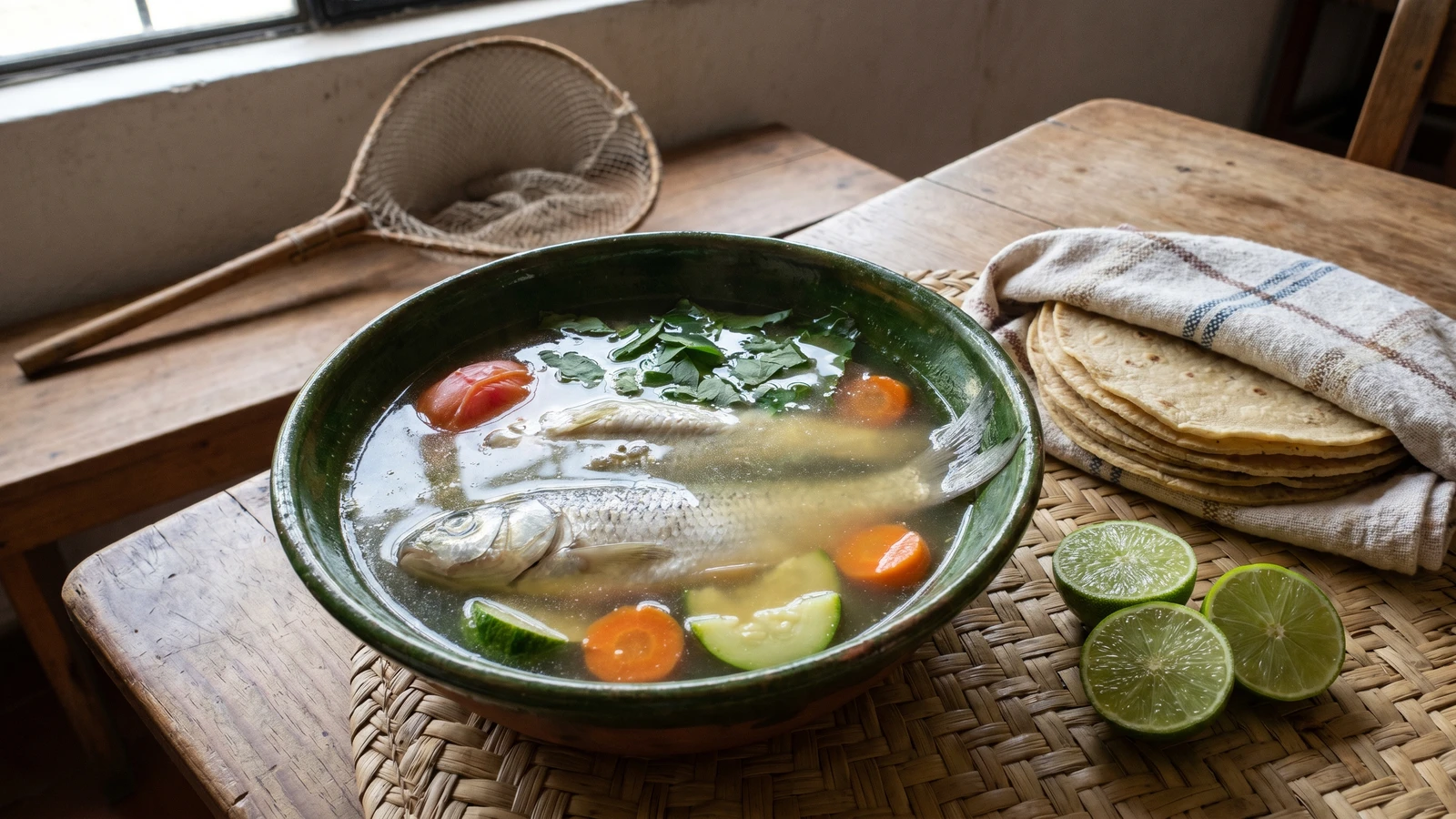
Michoacán's Lake Pátzcuaro fish broth, made with legal pescado blanco, chile perón, tomato, manteca, and nurite, is a clear fiesta caldo that proves quiet Mexican cooking can still command the table.
Michoacán, the Lake Pátzcuaro basin, this is where kurucha urapiti belongs: Tzintzuntzan, Janitzio, Santa Fe de la Laguna, San Andrés Tziróndaro. The lake is not scenery there. It is pantry, work, memory, and obligation. Pescado blanco is a fish of that water, and a broth made from it is not a casual Tuesday pot. It appears for fiestas patronales, for family tables that still understand why a clear caldo can carry ceremony.
The broth is built quietly: tomato, white onion, garlic, one chile perón, a spoon of manteca de cerdo, and nurite from the P'urhépecha highlands. The chile is there for perfume and heat at the edge, not to turn the pot red. Not all Mexican food shouts with chile. Some dishes make you pay attention because they are restrained, and restraint is harder than noise.
I learned this from cocineras tradicionales who cook over leña before the town is fully awake, women who know when a fish broth is being respected and when someone is just boiling seafood. The pescado blanco goes in at the end. It does not forgive a hard boil. The nurite is not mint, not oregano, not epazote. Substitute nothing. If you don't have it, say what is missing and keep moving with honesty.
My mother had no page for this in her notebook. She was from Jalisco. I wrote this one myself after standing in kitchens around Pátzcuaro, watching clay bowls from Tzintzuntzan filled with broth clear enough to see the silver skin of the fish. Cada estado, su propia cocina.
Kurucha urapiti is P'urhépecha for white fish, the lake fish known in Spanish as pescado blanco and identified with Chirostoma estor of the Lake Pátzcuaro basin. Caldo michi is claimed around both Pátzcuaro and Chapala, but they are different broths; the Pátzcuaro version is made with pescado blanco or charal of the lago, never with bagre. UNESCO's 2010 inscription of Traditional Mexican Cuisine used the Michoacán paradigm, and the authority behind that recognition came from cocineras tradicionales who preserved milpa practice, nixtamal, ceremonial cooking, and regional recipes through daily work.
Quantity
2 pounds
legally sourced, scaled and gutted, heads and tails left on
Quantity
2 teaspoons
divided
Quantity
2 tablespoons
plus lime halves for serving
Quantity
3 ripe
Quantity
1 large
half thickly sliced and half left whole for the comal
Quantity
3
unpeeled
Quantity
1 tablespoon
Quantity
8 cups
Quantity
1
slit lengthwise and left whole
Quantity
1
sliced into thin rounds
Quantity
1
cut into half-moons
Quantity
4 sprigs, plus a few leaves
tied with kitchen string, extra leaves reserved for serving
Quantity
4 sprigs
tied with kitchen string
Quantity
for serving
| Ingredient | Quantity |
|---|---|
| whole pescado blanco de Pátzcuaro (kurucha urapiti)legally sourced, scaled and gutted, heads and tails left on | 2 pounds |
| fine sea saltdivided | 2 teaspoons |
| fresh lime juiceplus lime halves for serving | 2 tablespoons |
| Roma tomatoes | 3 ripe |
| white onionhalf thickly sliced and half left whole for the comal | 1 large |
| garlic clovesunpeeled | 3 |
| manteca de cerdo | 1 tablespoon |
| cold water | 8 cups |
| fresh chile perón michoacanoslit lengthwise and left whole | 1 |
| small carrotsliced into thin rounds | 1 |
| small calabacita criollacut into half-moons | 1 |
| fresh nuritetied with kitchen string, extra leaves reserved for serving | 4 sprigs, plus a few leaves |
| fresh cilantrotied with kitchen string | 4 sprigs |
| warm hand-pressed corn tortillas (optional) | for serving |
Check the pescado blanco before anything touches the stove. The eyes should be clear, the gills red, and the smell clean, like lake water, not ammonia. Rinse the fish quickly under cold water. Rub with the lime juice and 1 teaspoon of the salt, inside and out. Let stand 10 minutes, then rinse quickly again and pat dry. This is cleaning, not curing. Do not leave delicate fish sitting in lime until it tightens.
Heat a dry comal over medium. Roast the tomatoes, the whole onion half, the unpeeled garlic cloves, and the slit chile perón. Turn them as they blister. The tomatoes should soften and darken in spots, the garlic should feel tender under its skin, and the chile should smell green and sharp without blackening. Burned chile will make a bitter broth. No me vengas con atajos.
Peel the roasted garlic. Put the roasted tomatoes, roasted garlic, and roasted onion half in a molcajete and crush them into a rough, juicy paste. Do not make it smooth in a blender. This is a broth, not salsa. You want flavor released, not a cloudy puree.
Set a wide clay cazuela or heavy pot over medium-low heat. Add the manteca de cerdo and let it melt gently. Add the sliced onion and cook until it softens but does not brown, about 4 minutes. Stir in the crushed tomato base and the remaining 1 teaspoon salt. Cook for 6 to 8 minutes, stirring often, until the tomato turns deeper orange and the fat shines at the edges. La manteca es el sabor, but here it speaks quietly.
Add the cold water, the roasted chile perón, and the carrot rounds. Bring to a gentle simmer, then lower the heat so the surface barely moves. Cook 20 minutes. Add the calabacita, the tied nurite, and the tied cilantro. Cook 5 minutes more. The broth should taste clean, lightly sweet from the carrot, and marked by the chile without being aggressive.
Lower the pescado blanco into the broth in a single layer. Spoon broth over the tops so the fish settles without breaking. Keep the heat low. Cook 6 to 9 minutes, depending on size, until the flesh turns opaque and separates cleanly from the backbone. If you use a thermometer, the thickest part should reach 140F. Do not stir the pot. A rolling boil will tear the fish apart and cloud the broth.
Turn off the heat and let the cazuela stand 5 minutes. Remove the tied cilantro and nurite bundles. Taste the broth. If it tastes flat, add salt, not more lime. Lime belongs at the table so each person can decide. The broth should remain clear enough to see the fish skin under the surface.
Lift each fish carefully into a deep clay bowl from Capula or Tzintzuntzan. Ladle broth, carrot, and calabacita around it. Tear a few fresh nurite leaves over the top. Serve with lime halves and warm hand-pressed corn tortillas. This is Michoacán on the table. Así se hace y punto.
1 serving (about 500g)
Culinary guides, cultural storytelling, and the editorial depth that makes cooking meaningful.
Discover Culinary ExplorerChef Lupita
Aguascalientes' Bajio pozole de lengua, built with cacahuazintle hominy, tender beef tongue, chile ancho and guajillo, with xoconostle brightness and table garnishes.

Chef Lupita
Veracruz's Gulf coast rice from Alvarado, built with seafood stock, tomato, chile chipotle, epazote, shrimp, fish, jaiba, and pulpo, served loose and brothy in a clay cazuela.

Chef Lupita
Costa Chica's wet salt-beef stew, built from chile costeño, guajillo, tomato, manteca, yuca, plantain, and masa dumplings, the ranching pot of Cuajinicuilapa and Pinotepa.

Chef Lupita
Michoacán's P'urhépecha atápakua is a masa-thickened sauce and stew at once, built with pork, chile guajillo, and hierbabuena added only at the end.