
Chef Lupita
Aguascalientes Beef Tongue Pozole (Pozole de Lengua)
Aguascalientes' Bajio pozole de lengua, built with cacahuazintle hominy, tender beef tongue, chile ancho and guajillo, with xoconostle brightness and table garnishes.
A cooking platform built around craft, culture, and the stories behind what we eat.
Created by
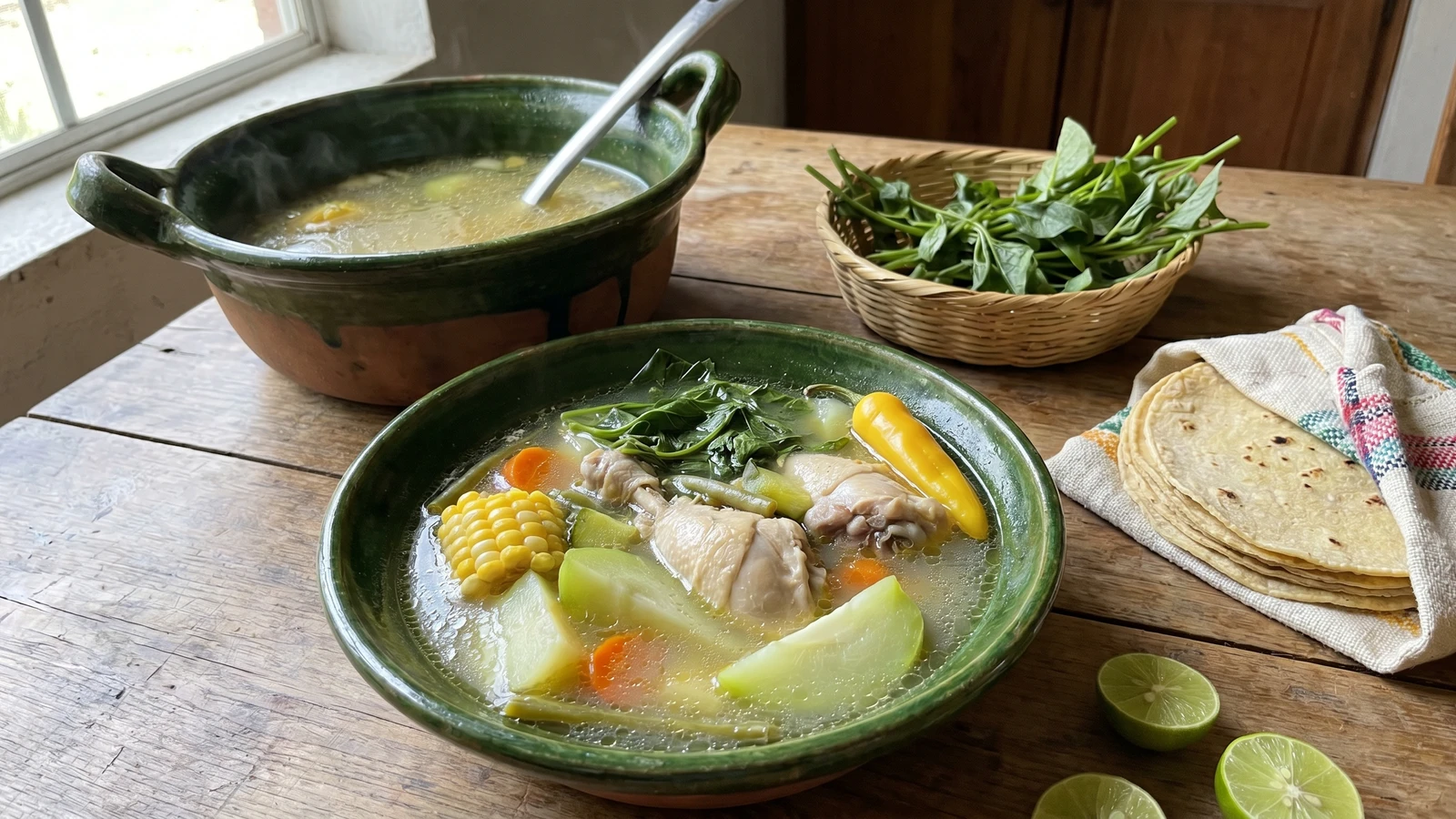
Michoacán's Meseta P'urhépecha caldo, clean chicken broth scented with fresh nurite, seasonal vegetables, and chile perón, a midday pot taught by cocineras tradicionales, not restaurant chefs.
Michoacán, Meseta P'urhépecha. This caldo lives in the pine towns around Cherán, Nahuatzen, Paracho, and Angahuan, where nurite is sold in small green bundles by women who know exactly which hill it came from. It is not a restaurant soup. It is the noon pot: chicken with skin and bone, vegetables from the market, and an herb that is food and medicine at the same time.
Nurite is the ingredient that makes this dish belong to the Meseta. It smells a little like mint, a little like oregano, and a little like wet pine needles after rain. Do not replace it with hierbabuena. Do not replace it with epazote. Those are fine herbs and they belong to other dishes. Here, substitute nothing. If you don't have nurite, make caldo de pollo, but don't call it caldo con nurite. Así se hace y punto.
My mother didn't cook this in Colonia Roma. She was from Jalisco, and her notebook had pozole, birria, tortas ahogadas. For this broth I had to go to Michoacán and listen to cocineras tradicionales who cook over leña before the market opens. They taught the practical thing first: start with good chicken, skim the broth, add the nurite at the end, and let the herb speak. Saber cocinar es saber vivir.
Caldo de pollo con nurite belongs to the P'urhépecha highlands of Michoacán, where nurite, commonly recorded in Mexican ethnobotanical writing as Satureja macrostema, has long been used both as a medicinal infusion and as a cooking herb. Mexico's 2010 UNESCO inscription for Traditional Mexican Cuisine was built around the Michoacán paradigm, and P'urhépecha cocineras tradicionales were central to documenting that living system of milpa, market, hearth, and community knowledge. This broth is not churipo, which is a red beef broth served with corundas, never alone; it is the everyday chicken caldo of the Meseta.
Quantity
3 pounds
use thighs, drumsticks, wings, and backs
Quantity
10 cups
Quantity
1/2 medium
Quantity
4
bruised
Quantity
2 teaspoons, plus more to taste
Quantity
2 ears
cut crosswise into thirds
Quantity
2 medium
peeled and cut into thick rounds
Quantity
2 medium
peeled and quartered
Quantity
1
peeled, pitted, and cut into wedges
Quantity
1 cup
trimmed and cut into 2-inch pieces
Quantity
2 small
cut into thick half-moons
Quantity
1
left whole
Quantity
1 small bunch, 8 to 12 sprigs
rinsed carefully
Quantity
for serving
Quantity
for serving
warmed
| Ingredient | Quantity |
|---|---|
| bone-in, skin-on chicken piecesuse thighs, drumsticks, wings, and backs | 3 pounds |
| cold water | 10 cups |
| white onion | 1/2 medium |
| garlic clovesbruised | 4 |
| kosher salt | 2 teaspoons, plus more to taste |
| fresh corncut crosswise into thirds | 2 ears |
| carrotspeeled and cut into thick rounds | 2 medium |
| waxy potatoespeeled and quartered | 2 medium |
| chayotepeeled, pitted, and cut into wedges | 1 |
| fresh ejotestrimmed and cut into 2-inch pieces | 1 cup |
| calabacitascut into thick half-moons | 2 small |
| fresh chile perón or chile manzano (optional)left whole | 1 |
| fresh nuriterinsed carefully | 1 small bunch, 8 to 12 sprigs |
| lime halves (optional) | for serving |
| hand-pressed corn tortillas (optional)warmed | for serving |
Pick through the nurite and remove any yellow leaves or tough woody stems. Rinse it in two changes of cool water because mountain herbs carry soil in the joints. Tie most of the sprigs into a small bundle and reserve a few tender leaves for the bowls. Nurite is not decoration. It is the medicine and the perfume of this caldo.
Put the chicken, cold water, onion, garlic, and salt in a heavy pot or clay cazuela. Bring it slowly to a simmer over medium heat. Skim the gray foam during the first fifteen minutes. Do not boil it hard. A furious pot gives you cloudy broth and dry chicken. This caldo should taste clean, like chicken, corn, and herb.
Lower the heat until the surface barely moves. Cover the pot halfway and cook for 35 to 40 minutes, until the chicken is tender but still holding to the bone. Leave the skin on. That small gold bead of chicken fat on the surface is the body of the broth. Boneless breast gives you hospital food. No me vengas con atajos.
Add the corn, carrots, potatoes, and chayote. Simmer gently for 15 minutes. The vegetables should soften without falling apart. This is how the midday pot works in the Meseta: the chicken gives the broth, the vegetables stretch the meal, and nobody leaves the table hungry.
Add the ejotes, calabacitas, and the whole chile perón if using. Keep the chile whole so it perfumes the pot without taking over. Cook 8 to 10 minutes, just until the calabacita is tender at the edge but not collapsed. Not all Mexican food is built to burn your mouth. This one is about broth and nurite.
Turn the heat to low and tuck the nurite bundle into the broth. Cover and let it steep for 5 to 7 minutes. Do not boil nurite hard. It turns dark and harsh when abused. Treat it like the medicinal herb it is. Taste the broth after five minutes. It should smell green, minty, resinous, like the pine towns above Pátzcuaro.
Remove the onion, spent garlic, chile perón, and nurite bundle. Taste for salt. Ladle chicken, vegetables, and broth into deep clay bowls and scatter a few fresh nurite leaves over the top. Serve with lime halves and warm hand-pressed corn tortillas. Flour tortillas belong to the north. This is Michoacán. Cada estado, su propia cocina.
1 serving (about 700g)
Culinary guides, cultural storytelling, and the editorial depth that makes cooking meaningful.
Discover Culinary ExplorerChef Lupita
Aguascalientes' Bajio pozole de lengua, built with cacahuazintle hominy, tender beef tongue, chile ancho and guajillo, with xoconostle brightness and table garnishes.

Chef Lupita
Veracruz's Gulf coast rice from Alvarado, built with seafood stock, tomato, chile chipotle, epazote, shrimp, fish, jaiba, and pulpo, served loose and brothy in a clay cazuela.

Chef Lupita
Costa Chica's wet salt-beef stew, built from chile costeño, guajillo, tomato, manteca, yuca, plantain, and masa dumplings, the ranching pot of Cuajinicuilapa and Pinotepa.

Chef Lupita
Michoacán's P'urhépecha atápakua is a masa-thickened sauce and stew at once, built with pork, chile guajillo, and hierbabuena added only at the end.