
Chef Lupita
Aguascalientes Beef Tongue Pozole (Pozole de Lengua)
Aguascalientes' Bajio pozole de lengua, built with cacahuazintle hominy, tender beef tongue, chile ancho and guajillo, with xoconostle brightness and table garnishes.
A cooking platform built around craft, culture, and the stories behind what we eat.
Created by
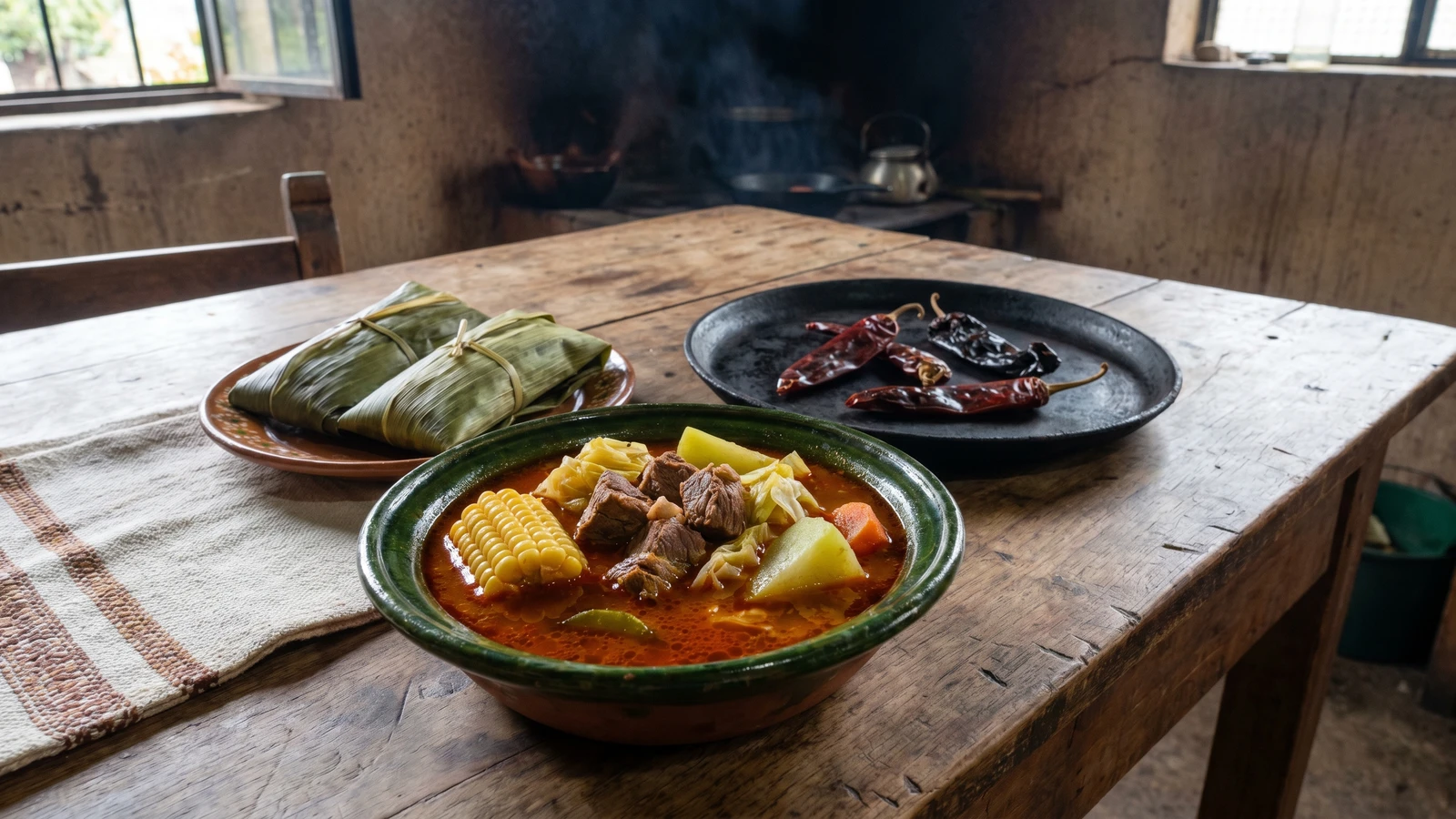
Michoacán's Meseta P'urhépecha ceremonial caldo, venison simmered with guajillo and ancho, milpa vegetables, and nurite, served properly with corundas because churipo never arrives alone at fiestas.
Michoacán, Meseta P'urhépecha. The high country around Cherán, Nahuatzen, Paracho, and the roads toward Uruapan is where this churipo de venado lives. Pine forest above, milpa below, clay cazuelas on the fire, and a red broth built for a fiesta table, not for a rushed Tuesday lunch.
The color belongs to chile guajillo, with chile ancho for weight and a little pasilla michoacano for depth. Venison is older than beef in this pot. Before cattle became the common celebration meat, the hills gave deer, rabbit, and wild birds. This version remembers that older logic. The meat goes first, slowly. The chiles are toasted, soaked, blended, strained, and fried in manteca. Some steps are the recipe.
The women who kept churipo alive are the cocineras tradicionales, the same authority the institutions finally had to recognize when Michoacán became the model for the 2010 UNESCO inscription. I learned this dish from señoras who did not measure patience in minutes. They listened to the pot. They added the vegetables by firmness, not by guessing. They finished with nurite only at the end because that herb is medicine and perfume, not decoration.
And hear me clearly: churipo is not served alone. It comes with corundas, the triangular tamales of Michoacán, wrapped here in fresh carrizo leaf and set beside the bowl. The corunda catches the red broth and turns the meal into a ceremony. My mother was Jalisciense, and she used to say you respect another state's food by not changing its bones. Cada estado, su propia cocina.
Churipo is a P'urhépecha ceremonial caldo from Michoacán's highland communities, served at weddings, fiestas patronales, and mayordomía meals with corundas, the triangular tamales of the region. Venison versions reflect the pre-cattle world of the Meseta, where deer and other game belonged to the older food system before Spanish cattle became common after the 16th century. In 2010, UNESCO recognized Traditional Mexican Cuisine using the Michoacán paradigm, with cocineras tradicionales as the living authority for milpa agriculture, nixtamalization, ritual cooking, and community transmission.
Quantity
3 pounds
cut into 2-inch pieces
Quantity
1 pound
for broth, if available
Quantity
14 cups, plus more as needed
Quantity
1 large
halved
Quantity
1
halved crosswise
Quantity
1 tablespoon, plus more to taste
Quantity
10
stemmed and seeded
Quantity
3
stemmed and seeded
Quantity
1
stemmed and seeded
Quantity
2 ripe
roasted until blistered
Quantity
2 tablespoons
for frying the chile base
Quantity
2
peeled, seeded, and quartered
Quantity
2 ears
cut into thick rounds
Quantity
2 medium
cut into thick diagonal pieces
Quantity
2 medium
peeled and quartered
Quantity
2
peeled, seeded, and cut into wedges
Quantity
8 ounces
trimmed
Quantity
2 small
cut into thick half-moons
Quantity
1/2 small head
cut into wedges through the core
Quantity
1 small sprig
Quantity
2 pounds
for corundas
Quantity
1 cup
at room temperature, for corundas
Quantity
1 teaspoon
dissolved in 2 tablespoons warm water and strained
Quantity
1 1/2 teaspoons
for corundas
Quantity
1 to 1 1/4 cups
as needed for the masa
Quantity
24 to 30
rinsed and softened over a comal, for wrapping corundas
| Ingredient | Quantity |
|---|---|
| bone-in venison shoulder, neck, or shankcut into 2-inch pieces | 3 pounds |
| venison bones (optional)for broth, if available | 1 pound |
| cold water | 14 cups, plus more as needed |
| white onionhalved | 1 large |
| head of garlichalved crosswise | 1 |
| sal de grano or kosher salt | 1 tablespoon, plus more to taste |
| dried chile guajillostemmed and seeded | 10 |
| dried chile anchostemmed and seeded | 3 |
| dried chile pasilla michoacanostemmed and seeded | 1 |
| Roma tomatoesroasted until blistered | 2 ripe |
| manteca de cerdofor frying the chile base | 2 tablespoons |
| xoconostlespeeled, seeded, and quartered | 2 |
| fresh corncut into thick rounds | 2 ears |
| carrotscut into thick diagonal pieces | 2 medium |
| potatoespeeled and quartered | 2 medium |
| chayotespeeled, seeded, and cut into wedges | 2 |
| green beanstrimmed | 8 ounces |
| calabacitascut into thick half-moons | 2 small |
| green cabbagecut into wedges through the core | 1/2 small head |
| fresh nurite | 1 small sprig |
| fresh nixtamal masa for tortillasfor corundas | 2 pounds |
| manteca de cerdoat room temperature, for corundas | 1 cup |
| tequesquitedissolved in 2 tablespoons warm water and strained | 1 teaspoon |
| sal de grano or kosher saltfor corundas | 1 1/2 teaspoons |
| warm venison broth or warm wateras needed for the masa | 1 to 1 1/4 cups |
| fresh carrizo leavesrinsed and softened over a comal, for wrapping corundas | 24 to 30 |
Put the venison pieces and bones in a heavy 8-quart pot or a deep clay cazuela. Cover with the cold water. Add the onion, garlic, and salt. Bring it slowly to a simmer over medium heat, then lower the heat until the surface barely trembles. Venison is lean and highland-tough. A hard boil tightens it and gives you dry meat in a cloudy broth.
For the first 20 minutes, skim the gray foam that rises. Do it with patience. After that, cover the pot halfway and simmer for 2 to 2 1/2 hours, until the meat is almost tender but not falling apart. Add hot water if the liquid drops below the meat. The broth should taste clean, mineral, and meaty before the chile ever touches it.
Heat a dry comal over medium. Toast the guajillo, ancho, and pasilla michoacano separately, about 20 to 30 seconds per side. The skins should puff and smell deep, not burned. Roast the tomatoes on the same comal until the skins blister and blacken in spots. The guajillo gives the red color. The ancho gives body. The pasilla brings the darker highland note.
Put the toasted chiles in a bowl and cover with hot water, not boiling water. Let them soften for 20 minutes. Drain them, then blend with the roasted tomatoes, the cooked garlic from the broth, and 1 1/2 cups of venison broth until completely smooth. Strain through a fine-mesh sieve, pressing hard on the solids. Churipo broth should be red and clean, not full of chile skins.
Melt the 2 tablespoons of manteca de cerdo in a cazuela or skillet over medium heat. Pour in the strained chile puree. It will sputter. Stir for 8 to 10 minutes, until the color darkens from bright red to brick red and the fat begins to show around the edges. La manteca es el sabor. Frying the chile wakes it up before it joins the broth.
While the venison simmers, beat the 1 cup manteca de cerdo until soft and lighter in color. Work in the fresh nixtamal masa, strained tequesquite, salt, and enough warm broth or warm water to make a soft masa that spreads without cracking. It should feel supple, not wet. Fresh masa from a tortillería is what you want. Masa harina will feed people, but it is a compromise.
Pass the carrizo leaves quickly over a warm comal so they bend without tearing. Put a small mound of masa in the center of each leaf and fold into a tight triangle, tucking the ends so the masa is enclosed. Corundas are not little rectangular tamales. Their triangular shape belongs to Michoacán. Cada estado, su propia cocina.
Line a tamalera or large steamer with extra carrizo leaves. Arrange the corundas in layers, leaving room for circulation. Cover and steam for 55 to 65 minutes, until the masa pulls cleanly from the leaf and smells like cooked corn and lard. Rest them 10 minutes before serving. A churipo table without corundas is not finished.
When the venison is almost tender, stir the fried chile base into the broth. Add the xoconostles, corn, carrots, potatoes, and chayotes. Simmer 20 minutes. Add the green beans, calabacitas, and cabbage wedges, then simmer 15 to 20 minutes more. The vegetables should hold their shape. This is a ceremonial caldo, not baby food.
Add the sprig of nurite during the last 10 minutes only. Taste for salt. The broth should be savory, red from guajillo, lightly sour from xoconostle, and clean enough that you can taste the venison. Nurite is not mint, not oregano, not epazote. It is nurite, from the Meseta, and you substitute nothing for it.
Ladle venison, vegetables, and red broth into deep bowls. Set two or three warm corundas beside each bowl, still wrapped or partly unwrapped in the carrizo leaves. The diner tears pieces of corunda and eats them with the broth. Churipo is always served with corundas, never alone. Así se hace y punto.
1 serving (about 820g)
Culinary guides, cultural storytelling, and the editorial depth that makes cooking meaningful.
Discover Culinary ExplorerChef Lupita
Aguascalientes' Bajio pozole de lengua, built with cacahuazintle hominy, tender beef tongue, chile ancho and guajillo, with xoconostle brightness and table garnishes.

Chef Lupita
Veracruz's Gulf coast rice from Alvarado, built with seafood stock, tomato, chile chipotle, epazote, shrimp, fish, jaiba, and pulpo, served loose and brothy in a clay cazuela.

Chef Lupita
Costa Chica's wet salt-beef stew, built from chile costeño, guajillo, tomato, manteca, yuca, plantain, and masa dumplings, the ranching pot of Cuajinicuilapa and Pinotepa.

Chef Lupita
Michoacán's P'urhépecha atápakua is a masa-thickened sauce and stew at once, built with pork, chile guajillo, and hierbabuena added only at the end.