
Chef Lupita
Aguascalientes Beef Tongue Pozole (Pozole de Lengua)
Aguascalientes' Bajio pozole de lengua, built with cacahuazintle hominy, tender beef tongue, chile ancho and guajillo, with xoconostle brightness and table garnishes.
A cooking platform built around craft, culture, and the stories behind what we eat.
Created by
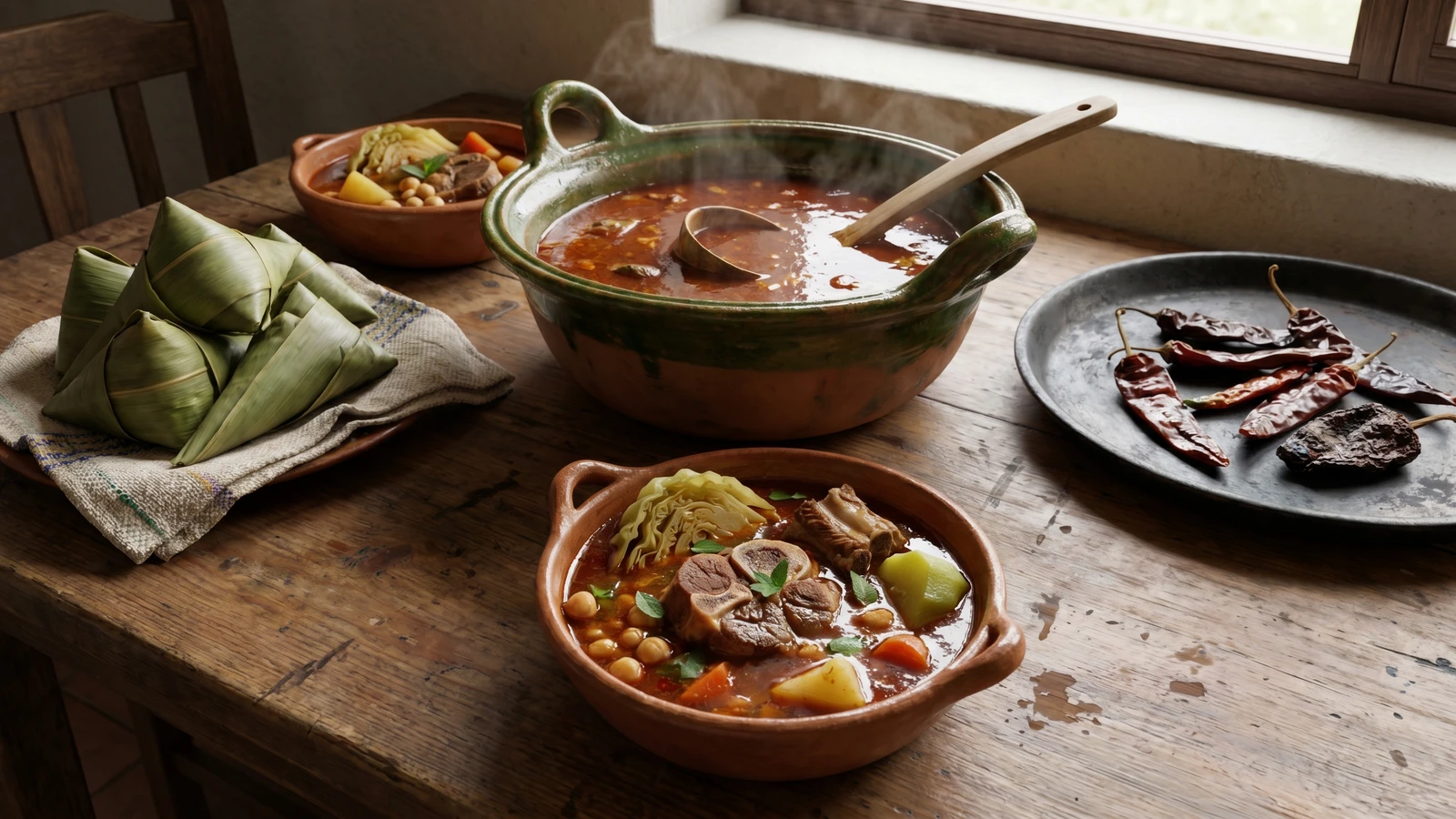
Michoacán's P'urhépecha ceremonial broth from the Meseta and Lake Pátzcuaro, beef shank simmered with guajillo, cabbage, chayote, garbanzo, and hierbabuena, served only with corundas beside the bowl.
Michoacán, specifically the Meseta P'urhépecha and the villages around Lake Pátzcuaro, is where churipo lives. In Cherán, Tzintzuntzan, and San Andrés Tziróndaro, it comes out for weddings, baptisms, patron-saint days, and funerals. A red beef caldo, yes, but don't shrink it to soup. Churhípu is ceremonial food, served with corundas or it is not complete.
Chile guajillo gives the broth its brick-red color. A little chile ancho gives body when the vendor's guajillos are thin, but the flavor is not about burning your mouth. It is beef shank, bone, col, chayote, garbanzo, and hierbabuena working together in a pot that tastes like the highlands after rain. The fat comes from the meat and bone. No vegetable oil floating around pretending to help.
I watched a cocinera tradicional in Tzintzuntzan keep three pots moving before dawn, one for the beef, one for the corundas, one for the chile. She didn't raise her voice. She didn't need to. Every woman around her knew when the cabbage went in and when the chayote would collapse if you bullied it. That knowledge is the institution. UNESCO can write the inscription; the señoras keep the calendar.
My mother had Jalisco in her notebook, not this. So I learned churipo the right way: standing in Michoacán kitchens, asking fewer questions and watching more. Serve it in clay from Capula or Tzintzuntzan with corundas wrapped in green leaf at the side. Cada estado, su propia cocina.
Churipo, or churhípu in P'urhépecha usage, is a ceremonial red beef broth from Michoacán's P'urhépecha communities, tied to weddings, cargo-system fiestas, and funerary meals where it is served with corundas. After cattle arrived in the 16th century, Indigenous cooks folded beef and its bones into older chile-and-maize ritual foodways, while the accompanying corundas preserved the nixtamalized corn center of the meal. The 2010 UNESCO inscription of Traditional Mexican Cuisine used the Michoacán paradigm and the authority of cocineras tradicionales, especially their systems of milpa, nixtamal, ritual cooking, and community transmission, as its central model.
Quantity
1 cup
rinsed and soaked overnight
Quantity
2 pounds
Quantity
1 1/2 pounds
Quantity
1 pound
Quantity
14 cups, plus more as needed
Quantity
1 medium
halved and divided
Quantity
6
divided
Quantity
1 tablespoon, plus more to taste
Quantity
10
stemmed and seeded
Quantity
2
stemmed and seeded
Quantity
2
peeled and cut into thick pieces
Quantity
2
peeled, seeded, and cut into wedges
Quantity
2 medium
quartered
Quantity
2 small
cut into thick half-moons, if in season
Quantity
1/2 small
cut into thick wedges through the core
Quantity
4 sprigs, plus leaves for serving
Quantity
12 to 16
warmed for serving, never omitted
| Ingredient | Quantity |
|---|---|
| dried garbanzo beansrinsed and soaked overnight | 1 cup |
| cross-cut beef shank (chambarete) with bone | 2 pounds |
| beef short ribs or beef ribs (costilla de res) | 1 1/2 pounds |
| beef marrow bones or neck bones | 1 pound |
| cold water | 14 cups, plus more as needed |
| white onionhalved and divided | 1 medium |
| garlic clovesdivided | 6 |
| kosher salt | 1 tablespoon, plus more to taste |
| dried chile guajillostemmed and seeded | 10 |
| dried chile anchostemmed and seeded | 2 |
| carrotspeeled and cut into thick pieces | 2 |
| chayotespeeled, seeded, and cut into wedges | 2 |
| waxy potatoesquartered | 2 medium |
| calabacitas (optional)cut into thick half-moons, if in season | 2 small |
| green cabbagecut into thick wedges through the core | 1/2 small |
| fresh hierbabuena | 4 sprigs, plus leaves for serving |
| corundaswarmed for serving, never omitted | 12 to 16 |
The night before cooking, cover the dried garbanzo beans with plenty of cool water. They need room to swell. The next day, drain them before they go into the pot. Old garbanzo takes longer, and no amount of scolding will make it tender faster.
Place the beef shank, ribs, marrow bones, 14 cups cold water, half the onion, 4 garlic cloves, and salt in a heavy 8-quart pot or clay cazuela. Bring it slowly to a simmer over medium heat. Skim the gray foam that rises in the first 20 minutes. A hard boil beats up the broth and makes the meat tough before it has given you anything useful.
Add the drained garbanzo beans after the foam slows down. Keep the pot at a steady low simmer for 2 hours to 2 hours 15 minutes, until the garbanzo is creamy at the center and the beef is beginning to loosen from the bone. Add hot water if the bones start showing above the surface.
Heat a dry comal over medium. Toast the chile guajillo in batches, about 15 to 20 seconds per side, just until the skins darken a shade and smell sweet. Toast the chile ancho the same way, a little longer because it is thicker. Do not blacken them. Burned chile turns the whole pot bitter. On the same comal, brown the reserved onion half and the remaining 2 garlic cloves in spots.
Cover the toasted chiles with hot water and let them soften for 20 minutes. Drain them. Blend the softened chiles with the browned onion, browned garlic, and 2 cups of hot beef broth until completely smooth. Strain through a fine-mesh sieve, pressing hard on the skins. You want a clean red puree, not flakes of chile skin floating in a ceremonial broth.
Stir the strained chile puree into the simmering beef broth. Some red caldos want the chile fried in manteca. Churipo does not. This is a beef broth, and the beef fat carries the chile. Simmer for 20 minutes, until the broth turns brick red and a light orange sheen gathers at the edge of the pot. Taste for salt now.
Add the carrots, chayotes, and potatoes. Simmer gently for 15 to 18 minutes. The pieces should stay whole but yield when pierced with a knife. Cut them large because this is not a chopped vegetable soup. The vegetables should look like they were placed there by someone paying attention.
Add the cabbage wedges, calabacitas if using, and the sprigs of hierbabuena. Simmer 8 to 10 minutes more, just until the cabbage bends and the calabacita is tender. Do not cook the cabbage until it disappears. Churipo has generosity, not confusion.
While the vegetables finish, warm the corundas in a steamer for 10 to 12 minutes, still wrapped in their leaves. If you bought them from a Michoacán vendor, keep them wrapped until they reach the table. Churipo is always served with corundas, never alone. No me vengas con atajos.
Ladle each bowl with beef, garbanzo, cabbage, chayote, potato, and enough red broth to cover the bottom of the spoon. Scatter a few fresh hierbabuena leaves over the top. Set two warm corundas beside every bowl, preferably in green-glazed clay from Michoacán or a deep barro bowl. Tear the corunda and dip it into the broth. Así se hace y punto. Saber cocinar es saber vivir.
1 serving (about 730g)
Culinary guides, cultural storytelling, and the editorial depth that makes cooking meaningful.
Discover Culinary ExplorerChef Lupita
Aguascalientes' Bajio pozole de lengua, built with cacahuazintle hominy, tender beef tongue, chile ancho and guajillo, with xoconostle brightness and table garnishes.

Chef Lupita
Veracruz's Gulf coast rice from Alvarado, built with seafood stock, tomato, chile chipotle, epazote, shrimp, fish, jaiba, and pulpo, served loose and brothy in a clay cazuela.

Chef Lupita
Costa Chica's wet salt-beef stew, built from chile costeño, guajillo, tomato, manteca, yuca, plantain, and masa dumplings, the ranching pot of Cuajinicuilapa and Pinotepa.

Chef Lupita
Michoacán's P'urhépecha atápakua is a masa-thickened sauce and stew at once, built with pork, chile guajillo, and hierbabuena added only at the end.