
Chef Juliette
Soufflé à la Royale
Vanilla Soufflé à la Royale rises around kirsch-soaked biscuits and bright diced fruit, a celebration of controlled moisture, glossy egg whites, and the nerve to carry it straight from oven to table.

Recipe Archive
Desserts bring structure to sweetness, from cakes and custards to frozen treats and fruit-driven finishes that close the meal with intention.
1329 recipes
A cooking platform built around craft, culture, and the stories behind what we eat.
Chef Juliette
Vanilla Soufflé à la Royale rises around kirsch-soaked biscuits and bright diced fruit, a celebration of controlled moisture, glossy egg whites, and the nerve to carry it straight from oven to table.

Chef Juliette
Soufflé à la vanille rises from vanilla-infused milk and properly whipped whites, plain enough to expose every choice and generous enough to make four people lean toward the oven.
Chef Juliette
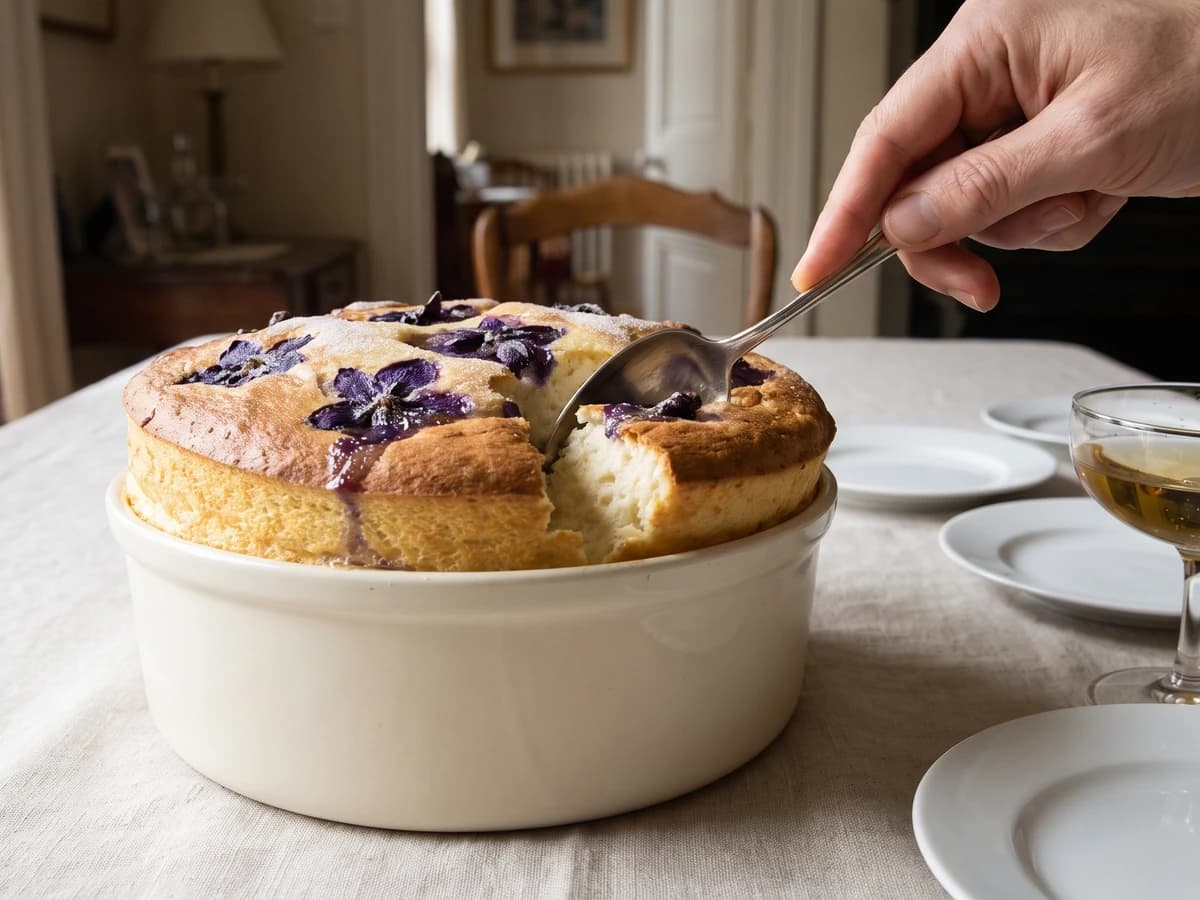
Soufflé aux violettes rises high from a vanilla panade and glossy whites, with crushed crystallised violets through its heart and a candied crown above: crush every shard fine, then trust the oven.

Chef Juliette
A celebration timbale of day-old Génoise, Italian meringue, peaches, cherries, and pineapple, rebuilt slice by slice and gently bronzed, with a bright Kirsch peach sauce poured beside it.

Chef Juliette
A glossy crown of sour cherries inside hollow brioche, apricot-brushed and ringed with pale puff-pastry ornaments: a celebration dessert whose success depends on filling it at the final moment.

Chef Juliette
A glazed brioche shell arrives jewelled with candied fruit, then receives its warm filling at the table: firm orchard fruit, pineapple, almonds and raisins held in a bright, kirsch-scented apricot purée.

Chef Juliette
A burnished brioche shell filled at the last moment with whole fruit and vanilla chestnuts, held in a glossy apricot, kirsch, and chestnut binding that respects every shape.
Chef Juliette
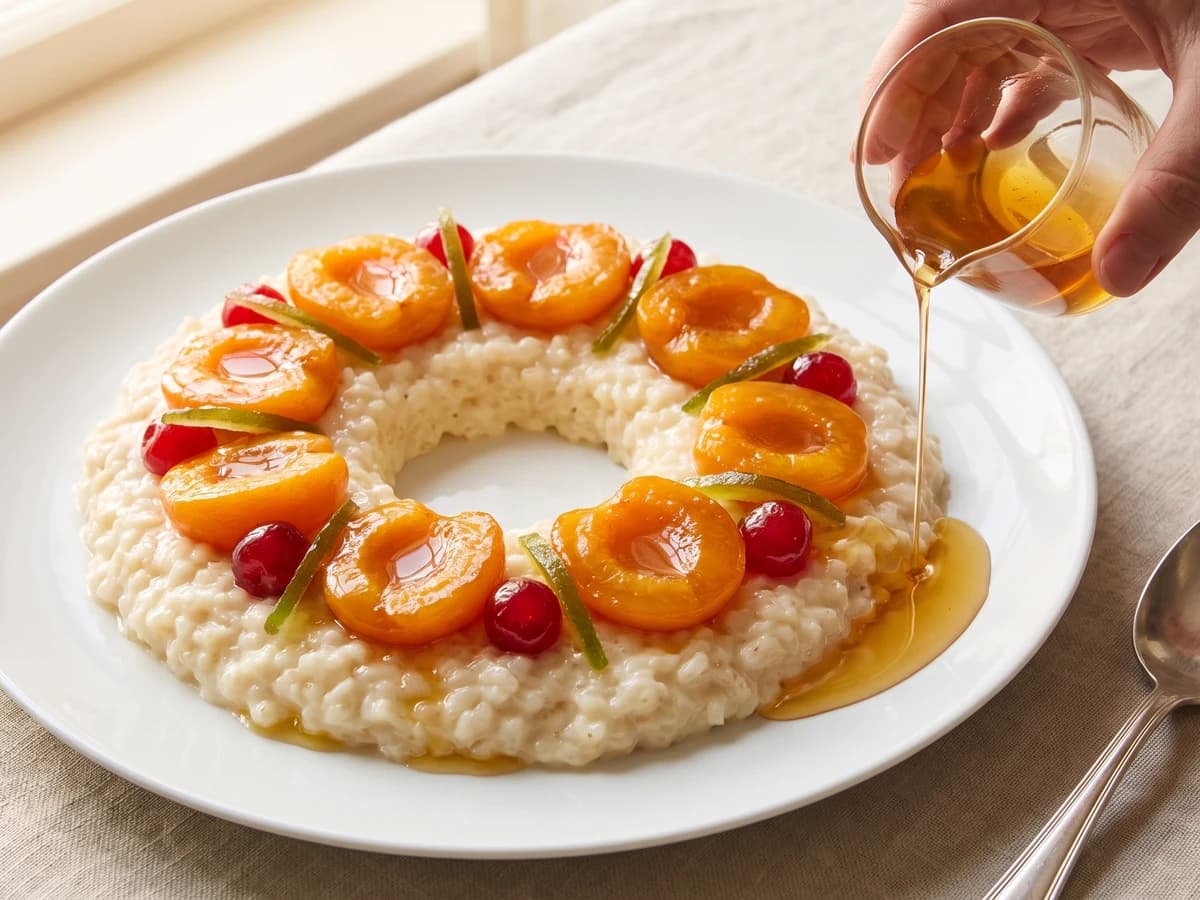
Apricots à la Condé sets tender poached fruit on a border of distinct vanilla rice grains, then coats the whole with glossy kirsch-scented apricot syrup and bright candied fruit.

Chef Juliette
Poached apricots and ruby cherries circle a golden pyramid of apricot-shaped rice croquettes, with Kirsch-scented sauce beside them: classical Condé timed for one cook, with the frying saved for the final minutes.

Chef Juliette
Apricot, almond, and Kirsch meet in a crown of macaroon-based sweets, each hidden beneath Italian meringue dried perfectly white and served with a bright apricot sauce at the table.

Chef Juliette
Abricots gratinés turns poached apricot halves, a firm apple bed, and a thin almond covering into a burnished fruit dessert. The base must stand stiff, or the whole handsome top begins to slide.

Chef Juliette
Poached apricot halves settle into vanilla sweet rice beneath a gently baked meringue dome, then jam catches every piped crest in alternating amber and ruby. Bake softly, and the centre sets before the shell colours.

Chef Juliette
Apricots shine above a firm dome of vanilla rice, frangipane, and pistachio inside a bronzed meringued Génoise crown, with buttery almond-milk syrup served from a jug at the table.

Chef Juliette
Kirsch-bright pineapple curved over cool vanilla Condé rice and lacquered with apricot syrup, a composed French dessert whose success rests on one humble act: draining the fruit well.
Chef Juliette
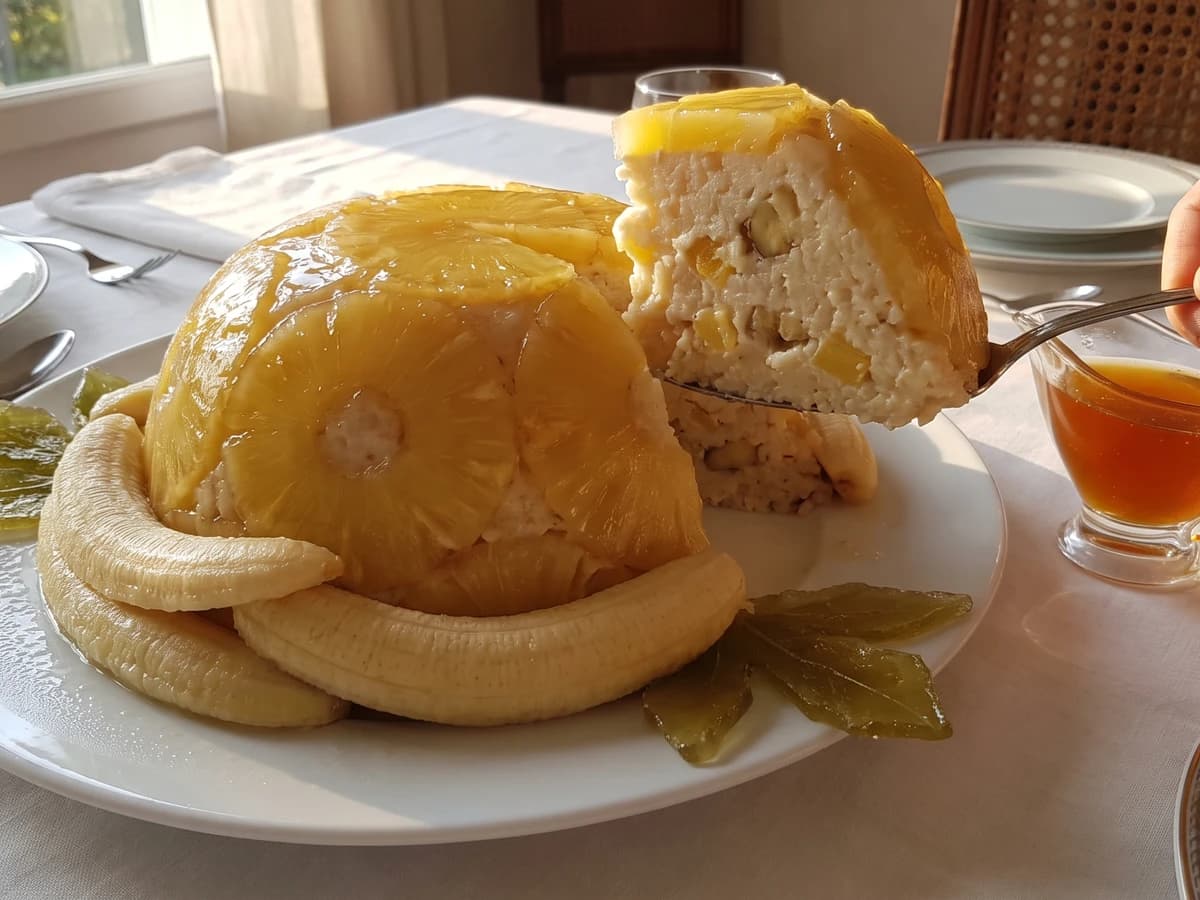
Pineapple slices, kirsch-bright and translucent, form a flawless dome around vanilla rice and a hidden centre of tropical fruit, with poached bananas and glossy apricot syrup waiting at the base.

Chef Juliette
Bananes à la Condé pairs barely poached vanilla fruit with creamy rice, jewel-like candied fruit, and a glossy Kirsch-apricot coating, a composed pudding whose success rests on keeping the syrup quieter than a simmer.

Chef Juliette
Whole-poached bananas, cut only once tender, rest on creamy vanilla rice beneath a domed meringue, lightly baked and jeweled with apricot and red-currant jam: an old entremets made for tonight's table.

Chef Juliette
Banana skins cradle banana ice beneath a thick, grooved coat of rum-scented meringue, browned in a fierce flash while broken ice guards the frozen center. The insulation is the whole lesson.

Chef Juliette
Bananes soufflées turn four bananas into their own serving dishes: silken sieved fruit, a real cream base, and whites folded at the last moment, rising gold in precisely six minutes.
Chef Juliette
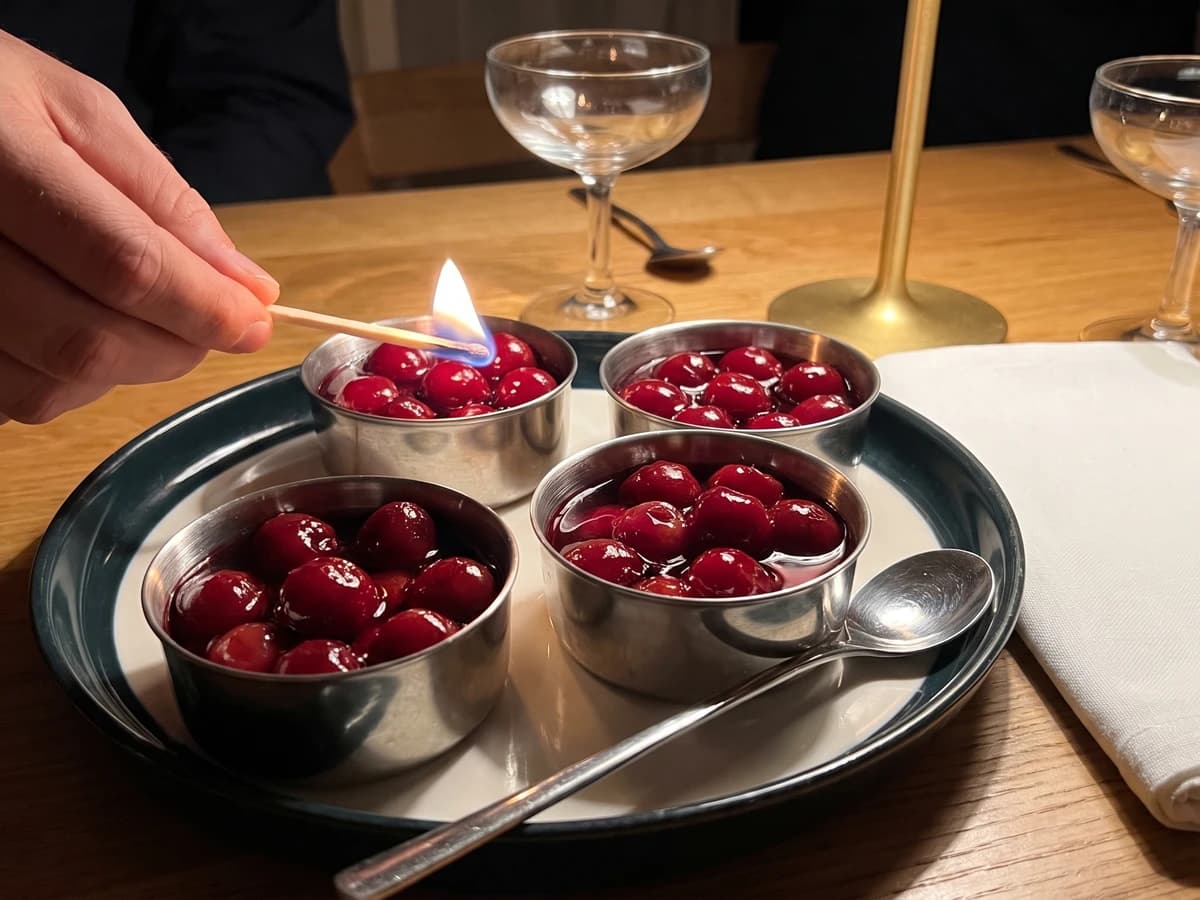
Cerises Jubilé makes celebration from discipline: tender cherries, a clear arrowroot-bound syrup, and warm kirsch catching in a brief blue flame, all scaled for four and served from honest little timbales.

Chef Juliette
Cerises à la Valeria teaches temperature discipline: creamy red-currant ice in crisp tartlets, sheltered by vanilla meringue, then crowned with Bordeaux-poached cherries and a bright pistachio finish.

Chef Juliette
Four frozen orange shells beneath high meringue crowns, browned in seconds under the grill: a bright celebration dessert whose whole lesson is the discipline of hot against cold.

Chef Juliette
Saffron-gold entremets rice fills six tangerine shells and rises in a glazed citrus-clad dome at their center, a grand French dessert translated cleanly for the home table.

Chef Juliette
Frozen citrus below, feather-light soufflé above: Soufflé Righi turns one intact peel into a small feat of timing, baked on crushed ice for two minutes or four.
Culinary guides, cultural storytelling, and the editorial depth that makes cooking meaningful.
Discover Culinary Explorer