
Chef Lupita
Acitrón de Cidra Conventual
Puebla's convent-style acitrón, made from cidra peel instead of endangered biznaga, built through repeated syrup soakings until the cubes turn firm, translucent, and ready for rosca or chiles en nogada.
A cooking platform built around craft, culture, and the stories behind what we eat.
Created by
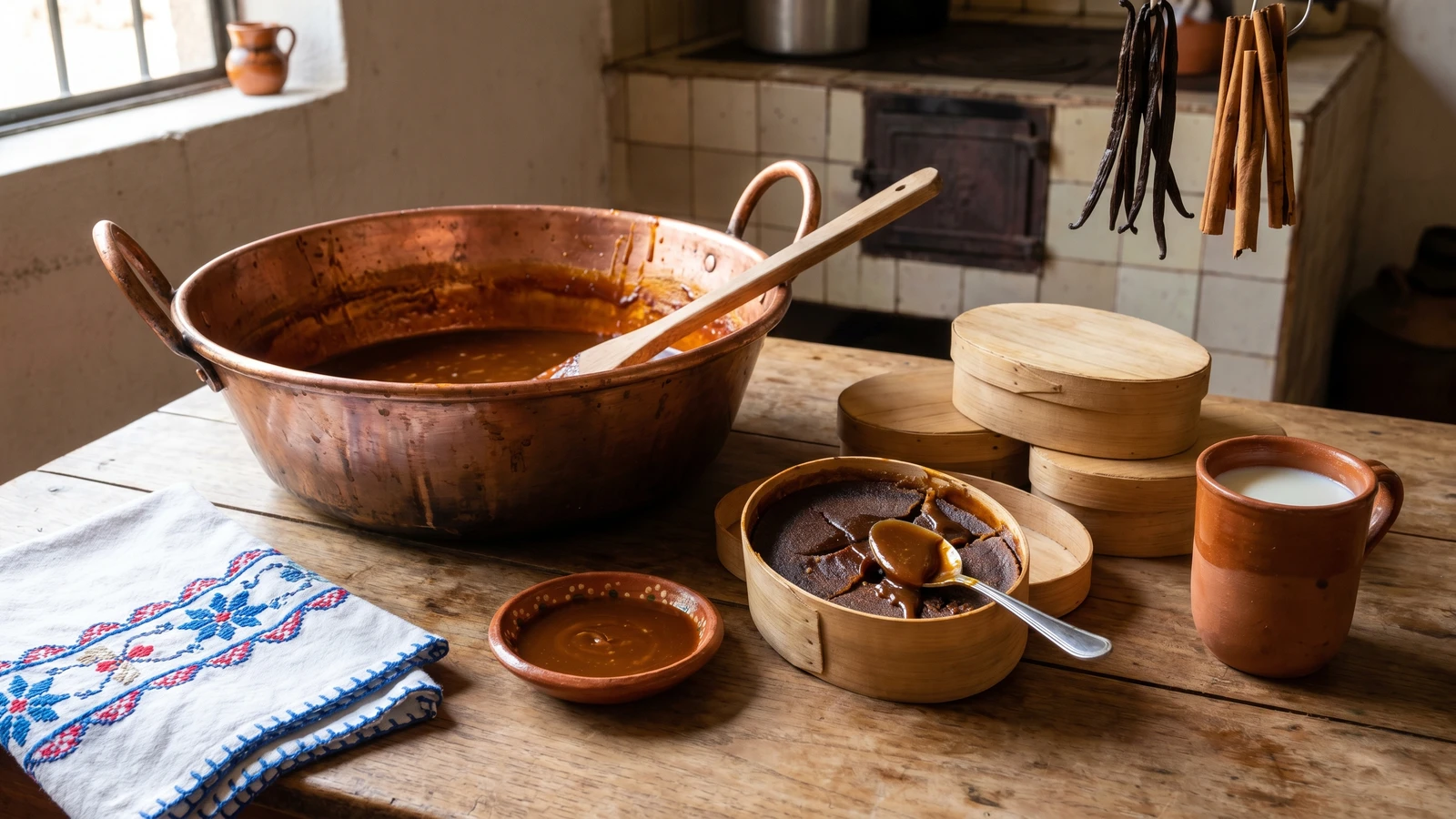
Sayula's goat-milk caramel is stirred for hours until the milk turns deep amber, thick enough to spoon into little oval wood boxes and dark enough to taste of toasted sugar.
Sayula is in southern Jalisco, between the lagoon country and the road that carries people toward Colima. This cajeta belongs there. Not to a supermarket squeeze bottle. Not to a factory jar with a cartoon goat. To Sayula, where the dulce is packed into little oval wooden boxes and sold as something you take home after visiting family.
The ingredient that defines it is goat milk. Cow milk makes dulce de leche. Good dulce, yes, but not cajeta de Sayula. Goat milk has a sharper backbone and a deeper finish after hours over the fire. The sugar darkens, the milk reduces, and the spoon starts dragging a path across the bottom of the cazo. That is when you pay attention. Walk away and it burns. No me vengas con atajos.
I learned this version from a woman near the Sayula plaza who stirred with one hand and corrected me with the other. She used a copper cazo, a wooden paddle, cinnamon, a little vanilla, and bicarbonato so the milk would foam at the beginning and settle into that glossy, heavy caramel later. My mother wrote in her notebook, 'la cajeta no se apura.' Cajeta is not hurried. Saber cocinar es saber vivir.
Cajeta takes its name from the small wooden boxes, or cajitas, used to store and sell reduced goat-milk caramel in central and western Mexico. Celaya, Guanajuato became nationally famous for cajeta in the 19th century, but Sayula, Jalisco developed its own strong tradition of cajeta packed in oval wooden boxes, often with a darker cooked surface that cracks under the spoon. Goat husbandry spread through Mexico after the Spanish introduced goats in the 16th century, and goat milk became especially important in regions where the animals adapted better than cattle to dry pasture and small household economies.
Quantity
2 liters
Quantity
3 1/2 cups
Quantity
1/2 teaspoon
Quantity
2 tablespoons
reserved from the pot, for dissolving the baking soda
Quantity
1
Quantity
1/4 teaspoon
Quantity
1 teaspoon
Quantity
1 tablespoon
for a smoother stored cajeta
| Ingredient | Quantity |
|---|---|
| fresh goat milk | 2 liters |
| granulated cane sugar | 3 1/2 cups |
| baking soda (bicarbonato de sodio) | 1/2 teaspoon |
| warm goat milkreserved from the pot, for dissolving the baking soda | 2 tablespoons |
| Mexican cinnamon stick (canela) | 1 |
| fine sea salt | 1/4 teaspoon |
| Mexican vanilla extract | 1 teaspoon |
| glucose syrup or light corn syrup (optional)for a smoother stored cajeta | 1 tablespoon |
Set a wide copper cazo or heavy wide pot over medium heat. Add the goat milk, sugar, cinnamon stick, and salt. Stir with a wooden paddle until the sugar dissolves completely. Wide matters here. More surface area means the milk reduces evenly instead of sulking in a deep pot for half the day.
Take 2 tablespoons of warm milk from the pot and mix it with the baking soda in a small cup. Stir it back into the pot. The milk will foam high, so do not panic and do not turn your back. Lower the heat if it climbs too fast. The bicarbonato helps the milk brown and keeps the texture from turning grainy.
Keep the pot at a steady gentle simmer and stir every few minutes for the first hour. The milk will move from white to cream, then pale beige. Scrape the bottom and corners each time. Milk solids like to hide there and burn before the surface tells you anything.
After about 90 minutes, the cajeta will darken to tan and the bubbles will turn thicker and slower. Now you stay with it. Stir constantly, scraping the bottom in long strokes. The smell should be toasted milk and caramel, not smoke. If you smell bitterness, your heat is too high. Lower it and keep moving.
When the cajeta is deep amber and the spoon leaves a clean path across the bottom of the cazo for two seconds, start testing. Drop a little onto a cold plate. It should mound softly and move slowly when you tilt the plate. For spooning into wooden boxes, stop before it becomes candy-firm. It thickens as it cools.
Remove the cinnamon stick. Stir in the vanilla and the glucose syrup if using. Cook 2 minutes more, stirring constantly, until glossy. The optional glucose is a dulcería trick for storage; it keeps the sugar from crystallizing. It is a compromise for shelf life, not magic.
Pour the hot cajeta into small oval wooden boxes, clean glass jars, or a shallow clay dish. Let it cool uncovered until the surface sets. In the Sayula boxes, the top darkens and forms that thin cooked-sugar skin that cracks under the spoon. That crack is part of the pleasure. Así se hace y punto.
1 serving (about 210g)
Culinary guides, cultural storytelling, and the editorial depth that makes cooking meaningful.
Discover Culinary ExplorerChef Lupita
Puebla's convent-style acitrón, made from cidra peel instead of endangered biznaga, built through repeated syrup soakings until the cubes turn firm, translucent, and ready for rosca or chiles en nogada.

Chef Lupita
Ciudad de México's Tulyehualco alegría is popped huautli folded into piloncillo honey, pressed with peanuts, pepitas, and raisins, then cut into the rectangular bars that built a pueblo's identity.

Chef Lupita
Oaxaca's pre-Columbian amaranth bar, popped on a hot comal and bound with piloncillo, honey, and the sacred Zapotec grain that the Spanish tried, and failed, to outlaw.

Chef Lupita
Querétaro's mercado candy of popped amaranto pressed with dark piloncillo syrup, pepitas, pecans, and cacahuate, a Bajío sweet that respects the seed before it decorates the table.