
Chef Lupita
Acitrón de Cidra Conventual
Puebla's convent-style acitrón, made from cidra peel instead of endangered biznaga, built through repeated syrup soakings until the cubes turn firm, translucent, and ready for rosca or chiles en nogada.
A cooking platform built around craft, culture, and the stories behind what we eat.
Created by
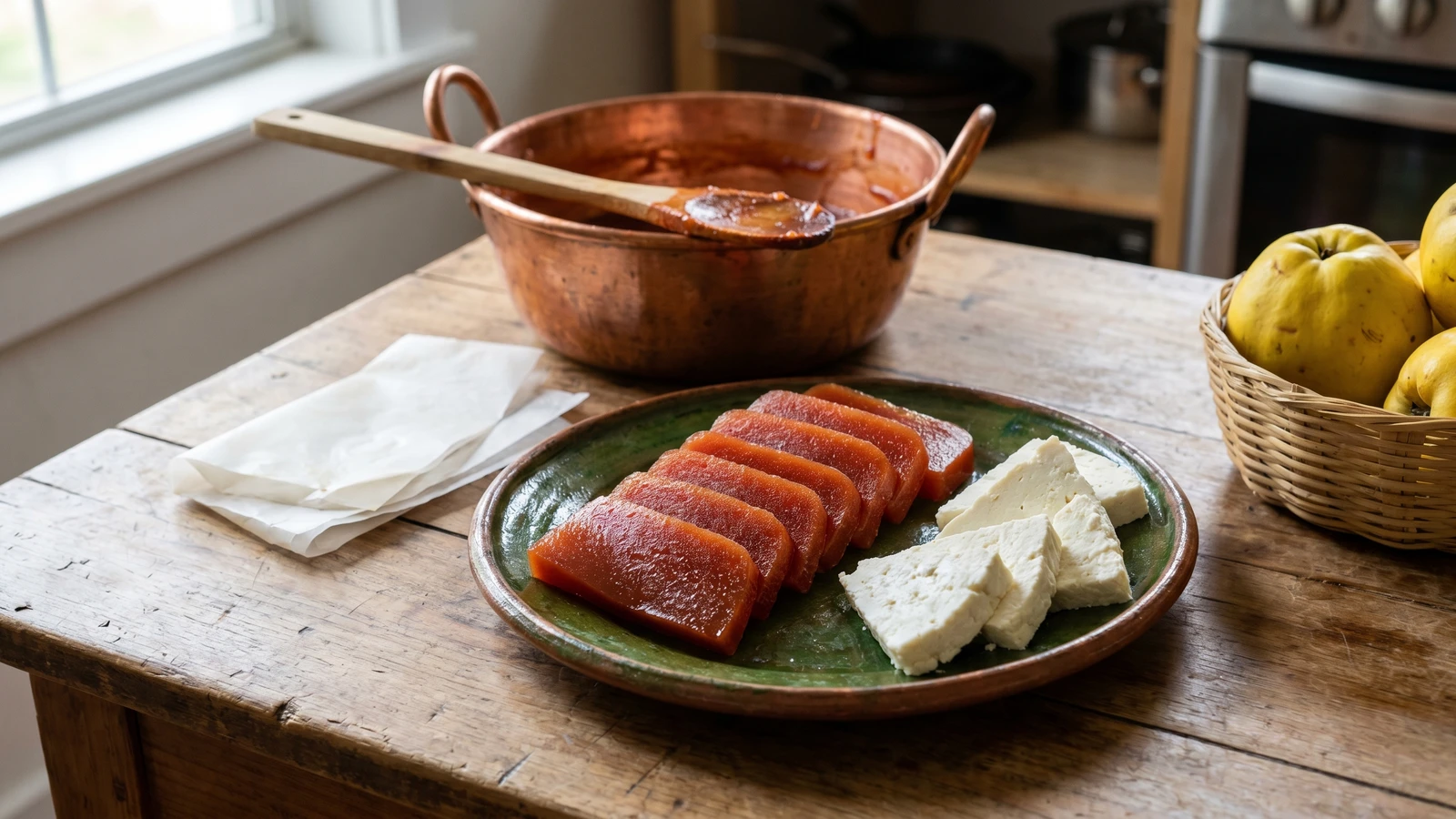
Morelia's quince paste is cooked down slowly until it can be sliced clean, then served with salty Michoacan cheese for the merienda every local recognizes.
Michoacan, and specifically Morelia, owns ate the way Puebla owns chiles en nogada. You see it in the candy shops near the centro, lined in blocks of membrillo, guayaba, tejocote, pera, and zapote, each one firm enough to slice and sweet enough to last. Esto no es comida de un solo Mexico. Cada estado, su propia cocina.
The defining ingredient here is membrillo, quince. Hard, perfumed, stubborn fruit. Raw, it gives you nothing. Cooked slowly with sugar in a copper cazo, it turns from pale yellow to rose and then to a deep orange-red paste that holds the knife. Copper helps the heat move evenly, but the real tool is patience. The spoon keeps moving or the fruit burns. La cocina no es decoracion, es trabajo.
I learned this version from a señora in Morelia who sold ate wrapped in wax paper beside baskets of queso de rancho. She told me the cheese matters as much as the fruit. Sweet alone is childish. Sweet with salty cheese becomes merienda, the small afternoon meal that keeps a house moving until supper. My mother wrote something similar in her notebook: 'con queso, siempre.' She was right.
This is make-ahead cooking, not last-minute dessert. Make the paste today, slice it tomorrow, serve it on green-glazed Michoacan barro with a knife that has seen real work. Saber cocinar es saber vivir.
Ate de Morelia developed from Spanish quince preserves brought during the colonial period and adapted in Michoacan with local fruits, especially guava from the warm valleys around the state. Morelia's convent kitchens and later its family candy workshops turned fruit paste into a regional industry, and Mexico recognized Ate de Morelia with a Denominacion de Origen in the 21st century to protect its geographic and artisanal identity. The custom of serving ate with cheese reflects a broader Mexican merienda tradition, where preserved fruit and fresh dairy meet on the same plate.
Quantity
3 pounds
washed well, stems removed
Quantity
6 cups, or enough to cover
Quantity
2 tablespoons
Quantity
75 percent of cooked quince pulp by weight
Quantity
1 small pinch
Quantity
for serving
queso fresco de rancho, queso adobera, or young queso Cotija
| Ingredient | Quantity |
|---|---|
| ripe quince (membrillo)washed well, stems removed | 3 pounds |
| water | 6 cups, or enough to cover |
| fresh lime juice | 2 tablespoons |
| granulated sugar | 75 percent of cooked quince pulp by weight |
| fine sea salt | 1 small pinch |
| Michoacan cheesequeso fresco de rancho, queso adobera, or young queso Cotija | for serving |
Scrub the quince well. The skin carries perfume and pectin, so do not peel it. Cut each fruit into quarters through the hard core. Quince fights the knife. Use a steady board and do not pretend it is an apple. Place the pieces in a heavy pot and cover with water.
Bring the pot to a gentle boil, then reduce to a steady simmer. Cook 45 to 60 minutes, until a knife passes through the quince without force and the kitchen smells floral, like pear, apple, and honey all arguing in the same room. The fruit will turn pale pink. That color deepens later in the copper.
Drain the quince, saving 1 cup of the cooking liquid. When the fruit is cool enough to handle, remove the cores and any hard seed pockets. Pass the cooked fruit through a food mill or blend it with just enough reserved cooking liquid to move the blades. You want a thick, smooth pulp, not juice.
Weigh the quince pulp. Add sugar equal to 75 percent of that weight. For example, 1000 grams of pulp takes 750 grams of sugar. Add the lime juice and salt. This is candy work, not guesswork. The sugar preserves the fruit and gives the ate its sliceable body.
Transfer the pulp and sugar to a copper cazo or a heavy wide pot. Cook over medium-low heat, stirring constantly with a wooden spoon. The paste will sputter, then thicken, then pull away from the sides in heavy waves. This takes 60 to 90 minutes. Do not walk away. The women who perfected this in Morelia stood at the pot and stirred. That is the technique.
The ate is ready when a spoon dragged across the bottom leaves a clean path for two seconds before the paste closes, and a small spoonful dropped on a cold plate holds its shape. The color should be deep orange-pink to ruby, depending on your quince and your pot. If it slumps like jam, keep cooking. Ate must be cut with a knife.
Line an 8-inch square pan or small clay mold with lightly oiled parchment. Scrape in the hot paste and smooth the top with a wet spatula. Let it cool uncovered, then cover loosely and rest at room temperature overnight. The texture settles as it rests. No me vengas con atajos.
Turn the ate out and cut it into small rectangles or diamonds. Serve thin slices with queso fresco de rancho, queso adobera, or young queso Cotija from Michoacan. The cheese must be salty enough to push back against the fruit. That sweet-salty bite is the merienda. Así se hace y punto.
1 serving (about 60g, including a small piece of cheese)
Culinary guides, cultural storytelling, and the editorial depth that makes cooking meaningful.
Discover Culinary ExplorerChef Lupita
Puebla's convent-style acitrón, made from cidra peel instead of endangered biznaga, built through repeated syrup soakings until the cubes turn firm, translucent, and ready for rosca or chiles en nogada.

Chef Lupita
Ciudad de México's Tulyehualco alegría is popped huautli folded into piloncillo honey, pressed with peanuts, pepitas, and raisins, then cut into the rectangular bars that built a pueblo's identity.

Chef Lupita
Oaxaca's pre-Columbian amaranth bar, popped on a hot comal and bound with piloncillo, honey, and the sacred Zapotec grain that the Spanish tried, and failed, to outlaw.

Chef Lupita
Querétaro's mercado candy of popped amaranto pressed with dark piloncillo syrup, pepitas, pecans, and cacahuate, a Bajío sweet that respects the seed before it decorates the table.