Culinary Explorer

A cooking platform built around craft, culture, and the stories behind what we eat.
Discover Culinary Explorer
Chongos Zamoranos

Chongos Zamoranos

Created by

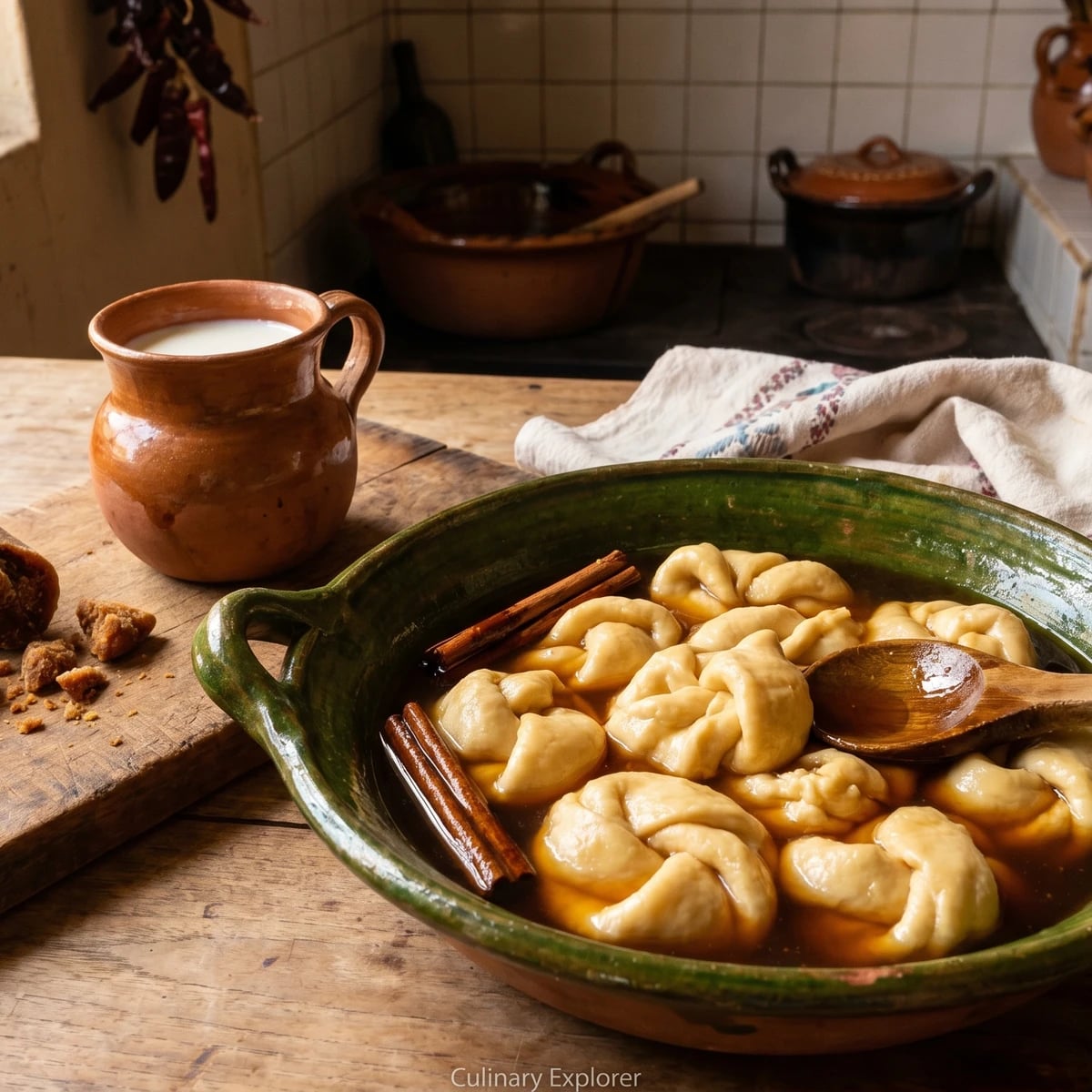
Michoacán's milk dessert from Zamora, built from fresh whole milk, cuajo, piloncillo, and cinnamon, where the curd must set firmly before it can become those sweet, folded knots.

Desserts
Mexican
Comfort Food
Make Ahead
20 min
Active Time
1 hr 30 min cook2 hr 50 min total
Yield8 servings

This comes from Zamora, Michoacán, in the northwest of the state, where dairy is not decoration on the table. It is the work. Milk, cuajo, sugar, cinnamon. Four things, if the milk is good. That is why the dish is unforgiving.

Chongos zamoranos are not flan and they are not rice pudding. The milk is set with rennet, cut, and cooked slowly until the curds tighten into soft folds and drink in a syrup scented with canela. In Zamora, a señora will know by looking whether your curd set properly. If it breaks into little grains, you rushed it, overheated it, or used the wrong milk. No me vengas con atajos.

The ingredient that defines this dish is milk from the dairy country around Zamora and Jacona. Traditionally it was raw milk, fresh from the morning milking, still alive enough to set into a strong curd. In a modern kitchen, use pasteurized whole milk, never ultra-pasteurized, and give it calcium chloride so the curd has backbone. A compromise, yes. A useful one.

My mother did not make chongos often. She was from Jalisco and preferred jericallas. But in her notebook she wrote one line under a Zamora recipe: 'quiet pot, quiet hands.' She was right. You don't beat this dessert into submission. You wait. Saber cocinar es saber vivir.

Chongos zamoranos are associated with Zamora, Michoacán, and their documented commercial production expanded in the late 19th and early 20th centuries as the region's dairy economy grew. The dessert belongs to the colonial milk-sweet tradition shaped by convent kitchens, Spanish rennet use, and Mexican sugar production, but Zamora made it its own through local milk and slow syrup cooking. The word 'chongo' refers to a knot or gathered fold, the shape the curd takes when it is cut and simmered without stirring it apart.

The technique, the tradition, and the story behind every dish.

Discover Culinary Explorer

Ingredients

pasteurized whole milk

Quantity

1 gallon

not ultra-pasteurized

calcium chloride

Quantity

1/4 teaspoon

diluted in 2 tablespoons cool water

liquid animal rennet

Quantity

1/2 teaspoon

diluted in 2 tablespoons cool water

piloncillo

Quantity

12 ounces

chopped

granulated sugar

Quantity

1/2 cup

Mexican cinnamon sticks (canela)

Quantity

2

fine sea salt

Quantity

1/4 teaspoon

Equipment Needed

  • Heavy wide 6-quart pot
  • Instant-read thermometer
  • Long thin knife for cutting curd
  • Large spoon for basting syrup
  • Clay cazuela or glass container for resting

Instructions

  1. 1

    Warm the milk

    Pour the milk into a heavy wide pot. Warm it over low heat to 100F, stirring gently so the bottom does not scorch. Do not boil it. Milk that gets too hot gives you a weak, tired curd. If you do not have a thermometer, the milk should feel barely warmer than your hand.

  2. 2

    Set the curd

    Turn off the heat. Stir in the diluted calcium chloride with three slow strokes. Stir in the diluted rennet with three more slow strokes. Stop. Cover the pot and leave it undisturbed for 45 to 60 minutes, until the milk sets like a delicate custard and a knife inserted near the edge comes out clean.

    Ultra-pasteurized milk will fight you. The proteins have been damaged by high heat and the curd often will not set properly. Buy regular pasteurized whole milk.
  3. 3

    Cut the curd

    With a long knife, cut the curd into 2-inch squares, reaching all the way to the bottom of the pot. Then leave it alone for 10 minutes. The whey will begin to rise around the cuts. This rest matters because the curd needs to firm before the syrup cooking starts.

  4. 4

    Add the syrup

    Scatter the chopped piloncillo, granulated sugar, cinnamon sticks, and salt around the edges and over the top. Do not stir. Bring the pot to the lowest possible simmer. The sugar will melt into the whey and form the syrup around the curds. If you stir now, you will break the chongos into cottage cheese. Así se hace y punto.

  5. 5

    Simmer slowly

    Cook uncovered over very low heat for 75 to 90 minutes. Every 15 minutes, spoon syrup gently over the curds without moving them around. The chongos should become pale gold, with soft folds and a light cinnamon color at the edges. The syrup should taste milky, sweet, and warm from the canela.

  6. 6

    Cool and rest

    Turn off the heat and let the chongos cool in the pot for 30 minutes. Transfer the curds and syrup to a clay or glass container. Chill at least 4 hours, preferably overnight. They taste better the next day because the curds keep absorbing the piloncillo syrup.

  7. 7

    Serve with syrup

    Serve the chongos cold or at room temperature in small bowls, with plenty of syrup spooned over each portion and a piece of cinnamon visible in the serving dish. No whipped cream. No berries. This is Zamora's dessert. It already knows what it is.

Chef Tips

  • Raw milk is traditional in Zamora, but it must come from a trusted, inspected dairy and be handled cold from the start. For most home cooks, pasteurized non-UHT whole milk is the responsible choice. Add calcium chloride and the curd will set properly.
  • Use Mexican canela, not hard cassia sticks if you can avoid them. Canela is softer, more fragrant, and belongs in milk sweets from Michoacán to Jalisco.
  • Do not stir after the curd is cut. The folds are the point. Chongos means knots, not crumbs.
  • If the curd never sets, the milk was too hot, the rennet was old, or the milk was ultra-pasteurized. Pregúntale a las señoras del mercado, they will tell you the milk decides everything.

Advance Preparation

  • Chongos zamoranos should be made at least one day ahead. The texture improves after a night in the syrup.
  • They keep refrigerated for 5 days in a covered container. Serve cold or let them sit at room temperature for 20 minutes before serving.

Frequently Asked Questions

Nutrition Information

1 serving (about 425g)

Calories
500 calories
Total Fat
15 g
Saturated Fat
9 g
Trans Fat
1 g
Unsaturated Fat
6 g
Cholesterol
50 mg
Sodium
275 mg
Total Carbohydrates
77 g
Dietary Fiber
0 g
Sugars
78 g
Protein
15 g

Note: Chef personas and recipes are created with AI assistance. Cook with care: follow safe food-handling practices, check doneness with a thermometer when needed, and adapt for allergies and your kitchen.

Where cooking meets culture.

Culinary guides, cultural storytelling, and the editorial depth that makes cooking meaningful.

Discover Culinary Explorer

More from Occidente Desserts

Browse the full collection