
Chef Lupita
Acitrón de Cidra Conventual
Puebla's convent-style acitrón, made from cidra peel instead of endangered biznaga, built through repeated syrup soakings until the cubes turn firm, translucent, and ready for rosca or chiles en nogada.
A cooking platform built around craft, culture, and the stories behind what we eat.
Created by
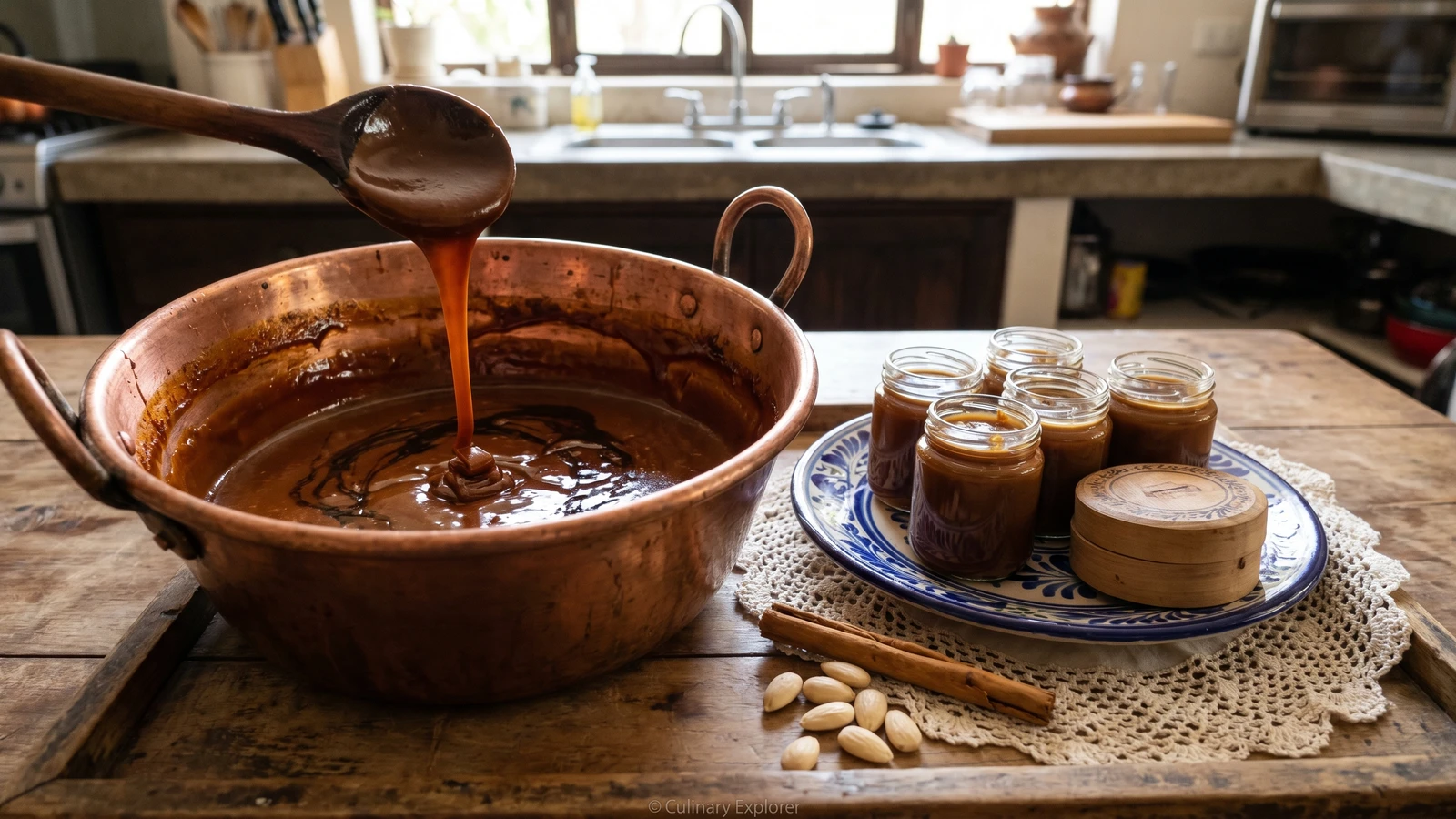
Guanajuato's cajeta quemada is goat milk and sugar worked for hours in a copper cazo, the dark caramel inheritance of Celaya's dairies, convent kitchens, and patient hands.
Guanajuato, the Bajio, Celaya. That is where cajeta quemada stands. Not dulce de leche from somewhere vague, not condensed milk boiled in a can. Celaya's cajeta is goat milk, sugar, copper, and time, worked until the milk darkens into a caramel that tastes like the dairy country around it.
The milk matters first. Goat milk has the body and slight mineral edge that cow milk does not give you. In Celaya, that milk came from the ranches around the city and went into copper cazos, stirred by women who knew by smell when the sugar had crossed from sweet to roasted. The word quemada does not mean careless burning. It means controlled darkness. There is discipline in that color.
I learned this version from a señora near the Mercado Morelos who sold cajeta in small wooden boxes and glass jars, with cinnamon tucked into the worktable drawer like a tool. She told me, 'Si se pega, ya perdiste.' If it sticks, you already lost. She was right. You stir, you scrape, you watch. La cocina no es decoración, es trabajo.
This is a 32-state cuisine. Guanajuato gives you cajeta de Celaya, and Celaya defends it because it earned the name. No me vengas con atajos. Condensed milk is not leche reducida. Corn syrup is not almibar. Saber cocinar es saber vivir.
Cajeta developed in the Bajio during the colonial period, when Spanish dairy animals and sugar production met older Mexican preservation habits in convent kitchens, hacienda kitchens, and market trade. The name comes from the small wooden boxes, cajitas, used to pack and sell the confection, and Celaya became its best-known center during the 19th century as goat dairying expanded around Guanajuato. In 2021, cajeta de Celaya received a Mexican geographic indication, protecting the name tied to the city and its traditional method.
Quantity
2 quarts
Quantity
2 cups
Quantity
1/2 cup
finely grated
Quantity
1/4 teaspoon
Quantity
1
Quantity
1/4 teaspoon
Quantity
1 teaspoon
| Ingredient | Quantity |
|---|---|
| fresh goat milk | 2 quarts |
| granulated cane sugar | 2 cups |
| piloncillofinely grated | 1/2 cup |
| baking soda | 1/4 teaspoon |
| Mexican cinnamon stick (canela de Ceilan) | 1 |
| fine sea salt | 1/4 teaspoon |
| pure Mexican vanilla extract (optional) | 1 teaspoon |
Pour the goat milk into a wide copper cazo or a heavy, wide pot. Stir in the baking soda. It will foam a little. Let it settle before adding the sugar. The baking soda keeps the milk from curdling during the long reduction. Use too much and the cajeta tastes soapy. Use the measure I gave you.
Add the cane sugar, grated piloncillo, cinnamon stick, and salt. Set the pot over medium heat and stir with a wooden spoon until the sugars dissolve completely. Scrape the bottom and the corners of the pot. Sugar hiding there will burn before the milk has even begun to reduce.
Raise the heat just until the milk reaches a lively simmer, then immediately lower it to medium-low. The surface should move steadily, not boil hard. A hard boil throws milk up the sides and scorches the sugars. Cajeta is made by patience, not force.
Cook for 1 hour, stirring every few minutes at first, then more often as the milk darkens. The color will move from ivory to beige to light amber. Keep scraping the bottom with a flat wooden spoon. The women who perfected this in Celaya did not walk away from the cazo. Neither do you.
After about 90 minutes, the cajeta will thicken and the bubbles will become slower and shinier. Stir constantly now. For cajeta quemada, you take it darker than vanilla cajeta: deep chestnut, glossy, with a roasted milk aroma and a trail that holds for a second when the spoon crosses the bottom. That is the point. One minute too far and it tastes burned, not quemada.
Drop a little cajeta onto a cold plate and let it sit for 30 seconds. Tilt the plate. It should move slowly, like thick honey, not run like milk and not set like hard candy. Remember it thickens as it cools. If it is too loose, cook five more minutes and test again.
Remove the cinnamon stick. Stir in the vanilla if using. Pour the hot cajeta into clean glass jars. Let it cool uncovered until warm, then cover and refrigerate. It will settle into a spoonable caramel with a deep brown shine. Recetas probadas y garantizadas.
1 serving (about 40g)
Culinary guides, cultural storytelling, and the editorial depth that makes cooking meaningful.
Discover Culinary ExplorerChef Lupita
Puebla's convent-style acitrón, made from cidra peel instead of endangered biznaga, built through repeated syrup soakings until the cubes turn firm, translucent, and ready for rosca or chiles en nogada.

Chef Lupita
Ciudad de México's Tulyehualco alegría is popped huautli folded into piloncillo honey, pressed with peanuts, pepitas, and raisins, then cut into the rectangular bars that built a pueblo's identity.

Chef Lupita
Oaxaca's pre-Columbian amaranth bar, popped on a hot comal and bound with piloncillo, honey, and the sacred Zapotec grain that the Spanish tried, and failed, to outlaw.

Chef Lupita
Querétaro's mercado candy of popped amaranto pressed with dark piloncillo syrup, pepitas, pecans, and cacahuate, a Bajío sweet that respects the seed before it decorates the table.