
Chef Lupita
Acitrón de Cidra Conventual
Puebla's convent-style acitrón, made from cidra peel instead of endangered biznaga, built through repeated syrup soakings until the cubes turn firm, translucent, and ready for rosca or chiles en nogada.
A cooking platform built around craft, culture, and the stories behind what we eat.
Created by
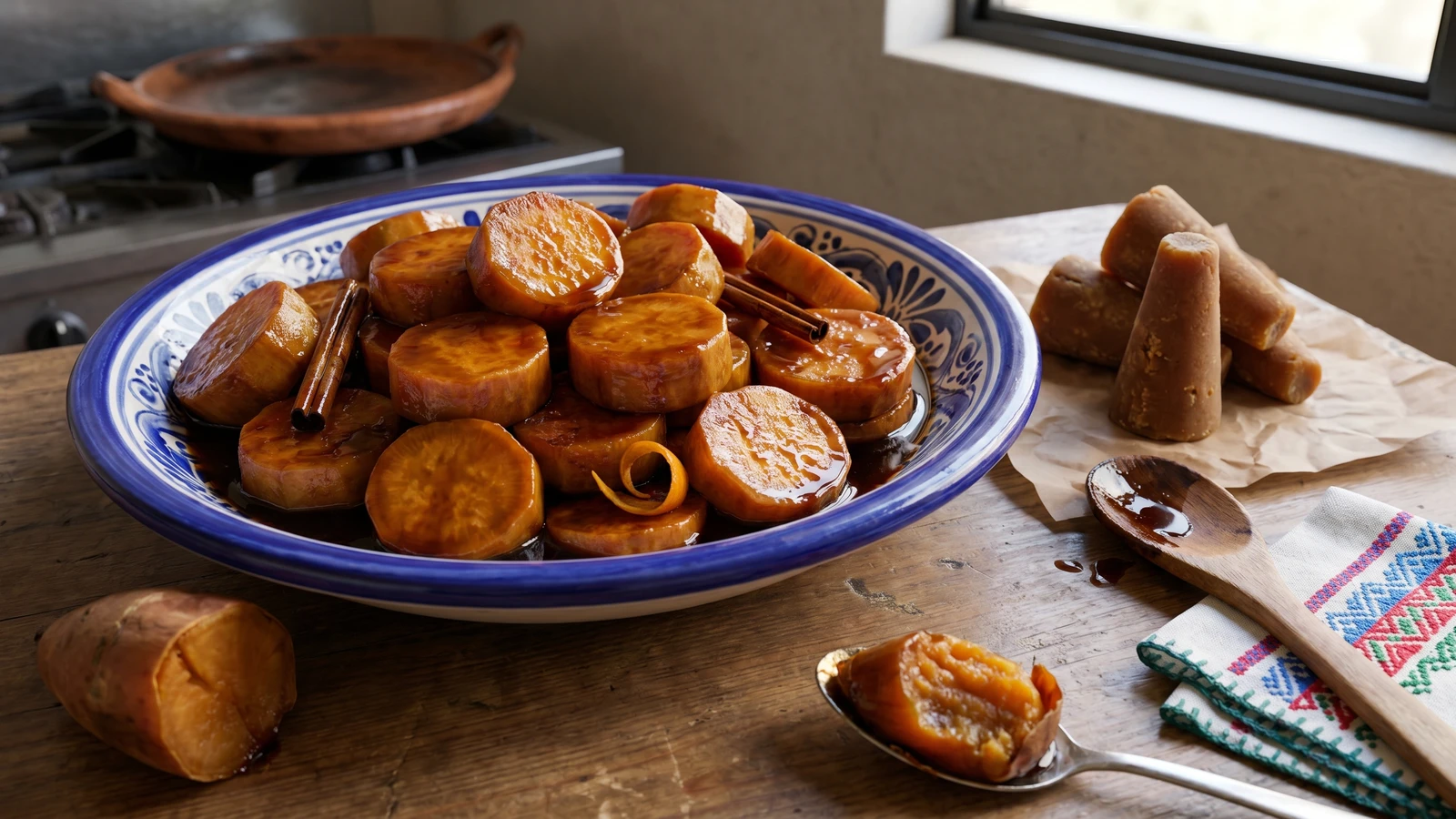
Guanajuato's Bajío camote, slow-simmered in dark piloncillo with canela until the flesh turns glossy and dense, served in clay tazones the way mercado cooks sell it by the spoon.
Guanajuato, in the Bajío, is where I place this pot: between the mines of the capital, the sweet stalls of Celaya, and the market kitchens that know how to stretch a cone of piloncillo into dessert for a family. Camote en piloncillo is not a convent sweet dressed for a silver tray. It is mercado food, home food, the kind a señora at Mercado Hidalgo will sell from a clay cazuela with the syrup dark at the edges.
The defining ingredient is piloncillo, not brown sugar. Piloncillo has a raw cane edge and a depth that refined sugar cannot fake. The camote stays unpeeled because the skin holds the round together while the syrup works into the flesh. Canela mexicana gives the scent. No vanilla. No condensed milk. That belongs to another camote register.
I learned this version from a woman who sold conservas near the back stalls in Guanajuato, where piloncillo cones sat next to guayaba de Calvillo and charamuscas wrapped in paper. She did not stir. She tilted the cazuela and spooned syrup over the camote until each piece shone like dark amber. That is the technique: low heat, patience, and a syrup that thickens without bullying the camote apart. Cada estado, su propia cocina.
The word camote comes from Nahuatl camotli, and sweet potatoes were cultivated in Mexico long before the conquest. Sugarcane arrived in New Spain in the 16th century, and piloncillo, unrefined cane sugar boiled and molded into cones, became the practical sweetener for market conservas before refined white sugar was cheap. In Guanajuato and the wider Bajío, where mining towns depended on market foods that kept and traveled, camote en piloncillo belongs to the household and mercado register, separate from the egg-rich convent sweets of Puebla or Morelia.
Quantity
2 pounds
scrubbed, unpeeled, cut into 2-inch rounds
Quantity
12 ounces
broken into chunks
Quantity
3 cups
Quantity
2 sticks
Quantity
3
Quantity
1 wide strip
white pith removed
Quantity
1/4 teaspoon
| Ingredient | Quantity |
|---|---|
| camote amarillo or camote moradoscrubbed, unpeeled, cut into 2-inch rounds | 2 pounds |
| piloncillo conesbroken into chunks | 12 ounces |
| water | 3 cups |
| canela mexicana | 2 sticks |
| whole cloves | 3 |
| orange peelwhite pith removed | 1 wide strip |
| sea salt | 1/4 teaspoon |
Scrub the camotes well and leave the skin on. Cut them into thick 2-inch rounds. The peel is not decoration. It holds the flesh together while the piloncillo works its way in. If you peel the camote first, it will collapse into sweet mash before the syrup is ready.
Put the piloncillo chunks, water, canela mexicana, cloves, orange peel, and sea salt in a wide clay cazuela or heavy pot. Set over medium-low heat and stir until the piloncillo melts completely, about 10 minutes. The syrup should smell of raw cane and canela, not burned sugar. Piloncillo is the sweetener here. Brown sugar is a compromise, not the same thing.
Arrange the camote rounds in the syrup in one snug layer if you can. If you need a second layer, keep it loose, not packed like bricks. Spoon syrup over the top so every cut face is wet. The liquid will not cover the camote completely, and that is correct. You are candying by slow spooning and turning, not boiling it like potatoes.
Lower the heat until the syrup gives small, steady bubbles at the edge of the cazuela. Cover partially and cook for 35 minutes. Turn each piece once with a spoon, gently. The camote should begin to darken at the edges and take on the color of the piloncillo. No me vengas con atajos. A hard boil will break the rounds and make the syrup harsh.
Uncover the pot and continue cooking 25 to 35 minutes more, spooning syrup over the camote every few minutes. When a knife slides through the thickest piece without force, lift the camote to one side of the pot or onto a plate. Let the syrup reduce until it falls from the spoon in a slow ribbon and looks dark amber. Watch it closely now. Hot sugar goes from ready to bitter quickly.
Return the camote to the reduced syrup and spoon the glaze over each piece until the surfaces look lacquered and the cut sides have absorbed the dark syrup. Turn off the heat and let the camote rest in the cazuela for 20 minutes. Resting matters. The syrup thickens, the canela settles, and the camote holds its shape.
Serve warm or at room temperature in clay tazones, with a spoonful of syrup over each portion. Leave a canela stick or the orange peel in the serving cazuela if you want people to see what scented the pot. This is mercado food, not a plated sweet trying to impress anybody. Así se hace y punto.
1 serving (about 250g)
Culinary guides, cultural storytelling, and the editorial depth that makes cooking meaningful.
Discover Culinary ExplorerChef Lupita
Puebla's convent-style acitrón, made from cidra peel instead of endangered biznaga, built through repeated syrup soakings until the cubes turn firm, translucent, and ready for rosca or chiles en nogada.

Chef Lupita
Ciudad de México's Tulyehualco alegría is popped huautli folded into piloncillo honey, pressed with peanuts, pepitas, and raisins, then cut into the rectangular bars that built a pueblo's identity.

Chef Lupita
Oaxaca's pre-Columbian amaranth bar, popped on a hot comal and bound with piloncillo, honey, and the sacred Zapotec grain that the Spanish tried, and failed, to outlaw.

Chef Lupita
Querétaro's mercado candy of popped amaranto pressed with dark piloncillo syrup, pepitas, pecans, and cacahuate, a Bajío sweet that respects the seed before it decorates the table.