
Chef Lupita
Acitrón de Cidra Conventual
Puebla's convent-style acitrón, made from cidra peel instead of endangered biznaga, built through repeated syrup soakings until the cubes turn firm, translucent, and ready for rosca or chiles en nogada.
A cooking platform built around craft, culture, and the stories behind what we eat.
Created by
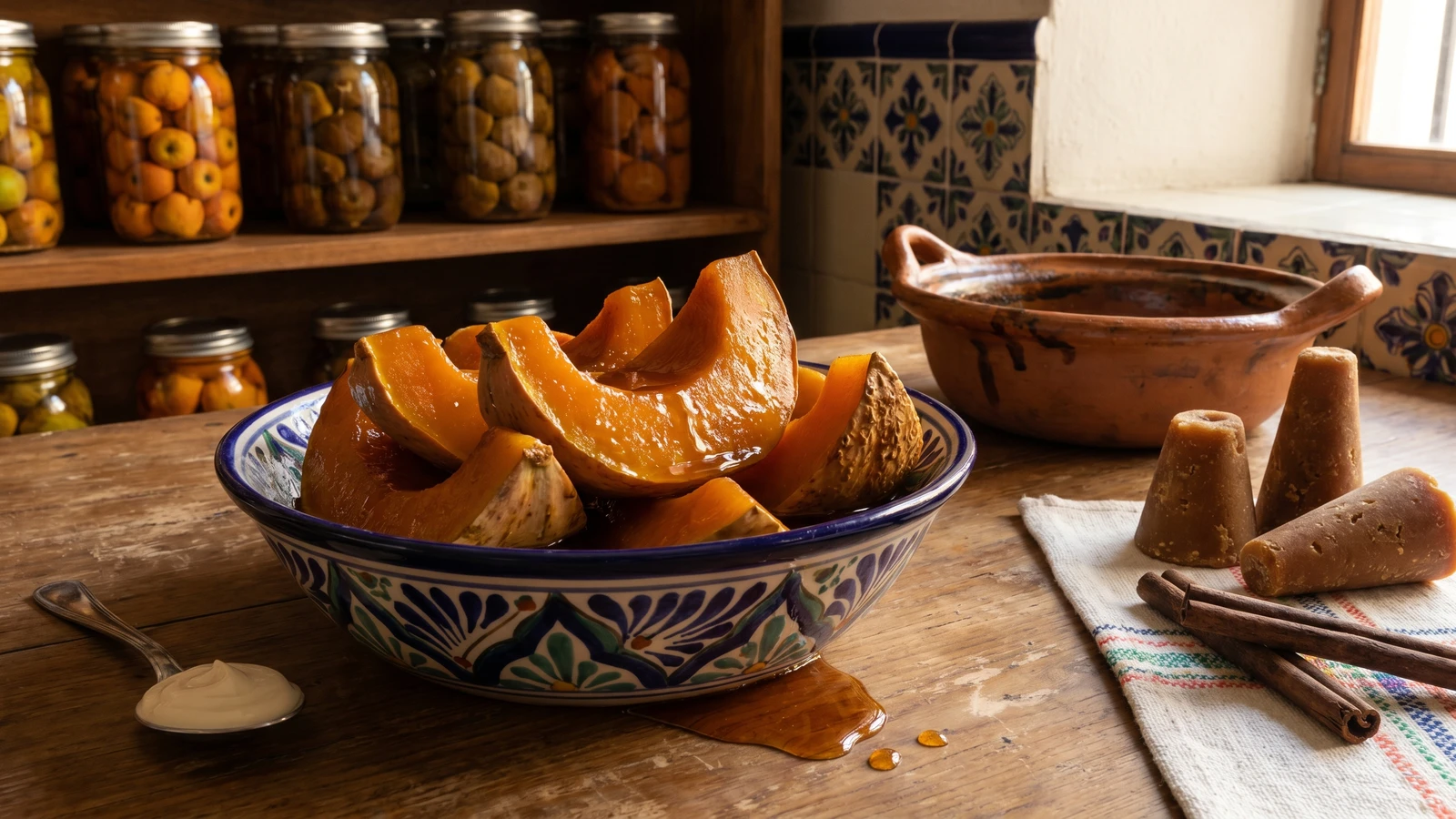
Puebla's Día de Muertos calabaza en tacha is autumn squash cooked slowly in piloncillo, canela, clove, and orange until the syrup thickens like a convent preserve.
Puebla, the Angelopolis and its old convent kitchens, is where this calabaza en tacha earns its place. Yes, you will see versions across central Mexico for Día de Muertos, from Estado de México to Tlaxcala, but this one speaks with Puebla's dulcería discipline: piloncillo, canela, clavo, orange peel, and time.
This is altar food and despensa food. The squash goes on the ofrenda beside pan de muerto, fruit, candles, and photographs, then it comes to the table when the syrup has done its work. The women who perfected this were not decorating dessert plates. They were preserving the harvest. La paciencia es la regla del huerto. The fruit was cheap or grown at home. The technique made it last.
Use calabaza de Castilla if you can find it, the big ridged Mexican winter squash with dense orange flesh and a hard rind. Cut it with respect. The rind stays on because it holds the pieces together during the long cooking. Piloncillo is not optional. White sugar makes sweetness. Piloncillo makes depth, dark cane, mineral, almost smoky. No me vengas con atajos.
My mother made calabaza en tacha in Colonia Roma every October, even though her hands belonged to Jalisco. In the margin of her notebook she wrote: 'no mover mucho, se rompe.' Do not stir it like soup. Bathe it with syrup, turn it once if you must, and leave it alone. Saber cocinar es saber vivir.
Calabaza en tacha descends from the colonial sugar-preserving grammar that Mexican convent kitchens refined between the 17th and 19th centuries, especially in Puebla's convents of Santa Clara and Santa Rosa, where fruit pastes, syrups, and candied harvest sweets became part of the city's dulcería identity. The word 'tacha' is commonly linked to the tacho, the large copper vessel used in sugar work and syrup reduction, though home cooks later adapted the method to clay cazuelas and heavy pots. The dish became strongly tied to Día de Muertos in central Mexico because winter squash ripens in the same season that families prepare ofrendas, making the altar follow the market calendar.
Quantity
5 pounds
washed, seeded, and cut into 3-inch wedges with rind attached
Quantity
1 1/2 pounds
broken into chunks
Quantity
3 cups
Quantity
2
Quantity
4
Quantity
2 wide strips
white pith trimmed away
Quantity
1/4 teaspoon
Quantity
1/2 cup
for serving
| Ingredient | Quantity |
|---|---|
| calabaza de Castilla or firm kabocha squashwashed, seeded, and cut into 3-inch wedges with rind attached | 5 pounds |
| piloncillobroken into chunks | 1 1/2 pounds |
| water | 3 cups |
| Mexican canela sticks | 2 |
| whole cloves | 4 |
| orange peelwhite pith trimmed away | 2 wide strips |
| kosher salt | 1/4 teaspoon |
| Mexican crema or cold milk (optional)for serving | 1/2 cup |
Wash the calabaza well because the rind stays on. Cut it into heavy 3-inch wedges and scrape out the seeds and stringy center. Keep the rind attached. It is not there for decoration. It holds the flesh together while the syrup works for hours.
In a wide clay cazuela, copper tacho, or heavy Dutch oven, combine the piloncillo, water, canela, cloves, orange peel, and salt. Bring to a simmer over medium heat and cook for 10 to 12 minutes, until the piloncillo dissolves and the syrup smells of dark cane and warm spice. This is an almíbar de piloncillo, not a white sugar syrup. There is a difference.
Set the squash wedges into the syrup in one snug layer if possible, rind side down or to the side, with the flesh exposed to the liquid. Spoon syrup over the top. Do not crowd so tightly that the pieces crush each other. A wide pot matters here because each piece needs contact with the syrup.
Reduce the heat to low. Cover partially and cook for 1 hour, basting the squash with syrup every 15 minutes. Do not stir hard. My mother wrote it correctly: no mover mucho, se rompe. The flesh should soften slowly and take on the color of the piloncillo.
Uncover the pot and continue cooking for 60 to 90 minutes more, basting often, until the syrup thickens and coats a spoon in a glossy dark layer. The squash should be tender but not collapsed, with orange flesh shining under the piloncillo. This is the slow reduction. If it takes the full time, let it. La paciencia es la regla del huerto.
Turn off the heat and let the calabaza rest in the syrup for at least 1 hour. Overnight is better. The flesh drinks in more piloncillo as it cools, and the texture settles. Preserved-harvest sweets are not impatient food.
Serve the wedges warm or at room temperature in small bowls, with extra syrup spooned over the top. Add a spoonful of Mexican crema or a splash of cold milk if that is how your house eats it. The contrast is good: dark piloncillo, soft squash, cold dairy. Así se hace y punto.
1 serving (about 220g)
Culinary guides, cultural storytelling, and the editorial depth that makes cooking meaningful.
Discover Culinary ExplorerChef Lupita
Puebla's convent-style acitrón, made from cidra peel instead of endangered biznaga, built through repeated syrup soakings until the cubes turn firm, translucent, and ready for rosca or chiles en nogada.

Chef Lupita
Ciudad de México's Tulyehualco alegría is popped huautli folded into piloncillo honey, pressed with peanuts, pepitas, and raisins, then cut into the rectangular bars that built a pueblo's identity.

Chef Lupita
Oaxaca's pre-Columbian amaranth bar, popped on a hot comal and bound with piloncillo, honey, and the sacred Zapotec grain that the Spanish tried, and failed, to outlaw.

Chef Lupita
Querétaro's mercado candy of popped amaranto pressed with dark piloncillo syrup, pepitas, pecans, and cacahuate, a Bajío sweet that respects the seed before it decorates the table.