
Chef Makoa
Baked ʻUlu Coconut Pudding (Hawaiian Ripe Breadfruit Custard)
Very ripe Hawaiian ʻulu, the canoe-crop breadfruit, mashed soft with coconut milk and sugar, then baked until the middle sets like a quiet custard.
A cooking platform built around craft, culture, and the stories behind what we eat.

Created by
A chewy, golden Hawaiʻi Local square from mochiko, butter, and coconut milk, baked in one pan until the edges pull crisp and the middle stays tender.
The table I grew up at had the deep foods on one side and the Local sweets on the other, and nobody had to argue which one belonged. Hawaiʻi knows how to feed people in layers. Poi and kālua puaʻa carry the old line from the loʻi and the imu, and butter mochi carries the newer line from the plantation camp, the bake sale, the church hall, the school cafeteria, the auntie who cuts every square the same size because she knows somebody is coming back for seconds.
This one is Hawaiʻi Local, not Kanaka Maoli deep food, and that matters. Mochiko, sweet rice flour from Japanese mochi tradition, met butter, eggs, milk, sugar, and coconut in the kitchens of Hawaiʻi, where Portuguese malasadas, Okinawan andagi, Chinese gau, Filipino hopia, and guava chiffon all found their place beside rice, plate lunch, and the old canoe crops. One island, many hands. That's Local.
Across the Triangle, our cousins have their own starch-and-coconut sweets: Tahiti has poʻe, the Cook Islands has poke, Sāmoa has panipopo, Tonga has faikakai. Butter mochi is not those dishes, and we don't blur them. Same ocean, different tables. This one belongs to Hawaiʻi's everyday table, chewy in the middle, golden at the edge, easy to carry in a pan, and always enough for one more.
Butter mochi grew out of Hawaiʻi's Local foodways in the twentieth century, especially the Japanese American use of mochiko, sweet glutinous rice flour, in home baking and community potlucks. It belongs to the post-contact, multiethnic table of Hawaiʻi, not the pre-contact deep-food line of kalo, ʻulu, imu, and poi. Its place beside malasadas, andagi, gau, hopia, and shave ice shows how Hawaiʻi took immigrant bakery traditions and made them ordinary family food.
Quantity
1 box (16 ounces)
Quantity
2 cups
Quantity
2 teaspoons
Quantity
1/2 teaspoon
Quantity
4
Quantity
1 can (13.5 ounces)
well shaken
Quantity
1 can (12 ounces)
Quantity
1/2 cup
melted and cooled slightly
Quantity
2 teaspoons
Quantity
for the pan
| Ingredient | Quantity |
|---|---|
| mochiko sweet rice flour | 1 box (16 ounces) |
| granulated sugar | 2 cups |
| baking powder | 2 teaspoons |
| fine sea salt | 1/2 teaspoon |
| large eggs | 4 |
| coconut milkwell shaken | 1 can (13.5 ounces) |
| evaporated milk | 1 can (12 ounces) |
| unsalted buttermelted and cooled slightly | 1/2 cup |
| vanilla extract | 2 teaspoons |
| butter or neutral oil | for the pan |
Heat the oven to 350F. Grease a 9-by-13-inch baking pan well, right into the corners, because the edges are where butter mochi gets that golden chew everybody reaches for first.
In a large bowl, whisk the mochiko, sugar, baking powder, and salt until the flour looks even and loose. Mochiko clumps easy, so break up the little lumps now. No need make fancy, just make it smooth.
In another bowl, whisk the eggs until blended, then whisk in the coconut milk, evaporated milk, melted butter, and vanilla. The mixture should look pale and glossy, with the butter fully carried through instead of floating on top.
Pour the wet mixture into the dry and whisk until the batter is smooth and pourable, like thick cream. Scrape the bottom of the bowl where dry mochiko likes to hide. If you leave pockets there, they bake up chalky, and no blame the mochi for that.
Pour the batter into the pan and tap it once on the counter to settle the surface. Bake for 55 to 65 minutes, until the top is golden, the edges pull lightly from the pan, and the center is set with a gentle spring. A tester may come out a little tacky. That's the chew, not raw batter.
Let the butter mochi cool fully in the pan before cutting. Warm from the oven it tears and drags; cooled, it cuts into clean squares with shiny sides and a soft chew. Wipe the knife between cuts if you want neat potluck pieces.
1 serving (about 49g)
Culinary guides, cultural storytelling, and the editorial depth that makes cooking meaningful.
Discover Culinary ExplorerChef Makoa
Very ripe Hawaiian ʻulu, the canoe-crop breadfruit, mashed soft with coconut milk and sugar, then baked until the middle sets like a quiet custard.

Chef Makoa
Soft squares of Hawaiʻi Local chichi dango, pale pink and white from the mochi-shop counter, baked with mochiko, milk, and coconut milk, then dusted until every sticky edge turns friendly.
Chef Makoa
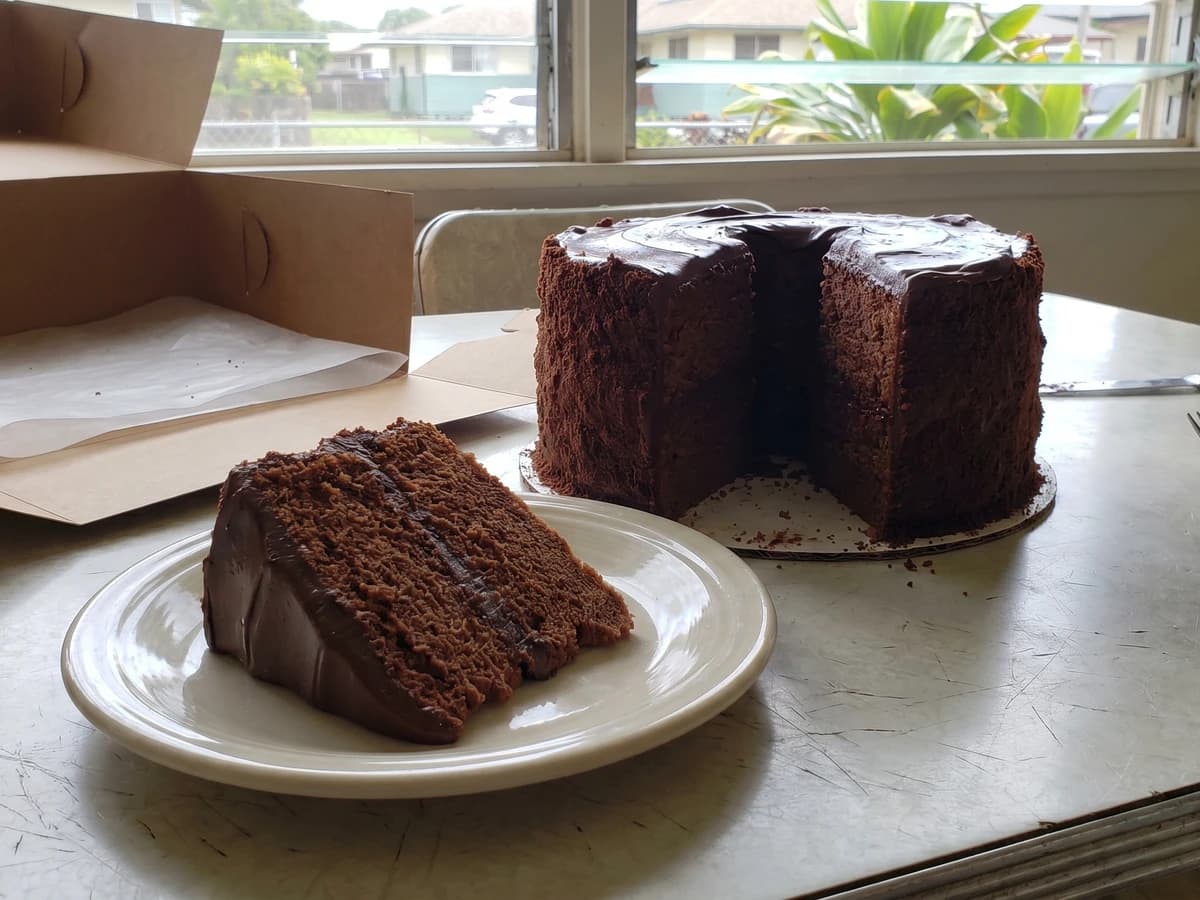
A Hawaiʻi Local chocolate-on-chocolate birthday cake: soft chiffon, cooked pudding icing, and cake crumbs pressed around the sides like the bakery case knew you were coming.
Chef Makoa
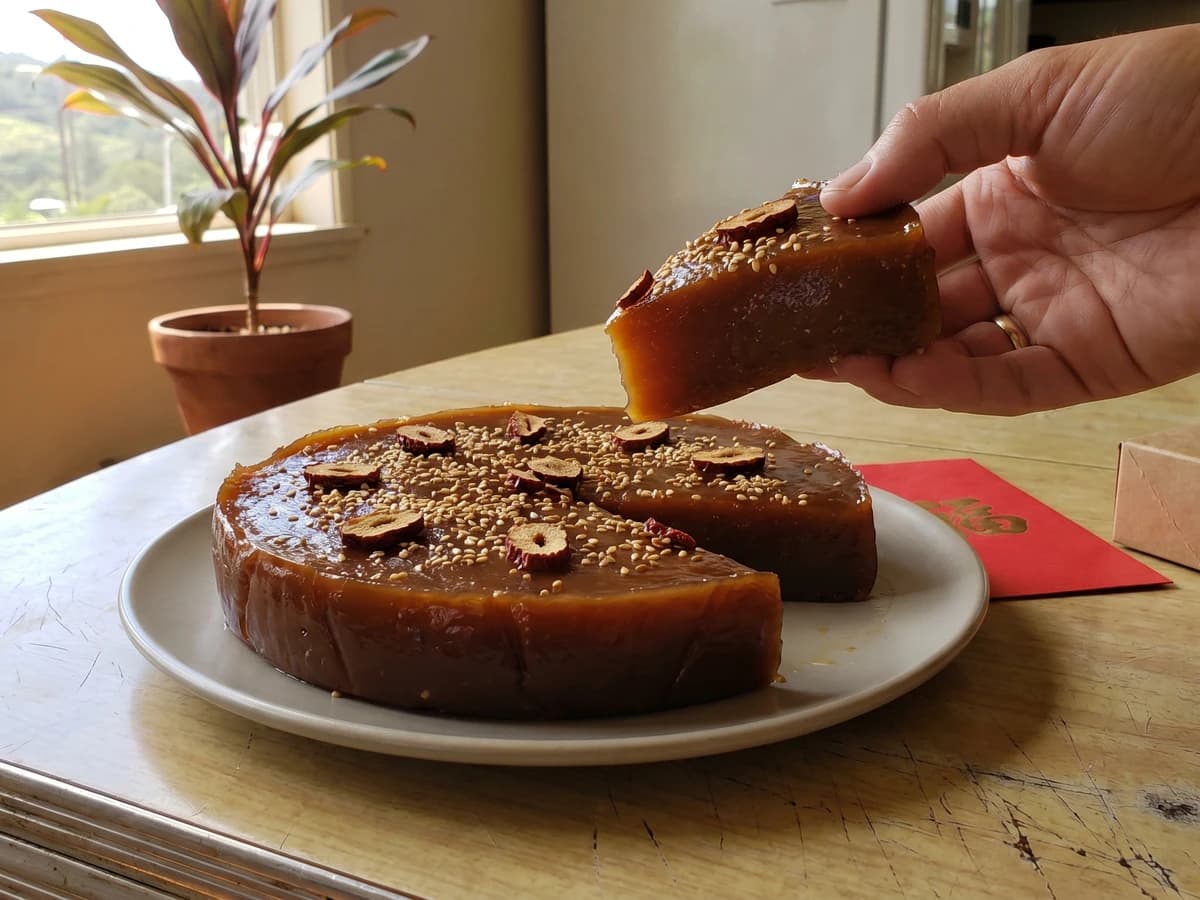
A Hawaiʻi Local Chinese New Year cake, dark with brown sugar and steamed until sticky, glossy, and sliceable. Gau holds the family close, one sweet square at a time.