
Chef Takumi
Hard-Baked Rice Crackers (堅焼きせんべい, Katayaki Senbei)
Katayaki senbei asks for patience, not cleverness: plain rice dough, thorough drying, fierce heat, and a soy glaze cooked on until the cracker rings under your teeth.

Updated June 5, 2026
The Japanese rice-cracker (komeika) tradition, the umbrella for two rice grammars. Senbei from uruchimai (regular short-grain rice), baked or grilled and brushed with soy or salt; arare and okaki from mochi-gome (glutinous rice), smaller for arare and larger for okaki, with the softer mochi melt; kaki-no-tane (the persimmon-seed-shaped shoyu-glazed crackers), nori-maki senbei, ebi senbei (shrimp), zarame senbei (sugar- crusted), hina-arare for Hinamatsuri. Soy-glazed, salted, or sweet, the crisp companion to tea, honmono and reachable in the home kitchen.
A cooking platform built around craft, culture, and the stories behind what we eat.
Chef Takumi
Katayaki senbei asks for patience, not cleverness: plain rice dough, thorough drying, fierce heat, and a soy glaze cooked on until the cracker rings under your teeth.

Chef Takumi
Kaki no tane is not a factory secret. It is rice dough, patience in the drying, and a soy-chili glaze that clings because the cracker is properly crisp first.

Chef Takumi
A plain rice cracker asks for patience, not mystery: cooked uruchimai pressed thin, dried until firm, baked crisp, then brushed with soy and returned to heat until the glaze grips.

Chef Takumi
Age senbei are rice crackers with one plain demand: dry them well before they meet the oil. Do that, and they puff, blister, and take soy glaze like lacquer.

Chef Takumi
Zarame senbei is not a cookie wearing a Japanese coat. It is a rice cracker, dried well, baked crisp, brushed with soy, then caught while hot with coarse sugar.
Chef Takumi
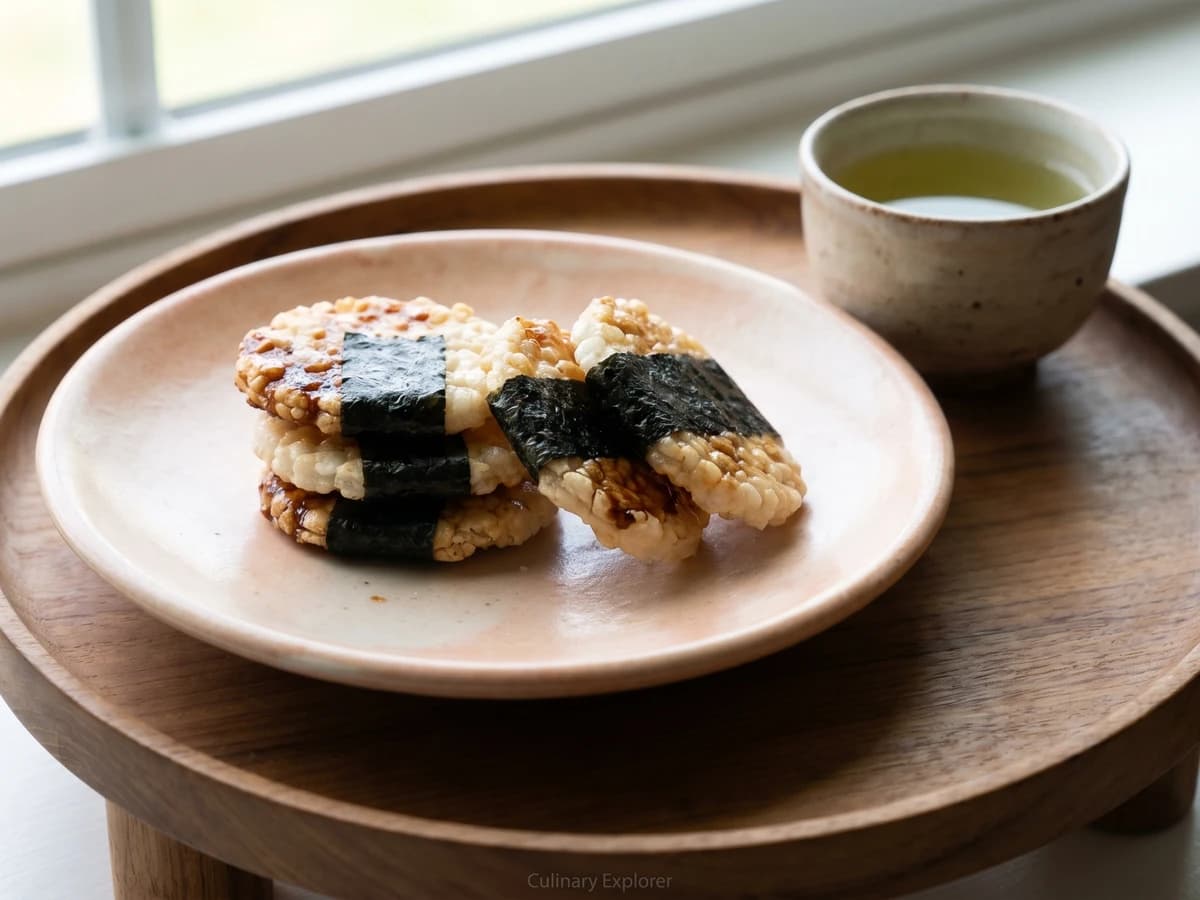
A proper nori-maki senbei is a small lesson in timing: dry the rice dough fully, brush it with soy while crisp, then wrap the nori while the cracker is still warm.
Chef Takumi
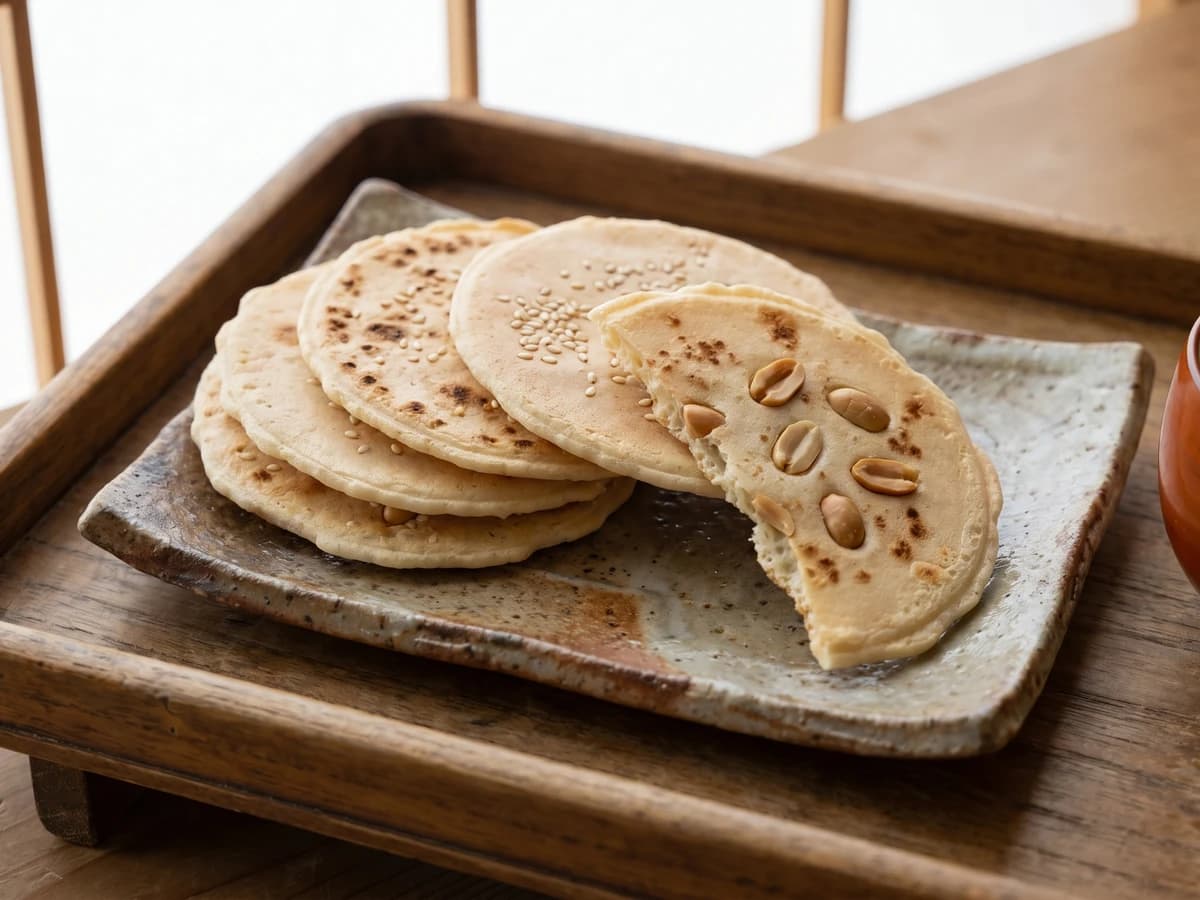
Nanbu senbei ask for plain things: flour, water, salt, heat, and a firm press. The prize is the crisp round cracker with its delicate lacy mimi edge.

Chef Takumi
A handful of crisp soy-chile arare, a handful of roasted peanuts, and a little restraint: Kaki-pī is snack food, drinking food, and home comfort, all decided by balance.

Chef Takumi
Sōka senbei is the Kantō rice cracker at its plainest: non-glutinous rice, patient drying, charcoal if you have it, and a thin soy glaze that tastes clean, never heavy.

Chef Takumi
A senbei that bends is not underbaked. Grill the rice cracker until blistered, plunge it hot into warm shōyu tare, and it turns dark, pliant, and faintly chewy.

Chef Takumi
Okaki begins with leftover mochi and patience. Dry it well, fry it steadily, and each piece blooms into a tender rice cracker with a soy-dark shine.

Chef Takumi
Arare begins as firm mochi, cut small and dried until patient enough to puff. Brush it with soy at the end, and the little hailstones turn crisp and savory.
Chef Takumi
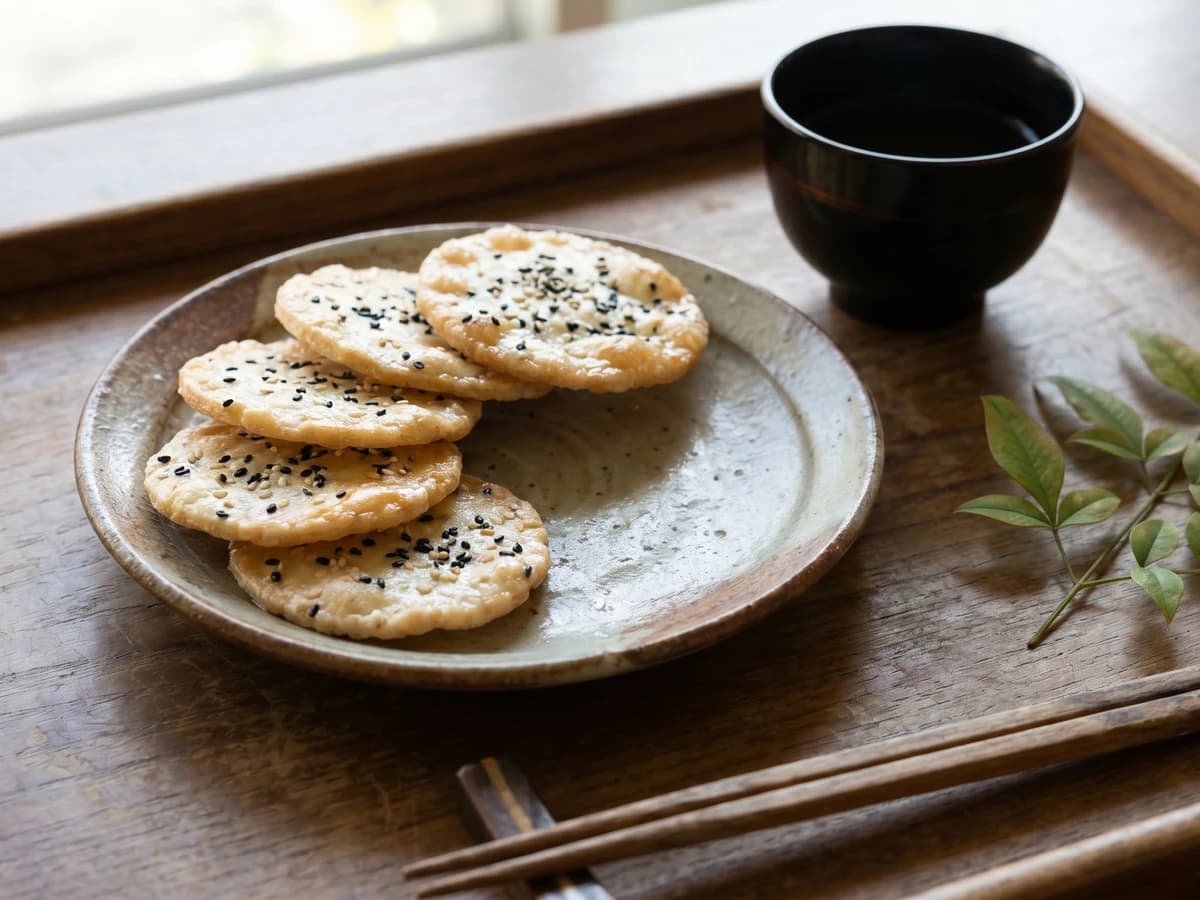
Goma senbei asks for no pastry cleverness: rice flour, hot water, sesame, and patient drying. The crackle comes before the fire, when the dough loses its dampness.

Chef Takumi
Tiny rice puffs, three spring colors, and a thin sugar coat. Hina-arare is festival food made reachable: dry the rice well, puff it hot, and stop before sweetness turns heavy.

Chef Takumi
This is shrimp first, cracker second: small shrimp ground into rice dough, rolled almost transparent, dried until matte, and baked until each piece snaps cleanly without hiding the sea.
Culinary guides, cultural storytelling, and the editorial depth that makes cooking meaningful.
Discover Culinary ExplorerChef Takumi is a fictional culinary guide to Japanese Washoku Cuisine, written with the assistance of AI.