
Chef Takumi
Arare (あられ, small mochi rice crackers)
Arare begins as firm mochi, cut small and dried until patient enough to puff. Brush it with soy at the end, and the little hailstones turn crisp and savory.
A cooking platform built around craft, culture, and the stories behind what we eat.
Created by
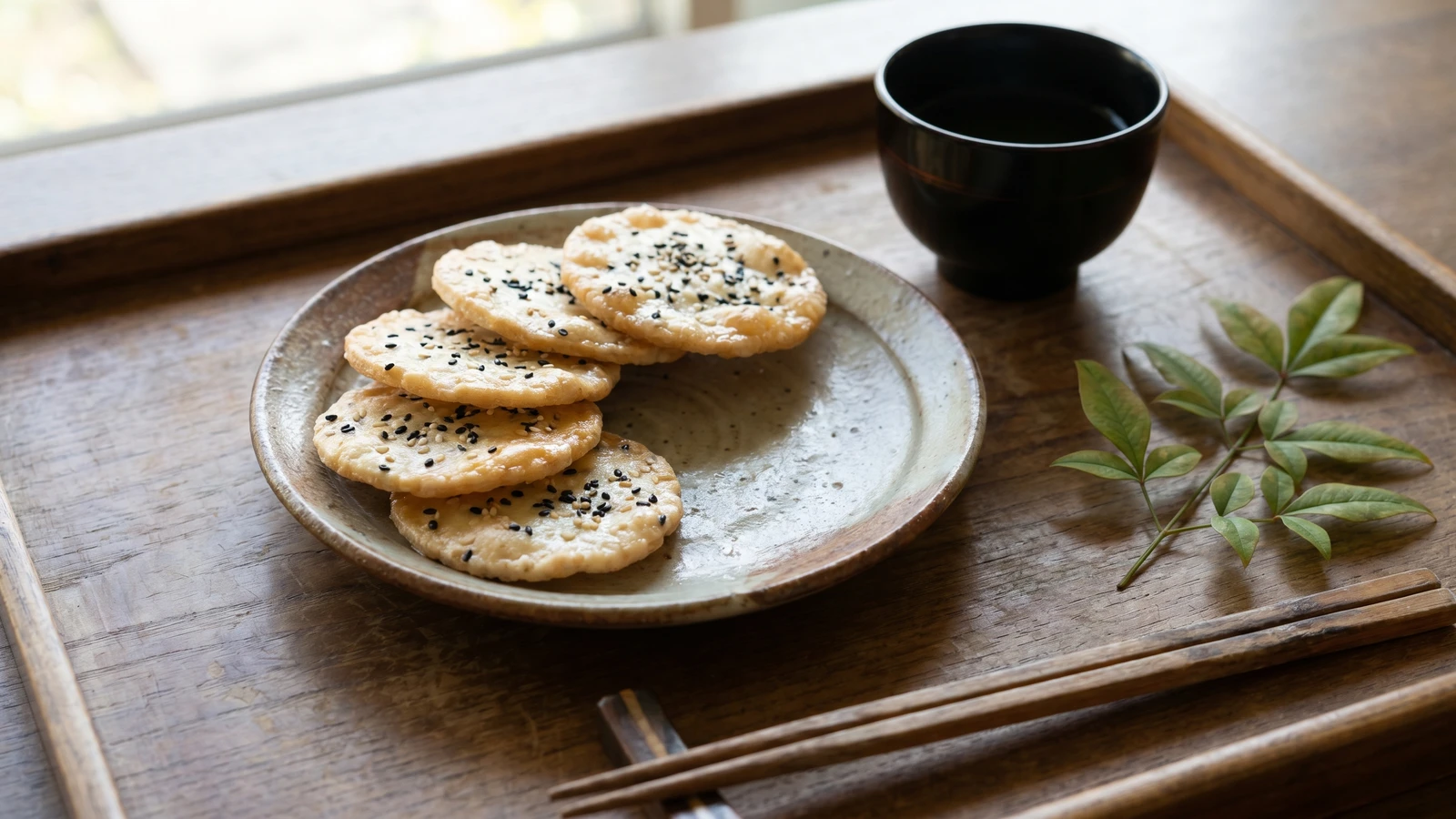
Goma senbei asks for no pastry cleverness: rice flour, hot water, sesame, and patient drying. The crackle comes before the fire, when the dough loses its dampness.
Sesame is a small ingredient with a large voice. Toast it well and it smells nutty and warm; press it into rice dough while the surface is still tacky, and the seeds stay where they belong instead of scattering across the table like bad students.
Senbei can look like a factory food, which makes people hesitate to make it at home. Don't. The dough is plain jōshinko, non-glutinous rice flour, mixed with hot water so the starch wakes up and binds. The important thing is not difficult, only unfamiliar: roll it thin, press in the sesame, dry the rounds until they feel leathery, then grill or bake them until crisp.
Drying is the detail that decides the dish. Put wet crackers straight to heat and they puff unevenly, blister hard, and stay stubborn in the middle. Let the surface dry first and the heat can finish the job cleanly, giving you a light snap instead of a hard chew. Brush on a little shōyu glaze at the end, not as disguise, but as seasoning. Nothing hidden. Sesame, rice, soy, and a little patience.
Senbei in its modern rice-cracker form became widespread in the Edo period, especially around towns such as Sōka in present-day Saitama, where grilled shōyu-brushed crackers became a local specialty. The word is older than that and once referred to various flour-based cakes, but Japanese rice senbei came to be associated with uruchimai, ordinary non-glutinous rice, rather than mochi rice. Sesame senbei belongs to that practical family: a dry, durable snack whose flavor depends on grain, fire, and a restrained seasoning.
Quantity
160g
Quantity
1 tablespoon
Quantity
1/4 teaspoon
Quantity
150ml, plus 1 to 2 teaspoons more if needed
Quantity
3 tablespoons
lightly toasted
Quantity
1 tablespoon
Quantity
1 teaspoon
Quantity
1/2 teaspoon
| Ingredient | Quantity |
|---|---|
| jōshinko (non-glutinous rice flour) | 160g |
| potato starch or cornstarch | 1 tablespoon |
| fine sea salt | 1/4 teaspoon |
| boiling water | 150ml, plus 1 to 2 teaspoons more if needed |
| white or black sesame seedslightly toasted | 3 tablespoons |
| soy sauce | 1 tablespoon |
| mirin | 1 teaspoon |
| sugar | 1/2 teaspoon |
Toast the sesame seeds in a dry pan over medium-low heat, shaking often, until the white seeds turn pale gold or the black seeds smell deeply nutty, 2 to 3 minutes. Tip them out at once. Sesame keeps cooking in the hot pan, and burnt sesame turns bitter fast.
Stir the jōshinko, starch, and salt together in a heatproof bowl. Pour in the boiling water and mix with chopsticks or a spoon until the flour gathers into a rough dough. Hot water partially gelatinizes the rice starch, which gives the dough enough strength to roll thin without asking for wheat flour. When cool enough to touch, knead it for 3 minutes until smooth and pliable.
Place the dough between two sheets of parchment and roll it 2mm thick. Thin matters here. A thick senbei dries slowly and eats hard instead of crisp. Peel off the top sheet, scatter the sesame evenly, replace the parchment, and roll once more so the seeds are pressed into the damp surface.
Cut the dough into 7cm rounds or neat rectangles and move them to a parchment-lined tray. Gather and reroll the scraps while they are still soft. If the dough cracks at the edges, wet your fingers and press it back together; rice dough is honest about dryness and forgives a little water.
Let the pieces stand uncovered for 30 minutes, then turn them over and dry 20 to 30 minutes more, until the surface feels leathery rather than sticky. This rest is not idleness. It drives off surface moisture so the crackers crisp evenly instead of blistering outside while staying damp within.
Heat a yakimonoami, a wire grilling net, over a low gas flame and grill the crackers in batches, turning often, until firm, pale, and crisp at the edges, 5 to 7 minutes per batch. No grill net? Bake them on a rack at 160 C for 18 to 22 minutes, turning once. Gentle heat finishes the drying before browning, which gives a clean snap.
Stir the soy sauce, mirin, and sugar until the sugar dissolves. Brush a very thin coat on one side of each cracker, then return them to the grill or oven for 1 to 2 minutes until the surface looks glossy and dry. Too much glaze softens the cracker and bullies the sesame. A whisper is enough.
Cool the senbei on a rack until fully crisp before storing. They firm as they cool, so don't judge them too early. Serve three or five on a small plate, with space around them. Leave it room.
1 serving (about 13g)
Culinary guides, cultural storytelling, and the editorial depth that makes cooking meaningful.
Discover Culinary ExplorerChef Takumi
Arare begins as firm mochi, cut small and dried until patient enough to puff. Brush it with soy at the end, and the little hailstones turn crisp and savory.

Chef Takumi
Chocolate shu cream is judged twice: first by the hollow shell, then by the custard. Dry the dough properly, choose chocolate with backbone, and the little puff behaves.

Chef Takumi
Start with the lightest choux: tiny unfilled puffs, properly dried over heat, loosened with eggs, and baked until the shell lifts hollow under a coat of pearl sugar.

Chef Takumi
Zarame senbei is not a cookie wearing a Japanese coat. It is a rice cracker, dried well, baked crisp, brushed with soy, then caught while hot with coarse sugar.