
Chef Takumi
Arare (あられ, small mochi rice crackers)
Arare begins as firm mochi, cut small and dried until patient enough to puff. Brush it with soy at the end, and the little hailstones turn crisp and savory.
A cooking platform built around craft, culture, and the stories behind what we eat.
Created by
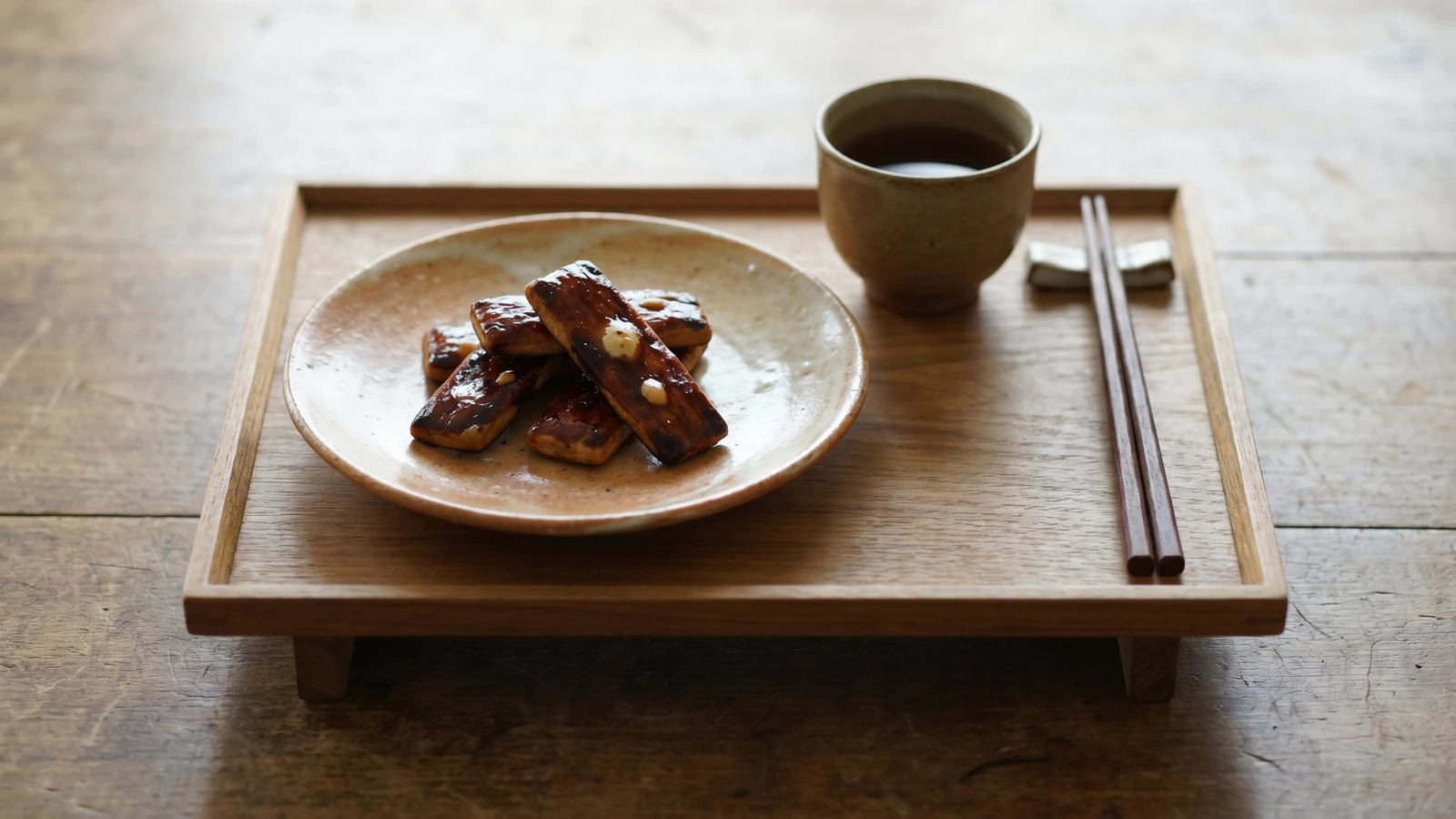
A senbei that bends is not underbaked. Grill the rice cracker until blistered, plunge it hot into warm shōyu tare, and it turns dark, pliant, and faintly chewy.
Arice cracker that bends makes some cooks suspicious. Senbei are supposed to snap, yes, and then Chōshi hands you this dark, soy-wet one that yields under the teeth instead of breaking. It isn't underbaked. It is nure senbei, a cracker made to drink.
The real work starts with jōshinko, rice flour made from uruchimai, the everyday non-glutinous rice. Use sweet rice flour and you make mochi wearing a cracker's hat, which fools no one for long. Hot water begins softening the starch, steaming cooks it through, and drying gives the rounds enough skin to grill without sticking.
The one detail that decides the dish is timing. Grill the senbei until it blisters and turns hot all the way through, then put it straight into warm shōyu tare. A hot cracker is open; a cool one is closed. The tare moves into the tiny cracks and through the rice, not just across the surface, and that's how you get the deep, dark chew that makes this honmono.
Serve it with tea, not as a grand dessert but as the salty-sweet thing that keeps a quiet table company. There is no decoration to hide behind here. Rice, soy, heat, and patience: not difficult, only unfamiliar.
Nure senbei is a modern specialty of Chōshi in Chiba Prefecture, a port town long tied to soy sauce brewing at the mouth of the Tone River. The style is credited to Kashiwaya in Chōshi in the 1960s, when a freshly grilled senbei was dipped in soy seasoning and left soft rather than dried crisp. Chōshi Electric Railway made the cracker widely known in 2006, when sales of its nure senbei helped keep the small local line running.
Quantity
200g
Quantity
1/4 teaspoon
Quantity
180ml, plus 1 to 2 tablespoons as needed
Quantity
80ml
Quantity
50ml
Quantity
30ml
Quantity
1 tablespoon
| Ingredient | Quantity |
|---|---|
| jōshinko (non-glutinous Japanese rice flour) | 200g |
| fine sea salt | 1/4 teaspoon |
| boiling water | 180ml, plus 1 to 2 tablespoons as needed |
| koikuchi shōyu (Japanese dark soy sauce) | 80ml |
| mirin | 50ml |
| sake | 30ml |
| sugar | 1 tablespoon |
Put the mirin, sake, and sugar in a small pan and bring them to a quiet simmer for about ninety seconds, just long enough to dissolve the sugar and soften the edge of the alcohol. Add the shōyu, warm it until the surface barely trembles, then take it off the heat. Don't boil the soy hard. Its fragrance is part of the dish, and a hard boil makes it flat and sharp.
Put the jōshinko and salt in a heatproof bowl. Pour in the boiling water a little at a time, stirring with chopsticks or a wooden spoon until the flour gathers into a rough dough. When it is cool enough to touch, knead it for three minutes. It should feel firm and smooth, not sticky; if it crumbles, add hot water a teaspoon at a time. The boiling water begins to swell the rice starch, which is why the dough can hold together without wheat or egg.
Tear the dough into six rough chunks and set them on a damp cloth in a seirō, or in a metal steamer basket. Steam over steady heat for twenty minutes, until the pieces look slightly translucent at the edges and spring back when pressed. This is not ceremony. The rice flour must cook through now, or the finished senbei will taste chalky no matter how carefully you grill it.
Move the hot dough to a suribachi, or to a sturdy bowl, and pound or knead it with a damp pestle or wooden spoon until it turns smooth and a little elastic, three to five minutes. Work while it is hot, because the starch bonds cleanly then. Divide it into eight pieces, roll each into a ball, and flatten between sheets of parchment into rounds about 6 to 7cm wide and 4 to 5mm thick.
Set the rounds on a wire rack and dry them in an airy spot for three to four hours, turning them every hour. They should feel dry and leathery on the surface but still flex slightly if you lift one. This pause is part of the method. Damp rounds stick and puff wildly; properly dried rounds blister neatly and take the tare evenly.
Heat a charcoal grill, fish grill, toaster oven, or broiler. Grill the rounds, turning often, until they have pale golden spots, small blisters, and edges that lift a little, about eight to ten minutes total depending on the heat. You want them hot, dry-faced, and open to the seasoning, not scorched. Burnt rice turns the soy bitter, and there is nothing to hide that taste.
Move each senbei straight from the grill into the warm tare. Press it gently under the surface for fifteen to twenty seconds per side, longer if you want the Chōshi-style chew especially deep. Lift it to a rack and let it rest for ten minutes so the seasoning settles through the rice. This is the whole trick: hot senbei drink, cool senbei only get painted.
1 serving (about 50g)
Culinary guides, cultural storytelling, and the editorial depth that makes cooking meaningful.
Discover Culinary ExplorerChef Takumi
Arare begins as firm mochi, cut small and dried until patient enough to puff. Brush it with soy at the end, and the little hailstones turn crisp and savory.

Chef Takumi
Chocolate shu cream is judged twice: first by the hollow shell, then by the custard. Dry the dough properly, choose chocolate with backbone, and the little puff behaves.

Chef Takumi
Start with the lightest choux: tiny unfilled puffs, properly dried over heat, loosened with eggs, and baked until the shell lifts hollow under a coat of pearl sugar.

Chef Takumi
Zarame senbei is not a cookie wearing a Japanese coat. It is a rice cracker, dried well, baked crisp, brushed with soy, then caught while hot with coarse sugar.