
Chef Lupita
Pan Torcido Tijuanense
Tijuana's twisted crusty roll, kneaded with manteca and a splash of lime, baked dark and hollow-sounding. The bread that holds a carne asada torta without surrendering to the juices.

Updated May 19, 2026
This is where wheat lives in Mexico. The Noroeste, Sonora, Sinaloa, Baja California, and Baja California Sur, is the only Mexican subregion where bread, not corn tortilla, is the daily grain. Hand-stretched sobaqueras a meter wide, coyotas filled with piloncillo, pan de mujer brushed with honey, the Russian Molokan jelep of Valle de Guadalupe, pan de datil from the Jesuit mission oases of Loreto, the masa madre sourdough revolution of Baja's wine country, and the bolillo and birote that hold up to carne asada and capirotada. Flour tortillas belong here. So do the rustic ranch loaves and the artisan hogazas. This is the bread story of the only Mexican region that grew its own wheat.
A cooking platform built around craft, culture, and the stories behind what we eat.
Chef Lupita
Tijuana's twisted crusty roll, kneaded with manteca and a splash of lime, baked dark and hollow-sounding. The bread that holds a carne asada torta without surrendering to the juices.

Chef Lupita
Baja California's wine country sourdough, built on a hundred-year-old Molokan tradition, Yaqui Valley wheat, and the long slow ferment that gives Valle de Guadalupe its honest bread.

Chef Lupita
The Noroeste sourdough roll from Sonora and Sinaloa, built on pata starter laced with Mexican lager and lime, with a dark crackling crust and a dense sour crumb that drinks capirotada syrup without falling apart.

Chef Lupita
Sonora's quick corn bread, dense and custard-like, built on fresh elote blended with condensed milk and butter. The merienda bread of ranch kitchens in Hermosillo and Ures, served warm with crema fresca and a cup of cafe de talega.

Chef Lupita
Sinaloa's tropical banana loaf, built on near-black platanos, melted manteca, grated piloncillo, and a generous half-cup of Mexican crema that keeps the crumb tender for days.
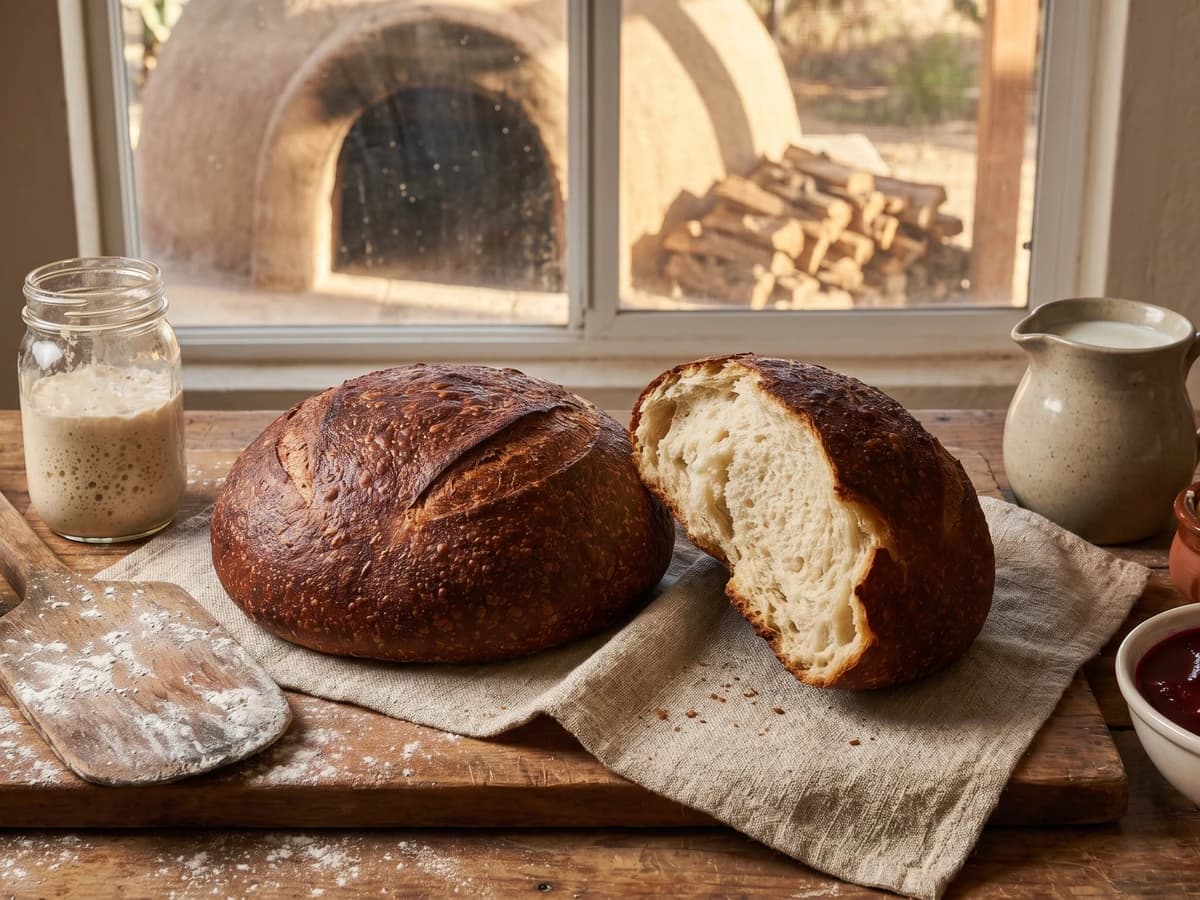
Chef Lupita
Baja California's hundred-year-old Russian Molokan bread from Francisco Zarco, dense and tender with a blistered mahogany crust, baked the way the Spiritual Christian colonists have done it since 1905.

Chef Lupita
Ensenada's long-fermented artisan loaf, built on Mexican wheat and Valle de Guadalupe masa madre, with a blistered mahogany crust and an open, lactic crumb finished with San Quintin sea salt.

Chef Lupita
The crusty white roll of northern Mexico, baked from a lard-enriched dough with a thin crackling shell and an open airy crumb. The vessel that carries every torta from Hermosillo to Mazatlan.

Chef Lupita
Sonora's daily bread, paper-thin wheat tortillas blistered on a hot comal with manteca de cerdo and hot water. The flour tortilla is the bread of the north, not corn but trigo.
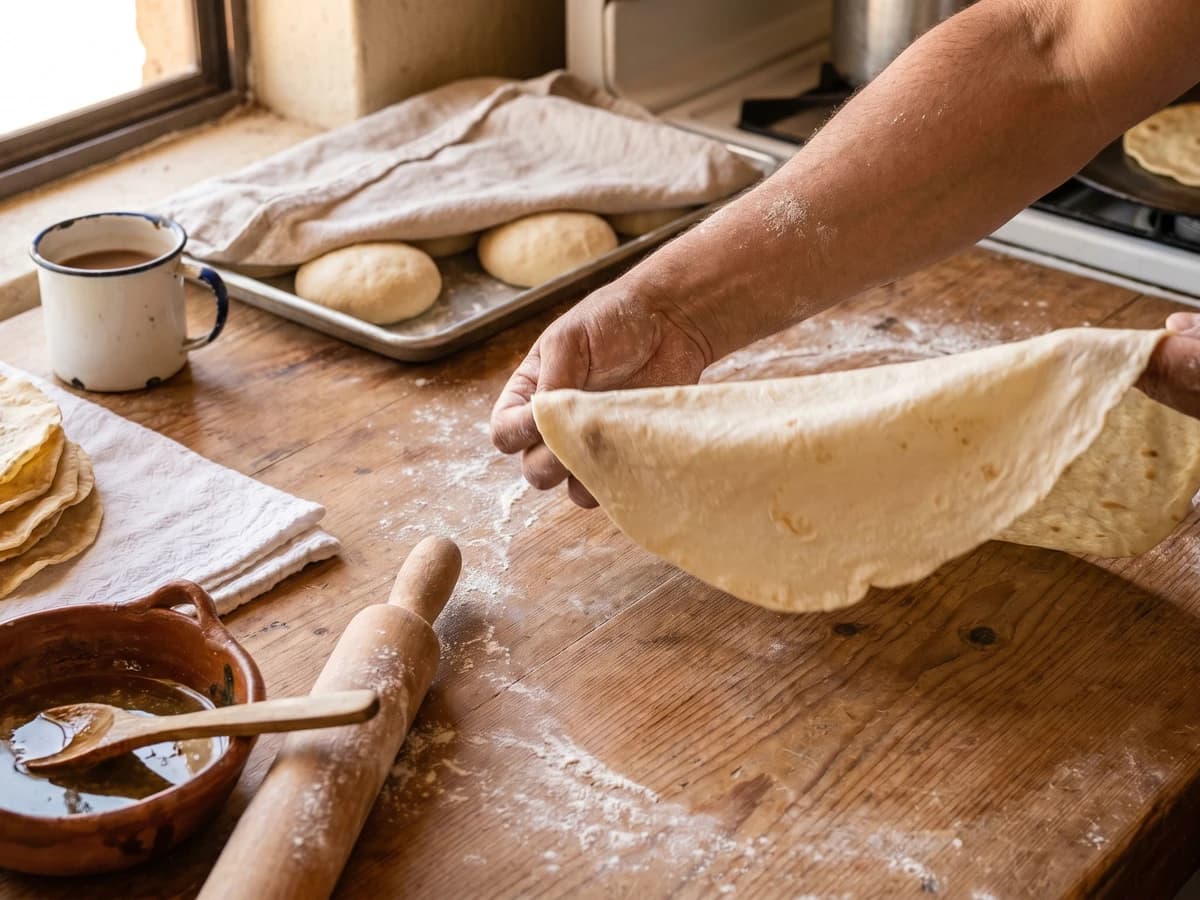
Chef Lupita
Sonora's hand-stretched flour tortillas, pulled translucent across the cook's forearm until they measure a meter wide. The bread of the north, made the way the senoras of Caborca and Hermosillo still make it.

Chef Lupita
Baja California Sur's enriched flour tortilla, thicker than Sonora's and biscuit-soft, the dough worked with fresh requeson and manteca de cerdo the way they do it on the ranches outside La Paz and Todos Santos.

Chef Lupita
Sonora's signature sweet bread from the old neighborhood of Villa de Seris in Hermosillo. Two thin wheat discs pressed around a piloncillo filling, sealed with a fork, and baked until the sugar caramelizes through.

Chef Lupita
Sonora's bran-flecked whole wheat round, sweetened with dark piloncillo and enriched with manteca de cerdo. The rancher's bread, denser than central pan dulce, made for long mornings and longer roads.

Chef Lupita
Sinaloa's egg-free sweet bread from Guasave and Mocorito. Yeasted dough sweetened with piloncillo, perfumed with toasted anise, dark from the wood oven, brushed with honey from the Sierra Madre while still hot from the bake.

Chef Lupita
Loreto and San Ignacio's mission-palm date loaf from Baja California Sur. Dense, dark, sweetened with piloncillo and bound with manteca, brushed with mission honey and eaten with cafe de olla.

Chef Lupita
Baja California Sur's golden morning roll from the brick ovens of Todos Santos. Enriched with eggs and lard, faintly sweet, with the whisper of orange that the panaderias of the south have baked into their bread for a hundred years.

Chef Lupita
Baja California Sur's ranch bread from the Sierra de la Giganta, a piloncillo-sweetened round loaf built on manteca, anise, and the slow heat of an horno de barro. Vaquero bread, made to keep for days in a saddlebag.
Culinary guides, cultural storytelling, and the editorial depth that makes cooking meaningful.
Discover Culinary ExplorerChef Lupita is a fictional culinary guide to Regional Mexican Cuisine, written with the assistance of AI.