
Chef Lupita
Acambaritas de Acámbaro
Guanajuato's daily bread from Acámbaro, a small glazed roll built on pata, enriched with manteca de cerdo, and baked until the top shines lightly for merienda.
A cooking platform built around craft, culture, and the stories behind what we eat.
Created by
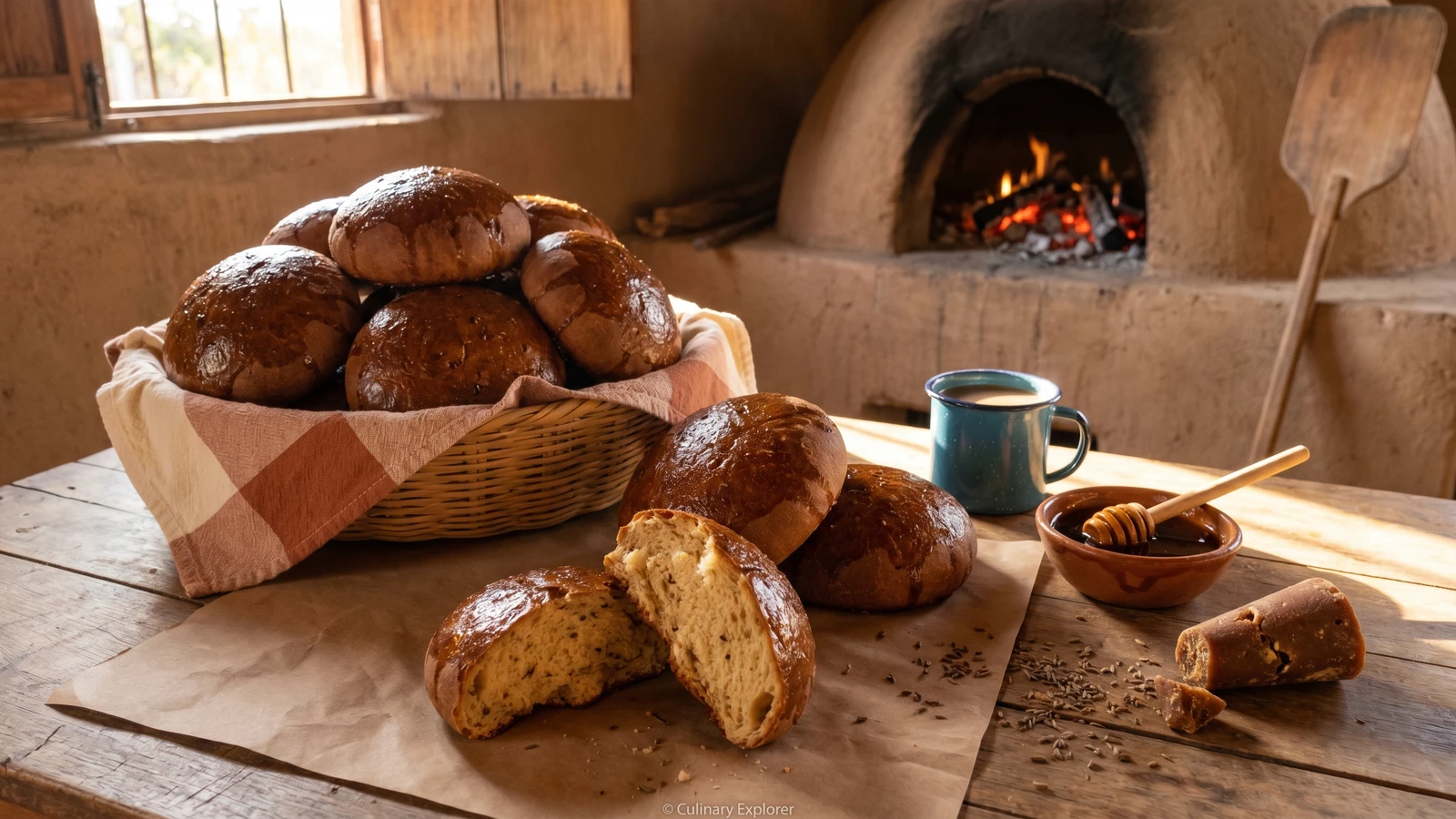
Sinaloa's egg-free sweet bread from Guasave and Mocorito. Yeasted dough sweetened with piloncillo, perfumed with toasted anise, dark from the wood oven, brushed with honey from the Sierra Madre while still hot from the bake.
This is a pan from northern Sinaloa. Specifically from the towns of Guasave and Mocorito, where roadside panaderas have been baking it in hornos de leña for over a century. You buy it warm at midday, wrapped in butcher paper, and you eat it standing on the side of the highway with a coffee. That is the proper way.
Pan de mujer carries no eggs. None. This is not an oversight, it is the recipe. The structure comes from a yeasted wheat dough enriched with manteca de cerdo, sweetened with piloncillo melted into a dark syrup, and perfumed with anise seed toasted on a comal. The honey wash at the end is what gives it that glossy, sticky crust that catches the light. The women who taught me this bread were specific: piloncillo, not refined sugar; manteca, not butter or shortening; honey from the Sierra Madre Occidental if you can get it. Cada estado, su propia cocina, and this is wheat country, not corn country. The flour tortilla is the bread of the north, full stop, and pan de mujer is what the same hands make when they want something sweet.
My mother did not bake this bread. She was from Jalisco and her sweet bread was conchas and orejas from the Mexico City panaderias. The first time I ate pan de mujer was in 2009, at a roadside stand outside Mocorito, where a senora named Dona Eulalia was pulling them out of a clay horno with a long wooden paddle. She handed me one without asking if I wanted it, watched me eat it, and only then told me what was in it. I went back the next morning and stayed in her kitchen for three days. The notebook page for this recipe still has her handwriting on it. No me vengas con atajos. The bread takes four hours, most of that waiting, and there is no faster version that is worth eating.
Pan de mujer belongs to a small family of egg-free Sinaloan ranch breads that emerged in the late 19th and early 20th centuries, when wheat became the dominant grain of northwestern Mexico following the Jesuit and Spanish introduction of wheat agriculture to the fertile valleys of the Rio Sinaloa and Rio Fuerte. The bread is associated specifically with the towns of Guasave and Mocorito, and the name 'pan de mujer' is most commonly explained by local historians as a reference to the women who, in households without a man's daily wage, baked these breads to sell along the roads connecting the agricultural valleys to the coastal towns. The use of piloncillo and honey rather than refined sugar reflects both the cost of imported sugar in rural Sinaloa during that period and the proximity of wild honey from the foothills of the Sierra Madre Occidental, which Sinaloense bakers still seek out for the finishing glaze.
Quantity
1 1/4 cups
warmed to 110F
Quantity
2 1/4 teaspoons (one packet)
Quantity
1 cone (8 ounces)
chopped or grated
Quantity
1/2 cup
Quantity
1
Quantity
5 cups, plus more for the bench
Quantity
1 teaspoon
Quantity
1/2 cup
softened but not melted
Quantity
1 tablespoon
lightly toasted on a comal
Quantity
1/3 cup
for brushing
Quantity
2 tablespoons
Quantity
as needed
| Ingredient | Quantity |
|---|---|
| whole milkwarmed to 110F | 1 1/4 cups |
| active dry yeast | 2 1/4 teaspoons (one packet) |
| piloncillo oscurochopped or grated | 1 cone (8 ounces) |
| hot water | 1/2 cup |
| cinnamon stick, canela de Ceylan | 1 |
| all-purpose flour | 5 cups, plus more for the bench |
| fine sea salt | 1 teaspoon |
| manteca de cerdosoftened but not melted | 1/2 cup |
| anise seedlightly toasted on a comal | 1 tablespoon |
| honey from the Sierra Madre Occidentalfor brushing | 1/3 cup |
| whole milk for the honey wash | 2 tablespoons |
| manteca de cerdo for greasing the pans | as needed |
Combine the chopped piloncillo, the hot water, and the cinnamon stick in a small saucepan. Set it over low heat and stir until the piloncillo dissolves into a dark, syrupy liquid. This takes about ten minutes. Do not rush it. Piloncillo is unrefined and it will scorch if the heat is too high. When it is fully dissolved, pull it off the fire, fish out the cinnamon stick, and let the syrup cool to lukewarm. This is the sweetness and the color of the bread. Refined sugar will give you a paler, flatter result.
Pour the warmed milk into a large mixing bowl. The milk should feel like a warm bath on your wrist, not hot. Sprinkle the yeast over the surface and let it sit for five minutes. It will start to foam. If it does not, your yeast is dead and you start over. Stir in the cooled piloncillo syrup. The mixture should be the color of dark tea.
In a large bowl, whisk together the flour, the salt, and the toasted anise seed. The anise is what makes this pan recognize itself. Without it, you have generic sweet bread. With it, you have pan de mujer. Make a well in the center and pour in the yeast-piloncillo mixture. Add the softened manteca de cerdo in small pinches around the well. La manteca es el sabor. Stir with a wooden spoon until the dough comes together in a shaggy mass.
Turn the dough out onto a lightly floured wooden table. Knead for ten to twelve minutes, pushing the dough away from you with the heel of your hand and folding it back over itself. The dough is enriched with lard and dark with piloncillo, so it will feel heavier than a bolillo dough. Keep working it. You want a smooth, elastic ball that springs back when you press it with a finger. If it sticks to the table, add flour one tablespoon at a time. Do not drown it.
Grease a clean bowl with a small spoonful of manteca and place the dough inside, turning it once to coat. Cover with a damp cloth and set in a warm corner of the kitchen, away from drafts. Let it rise until doubled in size, about an hour and a half. In Sinaloa the kitchens are warm and the dough rises fast. In a cooler kitchen, give it two hours. Asi se hace y punto.
Punch down the dough and turn it out onto the floured table. Divide it into twelve equal pieces, about three ounces each. Roll each piece into a tight ball under your cupped palm. The motion is the same one the panaderas use when they shape bolillos: the ball circles under your hand and tightens on itself. Press each ball gently to flatten it slightly into a round disc about three inches across and an inch thick. Place them on a heavy baking sheet greased with manteca, leaving two inches between each pane to allow for the second rise.
Cover the shaped panes loosely with a clean cloth and let them rise until puffed and pillowy, about 45 minutes. While they rise, fire up your oven. The traditional horno de leña runs hot and dry, the wood smoke perfumes the crust as the bread bakes. In your home oven, preheat to 375F and set the rack in the middle. If you have a baking stone, use it. It mimics the floor of the wood oven and gives the panes a better bottom crust.
Slide the tray into the oven. Bake for 28 to 35 minutes, rotating the tray once halfway through. The panes are ready when the tops are deep mahogany brown, the color of a piloncillo cone itself, and the bottoms sound hollow when you tap them. The piloncillo and the lard work together to give this bread a darker crust than you would expect from a yeast bread. Do not pull them when they look pale. They need the long bake to develop the flavor.
While the panes bake, warm the honey and the two tablespoons of milk together in a small saucepan over low heat until the honey thins and the mixture is uniform. Pull the panes out of the oven and immediately brush the tops generously with the honey wash. The honey will sizzle on the hot crust and set into a glossy, sticky finish. This is the signature of pan de mujer: the dark crust, the glistening honey, the perfume of anise underneath. Roadside vendors in Mocorito brush them so the panes shine in the afternoon sun.
Slide the panes onto a wire rack to cool for at least twenty minutes before you tear into them. The crumb sets as the bread cools. Eat them warm with cafe de olla, or at room temperature the next morning with a glass of milk. The Sinaloense way is to break the pane in half with your hands, never a knife. Saber cocinar es saber vivir.
1 serving (about 115g)
Culinary guides, cultural storytelling, and the editorial depth that makes cooking meaningful.
Discover Culinary ExplorerChef Lupita
Guanajuato's daily bread from Acámbaro, a small glazed roll built on pata, enriched with manteca de cerdo, and baked until the top shines lightly for merienda.

Chef Lupita
Michoacan's Tinguindin aguacatas are flat, leaf-scored sweet breads made with harina de trigo, piloncillo, anise, and manteca de cerdo, shaped by hand for the wood oven.

Chef Lupita
From Ajijic on Lake Chapala, Pan Tachihual is a lightly sweet wedding loaf built with harina de trigo, harina de maiz, piloncillo, manteca, anise, and the old Guadalajara pata.

Chef Lupita
Comitán's pan de yema shaped into little pigs, birds, and rabbits, a Chiapas bakery bread rich with egg yolks, manteca de cerdo, and anís, baked golden on hoja de plátano.