
Chef Lupita
Acambaritas de Acámbaro
Guanajuato's daily bread from Acámbaro, a small glazed roll built on pata, enriched with manteca de cerdo, and baked until the top shines lightly for merienda.
A cooking platform built around craft, culture, and the stories behind what we eat.
Created by
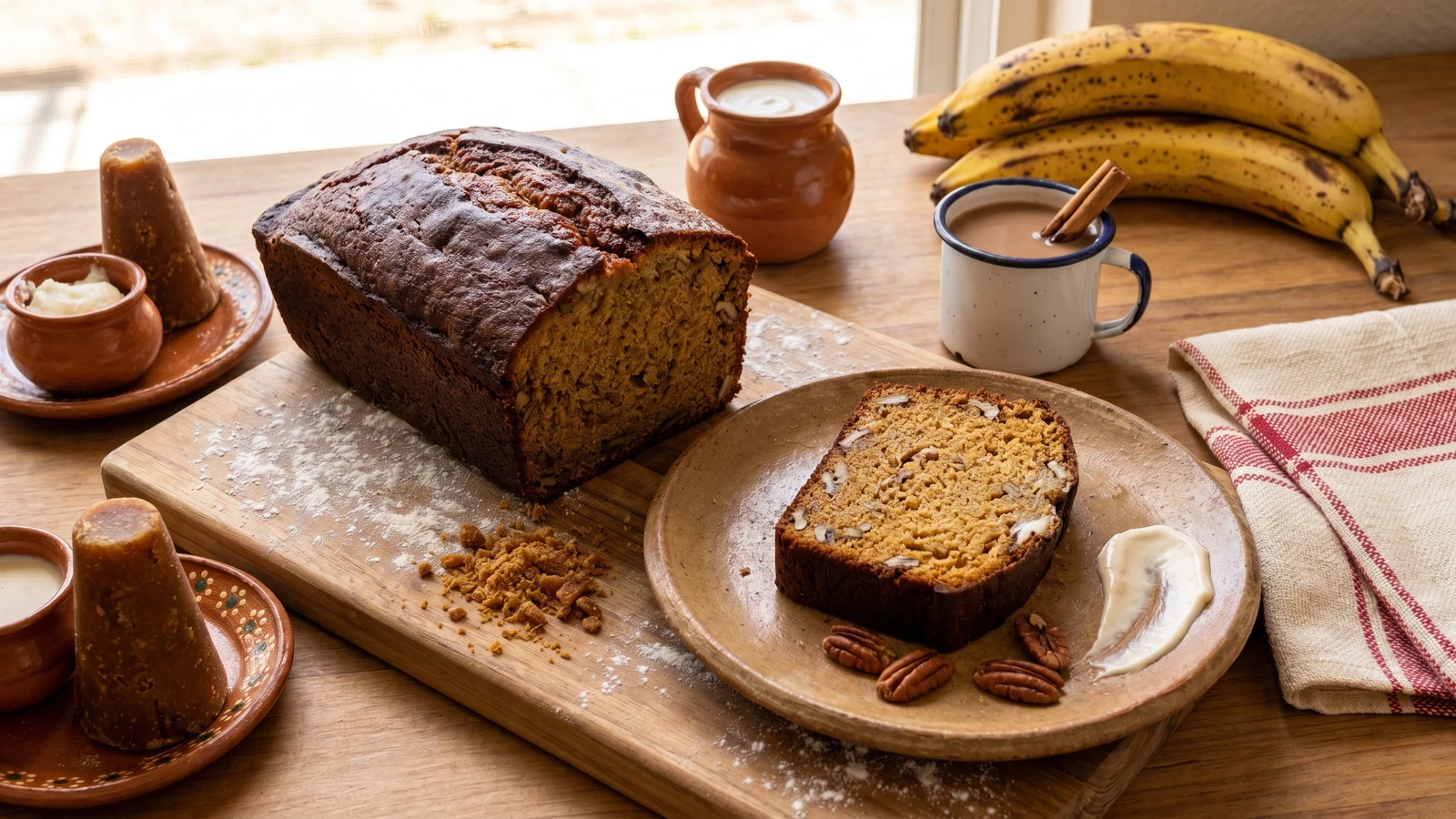
Sinaloa's tropical banana loaf, built on near-black platanos, melted manteca, grated piloncillo, and a generous half-cup of Mexican crema that keeps the crumb tender for days.
This is a Sinaloa bread, from the Pacific coast where platanos hang heavy on the trees in patios from Mazatlan to Los Mochis and the fruit ripens faster than anyone can eat it. Pan de platano is what coastal cooks make when the bowl on the counter has gone too far, when the peels are spotted black and the kitchen smells sweet from across the room. Nothing gets thrown away. The fruit becomes bread.
This is the Noroeste, which means this is wheat country, not corn country. The flour comes easy here. So does manteca de cerdo, the fat of the rancho, melted into the batter the way Sinaloense cooks have always done. Butter is a Mexico City and a foreign habit. Vegetable shortening is a supermarket compromise. La manteca es el sabor and it is what gives this loaf its tender, almost custardy crumb. The crema is the other secret. A half cup of real Mexican crema folded into the mash brings tang and softness that a dry banana bread cannot touch.
My mother kept a recipe in her notebook that she had copied from a senora in Culiacan during a trip in the early eighties, written across two pages with arrows pointing to substitutions she had tested at home. The piloncillo was underlined twice. Refined sugar will work, but the loaf will taste flat. Piloncillo brings molasses and minerals and the dark almost-burnt sweetness that belongs in this bread. Cada estado, su propia cocina. This one belongs to the Noroeste, and you should make it the way they make it.
Banana cultivation in Sinaloa expanded dramatically in the late 19th and early 20th centuries as the state's irrigation systems, fed by the Fuerte and Culiacan rivers, opened the coastal plain to tropical agriculture, making Sinaloa one of Mexico's principal banana-growing regions alongside Tabasco, Chiapas, and Veracruz. The pan de platano tradition is part of the broader Noroeste pan dulce repertoire that emerged from the region's wheat economy and rancho kitchens, where lard, piloncillo, and dairy from family-held cattle became the foundation of everyday baking long before commercial panaderias spread inland. The use of crema in quick breads is a distinctly northwestern habit tied to the dairying traditions of Sinaloa and Sonora, where ranching and tropical agriculture meet on the same coastal strip.
Quantity
3
skins almost black, about 1 1/2 cups mashed
Quantity
1/2 cup
Quantity
1/2 cup
melted and slightly cooled
Quantity
3/4 cup
finely grated, or packed dark brown sugar
Quantity
2
at room temperature
Quantity
1 teaspoon
Quantity
2 cups
Quantity
1 teaspoon
Quantity
1/2 teaspoon
Quantity
1/2 teaspoon
Quantity
1 teaspoon
Quantity
1/2 cup
toasted on a comal and roughly chopped
Quantity
1 tablespoon
coarsely grated
| Ingredient | Quantity |
|---|---|
| very ripe platanos (bananas)skins almost black, about 1 1/2 cups mashed | 3 |
| Mexican crema | 1/2 cup |
| manteca de cerdo (pork lard)melted and slightly cooled | 1/2 cup |
| piloncillofinely grated, or packed dark brown sugar | 3/4 cup |
| large eggsat room temperature | 2 |
| Mexican vanilla extract | 1 teaspoon |
| all-purpose wheat flour | 2 cups |
| baking soda | 1 teaspoon |
| baking powder | 1/2 teaspoon |
| kosher salt | 1/2 teaspoon |
| ground Mexican canela (Ceylon cinnamon) | 1 teaspoon |
| pecans (optional)toasted on a comal and roughly chopped | 1/2 cup |
| piloncillo for the topcoarsely grated | 1 tablespoon |
This bread does not start in the kitchen. It starts on the counter, four or five days before, with platanos turning from yellow to spotted to almost black. The fruit has to be soft enough that the peel splits when you press it. Hard banana means hard bread. No me vengas con atajos. If your bananas are still firm, put them in a paper bag with a ripe avocado for two days and try again.
Heat the oven to 350F. Grease a 9 by 5-inch loaf pan with a thin layer of manteca and dust it with flour, tapping out the excess. In Sinaloa kitchens the pan is often a battered rectangular tin that has baked a thousand loaves. Use what you have, but grease it properly. A loaf that sticks to the pan is a loaf that breaks when you turn it out.
In a wide bowl, mash the platanos with a fork until mostly smooth with a few small lumps. Stir in the crema. The crema is what sets this bread apart from the dry, sugary banana breads they sell in American coffee shops. It brings tang, fat, and softness all at once. Use real Mexican crema, not sour cream and not creme fraiche. They are not the same thing.
Whisk the melted manteca and grated piloncillo together in a separate large bowl until the piloncillo dissolves into the warm fat. The mixture will look grainy at first and smooth out as the piloncillo gives way. Whisk in the eggs one at a time, then the vanilla. Fold this into the platano-crema mixture. La manteca es el sabor. Butter would make a different bread. Vegetable oil would make a worse one.
In another bowl, whisk together the flour, baking soda, baking powder, salt, and canela. Mexican canela is softer and more floral than the cassia cinnamon sold in American supermarkets. If you have it, use it. If you do not, regular cinnamon will work, but cut it back to 3/4 teaspoon because it is more aggressive.
Add the dry ingredients to the wet in two additions, folding with a rubber spatula until just combined. A few streaks of flour are fine. Stop the moment the flour disappears. Overmixed quick bread turns rubbery and tunnels through the crumb. Fold in the toasted pecans if using. Asi se hace y punto.
Pour the batter into the prepared pan and smooth the top. Scatter the coarsely grated piloncillo across the surface for a dark, crackly crust. Bake on the middle rack for 55 to 65 minutes, until the top is deep brown, the loaf has pulled away from the sides, and a wooden skewer pushed into the center comes out with a few moist crumbs but no wet batter. The crema and the platano keep this bread tender even when it is fully baked, so do not pull it early.
Let the loaf rest in the pan for 15 minutes, then turn it out onto a wire rack and cool for at least another 30 minutes before slicing. A hot loaf cut too soon will gum up under the knife. Serve thick slices with a cup of cafe de olla in the late afternoon, the Sinaloa way. Saber cocinar es saber vivir.
1 serving (about 105g)
Culinary guides, cultural storytelling, and the editorial depth that makes cooking meaningful.
Discover Culinary ExplorerChef Lupita
Guanajuato's daily bread from Acámbaro, a small glazed roll built on pata, enriched with manteca de cerdo, and baked until the top shines lightly for merienda.

Chef Lupita
Michoacan's Tinguindin aguacatas are flat, leaf-scored sweet breads made with harina de trigo, piloncillo, anise, and manteca de cerdo, shaped by hand for the wood oven.

Chef Lupita
From Ajijic on Lake Chapala, Pan Tachihual is a lightly sweet wedding loaf built with harina de trigo, harina de maiz, piloncillo, manteca, anise, and the old Guadalajara pata.

Chef Lupita
Comitán's pan de yema shaped into little pigs, birds, and rabbits, a Chiapas bakery bread rich with egg yolks, manteca de cerdo, and anís, baked golden on hoja de plátano.