
Chef Lupita
Acambaritas de Acámbaro
Guanajuato's daily bread from Acámbaro, a small glazed roll built on pata, enriched with manteca de cerdo, and baked until the top shines lightly for merienda.
A cooking platform built around craft, culture, and the stories behind what we eat.
Created by
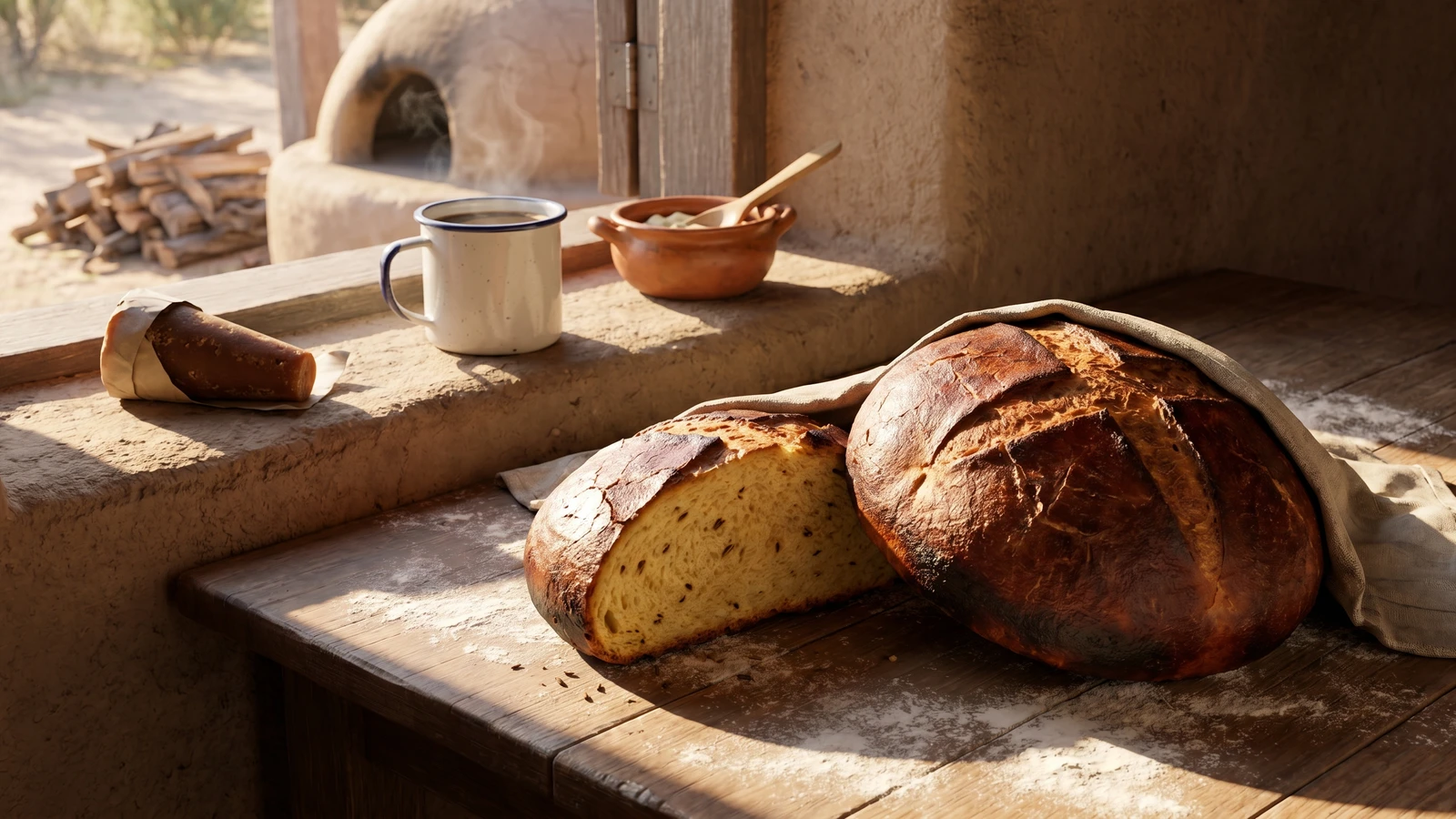
Baja California Sur's ranch bread from the Sierra de la Giganta, a piloncillo-sweetened round loaf built on manteca, anise, and the slow heat of an horno de barro. Vaquero bread, made to keep for days in a saddlebag.
This bread comes from the Sierra de la Giganta, the spine of mountains that runs down the middle of Baja California Sur between Loreto and San Javier. It is ranch country. Goats, cattle, mesquite, palm oases, and small adobe homes with hornos de barro built into the side yard. The women bake this bread once or twice a week, in batches of eight or ten loaves, in ovens fired with mesquite and palo de arco.
This is wheat country, not corn country. The Jesuit missions that settled this peninsula in the 17th and 18th centuries planted wheat in the few patches of arable land they could find, and the ranchero cuisine that grew around those missions runs on wheat flour, not nixtamal. The flour tortilla here is the bread of the table, and pan de rancho is the bread of the special morning, the bread that travels with the vaquero into the sierra and survives three days in his saddlebag because the manteca and the piloncillo keep it soft.
The sweetness is gentle and dark. Piloncillo, not refined sugar. The piloncillo gives the crumb a faint molasses note and a color that no white sugar can produce. The anise is the perfume that tells you which state you are in. Sonora has its coyotas. Chihuahua has its semitas. Baja Sur has this loaf, with its cross scored on top and its crackling dark crust, and if you make it with butter or vegetable shortening you have made a different bread entirely. No me vengas con atajos. La manteca es el sabor.
The ranch women in San Javier taught me that the dough should feel alive in your hands, like the skin of a young goat, soft and warm and resistant. They taught me to listen for the hollow sound when the bread is done. They taught me that bread baked in a wood oven is bread that carries the place inside it. You will not have an horno de barro. That is fine. A hot baking stone and a careful eye will get you close. Saber cocinar es saber vivir.
The wheat culture of Baja California Sur dates to the Jesuit missions established between 1697 and 1768, when missionaries from the Society of Jesus introduced European grains to the peninsula's few arable valleys around Loreto, San Javier, and Comondu. The hornos de barro, beehive-shaped clay ovens fired with mesquite or palo de arco wood, remain the traditional bake oven of the sierra ranches and produce a radiant heat that no modern domestic oven fully replicates. Pan de rancho belongs to the broader Noroeste wheat tradition that distinguishes Baja Sur, Sonora, and Chihuahua from the corn-based cuisines of central and southern Mexico, and its use of piloncillo and lard reflects the ingredient economy of isolated mission-era ranches, where refined sugar was scarce and rendered pork fat was a daily staple.
Quantity
6 cups (about 800 grams)
plus more for shaping
Quantity
1 cup (about 130 grams)
Quantity
1 cone (about 8 ounces)
chopped fine, or 1 cup grated
Quantity
1 cup
divided
Quantity
1/2 cup
melted and slightly cooled
Quantity
1/2 cup
warmed to body temperature
Quantity
2
lightly beaten
Quantity
1 tablespoon
Quantity
1 tablespoon
lightly crushed
Quantity
2 1/4 teaspoons
Quantity
1 tablespoon
for the starter
Quantity
1
beaten with 1 tablespoon milk, for brushing
Quantity
for sprinkling
| Ingredient | Quantity |
|---|---|
| bread flourplus more for shaping | 6 cups (about 800 grams) |
| whole wheat flour | 1 cup (about 130 grams) |
| piloncillochopped fine, or 1 cup grated | 1 cone (about 8 ounces) |
| warm waterdivided | 1 cup |
| manteca de cerdo (pork lard)melted and slightly cooled | 1/2 cup |
| whole milkwarmed to body temperature | 1/2 cup |
| large eggslightly beaten | 2 |
| kosher salt | 1 tablespoon |
| anise seedlightly crushed | 1 tablespoon |
| active dry yeast | 2 1/4 teaspoons |
| honey or cane sugarfor the starter | 1 tablespoon |
| large egg yolkbeaten with 1 tablespoon milk, for brushing | 1 |
| coarse sugar (optional) | for sprinkling |
Place the chopped piloncillo in a small saucepan with 1/2 cup of the warm water. Set over low heat and stir until the piloncillo dissolves completely into a dark amber syrup. Do not let it boil hard. You want a syrup, not a candy. Set aside to cool to body temperature. Refined sugar will not give you the same flavor. The molasses notes in the piloncillo are why this bread tastes like it comes from a Baja ranch and not a panaderia in the city.
In a small bowl, combine the remaining 1/2 cup warm water with the honey and the yeast. Stir once and leave it alone for 10 minutes. It should foam and smell yeasty. If nothing happens, your yeast is dead. Start over. There is no salvaging dough made with sleeping yeast.
In a large bowl, whisk together the bread flour, whole wheat flour, salt, and crushed anise seed. The anise is not optional. It is the perfume that tells you this bread is sudcaliforniano. Make a well in the center. Pour in the cooled piloncillo syrup, the bloomed yeast, the warm milk, the beaten eggs, and the melted manteca de cerdo. La manteca es el sabor, and in ranch bread it is also the structure. Without it the crumb is dry and the keeping quality disappears.
Stir with a wooden spoon until the dough comes together in a shaggy mass. Turn out onto a lightly floured surface. Knead for 10 to 12 minutes, pushing with the heel of your hand and folding the dough back on itself. The dough is enriched and slightly sticky from the piloncillo and the lard, so resist the urge to add too much flour. It should become smooth, elastic, and slightly tacky to the touch. When you press it with a finger, it should spring back slowly.
Place the dough in a lightly greased bowl, cover with a damp cloth, and let rise in a warm spot for 1 1/2 to 2 hours, until doubled. Enriched dough rises slower than lean dough. Be patient. On the ranches of Sierra de la Giganta, the women set the dough on the back of the wood stove and walked away to tend the goats. The dough will be ready when it is ready.
Turn the dough out onto a lightly floured surface and divide in two. Shape each piece into a tight round by tucking the edges underneath and rolling on the bench until the surface is smooth. Place the rounds seam side down on a baking sheet lined with parchment, leaving plenty of space between them. With a sharp knife or a razor, score a deep cross on the top of each loaf. This is the vaquero mark and it lets the bread open as it bakes.
Cover the shaped loaves loosely with a clean cloth and let rise again for 45 minutes to 1 hour. They should look puffed and softly domed. Meanwhile, position a rack in the center of the oven and preheat to 375F. If you have a baking stone or steel, put it in now. The closer you can get to the radiant heat of an horno de barro, the closer you get to the real bread.
Brush the tops of the risen loaves with the egg yolk and milk wash. Sprinkle with coarse sugar if you want the finish you see at the panaderias in Loreto. Slide the baking sheet onto the hot stone or directly onto the center rack. Bake for 35 to 45 minutes, until the loaves are deep mahogany brown and the bottoms sound hollow when tapped. An instant-read thermometer should read about 195F at the center. Underbaked pan de rancho is gummy. Asi se hace y punto.
Transfer the loaves to a wire rack and let them cool for at least 30 minutes before slicing. Cutting hot bread compresses the crumb and you will lose the open, slightly chewy texture that the lard and piloncillo built for you. Serve with cafe de olla, with carne machaca, with frijoles puercos. The ranch women of Baja Sur eat this bread for breakfast, again at the merienda, and broken into bowls of milk for the children before bed.
1 serving (about 95g)
Culinary guides, cultural storytelling, and the editorial depth that makes cooking meaningful.
Discover Culinary ExplorerChef Lupita
Guanajuato's daily bread from Acámbaro, a small glazed roll built on pata, enriched with manteca de cerdo, and baked until the top shines lightly for merienda.

Chef Lupita
Michoacan's Tinguindin aguacatas are flat, leaf-scored sweet breads made with harina de trigo, piloncillo, anise, and manteca de cerdo, shaped by hand for the wood oven.

Chef Lupita
From Ajijic on Lake Chapala, Pan Tachihual is a lightly sweet wedding loaf built with harina de trigo, harina de maiz, piloncillo, manteca, anise, and the old Guadalajara pata.

Chef Lupita
Comitán's pan de yema shaped into little pigs, birds, and rabbits, a Chiapas bakery bread rich with egg yolks, manteca de cerdo, and anís, baked golden on hoja de plátano.