
Chef Lupita
Acambaritas de Acámbaro
Guanajuato's daily bread from Acámbaro, a small glazed roll built on pata, enriched with manteca de cerdo, and baked until the top shines lightly for merienda.
A cooking platform built around craft, culture, and the stories behind what we eat.
Created by
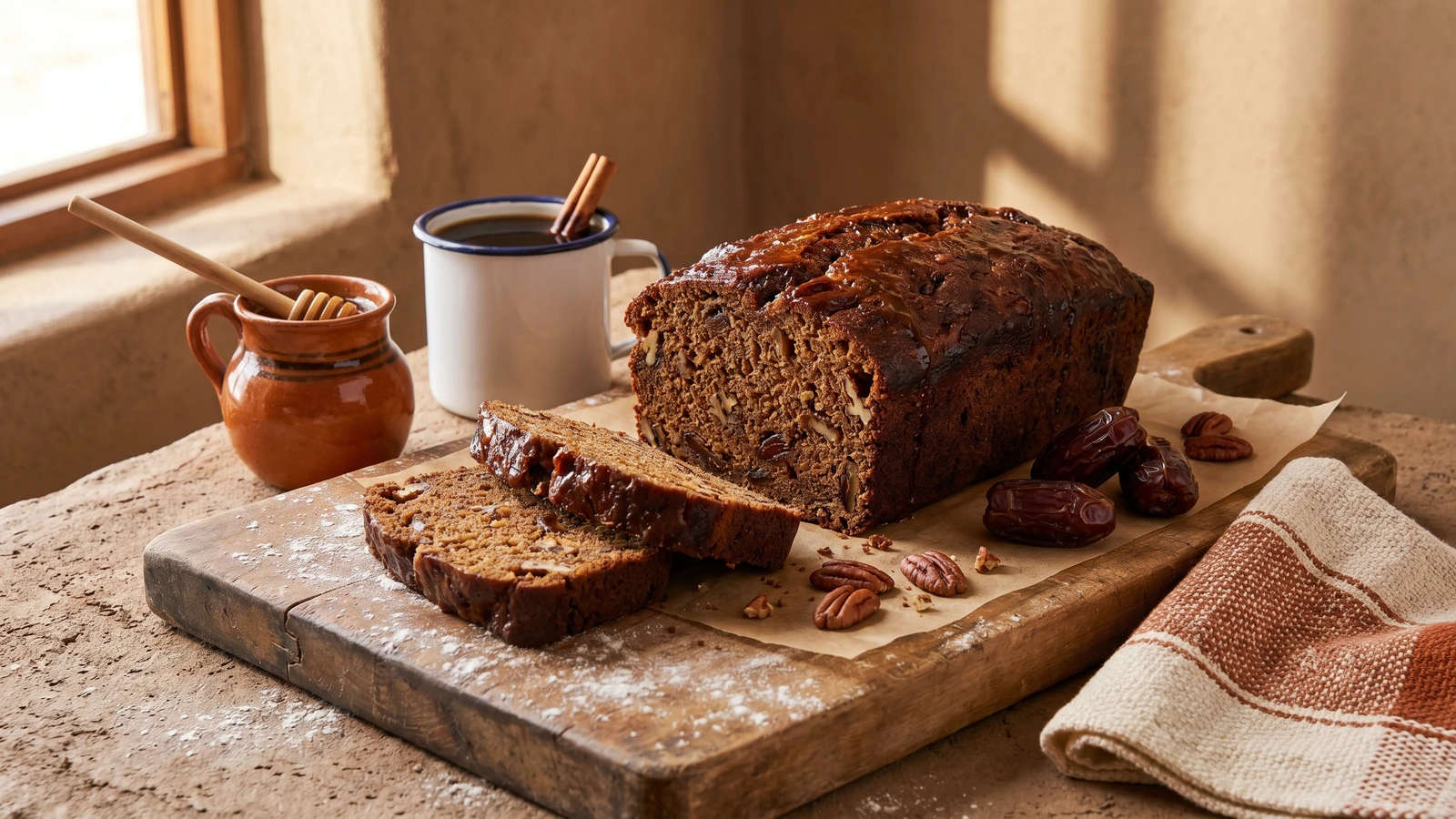
Loreto and San Ignacio's mission-palm date loaf from Baja California Sur. Dense, dark, sweetened with piloncillo and bound with manteca, brushed with mission honey and eaten with cafe de olla.
This bread comes from Baja California Sur, from the oases of Loreto, San Ignacio, and Mulege, where the Jesuit missionaries planted date palms in the 1700s and the palms outlived the missions by three hundred years. Those palms still feed the towns. The dates that go into this loaf are the same variety that has been falling off those trees since before Mexico was a country.
The Baja Sur peninsula is not corn country. It is wheat country, ranch country, and date country. The oases hold the dates and the pecans. The ranches give the lard. The piloncillo travels in from the mainland. The honey comes from bees working the orange blossoms in the mission gardens. Put those four things together with flour and you have pan de datil. There is no butter in this bread, and there should not be. La manteca es el sabor, even in a sweet loaf. The lard carries the date flavor in a way butter cannot.
I traveled to San Ignacio in the second year of my 32-state project and stayed with a family whose grandmother had baked this bread in a horno de barro every Sunday for fifty years. She showed me her method on a piece of brown paper, written in the same kind of penciled shorthand my mother used. Pour boiling water on the dates with baking soda. That single trick is what separates a proper pan de datil from a dry, brick-like loaf. The dates collapse, the soda darkens the crumb, and the bread comes out dense and moist the way the women of Baja Sur have always made it.
This is a make-ahead bread. It is better on day two. It travels well, keeps for a week wrapped tightly, and was, for generations, the bread that ranchers carried into the sierra when they rode out for days at a time. Cada estado, su propia cocina. This is Baja Sur on a plate.
Date palms were brought to Baja California Sur by Jesuit missionaries beginning in 1697 with the founding of the Mision Nuestra Senora de Loreto, the first permanent Spanish settlement in the Californias. The palms were planted at each new mission as a reliable food source for the long, dry months, and groves at Loreto, San Ignacio, Comondu, and Mulege survived the expulsion of the Jesuits in 1768 and the secularization of the missions in the 19th century, becoming the agricultural foundation of the peninsula's oasis towns. The pan de datil tradition emerged from these mission orchards as a ranch and household bread, using piloncillo and manteca because refined sugar and butter were scarce luxuries on a peninsula connected to the Mexican mainland only by boat until the Carretera Transpeninsular was completed in 1973.
Quantity
1 pound
pitted and roughly chopped
Quantity
1 cup
Quantity
1 teaspoon
Quantity
1/2 cup
at room temperature
Quantity
1 cup
grated, or packed dark brown sugar
Quantity
2
at room temperature
Quantity
1 teaspoon
Quantity
2 1/2 cups
Quantity
1 teaspoon
Quantity
1/2 teaspoon
Quantity
1 teaspoon
Quantity
1/2 teaspoon
Quantity
1 cup
toasted and roughly chopped
Quantity
1/4 cup
from the mission palms, or any good local honey
Quantity
as needed
| Ingredient | Quantity |
|---|---|
| Medjool or Black Khadrawy dates from Baja Surpitted and roughly chopped | 1 pound |
| boiling water | 1 cup |
| baking soda | 1 teaspoon |
| manteca de cerdo (pork lard)at room temperature | 1/2 cup |
| piloncillograted, or packed dark brown sugar | 1 cup |
| large eggsat room temperature | 2 |
| Mexican vanilla extract | 1 teaspoon |
| all-purpose flour | 2 1/2 cups |
| baking powder | 1 teaspoon |
| kosher salt | 1/2 teaspoon |
| ground Mexican canela (Ceylon cinnamon) | 1 teaspoon |
| freshly grated nutmeg | 1/2 teaspoon |
| pecans from the Sierra de la Gigantatoasted and roughly chopped | 1 cup |
| orange blossom honeyfrom the mission palms, or any good local honey | 1/4 cup |
| manteca for greasing the pans | as needed |
Place the chopped dates in a heatproof bowl. Sprinkle the baking soda over them. Pour the boiling water on top and stir once. Let the dates sit for 20 minutes. The water will turn dark and syrupy and the dates will collapse into a rough paste. The baking soda is not seasoning. It softens the date flesh and gives the loaf its dark, almost mahogany crumb. This step is the recipe. No me vengas con atajos.
Heat the oven to 325F. Grease two 9-by-5-inch loaf pans generously with manteca. Line the bottoms with parchment if you do not trust your pans. The lard greases better than butter for this bread and leaves the crust with a clean release.
In a large bowl or stand mixer, beat the room-temperature manteca and grated piloncillo together on medium speed for four to five minutes. The mixture should look like wet sand turning into a rough paste. Piloncillo does not cream the way refined sugar does. It does not need to. You are after even distribution, not fluff. La manteca es el sabor and the piloncillo is the soul. Refined white sugar would give you a different bread, and it would not be pan de datil de Loreto.
Beat in the eggs one at a time, mixing well after each. Add the vanilla. The batter may look slightly broken at this stage. That is normal. Piloncillo and lard are not as forgiving as butter and sugar. The flour will pull it back together.
In a separate bowl, whisk the flour, baking powder, salt, canela, and nutmeg. Use real Mexican canela, the soft bark that crumbles between your fingers, not the hard cassia bark sold as cinnamon in most supermarkets. The flavor is rounder, sweeter, less aggressive. It belongs in this bread.
Add the softened dates with all their dark soaking liquid to the lard mixture. Stir until combined. Add the dry ingredients in two additions, folding by hand with a wooden spoon. Stop the moment the flour disappears. Fold in the toasted pecans. Overmixing here will give you a tough, rubbery loaf. The batter should be thick, dark, and a little shaggy.
Divide the batter evenly between the prepared pans and smooth the tops. Bake for 60 to 70 minutes, until the tops are dark and a thin knife inserted into the center comes out with a few moist crumbs. Do not pull them early. This bread needs the full hour to set in the middle. The crust should look almost burnt at the edges. That is the piloncillo caramelizing. That is what you want.
Warm the honey gently in a small saucepan until it is loose. The moment the loaves come out of the oven, brush the honey over the hot tops. The crust will drink it in. Let the loaves cool in their pans for 20 minutes, then turn them out onto a rack to cool completely. Resist cutting into them right away. Pan de datil is denser and more flavorful at room temperature the next day, when the dates have settled and the crumb has tightened.
Slice thick. Eat with cafe de olla brewed with piloncillo and canela in a clay jarro. This is breakfast in San Ignacio. This is the bread that travels in a saddlebag for two days in the sierra and tastes better on the second day. Asi se hace y punto.
1 serving (about 70g)
Culinary guides, cultural storytelling, and the editorial depth that makes cooking meaningful.
Discover Culinary ExplorerChef Lupita
Guanajuato's daily bread from Acámbaro, a small glazed roll built on pata, enriched with manteca de cerdo, and baked until the top shines lightly for merienda.

Chef Lupita
Michoacan's Tinguindin aguacatas are flat, leaf-scored sweet breads made with harina de trigo, piloncillo, anise, and manteca de cerdo, shaped by hand for the wood oven.

Chef Lupita
From Ajijic on Lake Chapala, Pan Tachihual is a lightly sweet wedding loaf built with harina de trigo, harina de maiz, piloncillo, manteca, anise, and the old Guadalajara pata.

Chef Lupita
Comitán's pan de yema shaped into little pigs, birds, and rabbits, a Chiapas bakery bread rich with egg yolks, manteca de cerdo, and anís, baked golden on hoja de plátano.