
Chef Lupita
Acambaritas de Acámbaro
Guanajuato's daily bread from Acámbaro, a small glazed roll built on pata, enriched with manteca de cerdo, and baked until the top shines lightly for merienda.
A cooking platform built around craft, culture, and the stories behind what we eat.
Created by
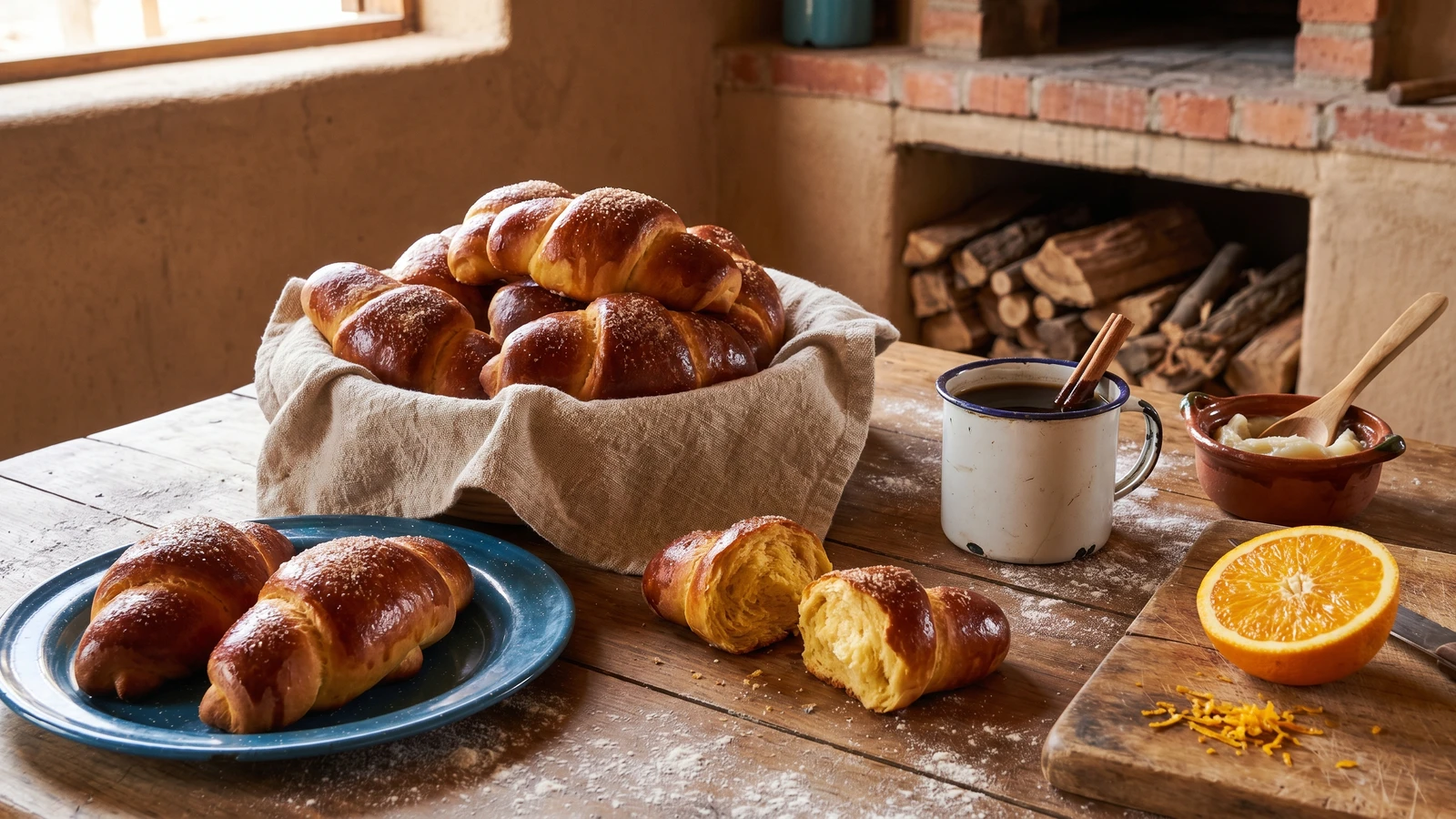
Baja California Sur's golden morning roll from the brick ovens of Todos Santos. Enriched with eggs and lard, faintly sweet, with the whisper of orange that the panaderias of the south have baked into their bread for a hundred years.
This is from Baja California Sur. From Todos Santos specifically, the small Pacific town a couple of hours north of Cabo, where the panaderias still fire brick ovens with mesquite and the morning line at Panaderia El Poblano starts before the sun is up.
Pan de huevo is the bread of the south of the peninsula. Wheat country, not corn country. The Jesuit missionaries brought wheat to Baja in the 18th century and it stayed. The ranches between La Paz and Todos Santos built their kitchens around it: flour tortillas, empanadas, and these slightly sweet egg rolls that go with cafe de olla in the morning and with a glass of milk before bed. The lard is not negotiable. La manteca es el sabor. Butter makes a French roll. Shortening makes nothing. Manteca de cerdo, rendered properly, gives you the tender crumb and the faint pork sweetness that distinguishes the bread of the Baja ranches from anything else.
The shape is the torcido, a short tapered cylinder, golden on top from a generous egg wash, sometimes sprinkled with sugar. The orange zest and a drop of azahar are old-school touches from the panaderos who came down from Sinaloa and Sonora and brought their citrus with them. I learned this version from a woman named Dona Chayo who has been baking at her family panaderia outside El Pescadero for forty-one years. She does not measure. She told me: "Manteca tibia, harina buena, huevos del rancho, paciencia." That is the whole recipe. Recetas probadas y garantizadas.
Wheat arrived in Baja California through the Jesuit mission system beginning in 1697 with the founding of Loreto, and by the late 18th century, mission ranches across the peninsula were cultivating wheat as their primary grain, a sharp departure from the corn-based traditions of central and southern Mexico. The pan de huevo and its cousins, pan de mujer, coyotas, and the various torcidos and bolillos of the Noroeste, descend from this mission baking tradition, which used lard from pigs raised on the ranches and eggs from the same yards. Todos Santos in particular preserved a small-scale artisan baking culture into the present day; Panaderia El Poblano, founded in the early 20th century, still uses a wood-fired brick oven, a technique that has nearly disappeared from urban Mexican panaderias but remains the standard in the ranching communities of Baja Sur.
Quantity
4 cups, plus more for dusting
Quantity
1/2 cup
Quantity
2 1/4 teaspoons (one 7g packet)
Quantity
1 teaspoon
Quantity
3
at room temperature
Quantity
2
at room temperature
Quantity
3/4 cup
warmed to 110F
Quantity
1/2 cup
softened to room temperature
Quantity
1 teaspoon
Quantity
from 1 orange
Quantity
1 large egg beaten with 1 tablespoon whole milk
Quantity
2 tablespoons
| Ingredient | Quantity |
|---|---|
| all-purpose flour | 4 cups, plus more for dusting |
| granulated sugar | 1/2 cup |
| active dry yeast | 2 1/4 teaspoons (one 7g packet) |
| kosher salt | 1 teaspoon |
| large eggsat room temperature | 3 |
| large egg yolksat room temperature | 2 |
| whole milkwarmed to 110F | 3/4 cup |
| manteca de cerdo (pork lard)softened to room temperature | 1/2 cup |
| orange blossom water (optional) | 1 teaspoon |
| orange zest | from 1 orange |
| egg wash | 1 large egg beaten with 1 tablespoon whole milk |
| granulated sugar for finishing | 2 tablespoons |
In a small bowl, combine the warm milk with one tablespoon of the sugar and the yeast. Stir once. Let it sit for 10 minutes, until the surface turns foamy and the smell goes from raw to bready. If nothing happens, your yeast is dead. Throw it out and start with fresh. Do not skip this step. A pan de huevo without the rise is a hockey puck.
In a large bowl or the bowl of a stand mixer, whisk together the flour, remaining sugar, salt, and orange zest. Make a well in the center. Add the eggs, egg yolks, the foamy milk-yeast mixture, and the orange blossom water if using. Mix with a wooden spoon or the dough hook on low until a shaggy dough forms. This is wheat country. The north and the Baja peninsula bake with flour, not corn, and the dough should come together quickly.
Once the dough holds together, add the softened lard one spoonful at a time. Knead between each addition, by hand for about 12 minutes or with the dough hook on medium for 8 minutes. The dough will fight you at first. It will look broken. Keep going. The lard works in and the dough turns smooth, elastic, and slightly shiny. La manteca es el sabor. Butter will not give you the same tender crumb, and shortening tastes like nothing. Use lard.
Shape the dough into a ball and place in a lightly greased bowl. Cover with a clean kitchen towel or plastic. Let it rise in a warm spot for 1 1/2 to 2 hours, until doubled. In Todos Santos this happens fast because the kitchen is warm and the sea air is humid. In a cold kitchen it can take three hours. Trust the dough, not the clock.
Turn the dough out onto a lightly floured wooden surface. Divide it into 12 equal pieces, about 90 grams each if you have a scale. Roll each piece into a tight ball by cupping your palm over it and dragging it in small circles against the wood. The surface should pull tight. Then roll each ball under your palms into a short cylinder, slightly tapered at the ends. This is the torcido shape that the panaderias of Todos Santos and El Pescadero have made for generations.
Arrange the shaped rolls on a parchment-lined baking sheet with about two inches between each one. Cover loosely with a kitchen towel. Let them rise again for 45 minutes to an hour, until they look puffed and a finger pressed gently into the side leaves a slow-filling dent. The second rise is where the crumb gets its airy structure. No me vengas con atajos. Underproofed pan de huevo is dense and tight.
Heat the oven to 375F. Brush each roll generously with the egg wash. A thin coat will not give you the deep golden color that pan de huevo is named for. Sprinkle the tops with the finishing sugar. Bake on the middle rack for 22 to 25 minutes, rotating the pan halfway through. The rolls are done when the tops are deep golden brown, almost mahogany at the peaks, and the bottoms sound hollow when tapped. In Panaderia El Poblano they come out of the brick horno with the same color, only deeper from the mesquite smoke.
Transfer the rolls to a wire rack. Let them rest for 15 minutes before eating. The crumb finishes setting as they cool. Serve warm or at room temperature with cafe de olla. Tear them open, never cut with a knife. The crumb should be airy, golden, and faintly sweet, with the orange just whispering underneath. Asi se hace y punto.
1 serving (about 85g)
Culinary guides, cultural storytelling, and the editorial depth that makes cooking meaningful.
Discover Culinary ExplorerChef Lupita
Guanajuato's daily bread from Acámbaro, a small glazed roll built on pata, enriched with manteca de cerdo, and baked until the top shines lightly for merienda.

Chef Lupita
Michoacan's Tinguindin aguacatas are flat, leaf-scored sweet breads made with harina de trigo, piloncillo, anise, and manteca de cerdo, shaped by hand for the wood oven.

Chef Lupita
From Ajijic on Lake Chapala, Pan Tachihual is a lightly sweet wedding loaf built with harina de trigo, harina de maiz, piloncillo, manteca, anise, and the old Guadalajara pata.

Chef Lupita
Comitán's pan de yema shaped into little pigs, birds, and rabbits, a Chiapas bakery bread rich with egg yolks, manteca de cerdo, and anís, baked golden on hoja de plátano.