
Chef Lupita
Acambaritas de Acámbaro
Guanajuato's daily bread from Acámbaro, a small glazed roll built on pata, enriched with manteca de cerdo, and baked until the top shines lightly for merienda.
A cooking platform built around craft, culture, and the stories behind what we eat.
Created by
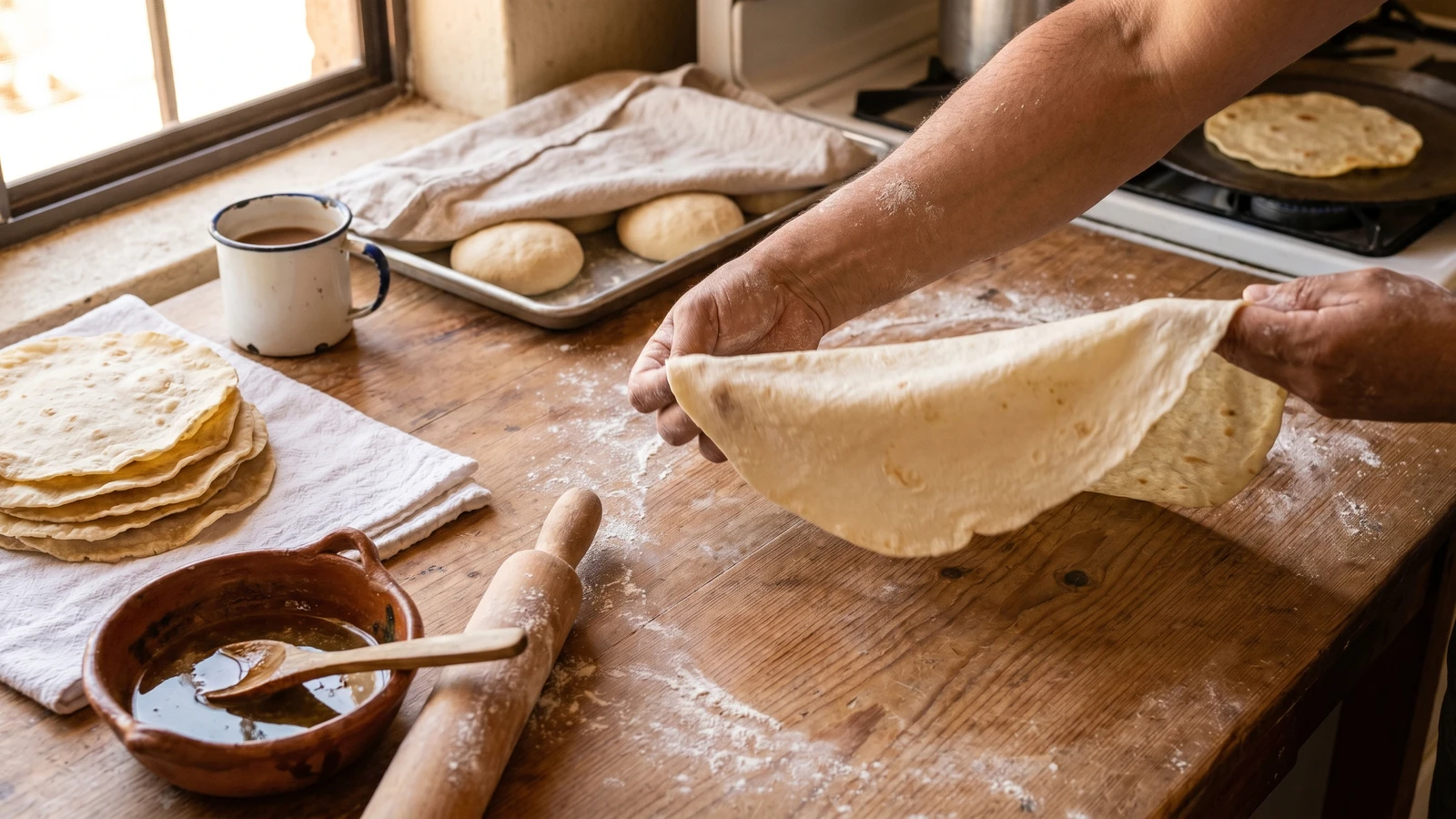
Sonora's hand-stretched flour tortillas, pulled translucent across the cook's forearm until they measure a meter wide. The bread of the north, made the way the senoras of Caborca and Hermosillo still make it.
Sobaqueras are from Sonora. Specifically from the wheat-growing valleys of the northwest, from Caborca, Hermosillo, Magdalena de Kino, where the ranches stretch into the desert and the bread of the day is flour, not corn. This is the north. Wheat country. The corn-versus-flour argument that people from central Mexico like to have ends at the Sonora border. Up here, the tortilla is flour and it is the size of a record album.
The name comes from sobaco, the armpit, because the technique is to stretch the dough across the cook's forearm and rotate it slowly until it thins to translucency. You can see the comal through it. A finished sobaquera measures 14 to 16 inches across in a home kitchen, and a meter across in the hands of a senora who has done this every day of her life. I have watched women in Caborca stretch dough so thin you could read a newspaper through it without tearing a single seam.
The dough is flour, lard, salt, and hot water. Hot water, not cold. That is the Sonora trick and it is the difference between a tortilla that stretches and a tortilla that rips. Manteca de cerdo is the fat. Not butter, not vegetable shortening, not olive oil. La manteca es el sabor and it is also what makes the dough pliable enough to survive the stretch. My mother did not make sobaqueras, she was from Jalisco and Jalisco is its own tortilla conversation, but the first time I ate one in Hermosillo, folded around carne asada straight off a mesquite fire, I understood why the north defends its bread. Cada estado, su propia cocina. Saber cocinar es saber vivir.
Wheat arrived in northwestern Mexico in the 17th century with Jesuit missionaries, who established the Pimeria Alta missions across what is now Sonora and southern Arizona and irrigated the river valleys of the Magdalena, Altar, and Sonora rivers for wheat cultivation. The flour tortilla emerged as a regional staple by the 18th century because wheat thrived in the desert climate while corn struggled, inverting the corn-dominant pattern of central and southern Mexico. The sobaquera or 'tortilla de agua,' as it is also called in Sonora, is documented in 19th-century ranch records as the daily bread of cowboys and miners, and the forearm-stretching technique was preserved almost exclusively by women in home kitchens and small tortillerias, with no commercial machine able to replicate the translucent thinness the hand produces.
Quantity
4 cups (500 grams)
plus more for dusting
Quantity
1/3 cup (75 grams)
at room temperature
Quantity
2 teaspoons
Quantity
1 1/4 cups (300 milliliters)
near boiling, not boiling
Quantity
1 tablespoon
melted
| Ingredient | Quantity |
|---|---|
| all-purpose flourplus more for dusting | 4 cups (500 grams) |
| manteca de cerdo (pork lard)at room temperature | 1/3 cup (75 grams) |
| fine sea salt | 2 teaspoons |
| hot waternear boiling, not boiling | 1 1/4 cups (300 milliliters) |
| manteca de cerdo for greasingmelted | 1 tablespoon |
In a wide bowl, whisk the flour and salt together. Add the room-temperature manteca de cerdo in pieces. Work the lard into the flour with your fingertips until the mixture looks like wet sand and no large lumps of fat remain. La manteca es el sabor. Vegetable shortening will not give you the same pliability or flavor. Use lard or do not make sobaqueras at all.
Pour the hot water into the flour mixture in a steady stream while stirring with your other hand. Hot water, near boiling, not boiling. This is the Sonora trick. The heat partially gelatinizes the starch in the flour and gives you a dough that stretches without tearing. Cold water makes a dough that will fight you when you try to stretch it. Bring the dough together into a rough mass.
Turn the dough out onto a clean, unfloured wooden table. Knead for eight to ten minutes. The dough will start sticky and tough and slowly turn smooth, soft, and elastic. You are building gluten so the dough can stretch to a meter wide without ripping. When it is done, the dough will pull back gently when you press it and feel like the inside of your earlobe.
Divide the dough into 8 equal pieces, about 100 grams each. Roll each piece between your palms into a tight ball. Coat each ball with melted manteca and place on a tray with space between them. Cover with a clean cotton cloth and let them rest at room temperature for at least one hour, two is better. The rest is not optional. A dough that has not relaxed will tear the second you try to stretch it. No me vengas con atajos.
Heat a wide, heavy comal or steel disco over medium-high until a drop of water dances and disappears. While it heats, take one rested ball and flatten it on a lightly floured wooden table with a rolling pin or a smooth wine bottle. Roll it out to about 10 inches across, turning a quarter turn between each pass. The dough should still feel supple, never tight.
Now the technique that names the tortilla. Sobaquera comes from sobaco, the armpit, because the tortilla gets stretched across the cook's forearm and tucked into the hollow of her elbow as it grows. Drape the disk of dough over the back of one floured forearm and use the other hand to gently pull the edges outward, rotating the dough around your arm. Work slowly. The dough will thin to translucency, almost see-through, until the tortilla measures 14 to 16 inches across. If it tears, patch it with a pinch of dough and keep going. Asi se hace y punto.
Lift the stretched tortilla onto the hot comal in one motion. It will start to bubble within seconds. Cook for about 30 seconds, until the top side dries and small toasted spots appear underneath. Flip with your fingers or a spatula. Cook the second side for another 20 to 30 seconds. The tortilla should be soft, pliable, with patches of light brown freckling, never crisp. A sobaquera that snaps is a sobaquera you overcooked.
Transfer each finished tortilla to a clean cotton cloth on a large flat surface. Stack them as they come off the comal and wrap the cloth over the top. The trapped warmth keeps them soft and pliable. Sobaqueras are eaten warm, folded around carne asada from the mesquite grill, machaca, frijoles puercos, or simply with sea salt and a squeeze of lime. The tortilla itself is the bread of the north. The flour tortilla is the bread of Sonora, full stop.
1 serving (about 95g)
Culinary guides, cultural storytelling, and the editorial depth that makes cooking meaningful.
Discover Culinary ExplorerChef Lupita
Guanajuato's daily bread from Acámbaro, a small glazed roll built on pata, enriched with manteca de cerdo, and baked until the top shines lightly for merienda.

Chef Lupita
Michoacan's Tinguindin aguacatas are flat, leaf-scored sweet breads made with harina de trigo, piloncillo, anise, and manteca de cerdo, shaped by hand for the wood oven.

Chef Lupita
From Ajijic on Lake Chapala, Pan Tachihual is a lightly sweet wedding loaf built with harina de trigo, harina de maiz, piloncillo, manteca, anise, and the old Guadalajara pata.

Chef Lupita
Comitán's pan de yema shaped into little pigs, birds, and rabbits, a Chiapas bakery bread rich with egg yolks, manteca de cerdo, and anís, baked golden on hoja de plátano.