
Chef Lupita
Mole de Garambullo de la Sierra Gorda Queretana
Queretaro's semi-desert mole, built with white garambullo cactus flowers, chile guajillo, chilcuague, xoconostle, and rabbit or chicken simmered in a clay cazuela.
Updated June 1, 2026
The pots of the Lerma basin: the hacienda lechera, the mining-city mercado, and the Sierra Gorda monte. Sopa queretana of the criollas, asado de boda potosino in its hacienda register, conejo al pulque queretano of the Otomí-mestizo kitchen, caldo michi of the Yuriria lake, birria estilo Aguascalientes steamed through the night for the Feria de San Marcos, mole de olla bajiense seasoned with chilcuague from the Sierra Gorda. The xoconostle-flavored broths of the semi-desert sit alongside the dairy-thickened soups of the haciendas. Caldo de zorra pre-Hispanic in Manuel Doblado, pozole verde de Salamanca born in the comedores comunitarios of the 1960s, mole verde de pepita that owes nothing to Oaxaca. The Bajío's brothy register, region-attributable in every cazuela.
A cooking platform built around craft, culture, and the stories behind what we eat.
Chef Lupita
Queretaro's semi-desert mole, built with white garambullo cactus flowers, chile guajillo, chilcuague, xoconostle, and rabbit or chicken simmered in a clay cazuela.

Chef Lupita
Guanajuato's controversial Salamanca pozole verde, born in 1960s community kitchens, with cacahuazintle, tomatillo, poblano, pork, tocino, jamon, salchicha, xoconostle, and a guajillo-chilcuague table salsa.

Chef Lupita
Querétaro's Otomí-mestizo rabbit guiso, browned in manteca and simmered with pulque, ancho, guajillo, xoconostle, and the dry-land bite of chilcuague.

Chef Lupita
Guanajuato's Bajío tortilla soup is a pasilla-guajillo broth fried in manteca de cerdo, stacked with crisp corn strips, queso ranchero, crema from the dairy hacienda, aguacate criollo, and thin pasilla ribbons.

Chef Lupita
Guanajuato's Bajío beef mole de olla, sharpened with xoconostle and the numbing bite of chilcuague from the Sierra Gorda, a clay cazuela pot that knows the Camino Real.

Chef Lupita
Guanajuato and Queretaro's Bajio soup, where squash blossoms from the milpa meet roasted chile poblano, epazote, corn, and the thick crema of the dairy hacienda.
Chef Lupita
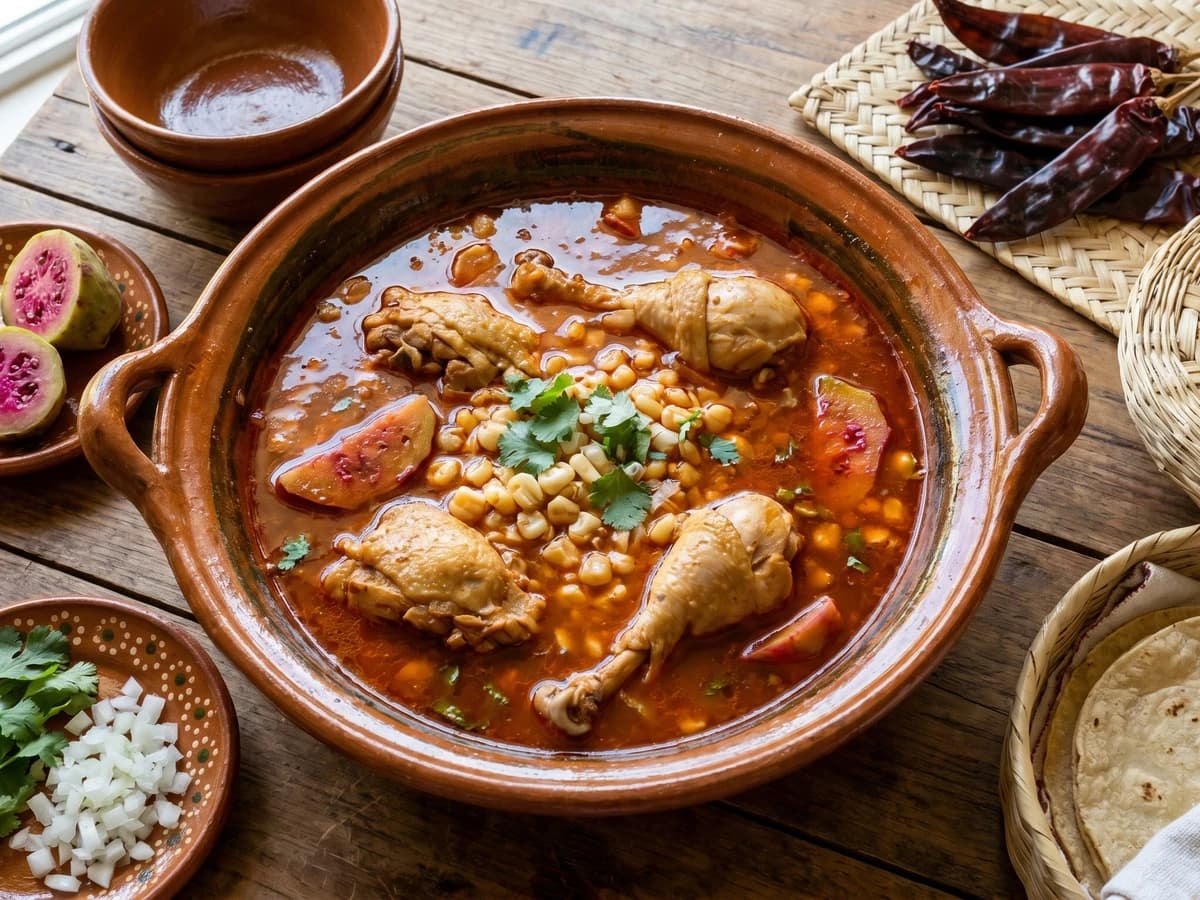
Guanajuato's capón is a guajillo-red chicken broth sharpened with xoconostle, finished with cilantro and a careful touch of chilcuague, the kind of Bajío stew that wakes up the table without shouting.

Chef Lupita
Queretaro's semi-desert soup of nopales and habas, built with chile guajillo, epazote, xoconostle, and the patient thrift of Otomi kitchens in Toliman and the Sierra Gorda.
Chef Lupita
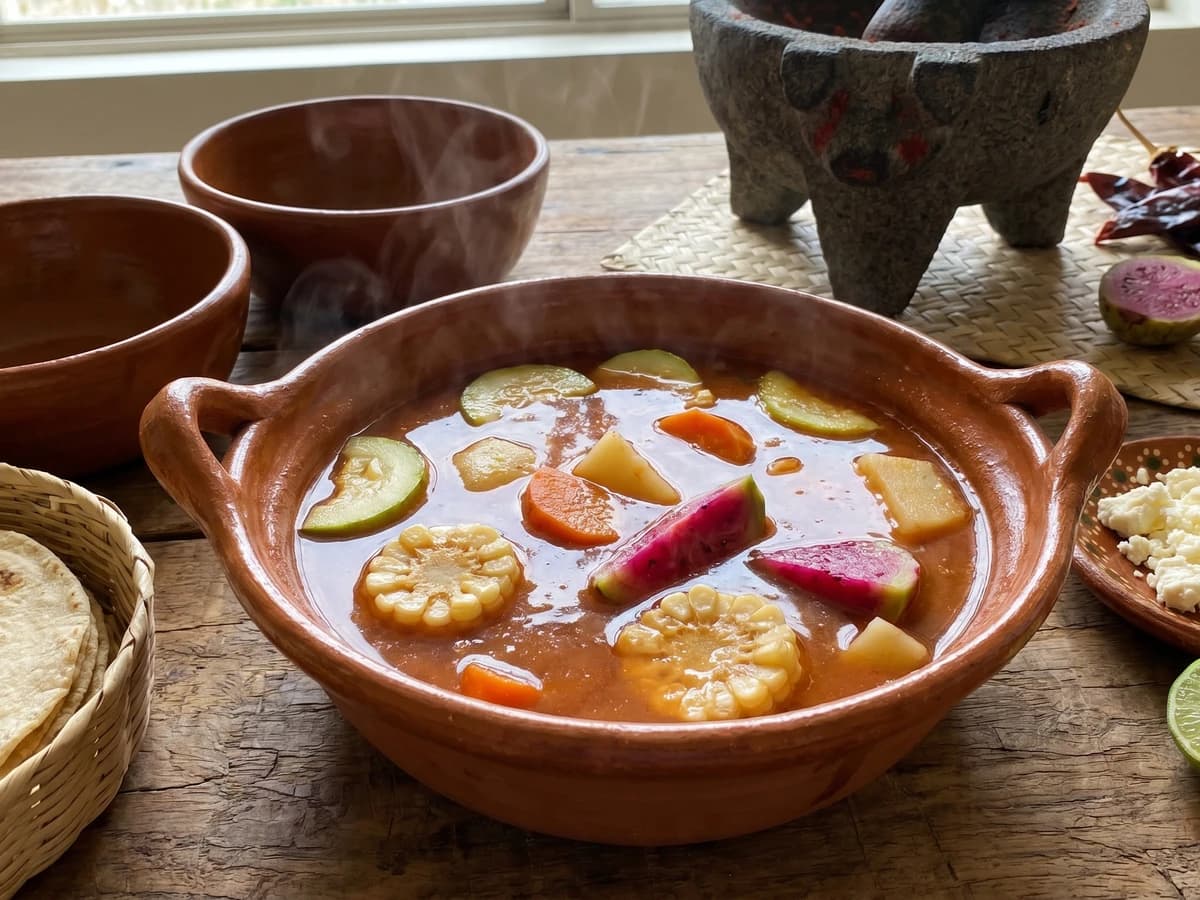
Southwest Guanajuato's Caldo de Zorra is an acidic xoconostle broth from Manuel Doblado, built with guajillo, chilcuague, corn, vegetables, and the patience of Bajio home kitchens.

Chef Lupita
Queretaro's Bajio soup of beef broth and cooked camote, colored with chile guajillo, sharpened with xoconostle, and finished with the quiet bite of chilcuague.

Chef Lupita
Guanajuato's Bajio mole verde thickens toasted pepitas with tomate verde, serrano, cilantro, and pork shoulder, a green cazuela that proves the Bajio has its own mole register.

Chef Lupita
Aguascalientes' Feria de San Marcos birria: borrego sealed over chile-stained consomé and cooked through the night with guajillo, ancho, chilcuague, xoconostle, and a Bajío table of tortillas.

Chef Lupita
Querétaro's mild tortilla soup from the Bajío, built with chicken broth, chile guajillo, fried corn strips, criollo avocado, queso ranchero, and thick crema from the old dairy haciendas.
Chef Lupita
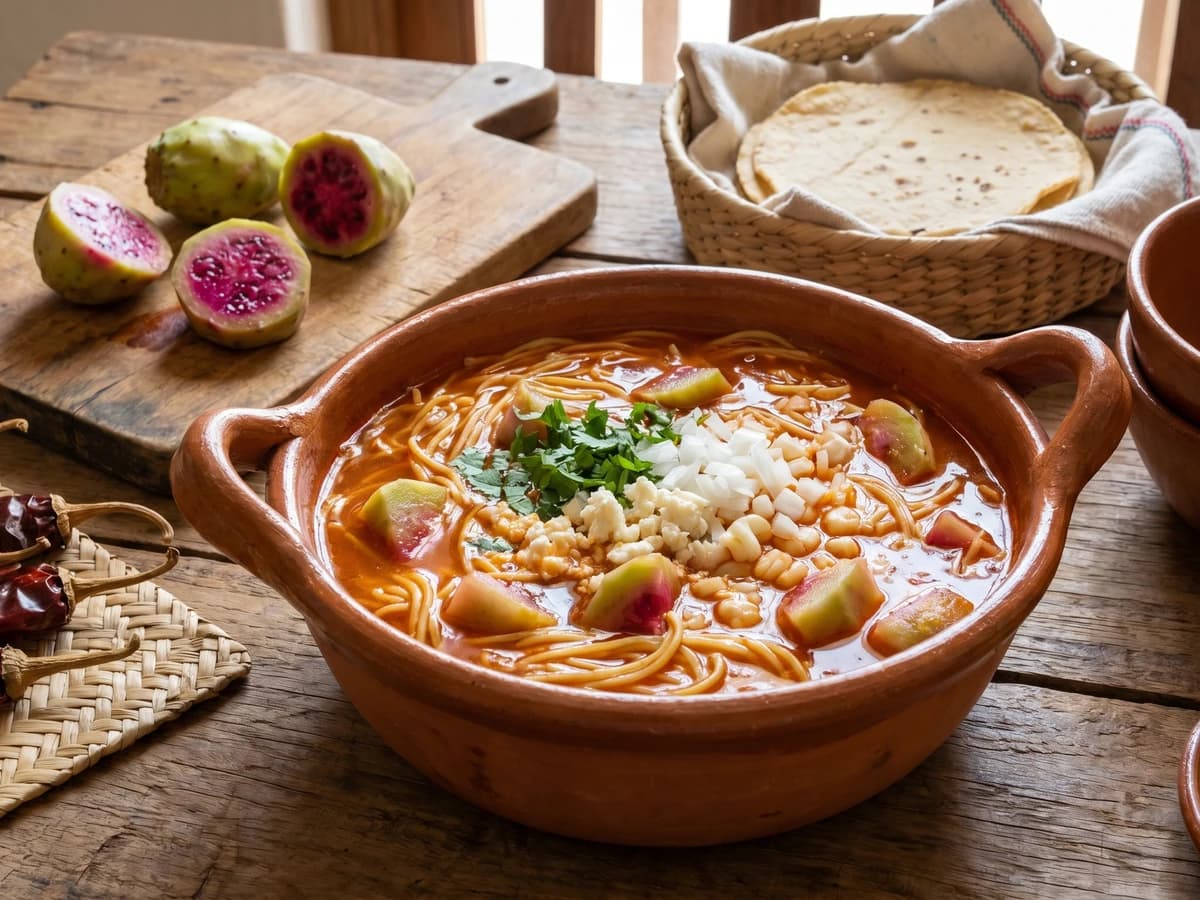
Queretaro's dry Bajio gives this fideo its sour backbone: xoconostle, toasted chile guajillo, tomato, cilantro, and vermicelli fried in manteca de cerdo until golden.

Chef Lupita
Aguascalientes' Bajio pozole de lengua, built with cacahuazintle hominy, tender beef tongue, chile ancho and guajillo, with xoconostle brightness and table garnishes.
Chef Lupita
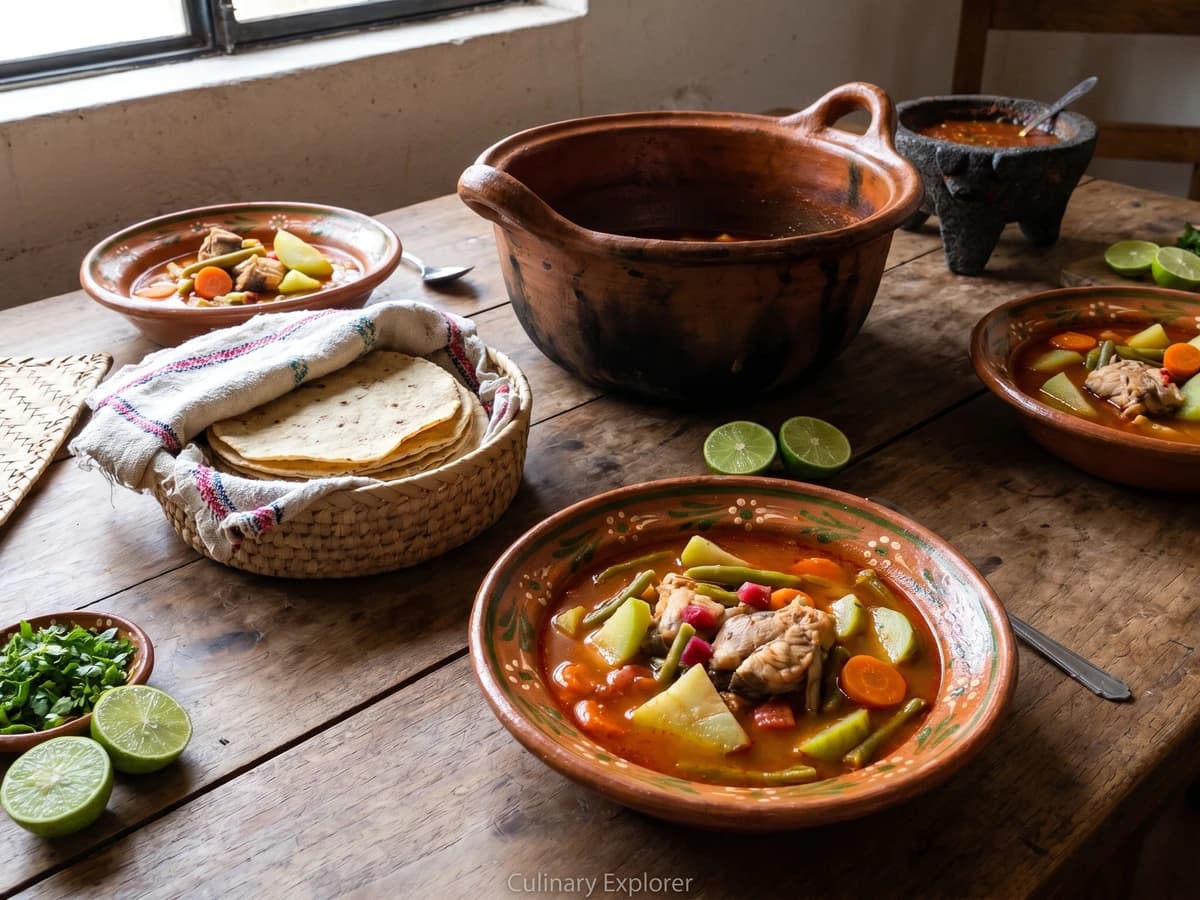
Guanajuato's lake-country caldo michi, built from bagre, jitomate, chile guajillo, xoconostle, and market vegetables from the Lerma basin, served the way Yuriria families know it.

Chef Lupita
Querétaro's semi-desert mole de conejo, built with guajillo, pepita, almendra, xoconostle, and chilcuague, the kind of slow guiso that belongs to Tolimán's Otomí kitchens.

Chef Lupita
Guanajuato's Bajio carne con chile colorado, pork browned in lard and simmered in a red adobo of guajillo, pasilla, jitomate, garlic, comino, and oregano.

Chef Lupita
Guanajuato's Pénjamo caldo from the Lerma corridor, a tomato-red catfish broth enriched with butter and chile ancho, served from a clay cazuela with lime, cilantro, and warm corn tortillas.
Culinary guides, cultural storytelling, and the editorial depth that makes cooking meaningful.
Discover Culinary ExplorerChef Lupita is a fictional culinary guide to Regional Mexican Cuisine, written with the assistance of AI.